.svg&w=384&q=75 "naujapitch logo")
UEFA Champions League Final: Paris Saint Germain vs Arsenal
At Puskas Arena in Budapest, Paris Saint Germain and Arsenal meet in the UEFA Champions League Final, a one-off game that will define their entire 2025 campaign: Arsenal arrive as the dominant league-phase side, ranked 1st with 24 points from 8 wins in 8, while Paris Saint Germain come from a more turbulent path, ranked 11th with 14 points from 4 wins, 2 draws and 2 losses. The seasonal weight is absolute: this is the title decider, with no margin for recovery beyond this night.
Head-to-Head Tactical Summary
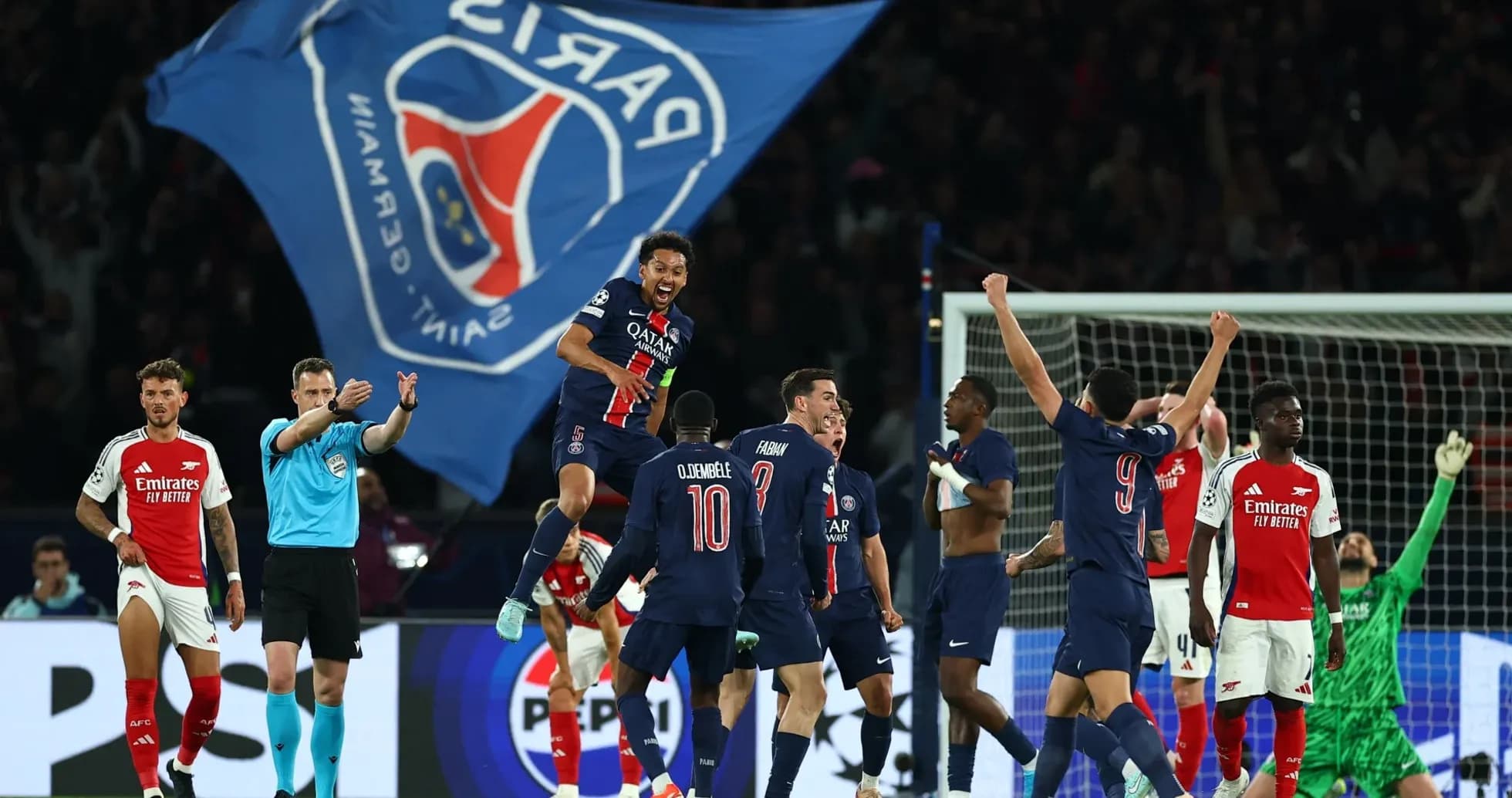
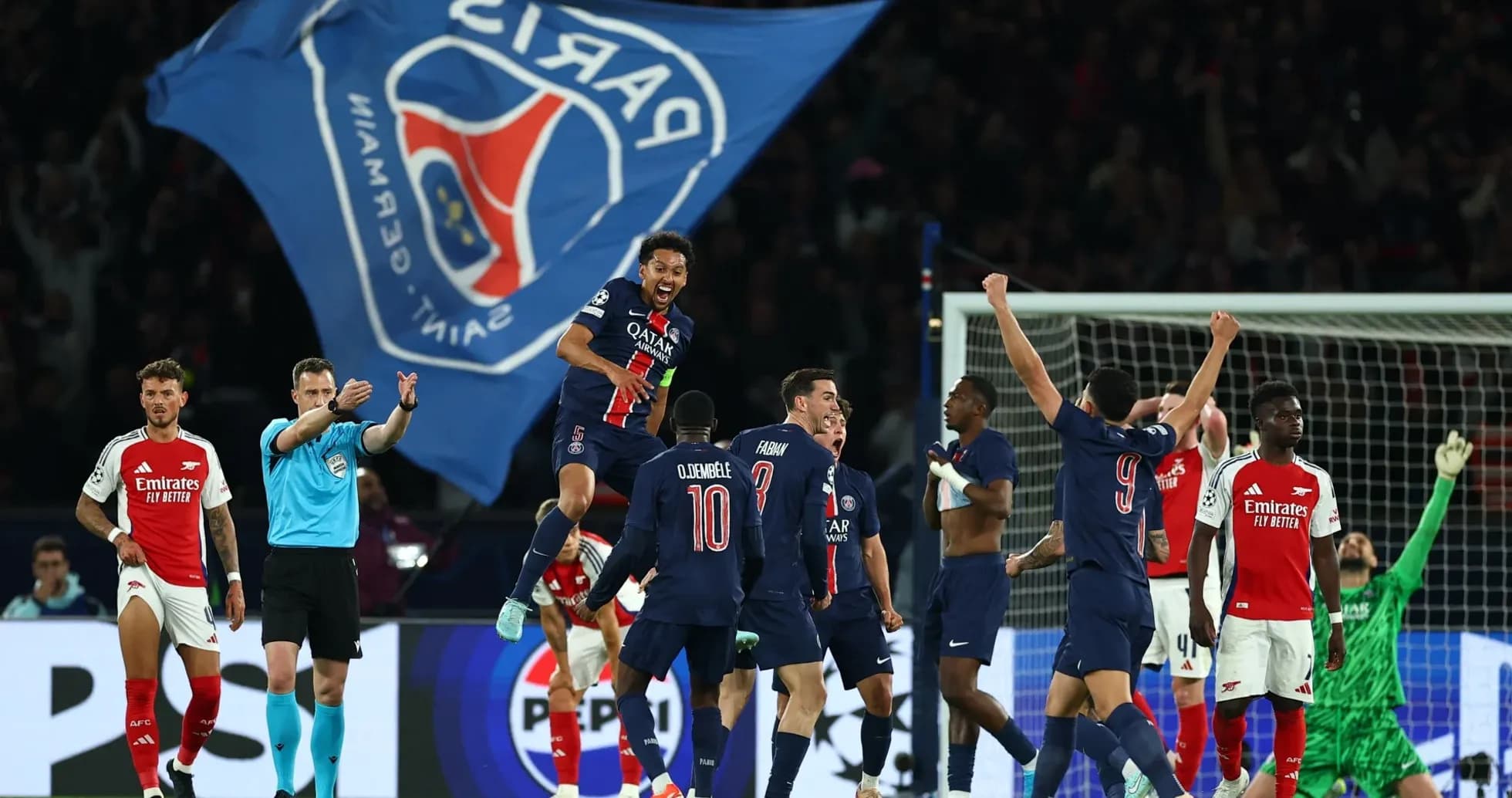
The recent head-to-head history in the Champions League is finely balanced but slightly tilted towards Paris Saint Germain in knockout pressure games. On 7 May 2025 at Parc des Princes in Paris (UEFA Champions League Semi-finals), Paris Saint Germain beat Arsenal 2-1, turning a 1-0 half-time lead into a narrow aggregate-clinching win. A week earlier, on 29 April 2025 at Emirates Stadium in London (UEFA Champions League Semi-finals), Paris Saint Germain had already taken control with a 1-0 victory, built on a 1-0 half-time advantage and a clean sheet away from home.
In the 2024 League Stage on 1 October 2024 at Emirates Stadium, Arsenal responded with a 2-0 home win over Paris Saint Germain, leading 2-0 at half-time and then managing the game. Earlier, in the International Champions Cup on 28 July 2018 at The National Stadium in Singapore, Arsenal produced a 5-1 win over Paris Saint Germain after leading 1-0 at half-time, a friendly but still indicative of Arsenal’s capacity to exploit space when PSG chase the game. Going further back, on 23 November 2016 at Emirates Stadium in the Champions League Group Stage, the sides drew 2-2 after a 1-1 half-time score, underlining how fine the margins have often been when they meet in Europe.
Global Season Picture
- League Phase Performance:
Paris Saint Germain: In the league phase, Paris Saint Germain sit 11th with 14 points from 8 matches (4 wins, 2 draws, 2 losses). They have scored 21 goals and conceded 11, for a positive goal difference of +10, with home numbers of 11 goals for and 6 against, and away figures of 10 for and 5 against. Their form string of DLDWL highlights inconsistency at this stage of the competition despite a strong attacking output (21 goals in 8).
Arsenal: In the league phase, Arsenal are the benchmark side, ranked 1st with a perfect 24 points from 8 matches (8 wins, 0 draws, 0 losses). They have scored 23 goals and conceded only 4, for a dominant goal difference of +19. At home they have 12 goals for and 3 against; away they have 11 for and just 1 conceded. The form string WWWWW reflects a flawless league-phase campaign with both a prolific attack and an elite defence (23 scored, 4 conceded). - Season Metrics:
Scope detection shows that team statistics (16 fixtures for Paris Saint Germain vs 8 league-phase matches; 14 for Arsenal vs 8 league-phase matches) include knockout rounds, so these numbers apply across all phases of the competition.
Paris Saint Germain: Across all phases of the competition, Paris Saint Germain have played 16 matches, winning 10, drawing 4 and losing 2, with 44 goals scored and 22 conceded. Their scoring rate is aggressive (2.8 goals per game) while the defence is more open (1.4 conceded per game), pointing to a high-variance, attack-first approach. Card data shows a tendency to collect yellow cards late (42.86% of yellows between minutes 76-90 and additional time), suggesting increased defensive stress or tactical fouling in closing phases.
Arsenal: Across all phases of the competition, Arsenal have played 14 matches, winning 11 and drawing 3, with no defeats. They have scored 29 goals (2.1 per game) and conceded just 6 (0.4 per game), underlining a controlled, structurally sound game model. Their clean sheet total of 9 from 14 matches reinforces the picture of a compact, low-risk defensive block. Yellow cards cluster between minutes 61-75 (31.82%), indicating a team that tightens its aggression in the critical mid-second-half period without losing overall discipline (no red cards recorded). - Form Trajectory:
Paris Saint Germain: In the league phase, the DLDWL sequence indicates a side that has oscillated between positive results and setbacks. The recent pattern suggests volatility: they are capable of winning but also prone to dropping points in short bursts, which can translate into streaky in-game momentum in a final.
Arsenal: In the league phase, the WWWWW form line is the definition of sustained momentum. Arsenal arrive at the final on the back of a continuous winning run, reinforcing confidence, automatisms, and belief that their game model works against a wide variety of opponents and scenarios.
Tactical Efficiency
Across all phases of the competition, Paris Saint Germain’s numbers describe a highly efficient attack but a more vulnerable defensive structure. Scoring 44 goals in 16 matches (2.8 per game) with only 1 failure to score suggests they consistently generate and convert chances, especially in their preferred 4-3-3 shape used in all 16 fixtures. However, conceding 22 goals (1.4 per game) and keeping just 5 clean sheets points to a defence that allows opponents regular opportunities, often forcing late-game management through intensity and fouls, as reflected in their late yellow card concentration.
Arsenal, by contrast, show a more balanced and controlled efficiency profile across all phases of the competition. With 29 goals in 14 matches (2.1 per game) and only 6 conceded (0.4 per game), they combine a stable attacking output with an elite defensive baseline. The absence of any recorded defeats, plus 9 clean sheets, indicates that their defensive mechanisms in both 4-3-3 and 4-2-3-1 formations are robust against different attacking styles. While specific “Attack/Defense Index” values from the comparison block are not numerically provided, the relative indicators are clear: Arsenal’s attack is slightly less explosive than Paris Saint Germain’s in raw goals per game, but their defensive efficiency is substantially higher, meaning their net tactical value (goals for minus goals against per match) is superior. In a final, that often translates into a greater capacity to control game tempo and risk.
The Verdict: Seasonal Impact
This final will fundamentally shape the narrative of 2025 for both clubs. For Paris Saint Germain, whose league-phase position (11th with 14 points) and DLDWL form underline inconsistency, winning the Champions League Final would reframe the entire campaign as a successful peak-performance run: the attacking power (21 league-phase goals, 44 across all phases) would be remembered for delivering the biggest prize, and defensive vulnerabilities would be forgiven as the acceptable cost of a front-foot approach. A defeat, however, would reinforce the perception of a side that can produce big nights (such as the semi-final wins over Arsenal in 2025) but struggles to sustain control over a full competition cycle.
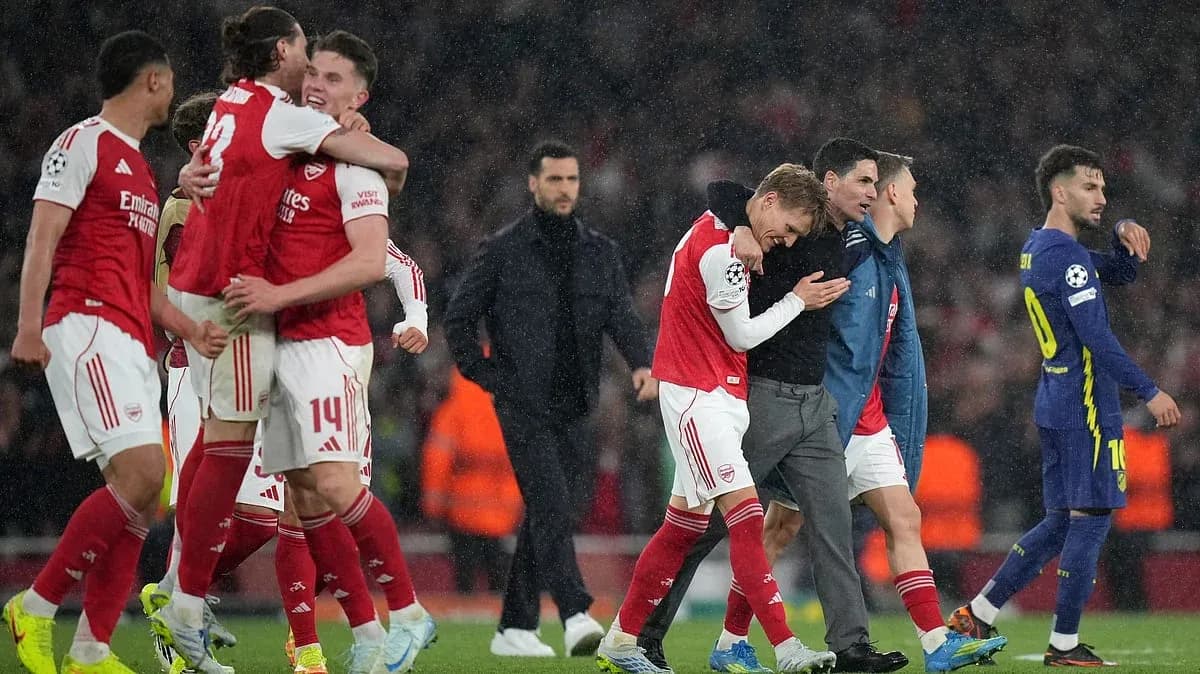
For Arsenal, arriving as the top-ranked league-phase team with 24 points, 23 goals scored and only 4 conceded, this match is about validating dominance with silverware. Victory would confirm them as the reference model of 2025: structurally superior, unbeaten across all phases, and capable of translating league-phase superiority into the ultimate title. It would also consolidate their status as a benchmark defensive side, with the Champions League trophy crowning an almost flawless run. A loss, by contrast, would turn an otherwise outstanding year into a story of missed culmination: the perfect league phase and unbeaten record across all phases would be overshadowed by failing in the decisive 90 minutes, raising questions about their capacity to convert structural superiority into trophies under maximum pressure.
In strategic terms, the seasonal impact is asymmetric: Paris Saint Germain seek redemption and validation of a high-risk, high-reward style, while Arsenal aim to avoid turning an era-defining campaign into a cautionary tale about dominance without a title. The result will not only decide the Champions League but also set the competitive hierarchy for 2026, influencing recruitment, tactical evolution, and psychological momentum for both clubs in Europe.