.svg&w=384&q=75 "naujapitch logo")
Bayern München vs Paris Saint Germain: Semi-Final Clash Analysis
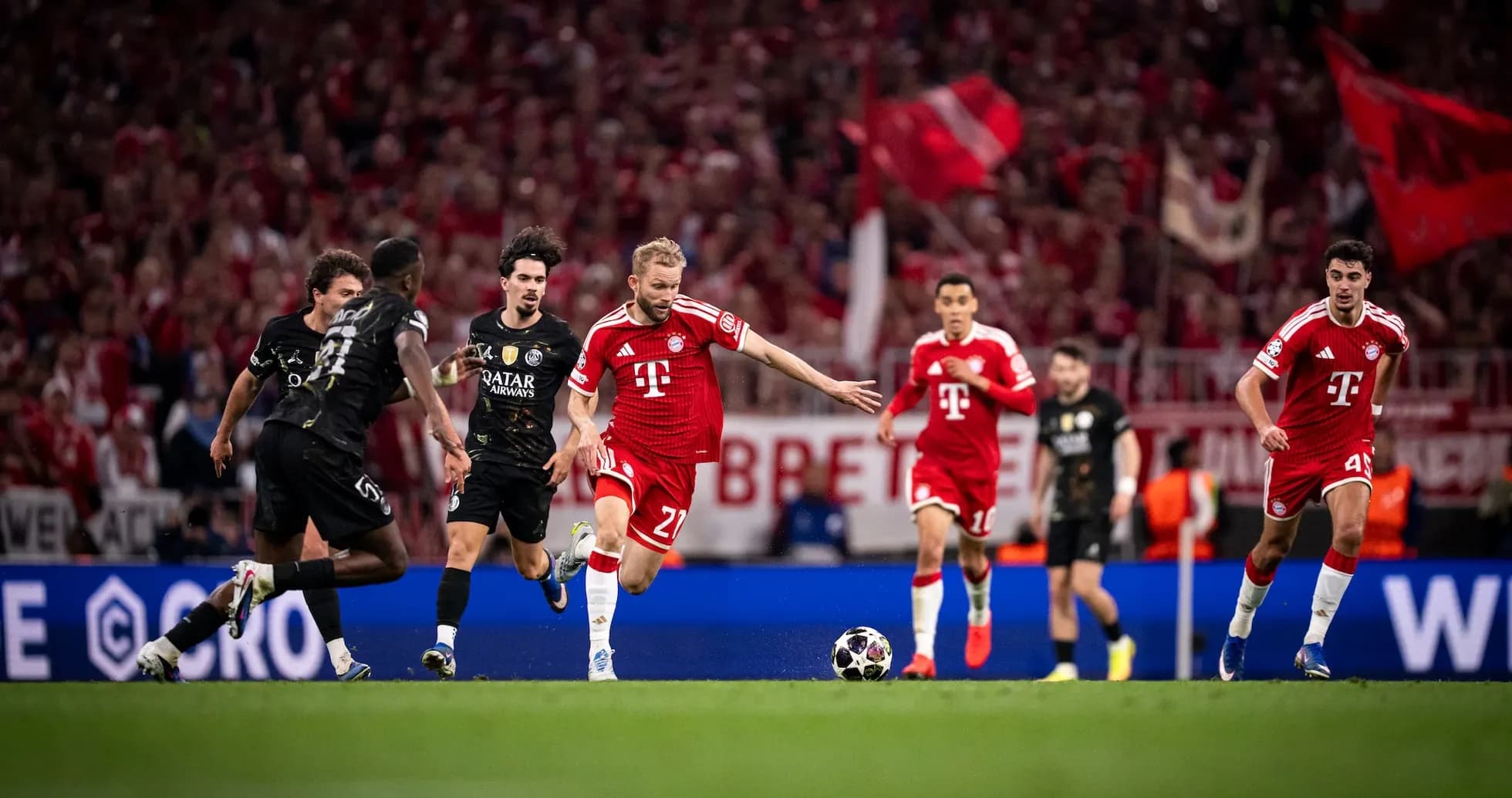
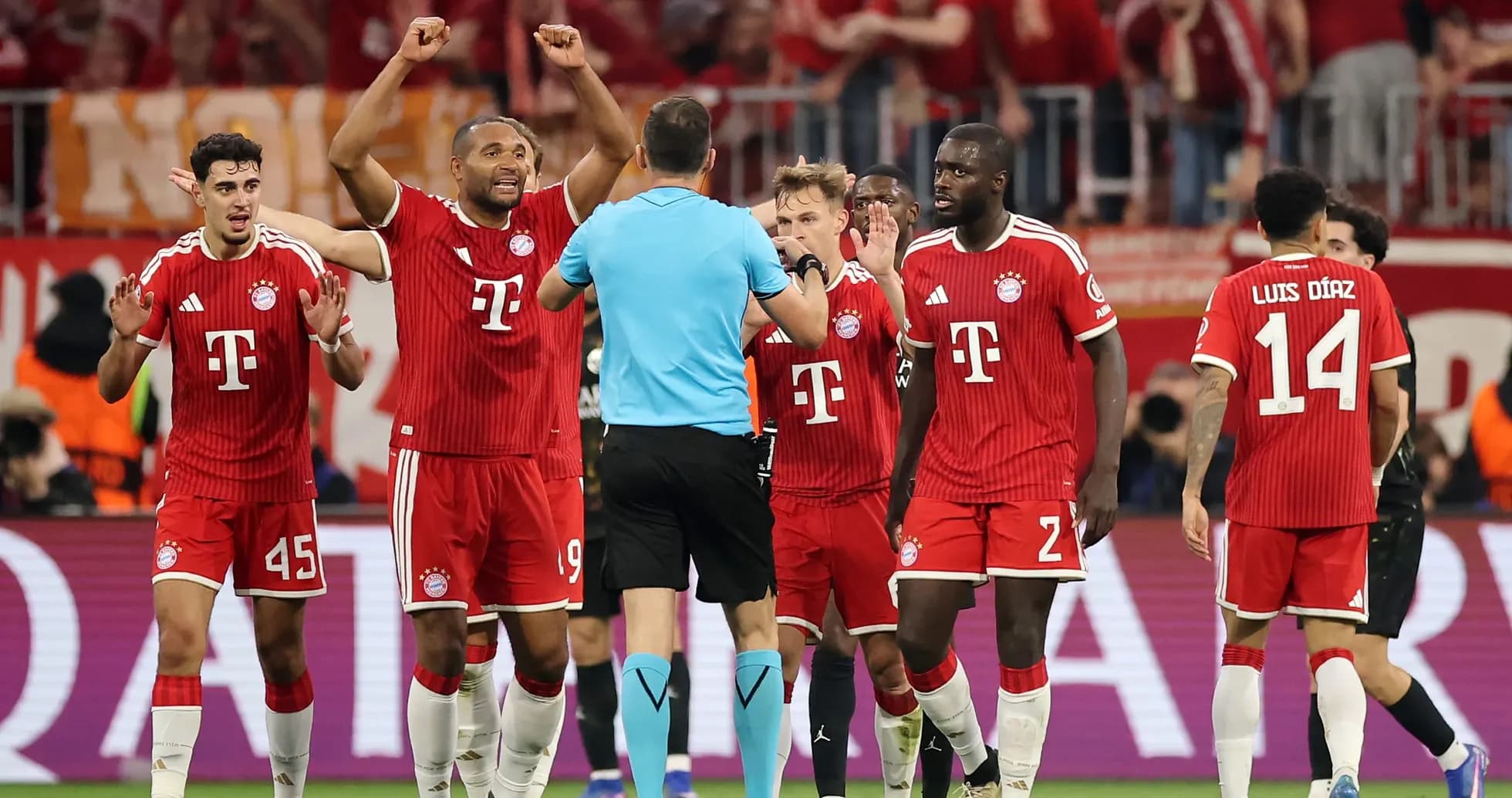
Under the Allianz Arena lights, this semi-final first leg between Bayern München and Paris Saint Germain ended 1–1, but the numbers and the patterns beneath the scoreline tell a more layered story of two heavyweights whose strengths clash almost perfectly.
I. The Big Picture – Two Superpowers, One Fine Margin
Following this result, Bayern remain the archetypal juggernaut of this Champions League season. Overall they have played 14 matches, winning 11, drawing 1 and losing just 2. Their attacking profile is ferocious: overall they average 3.1 goals per game, with 21 scored at home at an average of 3.0. Defensively, they concede overall 1.4 goals per match, 1.0 at home. That gives them an overall goal difference of +23 (43 scored, 20 conceded) and a home goal difference of +14 (21 scored, 7 conceded) – elite numbers that match their rank of 2nd in the competition standings, with 21 points and a goal difference of +14 in the table snapshot.
PSG, ranked 11th in the standings snapshot with 14 points and a goal difference of +10, are less dominant but no less dangerous. Overall this campaign they have played 16 games, winning 10, drawing 4 and losing only 2. They average 2.8 goals scored per game overall, with 3.1 at home and 2.4 on their travels. Defensively, they concede 1.4 goals per game overall, but just 1.0 away – a mirror image of Bayern’s home defensive average. Their overall goal difference stands at +22 (44 for, 22 against), and on their travels they have scored 19 and conceded 8, for an away goal difference of +11.
On the night, those seasonal identities collided and cancelled each other out: Bayern’s home firepower met PSG’s compact away resilience, and 1–1 felt like the statistical midpoint of two attacking machines that are used to overwhelming lesser opposition.
II. Tactical Voids – What Was Missing, and Where the Edges Frayed
Both managers came into this tie with notable absences that subtly reshaped the tactical landscape.
For Bayern, Vincent Kompany had to do without M. Cardozo (thigh injury), S. Gnabry (muscle injury), C. Kiala (ankle injury), W. Mike (hip injury) and B. Ndiaye (inactive). The absence of Gnabry in particular stripped Bayern of a proven Champions League contributor: he has 2 goals and 5 assists this campaign, with 246 passes at 92% accuracy and 10 key passes. Without his vertical runs and secondary creativity from the right, the burden fell more heavily on M. Olise and L. Díaz to provide width and end product.
On the PSG side, Enrique Luis had his own structural gaps. L. Chevalier (muscle injury), A. Hakimi (thigh injury) and Q. Ndjantou (muscle injury) were unavailable. Hakimi’s absence removed one of PSG’s prime transition outlets: he has delivered 6 assists in this Champions League run, with 23 key passes and 18 dribble attempts, and his overlaps normally help pin back opposition wingers. Instead, W. Zaire-Emery had to operate as a more conservative right-back, tightening PSG’s block but reducing their natural width on that flank.
Disciplinary profiles for the season also framed the risk landscape. Bayern’s yellow-card timing shows a pronounced late-game surge: 37.04% of their cautions come between 76–90 minutes, with further spikes at 16–30 minutes (18.52%) and scattered across other periods. They also have red cards concentrated between 46–60 and 61–75 minutes (50.00% of their reds in each of those windows). PSG, similarly, see 42.86% of their yellow cards in the 76–90 minute band and another 14.29% between 91–105. Their reds are split between 31–45 minutes (50.00%) and 91–105 minutes (50.00%). In a tense semi-final, both sides are historically most combustible just as legs tire and the game stretches.
III. Key Matchups – Hunter vs Shield, Engine Room vs Enforcer
Hunter vs Shield
At the sharp end, this tie is defined by two of the tournament’s most ruthless forwards. H. Kane, Bayern’s spearhead, has 14 goals and 2 assists in 13 Champions League appearances this season. He has produced 36 shots, 25 on target, and drawn 23 fouls – a centre-forward who combines penalty-box precision with link play (16 key passes) and even defensive work, having blocked 4 shots.
Opposite him, K. Kvaratskhelia embodies PSG’s dual-threat identity. With 10 goals and 6 assists, 30 shots (18 on target) and 20 key passes, he is both finisher and creator, and his 51 dribble attempts with 29 successes mark him as one of the competition’s most dangerous ball-carriers.
The defensive shields facing them are formidable but differently constructed. Bayern’s overall concession of 1.0 goals at home suggests a structure that protects M. Neuer well, with J. Tah and D. Upamecano backed by the screening of J. Kimmich and A. Pavlović. PSG’s away record of 1.0 goals conceded per game points to a disciplined back line in which Marquinhos and W. Pacho anchor a compact block, with N. Mendes and Zaire-Emery balancing aggression and restraint.
Engine Room
The midfield duel is subtler but just as decisive. For Bayern, Kimmich is the metronome and enforcer. In this Champions League run he has completed 1,117 passes at 90% accuracy, with 30 key passes and 15 tackles. He also carries disciplinary risk: 4 yellow cards already, and his role in stopping transitions against Kvaratskhelia, O. Dembélé and D. Doué makes him a prime candidate for pressure situations.
PSG’s answer is Vitinha, whose season reads like that of a deep-lying conductor at his peak: 1,553 passes at 93% accuracy, 23 key passes, 25 tackles, 17 interceptions and 6 goals. He is the hinge between PSG’s control and their vertical explosions. Around him, J. Neves and F. Ruiz provide balance, but Vitinha is the one who decides whether PSG sit in or step out.
On Bayern’s right, Olise is a tactical pivot. With 5 goals, 6 assists, 34 key passes and 75 dribble attempts (45 successful), he is both Bayern’s chief progressor and a top-tier chance creator. His duel with N. Mendes on PSG’s left flank is a battle between relentless 1v1 ingenuity and an athletic full-back who must choose between overlapping and containing.
IV. Statistical Prognosis – A Semi-final on a Knife-edge
Following this 1–1 first leg, the second act feels like a meeting of equals shaped by small statistical levers rather than obvious mismatches.
Bayern’s overall attacking volume – 43 goals in 14 games, never failing to score either at home or away – suggests they will create enough chances again. Their penalty record is perfect at team level this season, with 4 scored from 4 and none missed, though Kane himself has missed 1 penalty despite scoring 4; that nuance matters if another spot-kick decides the tie.
PSG counter with balance: 44 goals scored, 22 conceded overall, and 3 clean sheets on their travels. They have failed to score only once away, underlining their ability to carry threat even when under pressure. Their late-card profile (42.86% of yellows in the final 15 minutes) hints that if Bayern can drag the game into a chaotic closing stretch, PSG’s discipline will be tested.
In xG terms, even without explicit numbers, the profiles point to a high-quality chance game rather than a low-event stalemate. Bayern’s home average of 3.0 goals for and 1.0 against, set against PSG’s away averages of 2.4 for and 1.0 against, sketches a second leg with multiple big opportunities at both ends.
The verdict: Bayern’s structural superiority at home and their relentless scoring streak give them a marginal edge. But PSG’s away defensive solidity and the individual brilliance of Kvaratskhelia, Vitinha, Dembélé and Doué mean that a single transition, a single late mistake – perhaps in that volatile 76–90 minute window – could flip the narrative. This semi-final is not a clash of opposites; it is a mirror match between two sides whose statistical profiles suggest that the smallest tactical adjustment, or the calmest penalty taker, will decide who walks out of this tie and into the final.