.svg&w=384&q=75 "naujapitch logo")
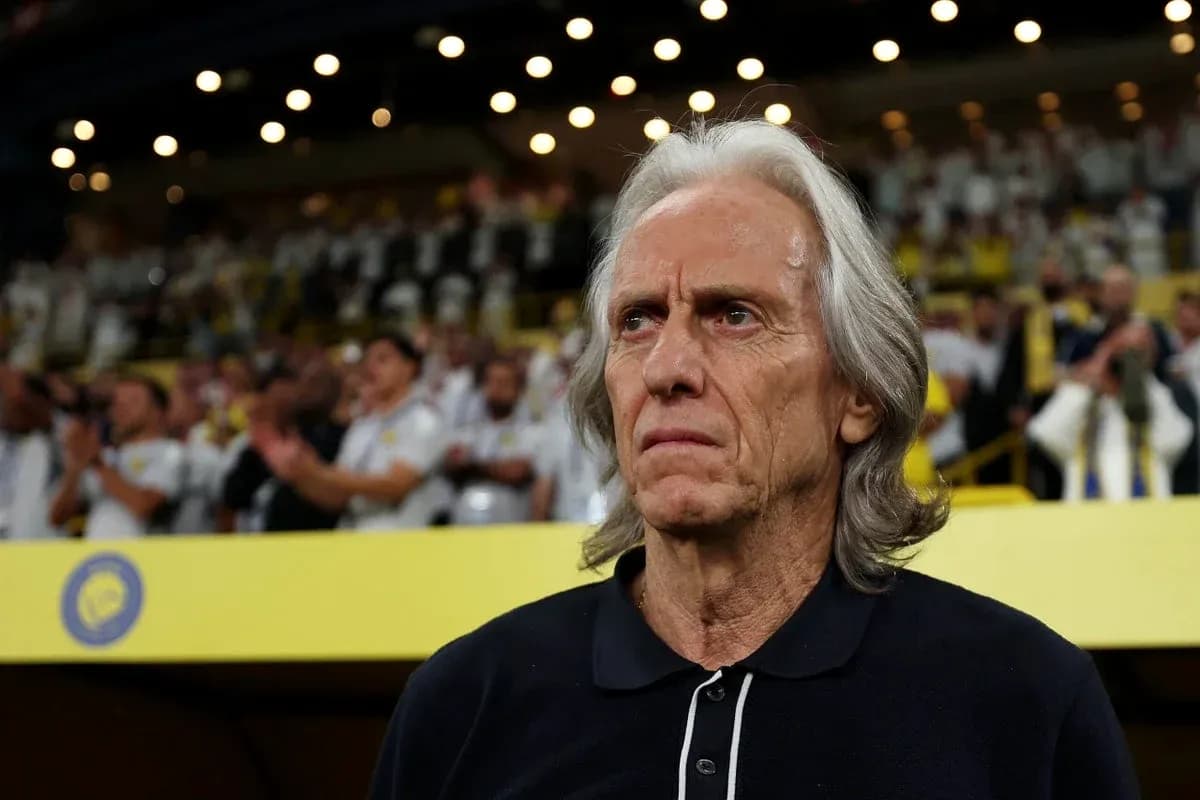
Jorge Jesus Takes Over as Portugal National Team Coach
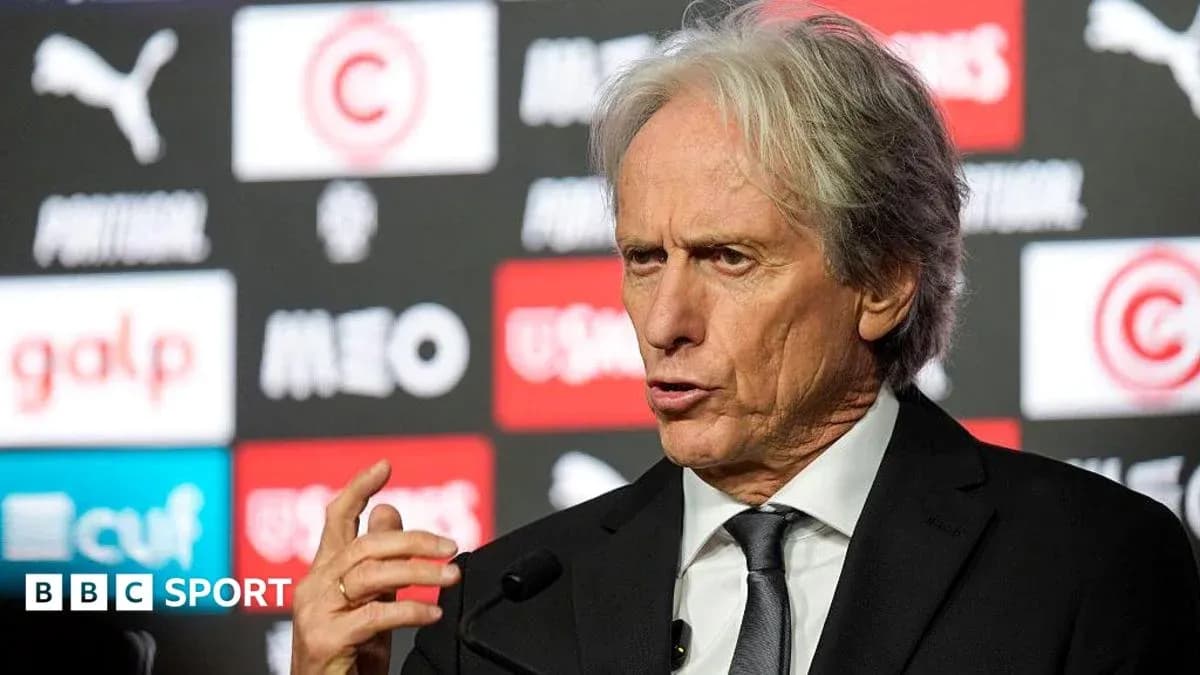
Jorge Jesus has been handed the Portugal job, stepping into one of international football’s most pressurised roles after Roberto Martinez’s exit in the wake of a World Cup last-16 elimination to Spain.
It is a bold, unmistakably Portuguese appointment. And it comes at a crossroads moment for a national team preparing to host the 2030 World Cup without the man who defined an era.
A serial winner comes home
At 71, Jesus is no stopgap. His managerial career stretches across 36 years and reads like a tour of the Lusophone and Middle Eastern elite: two spells at Benfica, a dramatic switch to Sporting CP, glory with Flamengo, and title-winning stints at Al Hilal and Al Nassr in Saudi Arabia.
The numbers are blunt and impressive. Twenty-five trophies. Three Portuguese league titles with Benfica. A Brazilian championship with Flamengo. League crowns in Saudi Arabia with both Al Hilal and Al Nassr, the latter ending a seven-year title drought for the Riyadh club.
He has rarely been dull. In 2015, he walked out on Benfica to join bitter Lisbon rivals Sporting CP, a move that sent shockwaves through Portuguese football and underlined his appetite for confrontation and risk. The same edge followed him abroad. At Al Hilal he became a standard-bearer for the Saudi Pro League’s early push for international relevance, then last summer he crossed the Riyadh divide to take over at Al Nassr.
There, he linked up with Cristiano Ronaldo. Before joining, Jesus admitted he “could not refuse the invitation” of the Portuguese legend to coach the club. Together, they delivered Al Nassr’s first title in seven years. Jesus departed at the end of the 2025-26 season, with Ange Postecoglou later taking the reins, but the impact of that year lingers in Riyadh.
Now he returns to the national stage, not as Ronaldo’s club manager, but as the man charged with steering Portugal into a future that, for the first time in two decades, will not be built around their record-breaking No 7.
Portugal’s new era, without Ronaldo
Portugal’s recent history is a strange mix of underachievement and silverware. They have not reached a World Cup semi-final since 2006, yet they claimed the European Championship in 2016 and lifted the Nations League in 2019, then again in 2025.
The World Cup, though, remains the missing piece. Martinez, appointed at the start of 2023, could not crack it. His tenure ended with that last-16 defeat to Spain, and with it the sense that Portugal had stalled on the biggest stage.
Ronaldo’s announcement earlier this month that he will not play another World Cup sharpened the sense of transition. The numbers he leaves behind for the seleção are staggering: 146 international goals in 233 appearances, both world records. For years, every tactical plan, every coaching decision, every generational debate started with his name.
Now, for the first time in a generation, it doesn’t.
Portugal will co-host the 2030 World Cup with Spain and Morocco, with Uruguay, Argentina and Paraguay staging games at the start of the tournament. This is not just another cycle. It is a home World Cup, shared but historic, and it will arrive without the man who dragged Portugal into the global elite.
Jesus walks into that vacuum. The question is not whether he can handle pressure. It is whether his aggressive, front-foot football and combustible personality can fuse a squad that must learn to live without its icon while aiming for the deepest run on home soil in the country’s history.
The one that got away from Brazil
The appointment also closes a chapter that once pointed in a different direction. In March 2025, The Athletic reported that Jesus was among the leading contenders to become Brazil head coach, alongside Carlo Ancelotti. The Italian ultimately took the Brazil job after leaving Real Madrid in May, ending any realistic prospect of Jesus taking over the Seleção.
Instead, the veteran coach now lands in a role that, in many ways, suits his story better. Portugal is where his reputation was forged, where his tactical ideas first took root, and where his name still carries weight in every stadium from Lisbon to Porto.
He arrives not as a fresh face, but as a proven winner with a long list of dressing rooms behind him and very little left to prove at club level.
A high-stakes reunion with history
The stakes are obvious. Portugal have tasted continental success and Nations League glory, but the World Cup has repeatedly eluded them. Hosting the 2030 edition raises the bar again. Quarter-finals will not be enough. Nor will polite exits to traditional powers.
Jesus has built his career on intensity, on teams that press high, attack with numbers and play with an edge that often mirrors their coach on the touchline. That identity will now be tested on the international stage, where time on the training ground is limited and tournament football punishes every misstep.
He inherits a squad rich in talent but stripped of the certainty that Ronaldo’s presence always provided. That might liberate some. It might expose others.
What it will not do is lower expectations. A 71-year-old serial winner has taken charge of a country about to host the biggest tournament of all. For Jorge Jesus and for Portugal, the countdown to 2030 starts now.