.svg&w=384&q=75 "naujapitch logo")
Michael Edwards Resigns: Liverpool's Transition Amidst Uncertainty
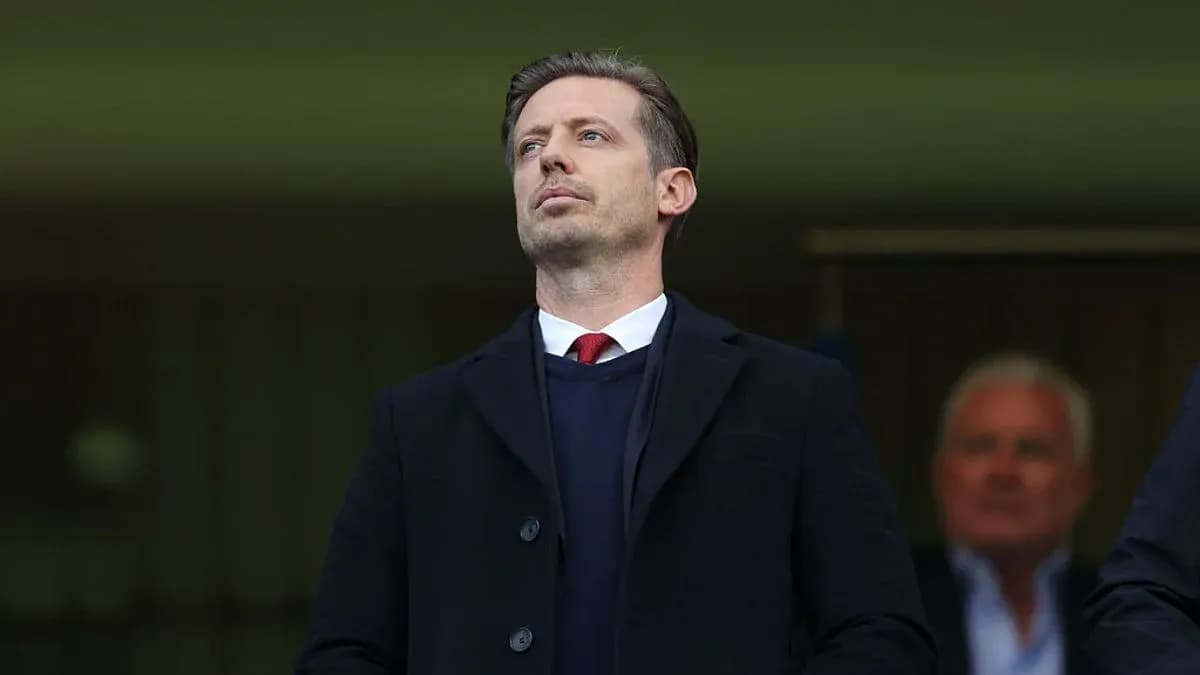
Michael Edwards has walked away from Fenway Sports Group for a second time – and this time, the project he came back for never truly materialised.
The architect of Liverpool’s modern-era recruitment machine has resigned as FSG’s chief executive of football, informing the ownership back in autumn 2025 that he would go once he felt the club’s future was properly mapped out. FSG tried to keep him. On Friday, they had to accept he was gone.
A grand plan that never left the drawing board
When Edwards returned in March 2024, it was not simply to steady Liverpool after Jürgen Klopp. He came back with a bigger canvas and a broader job title. No longer just Liverpool’s sporting director, he was elevated to FSG’s chief executive of football, charged with reshaping the group’s entire football operation.
The pitch was clear: guide Liverpool through the post-Klopp transition and build a multi-club structure around them. Strategic partnerships. A second club. A wider football empire with Liverpool at the centre and Edwards as the architect.
He threw himself into it. FSG assessed options including Getafe and Bordeaux, testing the market for the right fit. The model was supposed to mirror what rival groups across Europe have already embraced: shared data, shared pathways, shared value.
Then the trail went cold. No club truly matched FSG’s criteria. The search dragged, the momentum faded, and last year the ownership quietly shelved the multi-club plan. The broader project that had tempted Edwards back had, in his own words, “evolved differently” from the original vision.
At that point, his role – created specifically for him – started to look exposed. With a year left on his contract, he chose to leave. Because it is his decision, he is not expected to receive a payoff. FSG, for their part, may not even replace him like-for-like.
Liverpool left with a plan, but fewer architects
Edwards insists he departs with Liverpool in good health. In a carefully worded farewell, he called it “a privilege” to return at such a critical moment and said he leaves believing the club has “outstanding people, a clear direction and the foundations in place for continued success”.
He also made a point of highlighting the work done on FSG’s broader ambitions, stressing that his team had presented “a broad range of thoughtful and well-developed options” for the group’s football future, even if ownership chose not to act on them.
On the pitch and in the market, Liverpool are not expected to feel an immediate jolt. The club’s transfer business is in the hands of sporting director Richard Hughes, and plans for this summer window are already set. The machinery is still running.
But the picture above the recruitment department looks increasingly fragile.
Hughes, whose contract runs to 2027, has been heavily linked with a lucrative move to Al-Hilal in the Saudi Pro League. He has already made one era-defining call, sacking Arne Slot and appointing Andoni Iraola as head coach – a decision taken in tandem with Edwards. Once this transfer window shuts, Hughes could be the next to walk away.
If that happens, Liverpool’s carefully constructed hierarchy will have lost two central figures in quick succession, just as the club attempts to build on a historic 20th English league title.
Gordon steps back into the spotlight
Into that vacuum steps a familiar name. FSG president Mike Gordon is expected to take a far more hands-on role in football operations in Edwards’ absence. It would be a return to the frontline for one of the key figures behind Liverpool’s data-led revolution over the past decade.
Gordon, who worked closely with Edwards during both of his spells at Anfield, was effusive in his praise. He hailed Edwards’ “exceptional judgment, integrity and an unwavering commitment to building a strong football organisation for the long term,” and underlined his importance in helping Liverpool “successfully navigate a significant period of transition” before that landmark 20th title.
There is no dispute over Edwards’ legacy. From his first stint as sporting director between 2016 and 2022, when he helped assemble a Champions League- and Premier League-winning squad, to his second spell overseeing the post-Klopp handover, his fingerprints are all over Liverpool’s recent history. He also played a central role in creating the new leadership structure that now has to function without him.
The question now is not what Edwards has done for Liverpool. That is etched into the club’s modern story. The question is what comes next for an ownership group that invited him back to build a football empire, then stepped away from the very plan that brought him through the door.
With Edwards gone, Hughes potentially in demand, and Gordon back at the controls, Liverpool enter another phase of transition – this time off the pitch. How many more changes can a title-winning structure absorb before the foundations start to creak?