.svg&w=384&q=75 "naujapitch logo")
Sweden's Dominance Over Tunisia: A Tactical Breakdown
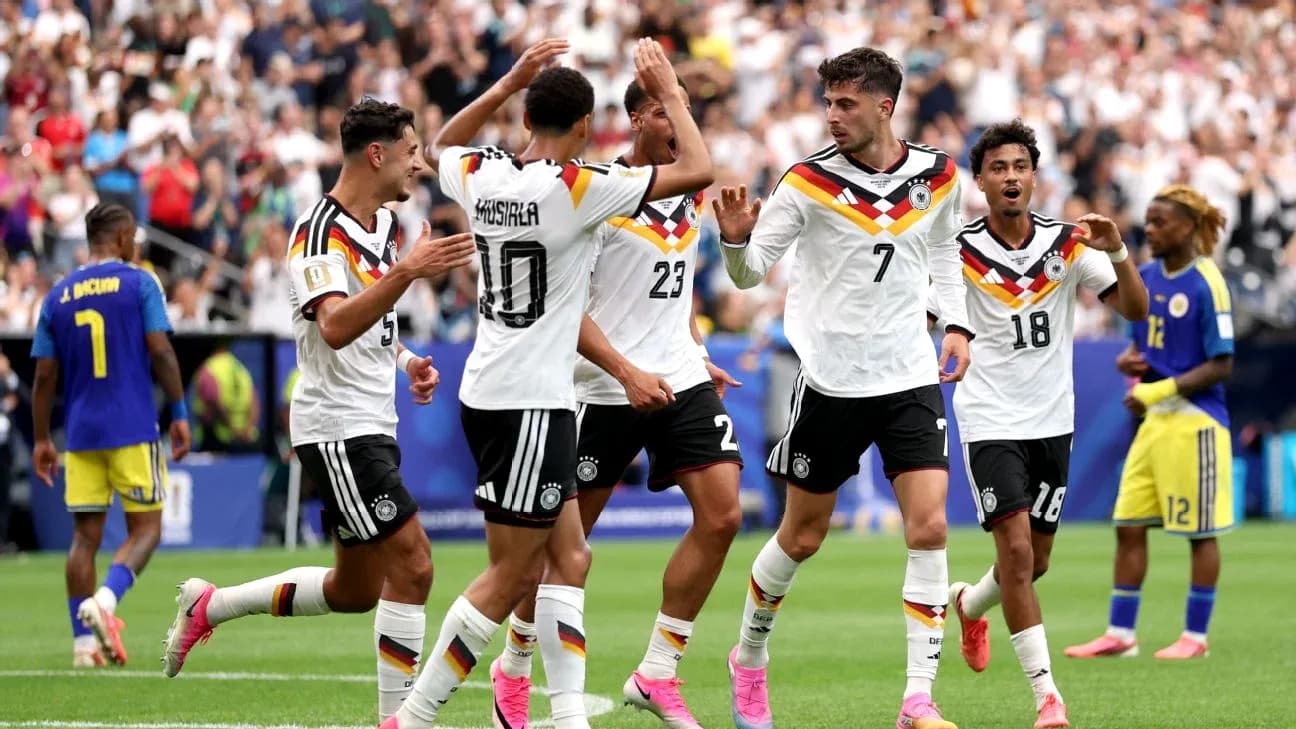
Under the night lights of Estadio BBVA in Monterrey, Sweden’s 5–1 dismantling of Tunisia felt less like an opening group game and more like a statement of identity. Following this result, Sweden sit top of Group F with 3 points, a goal difference of +4 (5 goals for, 1 against), and a performance that crystallised Graham Potter’s vision of an aggressive, front‑foot World Cup side. Tunisia, bottom of the group with 0 points and a goal difference of -4 (1 goal for, 5 against), leave the pitch knowing this was not just a defeat, but a tactical unravelling.
I. The Big Picture: Structures and Intent
Potter doubled down on boldness: a 3‑1‑4‑2 that asked his players to dominate every vertical lane. K. Nordfeldt was the lone anchor at the back, shielded by a trio of centre‑backs – V. Lindelof, I. Hien and G. Lagerbielke – who were tasked as much with progression as with protection. In front of them, J. Karlstrom’s single‑pivot role was pivotal: the hinge between security and risk.
Ahead of Karlstrom, a four‑man midfield band of G. Gudmundsson, Y. Ayari, B. Nygren and A. Bernhardsson stretched Tunisia horizontally, creating channels for the twin strikers, V. Gyökeres and A. Isak. The numbers tell the story of a side built to overwhelm: heading into this game Sweden had no World Cup sample, but following this result they average 5.0 goals at home and 5.0 overall, conceding 1.0 at home and overall. It is only one match, but it is a thunderous baseline.
Tunisia’s response was conservative: a 5‑3‑2 under Sabri Lamouchi, with A. Chamakh behind a back five of A. Abdi, M. Ben Hamida, M. Talbi, O. Rekik and Y. Valery. The idea was clear – compress space, deny Sweden’s forwards room, and counter through H. Mejbri’s creativity and the front pairing of E. Saad and A. Slimane. In practice, the structure became a siege. On their travels, Tunisia’s only outing has produced 1 goal scored and 5 conceded, an away average of 1.0 goals for and 5.0 against. The gulf between their defensive ambition and execution was stark.
II. Tactical Voids: Control, Discipline, and the Gaps
Sweden’s most striking feature was how complete the performance felt despite the inherent risks of a 3‑1‑4‑2. With no listed absentees, Potter could field his strongest XI and then layer on quality from the bench: M. Svanberg, L. Bergvall, A. Elanga, K. Sema and others formed a substitutes’ bench that allowed Sweden to maintain tempo rather than protect a lead.
Disciplinary control was immaculate. Sweden’s season card profile shows no recorded yellow or red cards by minute range; this match maintained that composure. They pressed, counter‑pressed and rotated aggressively, but without the reckless edge that often accompanies such intensity.
Tunisia, by contrast, cracked under the strain. Their season data shows a single yellow card in the 46–60’ window, a 100.00% concentration of their cautions in that early second‑half stretch – precisely when they needed clarity to mount a response. That spike in indiscipline in the 46–60’ period hints at a side that struggles emotionally when the game runs away from them. The five‑man back line, instead of forming a calm red wall, became a reactive block, repeatedly pulled out of shape by Sweden’s rotations between lines.
The biggest tactical void for Tunisia lay between their midfield three and their front two. R. Khedira, E. Skhiri and Mejbri were often pinned deep, leaving Saad and Slimane isolated. Without a reliable out‑ball, Tunisia’s transitions died in their own half, inviting further waves of Swedish pressure.
III. Key Matchups: Hunter vs Shield, Engine Room vs Enforcer
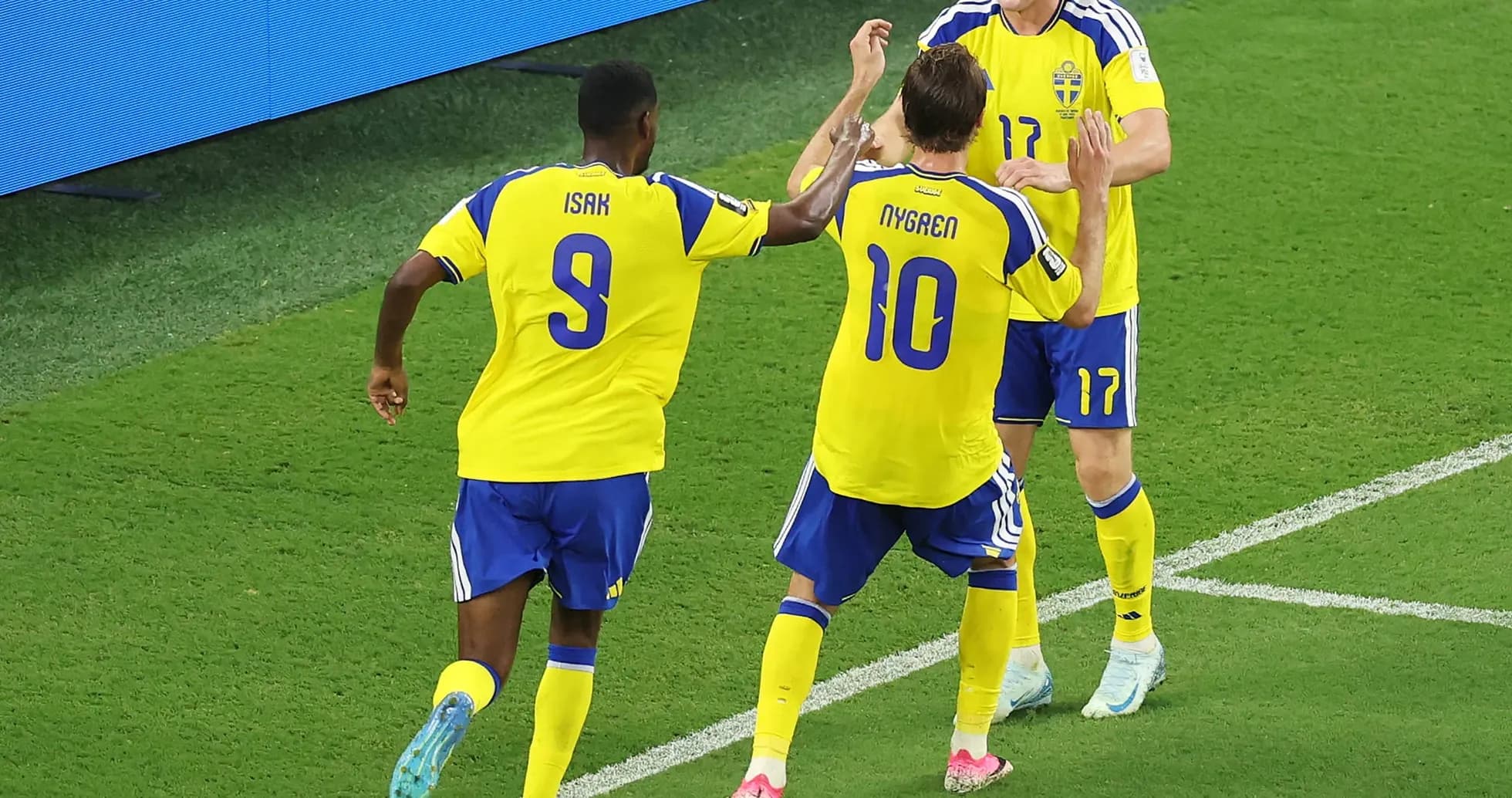
The “Hunter vs Shield” duel was brutally one‑sided. Sweden’s attacking trident of Isak, Gyökeres and Ayari ripped through a Tunisian defence that, on their travels, now concedes an average of 5.0 goals. Isak’s line reads like that of a complete forward: 1 goal, 2 assists, 2 shots on target from 2 attempts, 17 passes at 82% accuracy and 2 key passes. His movement between the lines dragged Talbi and Rekik into uncomfortable zones, opening corridors for Gyökeres to attack.
Gyökeres, with 1 goal, 1 assist, 4 total shots (2 on target) and 4 key passes from 19 passes at 84% accuracy, acted as both finisher and facilitator. Together, the front pair combined power with subtlety, constantly testing the seams between Tunisia’s wide centre‑backs and wing‑backs.
But the revelation was in the engine room. Y. Ayari, Sweden’s early top scorer with 2 goals from midfield, produced a box‑to‑box masterclass. Across 90 minutes he scored twice from 2 shots on target, completed 27 passes with 2 key passes, and added 3 tackles plus 1 interception. He was the late runner Tunisia never tracked, ghosting into the half‑spaces that their 5‑3‑2 struggled to police.
Opposite him, Skhiri and Khedira were overwhelmed. Their remit – to screen the back five and spring counters – became a damage‑limitation exercise. Whenever Tunisia did break Sweden’s first press, Karlstrom’s positioning and Lindelof’s anticipation closed the door. With no data on Tunisian individual defensive blocks here, the collective picture is enough: a back line that bent, then broke.
From the bench, M. Svanberg and L. Bergvall hinted at Sweden’s depth. Svanberg needed only 13 minutes to score once from his single shot on target, while Bergvall, in 25 minutes, provided 1 assist, 6 passes at 83% accuracy and contributed defensively with 1 tackle and 1 interception. For a tournament campaign, those are the kinds of impact substitutions that change not just games but group dynamics.
IV. Statistical Prognosis: Trajectories and xG Logic
We do not have explicit xG numbers, but the shot profiles and scoreline point towards a Swedish attacking performance that would comfortably sit in high xG territory. Sweden’s season line now reads: 1 match, 1 win, 5 goals for, 1 against, no clean sheets but no failures to score. The lack of penalties (0 taken, 0 missed) underlines that their output is being generated from open play patterns rather than set‑piece variance.
Tunisia’s early World Cup arc is more troubling: 1 match, 1 defeat, 1 goal for, 5 against, no clean sheets. Their biggest away loss is already 5–1, and their averages on their travels – 1.0 goals scored, 5.0 conceded – frame them as a side whose defensive solidity is not yet at World Cup standard.
Following this result, the tactical prognosis is clear. Sweden have unveiled a high‑ceiling blueprint built on a 3‑1‑4‑2 that maximises their attacking talent and leverages a deep, versatile bench. Their challenge will be to tighten the back line enough to turn dominance into clean sheets. Tunisia must decide whether to persist with a five‑man defence that has just conceded five, or to rebalance the side to give their forwards a platform.
On this evidence, the xG logic favours Sweden as a dark horse in the competition: a team whose numbers and narrative are suddenly aligned, and whose first night in Monterrey may be remembered as the moment their World Cup truly ignited.