.svg&w=384&q=75 "naujapitch logo")
Netherlands vs Japan: Tactical Insights from World Cup Group Stage
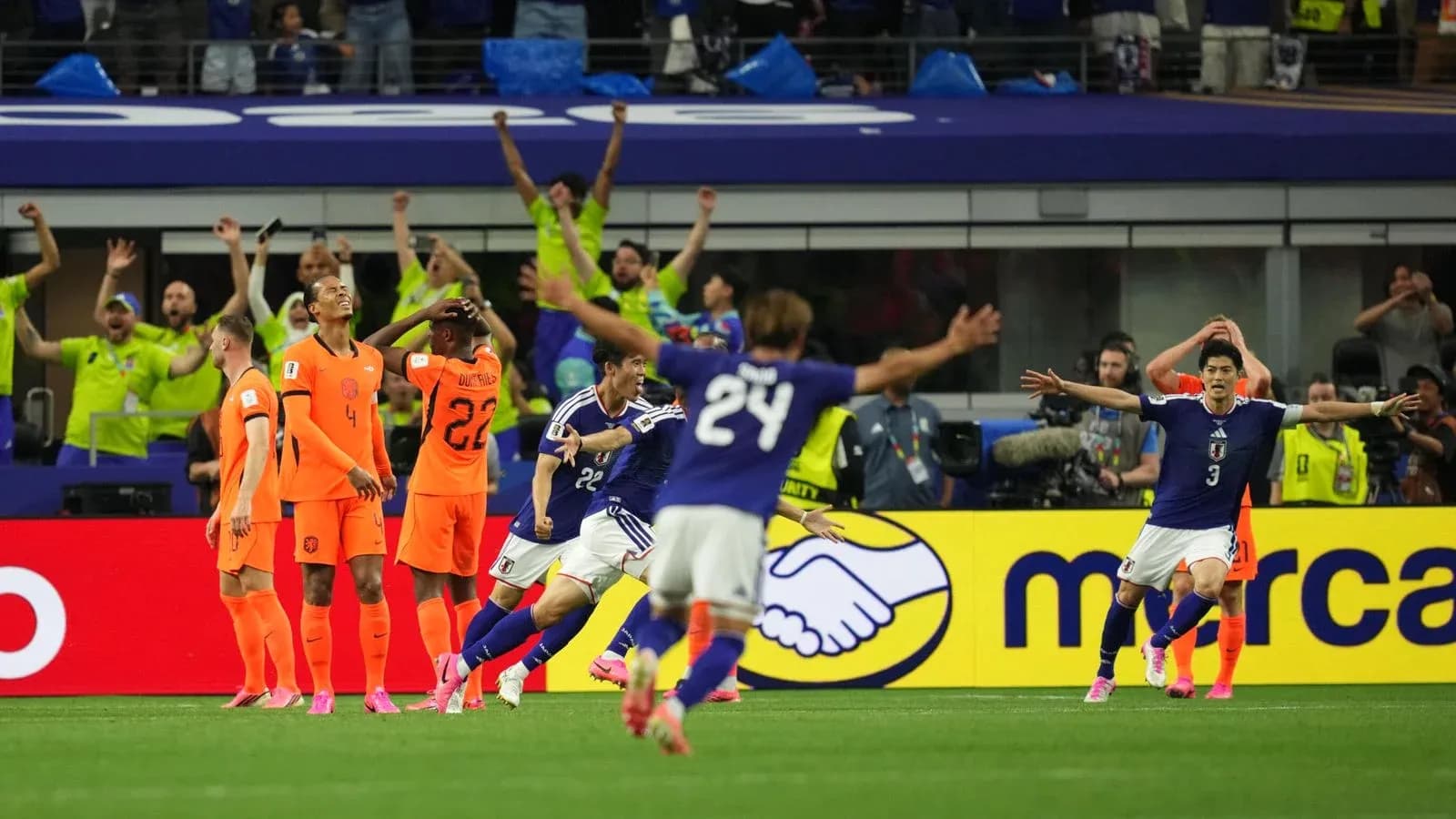
AT&T Stadium in Arlington hosted a meeting of contrasts in the World Cup Group Stage – Netherlands in their familiar 4-3-3, Japan in a flexible 3-4-2-1 – yet the scoreboard told a story of parity: 2-2 after 90 minutes. Following this result, both sides sit on 1 point with a goal difference of 0, but the way they arrived there reveals two very different tactical identities and hints at how the rest of their group campaign might unfold.
I. The Big Picture – Structure and Identity
Netherlands came into this tournament as a possession-oriented side, and the numbers from their opening match underline that duality of promise and vulnerability. Overall this campaign, they have played 1 match, drawn 1, scored 2 and conceded 2. At home in that single fixture, they average 2.0 goals scored and 2.0 conceded, with no clean sheets and no failures to score. The DNA is clear: they will trade.
Ronald Koeman’s 4-3-3 is built on a high technical ceiling in midfield and wide forwards who attack the half-spaces. Virgil van Dijk and J. P. van Hecke anchor the back line, flanked by D. Dumfries and M. van de Ven, while the midfield trio of F. de Jong, R. Gravenberch and T. Reijnders is designed to control rhythm rather than simply destroy.
Japan’s 3-4-2-1 under Hajime Moriyasu is more elastic. On their travels so far in this World Cup, they have played 1 match, drawn 1, scored 2 and conceded 2, with an away average of 2.0 goals for and 2.0 against. The back three of H. Ito, S. Taniguchi and T. Watanabe sits behind a hard-working band of four, with T. Kubo and R. Doan operating between the lines behind central forward A. Ueda. It is a structure that can morph into a back five or a front three within a single phase.
II. Tactical Voids – Discipline, Risk and Rotation
In terms of absences, there is no explicit injury list in the data, so the key “voids” are more tactical than personnel-based. Netherlands’ season card profile is already telling: all of their yellow cards so far have been clustered late. Heading into this game, 33.33% of their yellows arrived between 61-75 minutes, another 33.33% between 76-90, and 33.33% between 91-105. That is a side that grows more desperate or stretched as the match wears on.
On the individual level, C. Summerville and M. Depay both carry yellows from this match, and both are among the more aggressive, front-foot attackers. Summerville, in particular, walks the line between menace and risk: 3 fouls drawn, 1 committed, 1 yellow, but also 1 goal from 1 shot on target and a rating of 8.3 across 70 minutes. Koeman will be wary of losing his most incisive winger to suspension in later rounds if that pattern continues.
Japan, by contrast, have no yellow or red cards in their statistical profile so far. Their aggression is expressed more through pressing triggers and positional shifts than through overt fouling. It gives Moriyasu a cleaner disciplinary slate, but also hints at a team that might, at times, be a touch too respectful in duels.
III. Key Matchups – Hunter vs Shield, Engine Room vs Enforcer
Hunter vs Shield
For Netherlands, the emerging “hunter” is Summerville. With 1 goal in his only appearance, perfect shooting efficiency (1 shot, 1 on target, 1 goal) and 5 duels won out of 7, he is already among the World Cup’s more efficient forwards. His profile is that of a winger who can beat a man (1 dribble attempt, 1 success) and then finish.
Japan’s “shield” against such wide threats is not just one player but the system: the wide centre-backs and wing-backs in the 3-4-2-1. H. Ito on the left of the back three and the wide midfielder in front of him (often K. Nakamura) must handle the Dutch right side of Dumfries and Summerville. The challenge is twofold: track the winger’s inward drifts while also dealing with Dumfries’ overlapping runs. If Japan’s wide centre-back steps out too aggressively, Summerville can spin in behind; if he sits, Gravenberch’s vertical passing becomes a problem.
On the other side, Japan’s attacking “hunter” is more of a tandem: T. Kubo and Koki Ogawa. Kubo, with 1 assist, 16 passes at 75% accuracy and 1 key pass, is the creative hub between the lines. Ogawa, introduced from the bench, needed only 15 minutes to register 1 shot and 1 assist. Against a Dutch defence that has already conceded 2 goals at home, their timing in attacking the space either side of van Dijk will be crucial.
Engine Room – Playmaker vs Enforcer
In midfield, the clash is between R. Gravenberch and Japan’s central pairing of D. Kamada and K. Sano. Gravenberch has started this World Cup with 2 assists in 1 appearance, 25 passes at 88% accuracy and 2 key passes. He is the conduit between F. de Jong’s deeper orchestration and the front three’s movement.
Japan do not field a classic destroyer, but Kamada’s positional intelligence and Sano’s work rate form a kind of “collective enforcer.” Their task is to block the vertical lanes into Malen and Gakpo while also closing Gravenberch quickly enough to prevent him from turning. If they fail, Netherlands’ 2.0 goals per home game could become a recurring theme.
IV. Statistical Prognosis – Trading Blows in an Open Group
With both sides sitting on identical overall records – 1 match, 2 goals for, 2 against, 0 goal difference – this group feels primed for fine margins rather than dominance. Neither team has a clean sheet; neither has failed to score. Penalties are not yet a factor: both Netherlands and Japan have taken 0 penalties, with 0 scored and 0 missed, so there is no evidence of an advantage from the spot.
Defensive solidity is, at best, a work in progress on both sides. Netherlands’ back four is individually strong, but the team’s 2.0 goals conceded at home and their late-card profile suggest structural stress when protecting leads. Japan’s 3-4-2-1 can be compact, yet conceding 2 goals on their travels with an away average of 2.0 against points to vulnerabilities when defending crosses and second balls.
The xG story is not explicitly provided, but the shot and chance-creation data hints at a tournament where both teams will continue to create. Gravenberch’s 2 key passes and double assist, Kubo’s and Ogawa’s combined 2 assists, and Summerville’s ruthless finishing all point towards high-quality chances rather than speculative efforts.
The prognosis, then, is of two sides destined to trade blows rather than lock games down. Netherlands have the higher individual ceiling in attack, especially if Koeman layers Depay and W. Weghorst into late-game scenarios. Japan, with their flexible shape and bench threats like Ogawa, are built to punish any lapse in Dutch concentration.
Following this result, the tactical preview for their remaining group fixtures is simple: expect goals, expect momentum swings, and expect the decisive moments to come late, when Netherlands’ discipline is most fragile and Japan’s structure is most stretched. In a group where both average 2.0 goals for and 2.0 against, the side that first discovers a reliable defensive spine will be the one that steps confidently into the Round of 32.