.svg&w=384&q=75 "naujapitch logo")
Norway Shocks Brazil in World Cup 1/8 Final
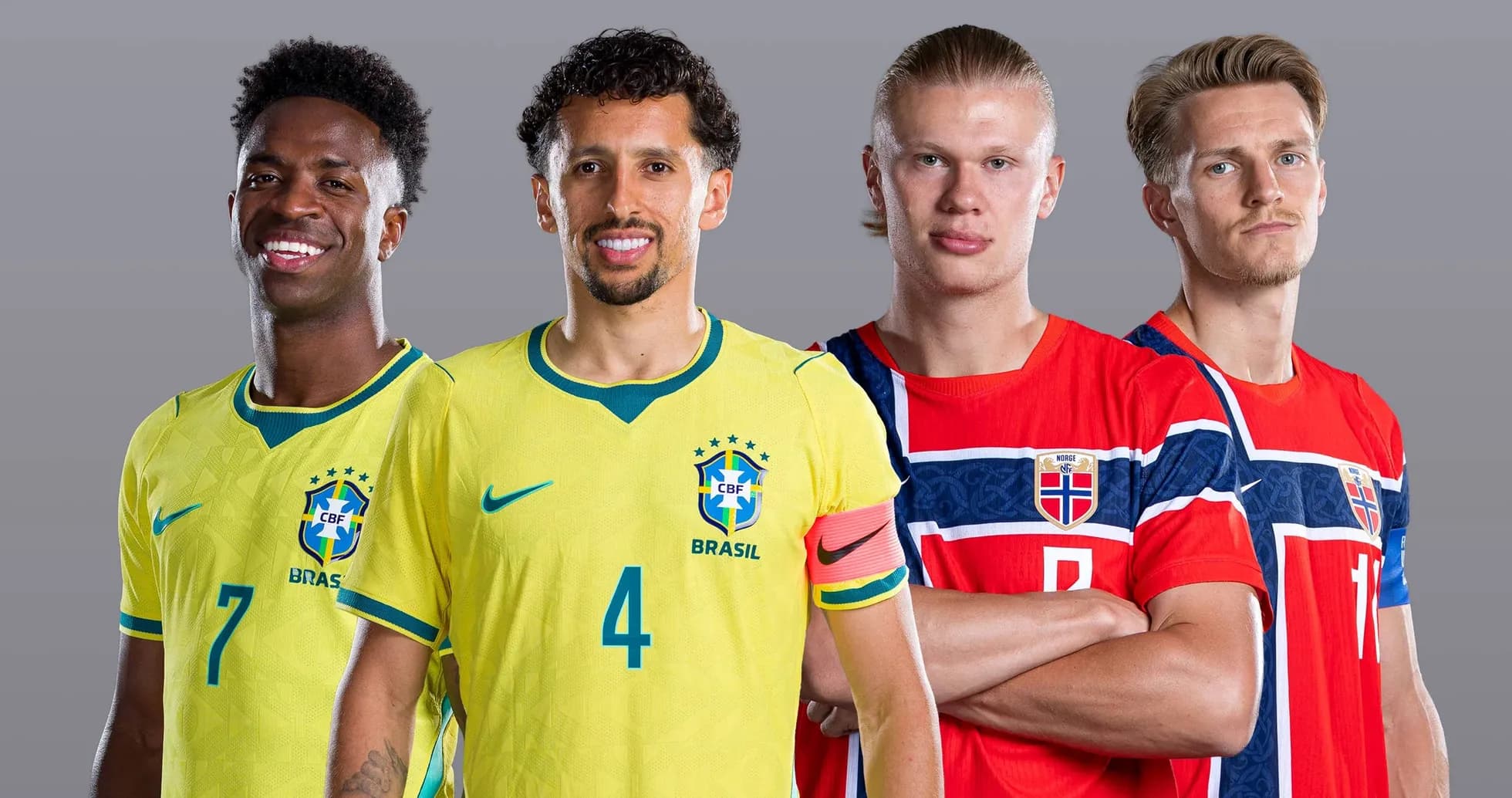
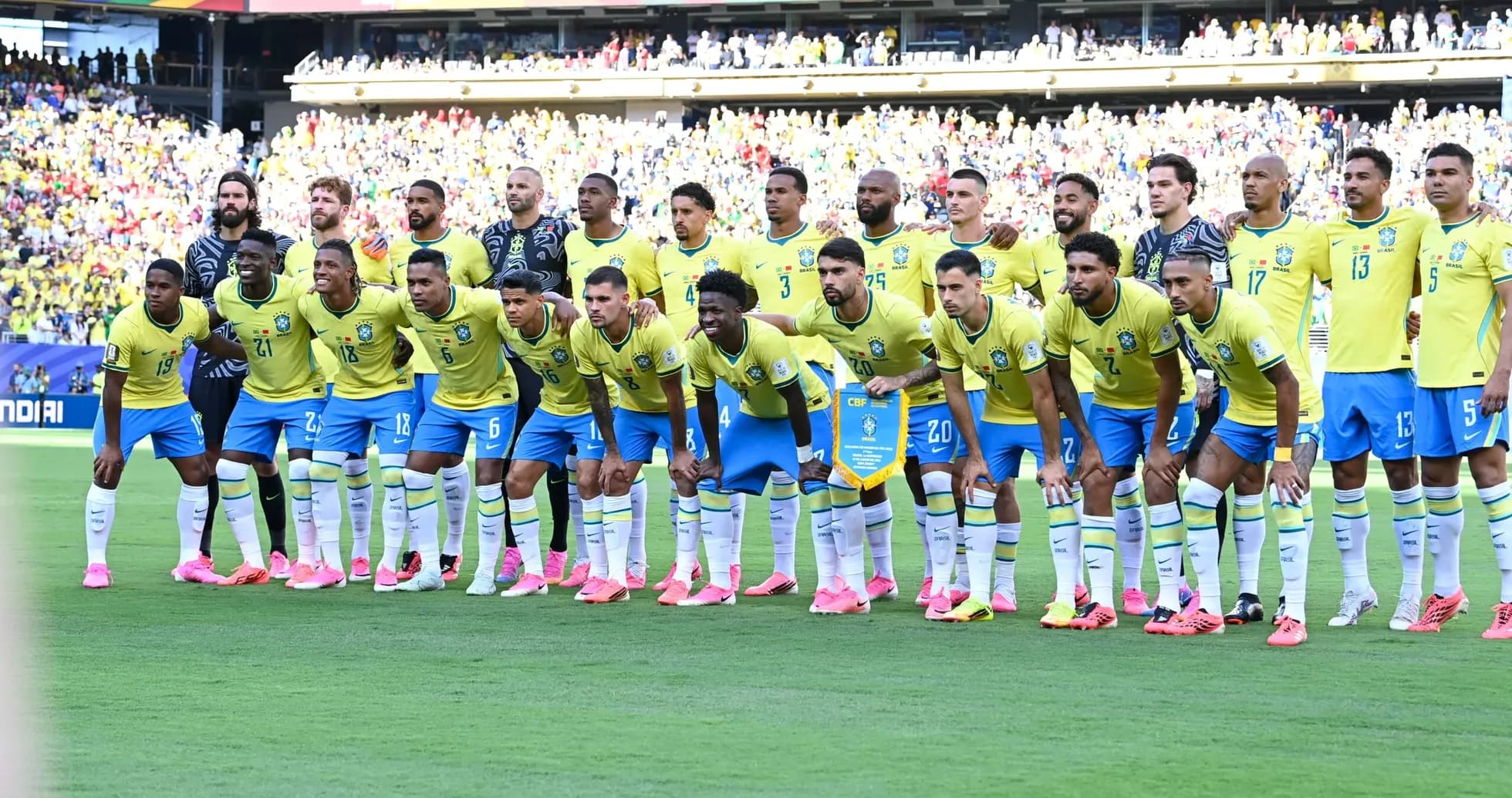
MetLife Stadium staged a World Cup 1/8 final that felt like a collision of footballing identities: Brazil’s historic swagger against Norway’s new‑money ruthlessness. By the end of 90 minutes, the scoreboard read Brazil 1–2 Norway, and the narrative of this tournament had been jolted.
I. The Big Picture – Two Arcs Colliding
Heading into this game, Brazil arrived as Group C winners, ranked 1st in their pool with 7 points and a goal difference of 6, built on 7 goals for and just 1 against in the group stage. Across the tournament as a whole, they had played 5 matches, winning 3, drawing 1 and losing 1. Their attacking profile was broad rather than top‑heavy: 10 goals in total, with 7 at home venues and 3 on their travels, an overall average of 2.0 goals per match. Defensively, they had conceded 4 overall, 4 at home and 0 away, an overall average of 0.8 goals against.
Norway’s path was more chaotic but no less dangerous. They finished 2nd in Group I with 6 points and a group‑stage goal difference of 1 (8 scored, 7 conceded). Across the tournament they were more volatile: 5 games, 4 wins and 1 defeat, with no draws. Their attack had been prolific: 12 goals overall, 4 at home and 8 on their travels, an overall scoring rate of 2.4 goals per game. Yet their defensive record betrayed vulnerability, conceding 9 in total (6 at home, 3 away) for an overall average of 1.8 goals against.
The stylistic contrast was written into the formations. Carlo Ancelotti leaned into a 4‑4‑2, a deviation from Brazil’s more common 4‑3‑3 and 4‑2‑3‑1 earlier in the tournament. Stale Solbakken doubled down on Norway’s tournament identity with a 4‑3‑3, a shape they had used in 4 of their 5 matches.
II. Tactical Voids – Absences and Discipline
Brazil’s squad sheet carried a subtle but significant wound: Raphinha and Lucas Paquetá were both ruled out with hamstring injuries. On paper, Ancelotti still had an embarrassment of attacking riches – Vinicius Junior, Neymar, Matheus Cunha, G. Martinelli, Endrick and Luiz Henrique all listed – but the absence of Paquetá’s link play and Raphinha’s width altered the geometry of the side.
In response, Ancelotti’s midfield four of Rayan, Bruno Guimaraes, Casemiro and G. Martinelli was more workmanlike and vertical than his usual structures. Casemiro, already one of the World Cup’s leading card magnets with 2 yellows so far, anchored the pivot, while Bruno Guimaraes – among the tournament’s top assist providers with 4 – had to shoulder both progression and creativity from central areas.
Norway, by contrast, were close to full strength. Their disciplinary profile across the tournament was relatively clean: just a handful of yellows, with a notable tendency to pick them up early or just after half‑time – 50.00% of their yellow cards arriving between 0–15 minutes and 50.00% between 46–60. Brazil’s own card timing told a different story: a spread across the match, but with a notable late‑game surge, 25.00% of their yellows coming between 61–75 minutes and another 12.50% between 76–90, hinting at emotional spikes as matches grew tense.
Penalty history also framed the psychological backdrop. Brazil had won 2 penalties this campaign, scoring 1 and missing 1, a split that ensured any future spot‑kick would carry a whisper of doubt. Norway’s record was starker: 1 penalty awarded, 1 missed, 0% conversion. Neither side came into this knockout with the comfort of perfection from the spot.
III. Key Matchups – Hunter vs Shield, Engine Room vs Enforcer
The headline duel was never in doubt: Erling Haaland against Brazil’s central defensive axis and Casemiro’s shield. Haaland entered this tie as one of the World Cup’s most devastating forces: 7 goals in 4 appearances, with 15 shots and 12 on target, and a rating of 8.3 across 360 minutes. He is not just a finisher but a constant physical and psychological presence, engaging in 37 duels and winning 18.
Marquinhos and Gabriel, Brazil’s centre‑back pairing, had been protected by a structure that, until this defeat, had conceded just 4 goals in 5 matches overall. Casemiro’s numbers underlined his importance: 14 tackles, 4 successful shot blocks and 6 interceptions across the tournament, plus 46 duels contested and 27 won. His job was not simply to screen; it was to disrupt the service lines from Martin Ødegaard and Sander Berge into Haaland and Alexander Sørloth.
Ødegaard, one of Norway’s top assist providers with 3, is the brain of Solbakken’s 4‑3‑3. His 263 passes at 90% accuracy, with 4 key passes, show a player who dictates tempo as much as he creates chances. He was flanked by Berge and P. Berg, a trio designed to balance control with vertical thrust.
On the other side, Brazil’s “Hunter” was more plural. Vinicius Junior came in as a top‑tier attacking force: 4 goals and 1 assist, 14 shots (11 on target), 36 dribbles attempted with 16 successful, and 9 key passes. Alongside him, Matheus Cunha had 3 goals from 10 shots, plus an ability to work defensively – 6 tackles and 3 interceptions. The 4‑4‑2 placed Cunha and Vinicius as a split front, threatening Norway’s centre‑backs K. Ajer and T. Heggem while pulling full‑backs J. Ryerson and D. Wolfe into uncomfortable decisions.
This is where Norway’s defensive numbers mattered. Overall they had conceded 9 goals, with their best work “on their travels” – just 3 conceded away, an away average of 1.0 goal against per match, compared to 3.0 at home. Their back line, then, had shown it could survive in hostile environments, but not without giving up chances.
In the engine room, Bruno Guimaraes versus Ødegaard was the cerebral subplot. Bruno’s 4 assists and 10 key passes, built on 191 total passes at 86% accuracy, made him Brazil’s primary conduit between Casemiro’s destruction and the front two’s chaos. He also brought steel: 11 tackles, 1 blocked shot and 2 interceptions. Ødegaard mirrored that blend of artistry and work rate, with 6 tackles and 2 interceptions of his own. The battle was not only about who could create, but who could suffocate the other’s rhythm.
IV. Statistical Prognosis – Why Norway’s Edge Told
On paper, Brazil’s overall defensive solidity – 0.8 goals conceded per game – should have been the foundation of progression. Their attack, at 2.0 goals per match overall and 3.0 on their travels, suggested they could match Norway punch for punch. Norway, however, carried a sharper attacking blade: 2.4 goals per game overall, with 2.7 on their travels, and a front line led by a striker with 7 goals in 4 appearances.
The intersection that decided this tie was simple: Norway’s offensive peak – a relentless, vertical 4‑3‑3 built around Haaland’s gravity and Ødegaard’s distribution – against a Brazilian structure that, in shifting to 4‑4‑2 and missing Paquetá and Raphinha, lost a measure of control between the lines. Brazil’s late‑game card profile hinted at nerves under pressure; Norway’s clinical away scoring suggested they would not waste the moments when the game stretched.
Following this result, the numbers will say Norway’s attack overpowered one of the tournament’s most balanced squads. The story on the pitch said the same: the Hunter found just enough daylight through the Shield, and in a World Cup 1/8 final, that sliver is all it takes.