.svg&w=384&q=75 "naujapitch logo")
World Cup Drama: Argentina, Egypt, and Historic Battles Ahead
The World Cup has narrowed to its sharpest edge. Every game now feels like a final, every mistake like a scar that will not fade.
On Tuesday, the spotlight swings to Atlanta and Vancouver. In one city, the reigning champions try to keep their crown from slipping. In the other, two hardened, well-drilled sides scrap for the right to dream on.
Argentina, Egypt and the weight of history
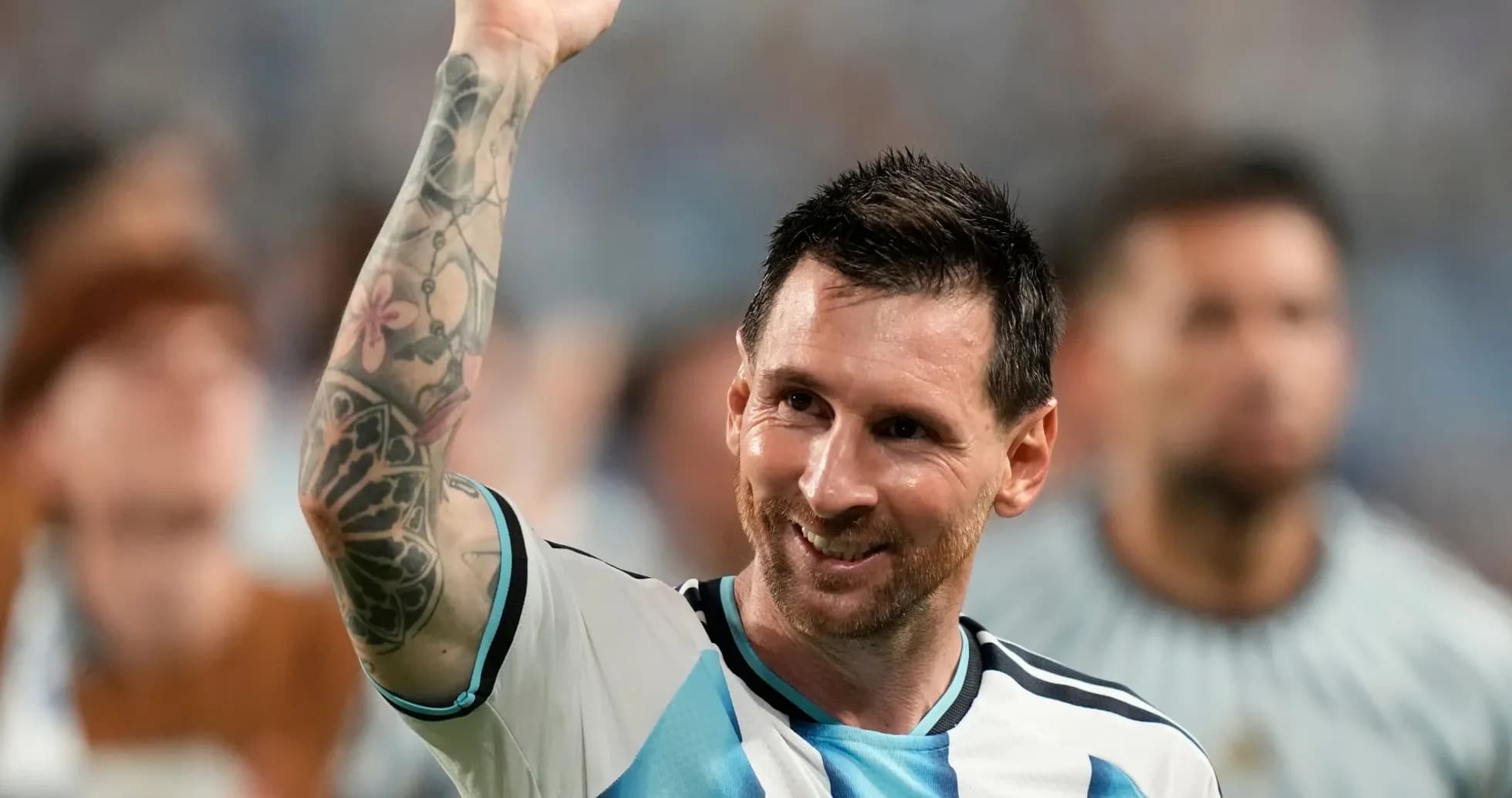
Argentina against Egypt in Atlanta is more than a round-of-16 tie. It is a collision between a team defending a world title and a nation staring at the biggest night in its footballing life.
The last time these sides met, it was a low-key friendly in Cairo in 2008. Argentina won 2-0, Sergio Aguero and Nicolas Burdisso on the scoresheet, Lionel Messi absent through injury. It felt routine then. It will not feel routine now.
Argentina have long treated World Cup fixtures against African opposition as familiar territory and usually walk away with the result to match. The numbers lean heavily their way again. Opta’s supercomputer ran 25,000 simulations and handed the champions a 69.1 percent chance of winning inside 90 minutes.
That is dominance on paper. On grass, it is never that simple.
Egypt, given just a 12.3 percent chance of an upset, carry something harder to quantify: the sense that they are playing with house money and a nation at their back. Another 18.5 percent of simulations end in a draw, dragging the tie into extra time and the kind of chaos that shortens the gap between giants and challengers.
For Egypt, simply being here is historic. For Argentina, anything less than a deep run feels like failure. One team fights to stay in the story. The other fights to avoid becoming one.
Switzerland, Colombia and a knife-edge in Vancouver
A continent away in Vancouver, Switzerland and Colombia meet in a tie that looks, and feels, far more balanced.
They know each other, if not intimately, then well enough. Four previous meetings, three of them friendlies, the most recent in March 2007. Colombia won that one 3-1, Edixon Perea, Jhon Viafara and Andres Chitiva scoring for Los Cafeteros.
That was another era. The stakes now are brutal: win and the quarterfinals open up; lose and the journey is reduced to a footnote.
The algorithms lean ever so slightly towards the South Americans. Opta’s model gives Colombia a 41.9 percent chance of victory inside normal time from its 25,000 simulations. Switzerland sit at 28.2 percent, with a hefty 29.9 percent pointing to a draw.
In other words, this is a game built for tension. Colombia, with their attacking flair and emotional surges, against a Swiss side that thrives on structure, discipline and the art of making opponents suffer for every inch.
Ronaldo’s last World Cup bow
Away from Tuesday’s fixtures, one of the game’s defining careers has reached its final World Cup page.
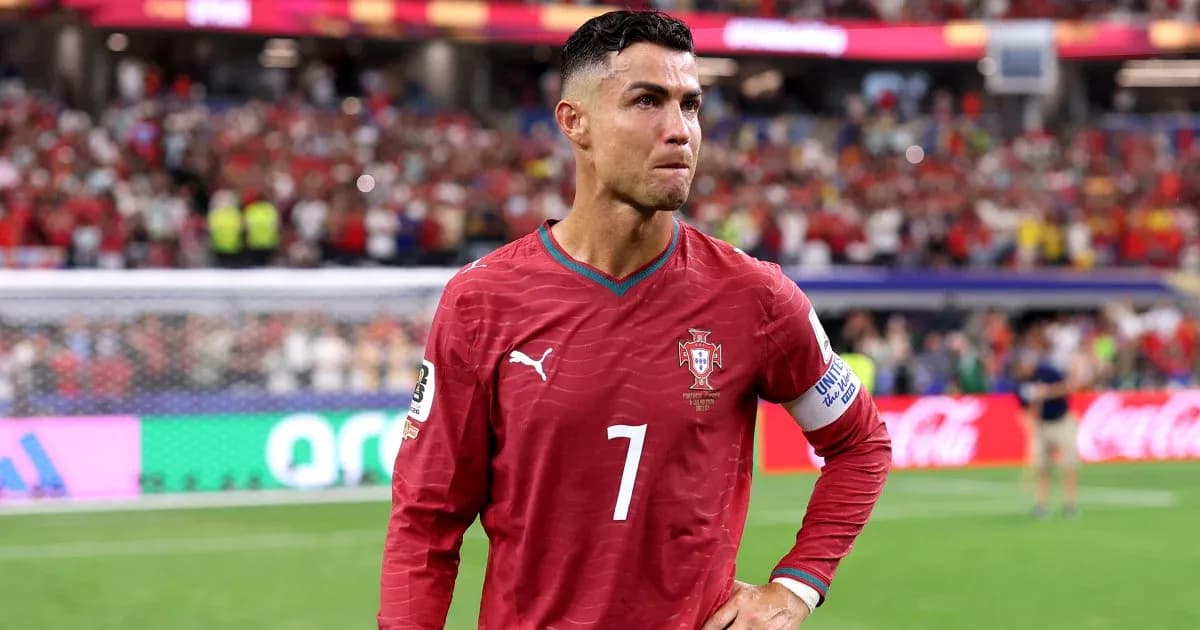
Cristiano Ronaldo, 41 years old and still the reference point for a nation, has played his last match on this stage. Six World Cups, countless records, endless debates. The end arrived not with a trophy lift, but with a defeat that left him visibly wounded.
“I’m sad to be leaving the World Cup like this,” he said after Portugal’s exit. “I gave everything I had, I did my best, and I leave with a clear conscience. It was my last World Cup, yes, but now I’ll have time to reflect and spend time with my family. I won’t make any decisions in the heat of the moment.”
He stopped short of confirming whether he has also kicked his last ball for Portugal. That decision can wait. For now, his insistence is that the focus remains on the team, not on the epilogue of a superstar.
The World Cup moves on, as it always does. But it does so without one of its most enduring characters.
USA’s home dream shattered by ruthless Belgium
On home soil, the United States imagined a run that would stretch into the tournament’s final days. Instead, the images that will endure are of anguish.
Christian Pulisic on the turf, clutching his ankle. Matt Freese, hands on his head after a costly error. Chris Richards collapsed on the grass in frustration. Even Mauricio Pochettino, usually composed on the touchline, lashing out at a rack by the bench, bottles flying.
Belgium did not care for the script. They tore it up.
Charles De Ketelaere led the dismantling, scoring twice and assisting another in a 4-1 win that hurled the Red Devils into the last eight and hurled the USA out of their own party.
“It stinks,” Tyler Adams admitted. “This was a moment to have an opportunity to advance and really try and do something special. We fell short.”
The return of Folarin Balogun, cleared after FIFA lifted his red-card suspension in controversial fashion, should have been a lift. It was not enough. Defensive mistakes in the first half gave Belgium a grip they never loosened, and Freese’s second-half error only deepened the wound.
For a team that talked about making a statement at a home World Cup, the statement that remains is of how unforgiving this level can be.
Hossam Hassan’s platform and Palestine
In Atlanta, Egypt’s coach Hossam Hassan knows he is preparing for the biggest match in his country’s football history. Yet when he sat down in front of the microphones on Monday, his first concern was not Argentina. It was Palestine.
Hassan, who had already raised a Palestinian flag after Egypt’s win over Australia in the previous round, used the global stage to deliver a four-minute, emotionally charged message. Journalists in the room responded with applause.
“If there is anyone in the world who does not feel for the Palestinian people, then they are not human, whether they are Arab, European, or American,” he said.
He drew a stark comparison between the global reaction to civilian deaths in Gaza and the attention often given to animal welfare, insisting that the loss of thousands of lives in a single day must never be normalised.
These were not throwaway lines. They were a deliberate choice, delivered on the eve of a match that could redefine Egyptian football. For Hassan, the World Cup is not just a sporting stage; it is a moral one.
While his players chase a first-ever quarterfinal, their coach has already made clear that some things, to him, sit above the game.
Mbappe, racism and a senator’s shame
In another corner of this sprawling tournament, Kylian Mbappe has found himself fighting a different kind of battle.
France’s captain, fresh from leading his country into a quarterfinal against Morocco, confronted racist abuse from Paraguayan senator Celeste Amarilla after Les Bleus knocked Paraguay out in the round of 16.
Amarilla posted a tirade on X, attacking Mbappe with racist slurs, calling him a “colonised Cameroonian, desperately trying to pass himself off as French” and a “brute” who had not learned to write. She even suggested Paraguay’s players should have slapped him after the match.
Mbappe did not let it slide.
“Madame Celeste Amarilla, you are a despicable woman and unworthy of your position. You do not represent Paraguay, that country which has sweated passion and honour throughout the competition,” he wrote in a statement on X.
He accused her of allowing racism to overshadow the achievements of Paraguay’s players, arguing that her recklessness and brazen prejudice had erased the memory of their historic World Cup run and replaced it with the image of “an incompetent woman who gives the worst possible image of her country.”
His message was clear: he will not allow figures in power to spread hatred without challenge.
Amarilla later deleted her posts and released an open letter to Mbappe, saying she regretted using insults she herself had suffered as a mixed-race person. The damage, though, had already been done.
France march on to face Morocco on Thursday, their captain carrying not just the hopes of a nation, but the weight of a fight that stretches far beyond 90 minutes.
The tournament now moves into a phase where every whistle echoes. Argentina’s defence of their crown, Egypt’s shot at history, Colombia and Switzerland on a tightrope, Ronaldo stepping off the World Cup stage, a host nation stunned, a coach speaking for Palestine, a captain standing against racism — all of it converges into a single question.
When the dust settles on this World Cup, which of these moments will define it?