.svg&w=384&q=75 "naujapitch logo")
Manchester United vs Nottingham Forest: Premier League Clash Preview
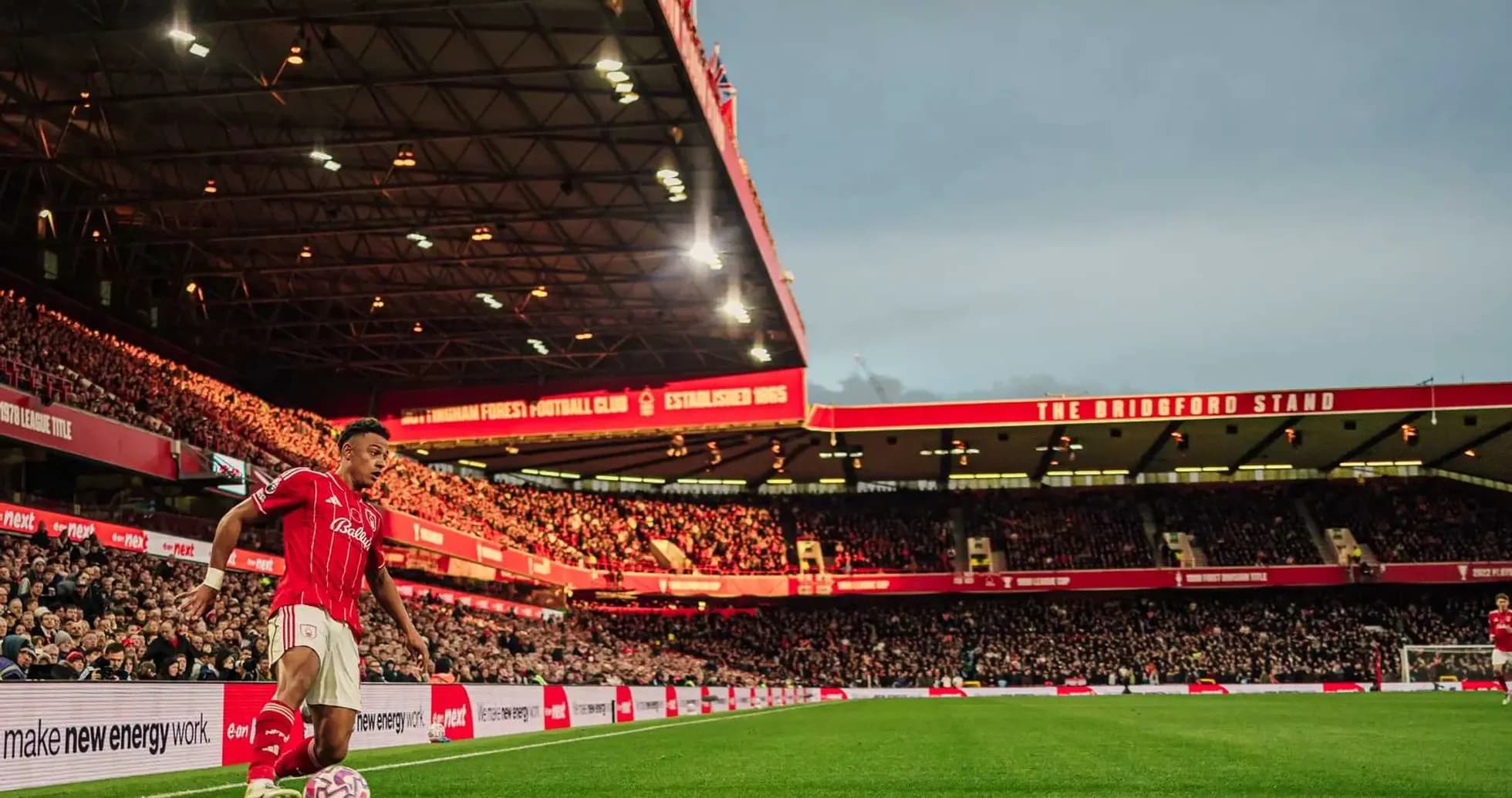
On 17 May 2026, Old Trafford in Manchester stages a meeting heavy with subplots: Manchester United, pushing to cement a Champions League place, welcome a resurgent Nottingham Forest side still making sure the relegation conversation stays at arm’s length. Under the watch of M. Salisbury, the narrative is clear: for United it is about securing a top‑end finish, for Forest it is about turning a strong surge of form into mathematical safety and a statement away result at one of English football’s most imposing arenas.
Season Context
Manchester United arrive in the closing stretch of the Premier League campaign sitting 3rd with 65 points from 36 matches (63 goals scored, 48 conceded). That balance — a positive goal difference of 15 and 18 wins from those 36 games — underlines a side that has combined attacking punch with periods of defensive looseness, yet has done enough to occupy a confirmed “Promotion - Champions League (League phase)” position.
Nottingham Forest, by contrast, look upwards with more relief than ambition. They are 16th on 43 points after 36 matches (45 goals scored, 47 conceded), their goal difference of -2 reflecting a team that has been competitive but often on a knife-edge. Eleven wins and ten draws have given them breathing space, but the table still demands one last push to ensure their late‑season revival is fully rewarded.
Form & Momentum
Manchester United’s recent league form line of DWWWL paints a picture of a team largely effective but not flawless (13 points from their last five would have been perfection, but the defeat checks that momentum). Across the full campaign, 63 goals in 36 games show a consistently dangerous attack (1.75 goals per game), while 48 conceded in the same span reveal a defence that can be exposed (1.33 goals conceded per game) when structure or concentration slips.
Nottingham Forest’s form string of DWWWD tells a story of a side finishing strongly and hard to beat (nine points from their last four wins/draws in that run). Their season-long numbers — 45 goals scored and 47 conceded over 36 matches — point to a team that stays in most contests (both scoring and conceding around 1.25–1.30 per game), and that recent sequence suggests growing resilience at precisely the right moment (unbeaten in that five‑match snapshot).
Head-to-Head Patterns
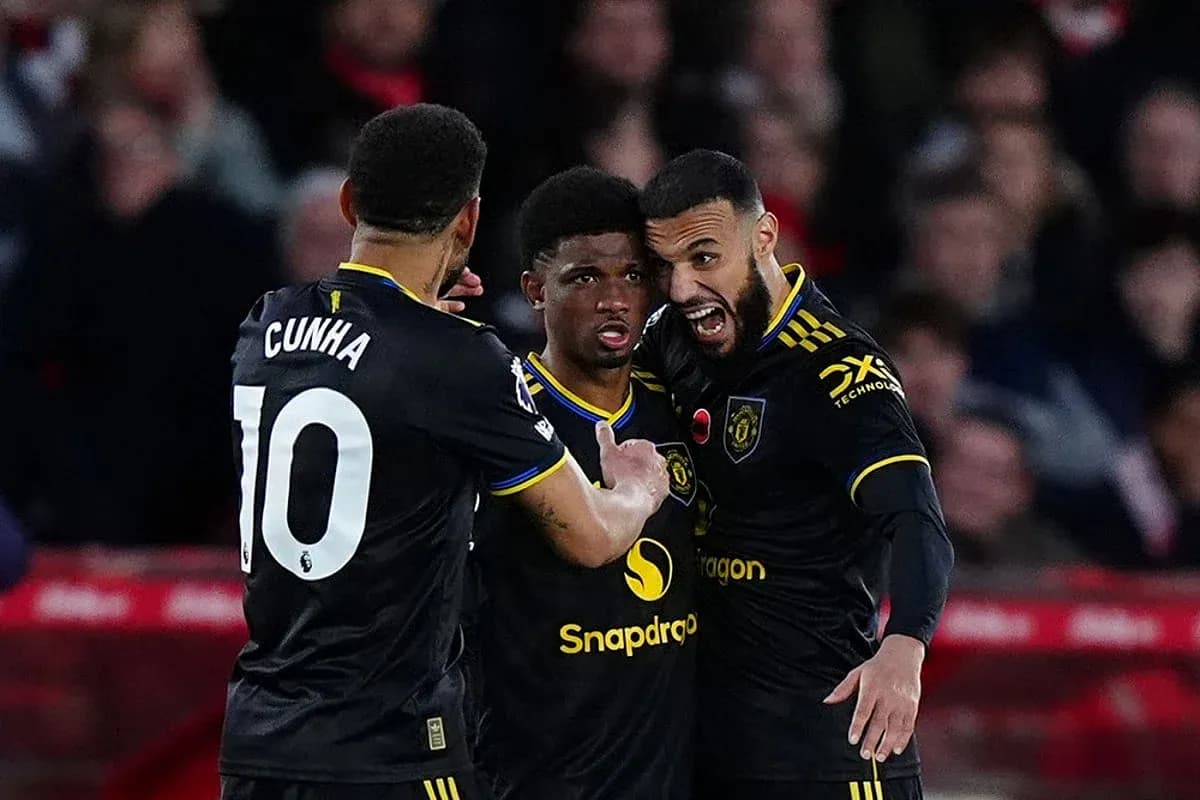
Recent meetings have tilted the psychological balance in Forest’s favour. On 1 November 2025, Nottingham Forest and Manchester United shared a 2-2 draw at City Ground (Premier League, season 2025, November 2025), a chaotic contest that underlined Forest’s ability to trade blows with United in open play.
Earlier in the same Premier League rivalry arc, Nottingham Forest edged a tight home encounter 1-0 against Manchester United at The City Ground on 1 April 2025 (Premier League, season 2024, April 2025), a result that showcased Forest’s capacity to manage a game and protect a narrow advantage against elite opposition.
Perhaps most tellingly for the Old Trafford dynamic, Nottingham Forest came to this very ground on 7 December 2024 and left with a 3-2 victory over Manchester United (Premier League, season 2024, December 2024). That five‑goal thriller underlined Forest’s threat in transition and left a scar that will still be remembered by the home crowd and players alike.
Tactical Preview
Manchester United’s season-long statistical profile suggests a side comfortable alternating between a back three and a back four, with 3-4-2-1 and 4-2-3-1 each used 18 times. That flexibility allows Manchester United to crowd central areas with Casemiro as a ball‑winning midfielder (88 tackles and 30 interceptions) and to release creative forces like Bruno Fernandes between the lines, whose 19 league assists and 125 key passes make him the division’s standout creator (19 assists, 125 key passes). With 63 league goals, United are structurally geared to sustain pressure, and the presence of B. Šeško (11 goals from 30 appearances) and B. Mbeumo (9 goals, 3 assists) provides vertical running and penalty‑box presence to exploit Bruno Fernandes’ service.
Defensively, Manchester United’s concession of 48 goals hints at vulnerability when their aggressive structure breaks (1.33 goals conceded per game). Casemiro’s 9 yellow cards and one yellow‑red underline how often he operates on the edge to protect the back line, while H. Maguire’s red card and strong duel numbers (89 duels won from 124) show a defender willing to step into challenges. Against a Forest side that likes to attack with numbers, United’s ability to control counter‑attacks will be critical.
Nottingham Forest, meanwhile, are tactically more settled. A 4-2-3-1 has been their go‑to system, used 29 times, providing a clear framework: a double pivot shielding the defence, full‑backs pushing selectively, and a trio of advanced midfielders supporting a lone striker. M. Gibbs-White is central to this approach; as a midfielder with 13 goals and 4 assists, plus 46 key passes, he is Forest’s creative and scoring heartbeat (13 goals, 4 assists, 46 key passes). Wide players such as C. Hudson-Odoi and others can stretch the pitch, while the recent attacking surge is reflected in Nottingham Forest’s last‑five attacking index of 100% and 14 goals in that span (2.8 per game in that sample).
At the back, Nottingham Forest’s season totals of 47 goals conceded show a defence that bends but does not always break (1.31 goals conceded per match). N. Williams, listed as a midfielder but heavily involved defensively, has 91 tackles and 43 interceptions, illustrating Forest’s aggressive ball‑winning on the flanks. The red card on his record is a reminder that Forest’s intensity can spill over, but their last‑five defensive index of 67% suggests improved solidity as they have tightened up in the run‑in.
The stylistic clash is intriguing: Manchester United’s multi‑system, creator‑driven attack versus a Forest side that is flying in the final third (last‑five attacking index 100%) and emboldened by recent success at Old Trafford. With Manchester United averaging more than 1.7 goals per league game and Forest in a hot attacking streak, this has the ingredients of another high‑emotion, tactically fluid contest.
Statistical Snapshot
- Competition: Premier League, season 2025 — 17 May 2026.
- Venue: Old Trafford, Manchester.
- Prediction: Win or draw — Double chance : draw or Nottingham Forest.
- Win Probabilities: Home 10% / Draw 45% / Away 45%.
- Model: Manchester United 42.2% — Nottingham Forest 57.8%.
Betting Verdict
The prediction model leans strongly towards Nottingham Forest avoiding defeat, with a “Win or draw” call and double‑chance advice on draw or Nottingham Forest, despite bookmakers broadly pricing Manchester United as clear favourites at around 1.60 for the home win and roughly 4.20–4.50 on the draw and 4.80–5.20 on the away victory. Forest’s recent form run of DWWWD, their last‑five attacking index of 100%, and the memory of that 3-2 success at Old Trafford in December 2024 all support the case that they can trouble United again. Manchester United’s DWWWL sequence and strong season attack keep them dangerous, but their 48 goals conceded and Forest’s confidence tilt the value towards the underdog. From a betting perspective, following the model and siding with “Double chance: draw or Nottingham Forest” looks the most logical way to align recent form, head‑to‑head evidence, and the generous odds on the visitors avoiding defeat.