.svg&w=384&q=75 "naujapitch logo")

West Ham's Paradoxical Season Finale: 3–0 Win But Relegation Looms
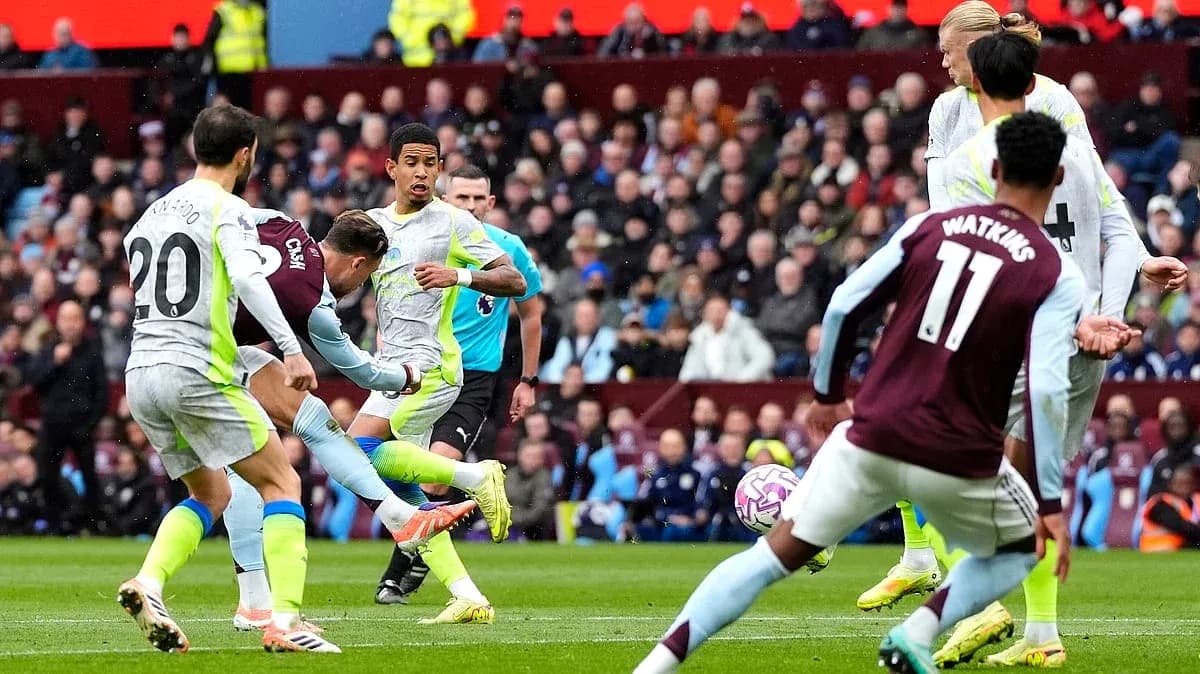
The London Stadium’s final act of the 2025–26 Premier League season closed with a jarring contradiction. On the scoreboard, West Ham 3–0 Leeds looked emphatic, a flourish under Anthony Taylor’s whistle. In the table, though, the story is harsher: following this result, West Ham finish 18th with 39 points and a goal difference of -19, condemned to relegation despite one of their most complete home performances of the campaign. Leeds, beaten but safe in 14th on 47 points with a goal difference of -7, leave London reflective rather than ruined.
I. The Big Picture – Systems, Season, Stakes
This was Round 38 of the Premier League, a meeting of two flawed but intriguing projects. Across the season, West Ham’s identity has been that of a stretched side: in total they scored 46 league goals and conceded 65, averaging 1.2 goals for and 1.7 against per game. At home they were slightly more vibrant, with 27 goals scored and 30 conceded, an average of 1.4 for and 1.6 against at London Stadium.
Leeds arrived with a more balanced, if still fragile, profile. In total they scored 49 and conceded 56, averaging 1.3 goals for and 1.5 against. At Elland Road they were strong (29 for, 21 against), but on their travels far more vulnerable: 20 away goals scored, 35 conceded, an away average of 1.1 for and 1.8 against. The 3–0 here was brutally in line with that away pattern.
On the tactical board, West Ham lined up in a 4-2-3-1 – the club’s most-used shape this season – with M. Hermansen behind a back four of K. Walker-Peters, K. Mavropanos, A. Disasi and M. Diouf. T. Soucek and M. Fernandes formed the double pivot, with J. Bowen, Pablo and C. Summerville supporting lone forward T. Castellanos.
Leeds countered with Daniel Farke’s 3-5-2: K. Darlow in goal, a back three of J. Rodon, J. Bijol and P. Struijk, wing-backs J. Bogle and J. Justin, and a central trio of B. Aaronson, E. Ampadu and A. Tanaka behind the front two D. Calvert-Lewin and L. Nmecha. On paper, it was a clash between West Ham’s wide creativity and Leeds’ central density.
II. Tactical Voids – Absences and Discipline
Both squads carried scars into this fixture. West Ham were without L. Fabianski (back injury) and A. Traore (muscle injury), removing an experienced goalkeeper option and a direct wide runner from Nuno Espirito Santo’s toolbox. That absence placed full responsibility on Hermansen and increased the creative burden on Bowen and Summerville.
Leeds’ list was longer and more structural: I. Gruev (knee), G. Gudmundsson (hamstring), S. Longstaff (hernia), N. Okafor (calf) and A. Stach (ankle) all missed out. That stripped Farke of rotation in central midfield and attacking depth from the bench, forcing him to lean heavily on Ampadu’s control and Calvert-Lewin’s presence.
Season-long card trends framed the undercurrent. Heading into this game, West Ham’s yellow cards peaked between 31–45 minutes with 23.19%, and they carried a late-game edge of aggression too, with 21.74% of their yellows between 91–105 minutes and red cards split evenly across 46–60, 76–90 and 91–105 minutes (33.33% each). Leeds, by contrast, tended to flare up just after the interval and into the final half-hour: 21.88% of their yellows came between 61–75 minutes, with another 18.75% between 31–45. Both teams had seen a single red in the 46–60 window this season, hinting at how combustible the early second half can be for them.
III. Key Matchups – Hunter vs Shield, Engine Room
The headline duel was always going to be “Hunter vs Shield”: D. Calvert-Lewin, Leeds’ leading scorer, against a West Ham defence that has leaked all year. Calvert-Lewin finished the season with 14 league goals and 1 assist from 35 appearances, taking 66 shots with 34 on target. He is more than a finisher: 460 passes, 20 key passes, 184 duels won and 38 fouls drawn underline how much of Leeds’ attack orbits his movement and physicality. He also carried penalty jeopardy – 4 scored, but 1 missed – a reminder that even from the spot he is not flawless.
Against him stood a West Ham back line that, overall, conceded 65 goals in 38 matches. At home they allowed 30, an average of 1.6 per game, but in this fixture they held firm. A. Disasi and K. Mavropanos were tasked with winning aerial duels and defending the box, while Walker-Peters and Diouf had to judge when to squeeze up on Leeds’ wing-backs without leaving Calvert-Lewin isolated against a single centre-back.
Deeper in midfield, the “Engine Room” battle pitted J. Bowen and the West Ham creators against E. Ampadu, Leeds’ defensive metronome. Bowen’s season tells of a wide forward who became a primary playmaker: 9 goals and 11 assists, 50 shots (28 on target), 45 key passes and 119 dribble attempts with 53 successes. He is West Ham’s chaos agent between the lines, constantly asking questions of defensive structures.
Ampadu, by contrast, is Leeds’ organiser and enforcer. Across the campaign he made 1 goal and 1 assist, but his value lay in 1729 passes with 85% accuracy, 81 tackles, 18 successful blocks and 50 interceptions. He also won 184 duels and committed 50 fouls, picking up 10 yellow cards – the archetype of a holding midfielder who lives on the disciplinary edge. His task was to screen the back three, track Bowen’s half-space runs, and prevent Soucek and Fernandes from playing forward early.
IV. Statistical Prognosis – What the Numbers Say
Following this result, the numbers crystallise the season’s logic. West Ham’s 3–0 win is an outlier in margin but not in method: they leaned into their home attacking average of 1.4 goals and finally married it to a rare clean sheet in front of their own fans (just their fourth at home in total this campaign). Leeds, meanwhile, conceded in line with their away average of 1.8 goals against, but without the compensating punch of their 1.1 away goals for.
From an Expected Goals perspective, the tactical patterns suggest West Ham’s xG would have been built on volume from wide and second-phase pressure: crosses toward Castellanos and Soucek, cut-backs for Bowen and Pablo, and transition moments sparked by Summerville. Leeds’ xG profile would typically lean on Calvert-Lewin’s box touches and set-pieces, but their lack of midfield depth and the strain on Ampadu likely reduced the quality of those final-third entries.
Defensively, Leeds’ season-long tendency to wobble after the hour – with 21.88% of their yellow cards in the 61–75 window – dovetails with West Ham’s willingness to keep attacking late. Even without detailed minute-by-minute goal data, the structural story fits: as Leeds’ legs and concentration dipped, West Ham’s wide rotation and aerial presence found more space.
The final verdict is paradoxical. West Ham delivered a performance that, in isolation, looked like a blueprint for survival: a solid 4-2-3-1, Bowen orchestrating, Soucek anchoring, the back four finally cohesive. Yet the table does not lie. Overall, their 46 scored and 65 conceded left them short. Leeds, beaten here, can still claim a season of consolidation: 49 for, 56 against, mid-table stability, and a clear spine in Calvert-Lewin and Ampadu.
This match, then, reads as an epilogue rather than a turning point: West Ham’s belated reminder of what might have been, and Leeds’ warning that their away fragility must be addressed if this mid-table platform is to become something more.