.svg&w=384&q=75 "naujapitch logo")
Leeds vs Brighton: Premier League Clash at Elland Road
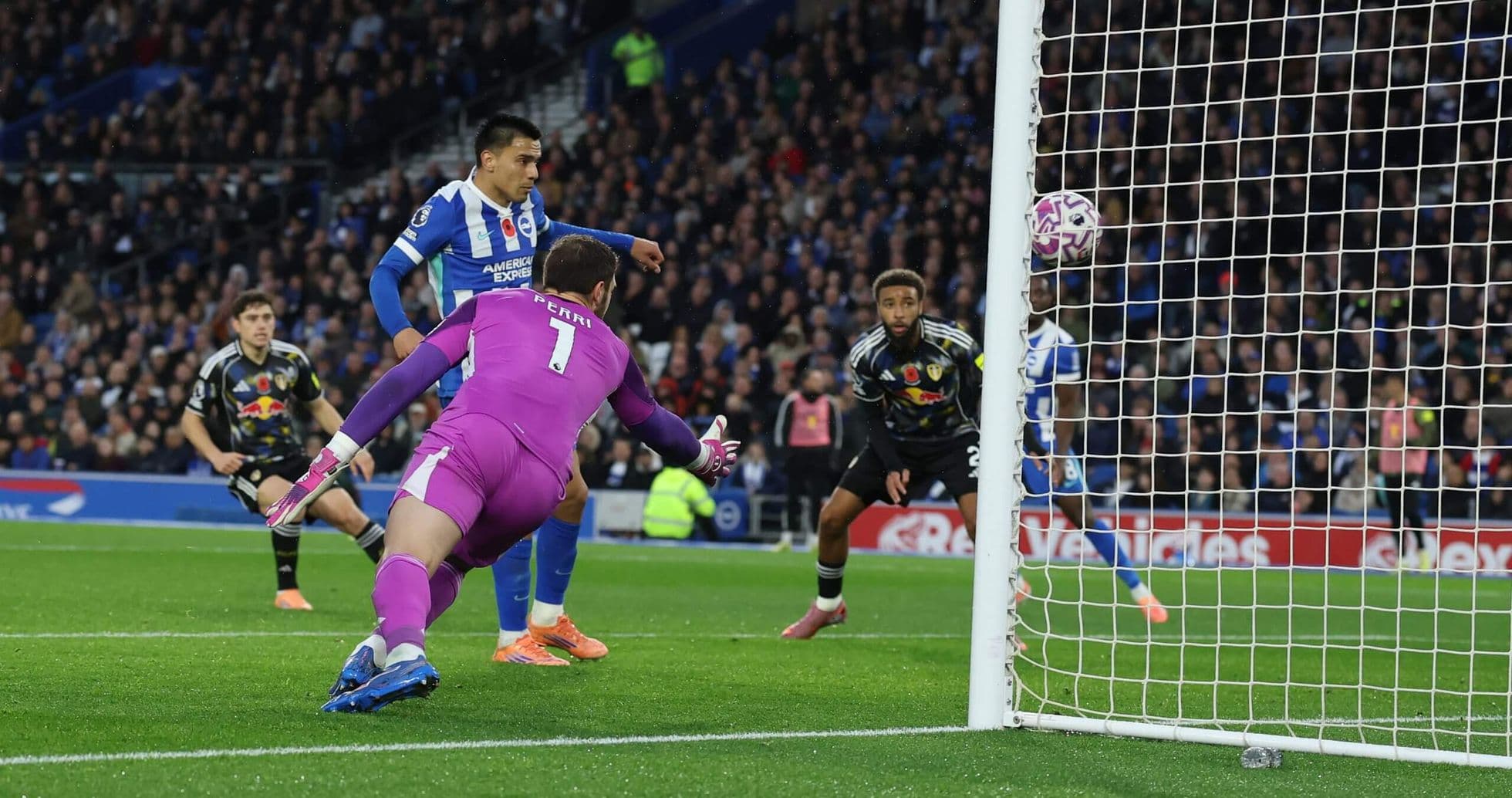
Elland Road stages a tense late-season Premier League meeting on 17 May 2026 as 14th‑placed Leeds host 7th‑placed Brighton. With Leeds still looking to lock in safety and Brighton chasing European football via the Conference League play‑off spot, the stakes are high despite this being Round 37 rather than a cup tie.
Context and stakes
In the league, Leeds sit 14th on 44 points with a goal difference of -5 after 36 games. Their recent form line of DWDWW reflects a late surge: only 12 defeats all season and a knack for avoiding losses. At home they have been solid: 8 wins, 5 draws and 5 defeats from 18, scoring 28 and conceding just 21.
Brighton arrive in 7th with 53 points and a goal difference of +10. Their form (WLWDW) underlines a side that still wins regularly and has one eye on European qualification. Across all phases they have 14 wins, 11 draws and 11 defeats, with 52 goals scored and 42 conceded. The away record is more fragile: 5 wins, 5 draws and 8 defeats, 22 scored and 25 conceded.
So the dynamic is clear: Leeds, strong at Elland Road, pushing to finish a tricky season on a high; Brighton, better overall and more balanced statistically, but less convincing on their travels and under pressure to protect a European-chasing position.
Tactical outlook: styles and structures
The season data hints strongly at how both sides are likely to set up.
Leeds have been tactically flexible, using eight different formations across the campaign. The most common has been 4‑3‑3 (12 times), followed by 3‑5‑2 (10) and 3‑4‑2‑1 (6). That spread suggests a coach willing to adjust shape for opponent and game state, but the preference for three centre‑backs at times also reflects a need to stabilise a defence that has conceded 53 league goals.
At Elland Road, Leeds concede only 1.2 goals per game and score 1.6, a healthy home profile. Seven home clean sheets across all phases (5 at home, 2 away) show they can shut games down, though 11 matches without scoring overall underline inconsistency in attack. The biggest home win, 4‑1, and heaviest home defeat, 0‑4, capture that volatility.
Brighton are more structurally settled. They have used 4‑2‑3‑1 in 31 of 36 league matches, with only occasional switches to 4‑3‑3 and 3‑4‑2‑1. That continuity underpins a well‑drilled side: 1.4 goals scored and 1.2 conceded per game across all phases, with 10 clean sheets and only 7 blanks in front of goal. Their biggest away win is 1‑3, but they have also lost 4‑2 on the road, reinforcing the sense that away matches can become open, high‑event affairs.
With Michael Oliver appointed as referee, both teams will need to manage their aggression. Leeds’ yellow‑card distribution peaks between 61–75 minutes (23.33%), while Brighton pick up a lot of bookings in the 46–60 minute window (27.91%), a period where the game could easily swing.
Key players and attacking threats
The standout figures up front are the joint top scorers in this Premier League season for these clubs: Dominic Calvert‑Lewin for Leeds and Danny Welbeck for Brighton, both on 13 goals.
Calvert‑Lewin has 13 goals and 1 assist in 33 appearances, with 32 shots on target from 64 attempts. He is heavily involved physically, engaging in 446 duels and winning 175, underlining his role as a focal point for long balls and crosses. His penalty record is important context: he has scored 4 spot‑kicks but missed 1, so while reliable, he is not flawless from the spot.
Welbeck matches that 13‑goal, 1‑assist output in 35 appearances, with 27 shots on target from 45 attempts. His all‑round contribution is notable: 460 passes with 20 key passes, plus defensive work (23 tackles, 9 interceptions) that fits Brighton’s pressing and counter‑pressing. From the penalty spot, he has scored 1 but missed 2, so any Brighton penalty is far from automatic.
Given Leeds’ home average of 1.6 goals for and Brighton’s away average of 1.2, both main strikers should have opportunities, especially if the game opens up in the second half, when both teams tend to collect cards and intensity rises.
Injuries and selection issues
Both squads have significant absentees and doubts that could shape the tactical picture.
For Leeds:
- Out: I. Gruev (knee), G. Gudmundsson (muscle), N. Okafor (calf).
- Doubtful: J. Bogle (hamstring), F. Buonanotte (hamstring, listed under Leeds in the data), P. Struijk (hip).
The confirmed absences affect depth in midfield and wide areas, while doubts over Bogle and Struijk potentially impact the defensive rotation and wing‑back/full‑back options. With such flexibility in formations this season, missing versatile pieces may push Leeds towards a more conservative, familiar shape like 4‑3‑3 at home.
For Brighton:
- Out: K. Mitoma (thigh), S. Tzimas (knee), A. Webster (knee).
- Doubtful: D. Gomez (knee), M. Wieffer (injury).
Mitoma’s absence removes one of Brighton’s most direct wide threats, reducing their one‑v‑one dribbling threat on the flanks. Webster’s injury impacts central defensive depth, which is particularly relevant away from home, where Brighton already concede 1.4 goals per match. If Gomez and Wieffer are not fully fit, midfield balance and defensive cover in front of the back four could also be compromised.
Head‑to‑head: recent competitive meetings
The last five competitive meetings between these sides (all in the Premier League) show Brighton with a clear edge but with Leeds competitive at Elland Road:
- 1 November 2025, Amex Stadium: Brighton 3‑0 Leeds – Brighton win.
- 11 March 2023, Elland Road: Leeds 2‑2 Brighton – draw.
- 27 August 2022, The American Express Community Stadium: Brighton 1‑0 Leeds – Brighton win.
- 15 May 2022, Elland Road: Leeds 1‑1 Brighton – draw.
- 27 November 2021, The American Express Community Stadium: Brighton 0‑0 Leeds – draw.
Across these five matches, Brighton have 2 wins, Leeds have 0, and there have been 3 draws. Notably, all three Elland Road fixtures finished level, underlining how difficult Leeds have made it for Brighton in Yorkshire even when the visitors have been the stronger side overall.
Tactical balance and likely game script
Leeds’ home numbers suggest a side comfortable in a mid‑block that springs quickly into transitions via Calvert‑Lewin. Their clean‑sheet count at Elland Road and relatively low goals‑against figure at home (21 in 18) indicate that they can absorb pressure, especially with three‑centre‑back systems like 3‑5‑2 or 3‑4‑2‑1.
Brighton’s entrenched 4‑2‑3‑1 and higher overall goal difference point to more control of possession and territory. Without Mitoma, they may rely more on central combinations and overlapping full‑backs rather than pure wing‑dribbling. Welbeck’s movement between the lines, plus the supporting cast in the “3” behind him, should test Leeds’ defensive structure, particularly in the half‑spaces.
Set‑pieces could be decisive. Leeds’ physical profile, embodied by Calvert‑Lewin, and Brighton’s occasional vulnerability away (25 conceded on the road) make dead‑ball situations a natural battleground. Discipline will also matter: both sides accumulate yellows in the middle and later stages of games, and Leeds already have one red this season in the 46–60 minute range.
The verdict
Data points to a finely poised contest. Brighton are the better side across all phases, with more wins (14 vs 10), a stronger goal difference (+10 vs -5) and a higher league position. However, their away record is patchy, and they visit a Leeds team that is robust at home and in good recent form.
Leeds have not beaten Brighton in the last five league meetings, but they have drawn all three at Elland Road in that span. With Brighton missing Mitoma and Webster and Leeds’ home defence relatively tight, another narrow, hard‑fought game feels likely.
On balance, Brighton’s superior quality and attacking structure should allow them to create more chances, but Leeds’ home resilience and Calvert‑Lewin’s presence suggest the hosts can take something. A draw or a one‑goal margin either way is the logical expectation, with a low‑to‑moderate scoreline that reflects Leeds’ defensive improvement at Elland Road and Brighton’s slightly blunter edge without their key wide threat.