.svg&w=384&q=75 "naujapitch logo")
France’s Statement Win Over Senegal in Group I Opener
MetLife Stadium under New Jersey’s heavy summer sky hosted a Group I opener that felt far more like a knockout rehearsal than a first step. France and Senegal mirrored each other structurally in a 4-2-3-1, but the 3–1 full-time scoreline underlined a deeper truth: one side already looks calibrated for a long World Cup run, the other is still searching for balance between courage and control.
I. The Big Picture – France’s statement, Senegal’s warning
Following this result, France sit 2nd in Group I with 3 points, a goal difference of +2 (3 goals for, 1 against) and a perfect early record: 1 win from 1. All of that has come at home in this fixture, where they scored 3 and conceded 1, giving them a home average of 3.0 goals for and 1.0 against. The numbers are embryonic, but the pattern is familiar: a France side that rarely needs to be spectacular for 90 minutes, just ruthless in the decisive phases.
Senegal, 3rd in Group I with 0 points and a goal difference of -2 (1 for, 3 against overall), leave East Rutherford with more questions than answers. On their travels, they have played 1, lost 1, scored 1 and conceded 3, an away average of 1.0 goal for and 3.0 against. The raw data is harsh: no clean sheet, no points, and a defensive structure that cracked whenever France accelerated between the lines.
II. Tactical Voids – Where the plans frayed
There were no listed absences to hide behind; both coaches essentially had their full squads. That made the tactical choices even more revealing.
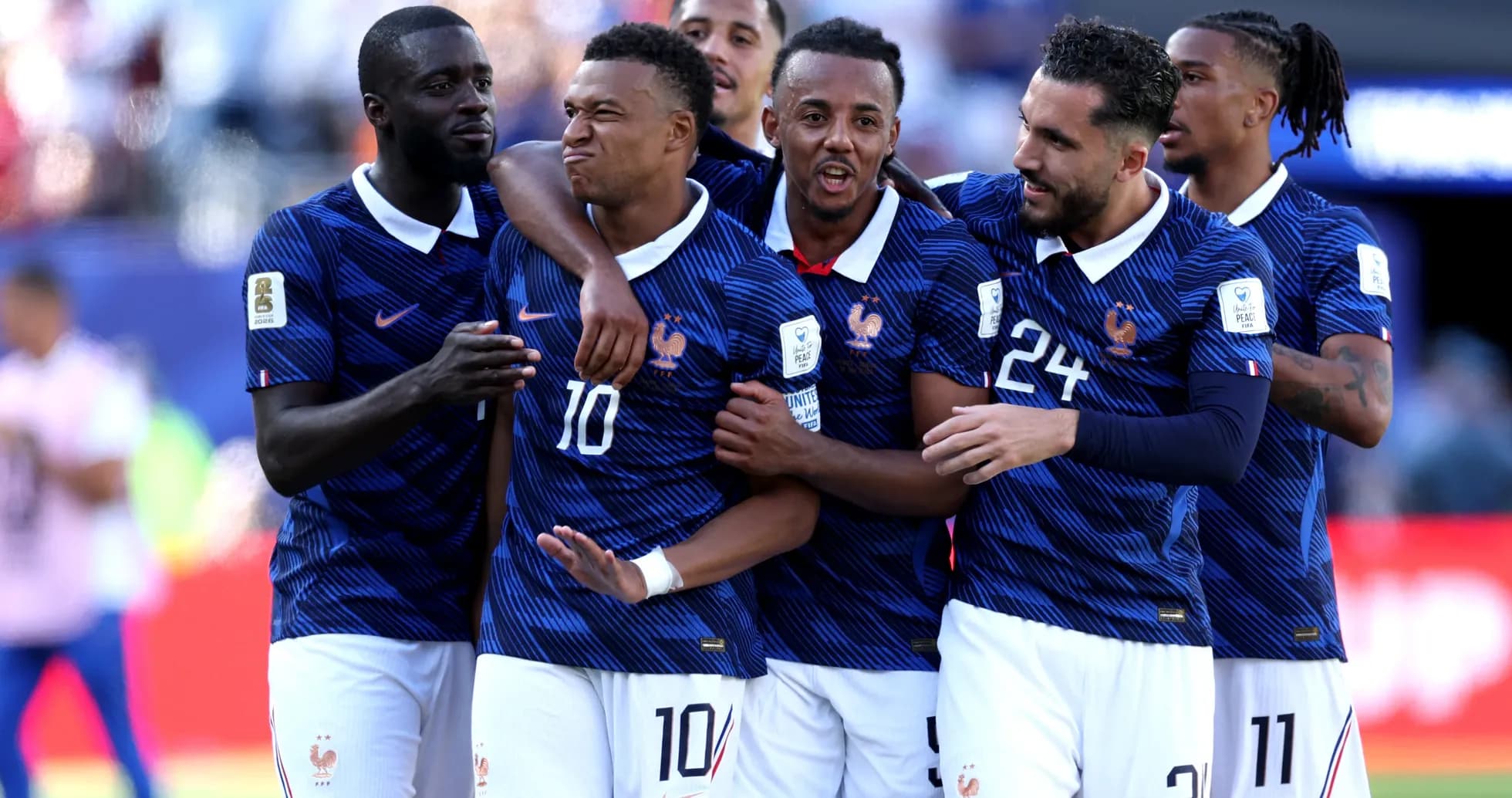
Didier Deschamps doubled down on continuity. His 4-2-3-1 was built on a solid central spine: Mike Maignan behind the pairing of Dayot Upamecano and William Saliba, with Aurelien Tchouameni and Adrien Rabiot as the double pivot. In front of them, a fluid three of Michael Olise, Ousmane Dembele and Desire Doue worked to feed Kylian Mbappe, who operated as the lone forward but constantly drifted into half-spaces.
Bouna Thiaw Pape mirrored the system but not the stability. Kalidou Koulibaly and Moussa Niakhate formed the central defensive axis, flanked by Krepin Diatta and Moussa Diouf. In midfield, Idrissa Gueye and Pape Gueye tried to anchor a band of three – Ismaila Sarr, Lamine Camara, Sadio Mane – behind Nicolas Jackson. On paper, it was a brave, front-foot shape; in practice, it left their double pivot repeatedly exposed when the front four lost the ball high and France broke through the first press.
Disciplinary data for the tournament so far offers no card timings for either side, a statistical blank slate that fits the visual impression: this was not a game defined by reckless challenges, but by positional missteps. Senegal’s full-backs, especially, often found themselves caught between stepping to Dembele and Olise or protecting the channel behind them. Each hesitation opened a seam for Mbappe to attack.
III. Key Matchups – Hunter vs Shield, and the Engine Room
The defining duel was always going to be Mbappe against Koulibaly’s defensive line. Heading into this game, France’s overall attacking profile was still unwritten; following this result, Mbappe has immediately carved his place in the tournament’s narrative. In total this campaign, he has 2 goals from 1 appearance, with 4 shots, all on target, and an 8.2 rating. His efficiency was chilling: 4 shots, 4 on target, 2 goals, and 93% passing accuracy from 16 passes. This is not a volume shooter; it is a finisher who punishes any structural flaw.
For Senegal, the “shield” was meant to be Koulibaly and Niakhate, protected by Idrissa Gueye. Yet France’s movement relentlessly targeted the spaces either side of the centre-backs. Dembele’s inside drifts from the right forced Diatta to narrow, while Olise’s ability to receive between the lines on the opposite side dragged the Senegal block into awkward diagonals. Each time they shifted, Mbappe slipped into the blind spot – the classic hunter operating just beyond the defensive line’s field of vision.
In the engine room, Tchouameni and Rabiot quietly dictated tempo. With France’s season statistics showing a preference for this 4-2-3-1 (it is the only lineup used, played 1 time), the double pivot is already imprinted with automatisms: Tchouameni screening and recycling, Rabiot shuttling into wider pockets to connect with Theo Hernandez on the overlap. That left Senegal’s Pape Gueye and Idrissa Gueye constantly torn between tracking runners and protecting central lanes.
On the other side, Senegal’s most incisive moments came when their own bench weapons entered the fray. Ibrahim Mbaye, who appears both in the Senegal squad list and as a top scorer, stepped off the bench and needed only 15 minutes to score 1 goal from 1 shot, also completing 8 passes at 87% accuracy. His cameo, fed by Iliman Ndiaye – who sits among the top assist providers with 1 assist from 10 passes at 90% accuracy – hinted at a different dynamic: quicker combinations, sharper movements between France’s centre-backs and full-backs.
That late spark, however, felt more like a counterpunch than a sustained plan.
IV. Statistical Prognosis – France in control, Senegal at a crossroads
With only one group game played, xG numbers are not provided, but the patterns are clear enough to sketch a prognosis.
France have already shown they can generate and convert high-quality chances without overextending. In total this campaign, they have 3 goals from 1 match, conceding 1, with no clean sheets yet but a defensive line that rarely looked panicked. The goal difference of +2 is exactly what their all-round control suggested. They have not needed penalties – 0 taken, 0 missed – and they have not failed to score in any outing so far.
Senegal, by contrast, are walking a tightrope. In total this campaign, they have 1 goal for and 3 against, a goal difference of -2 that exactly mirrors their defensive vulnerability. On their travels, they concede an average of 3.0 goals per match, a figure that will bury any qualification hopes if it persists. Yet the presence of Mbaye and Ndiaye among the early attacking contributors shows they have weapons capable of unsettling any back line if the structure behind them can hold.
From a tactical lens, the next steps are clear. France will likely double down on their current blueprint: the same 4-2-3-1, the same spine, and the same ruthless reliance on Mbappe’s efficiency, with Bradley Barcola ready as a high-impact substitute after his own 1 goal from 1 shot cameo. Senegal must decide whether to keep their aggressive 4-2-3-1 or tilt towards more protection for their double pivot, perhaps by narrowing the wingers or introducing a more conservative full-back.
Following this result, the story of Group I is not yet written, but one truth already stands out: France look like a side that understands exactly how it wants to win games. Senegal, for all their courage and flashes of brilliance, must now learn just as quickly how not to lose them.