.svg&w=384&q=75 "naujapitch logo")
Iran and New Zealand Draw 2-2: A Tactical Showdown in Group G
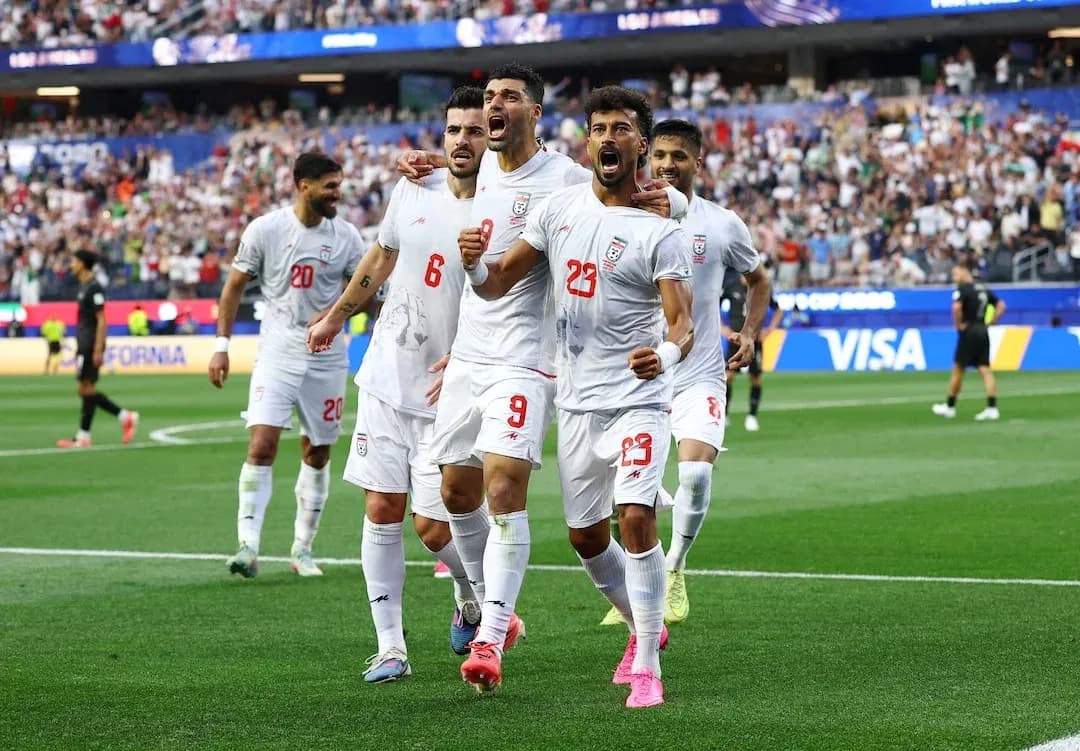
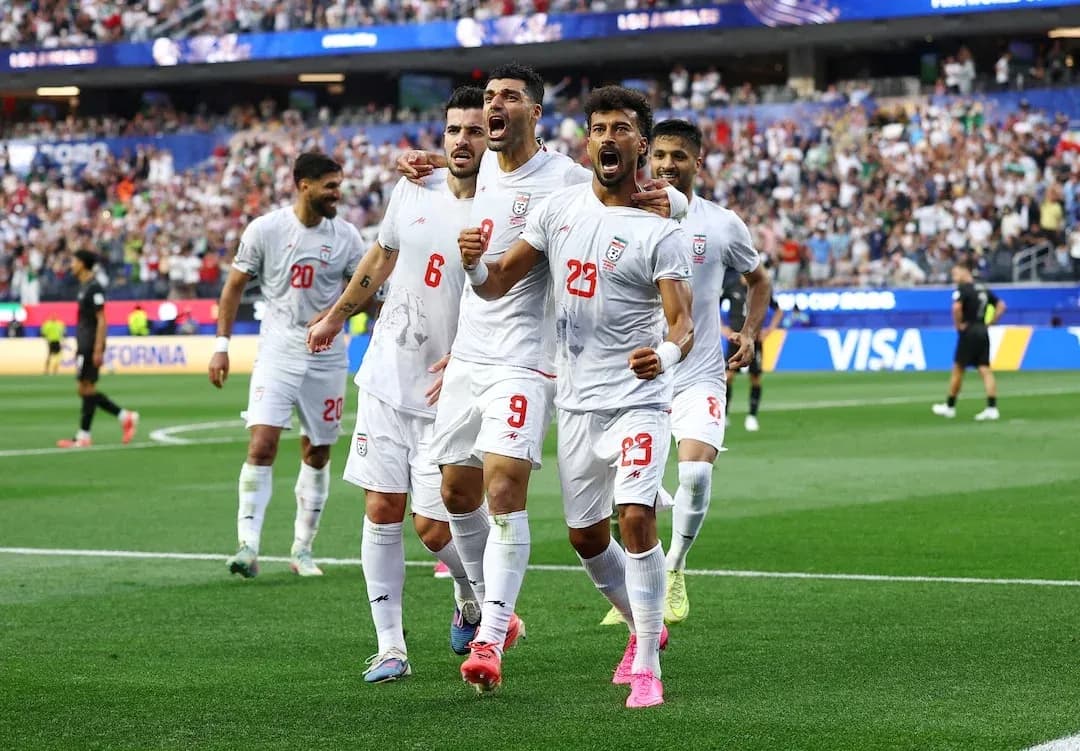
Under the roof of SoFi Stadium, Iran and New Zealand opened their World Cup campaigns with a 2-2 draw that felt less like a cautious group-stage sparring session and more like two sides announcing exactly who they intend to be in this tournament. Following this result, both sit level in Group G: New Zealand ranked 1st and Iran 2nd, each with 1 point, a goal difference of 0, and identical overall records of 0 wins, 1 draw, 0 defeats, 2 goals for and 2 against.
I. The Big Picture – Two Identities, One Shared Statement
Iran arrived as the nominal home side, lining up in a classic 4-4-2 under Amir Ghalenoei. On home soil in this World Cup, they have now played 1 match, drawn 1, and scored and conceded 2 goals, for a home average of 2.0 goals for and 2.0 against. New Zealand, on their travels, mirrored that output: 1 away game, 1 draw, 2 goals scored and 2 conceded, with away averages of 2.0 for and 2.0 against.
The symmetry on the scoreboard hides two very different blueprints. Iran’s 4-4-2 is built on structured width, full-backs who step into playmaking roles, and forwards who occupy the box. New Zealand’s 4-2-3-1 is more vertical: a single reference point in Chris Wood, supported by a fluid band of three led by the inventive Sarpreet Singh and the ruthless Elijah Just.
If this Group Stage – 1 fixture was supposed to be a gentle introduction, both teams tore up that script. They traded punches, and in doing so, revealed their tactical DNA for the rest of the group.
II. Tactical Voids and Discipline – Edges and Exposures
There were no listed absentees, so neither side could lean on the excuse of missing stars. Instead, the gaps were structural and psychological.
Iran’s biggest disciplinary note comes from the season statistics: 100.00% of their yellow cards so far have arrived in the 76-90' window, a clear late-game surge in aggression. That pattern materialized through Ehsan Hajsafi. Coming off the bench, Hajsafi played 25 minutes, committed 1 foul, drew 1, and picked up a yellow card. He sits among the competition’s top yellow-carded players and, intriguingly, also appears in the red-card leaders list, underlining how fine his disciplinary margin is. Even without an actual sending off here, he embodies Iran’s emotional spike in the closing stages.
New Zealand, by contrast, have yet to record a yellow or red card across any minute range. Their defensive line – Max Crocombe behind Tim Payne, Finn Surman, Michael Boxall and Liberato Cacace – played on the edge but not over it. This clean disciplinary slate is as much a tactical choice as a statistical quirk: they defend by shape and timing rather than by repeated tactical fouling.
Yet the voids are evident. Iran, despite their structure, have no clean sheets overall; New Zealand mirror that with 0 clean sheets in total. Both have failed to shut down transitions, and with no penalties taken or missed by either side so far (0 penalties in total, 0 scored, 0 missed), their defensive tests have been almost entirely in open play.
III. Key Matchups – Hunter vs Shield, and the Engine Room
Hunter vs Shield
For New Zealand, the hunter is Elijah Just. In total this campaign he has 2 goals from 2 shots, both on target, with a rating of 9. He is not just finishing moves; he is knitting them together, with 26 passes, 1 key pass and 84% accuracy. His movement from the left and into half-spaces posed the central question: could Iran’s back four, led by Shoja Khalilzadeh and Ali Nemati, handle a winger who times his runs as well as he strikes the ball?
Iran’s defensive “shield” is collective rather than individual. Statistically, they have conceded 2 goals overall, the same as New Zealand, but their standout defensive contributor in this match was Ramin Rezaeian. Listed as a defender, Rezaeian produced a complete two-way performance: 1 goal, 1 assist, 3 tackles, 2 interceptions, and 8 duels contested, winning 7. He also delivered 41 passes with 3 key passes, at 73% accuracy. Rezaeian effectively turned Iran’s right flank into a launchpad, forcing New Zealand’s left side – particularly Cacace and Just – to constantly balance between attacking ambition and defensive responsibility.
In the raw numbers, the hunter won’t feel fully contained: New Zealand still found 2 goals overall. But Iran’s right side, with Rezaeian stepping high and Saman Ghoddos drifting inside, ensured those chances were hard-earned rather than freely given.
The Engine Room
In the middle, the contest was subtler. For New Zealand, Joe Bell and Marko Stamenić formed the double pivot. Their mandate was to control Iran’s central progression, particularly through Saeid Ezatolahi and Ghoddos, and to feed the creative trio of Callum McCowatt, Singh and Just.
Iran’s engine is more layered. Ezatolahi sits, screens and recycles, while Ghoddos and Mohammad Mohebi operate between lines. Behind them, Milad Mohammadi offers underlaps from left-back, while Aria Yousefi and the forwards, Shahriar Moghanlou and Mehdi Taremi, work the channels. The result is a midfield that can look like a flat four on paper but behaves like a box or diamond in possession.
This is where Chris Wood’s influence becomes deceptive. He did not score, but in total this campaign he has 2 assists, 4 key passes and 16 completed passes at 87% accuracy. As New Zealand’s top assister, Wood drops off the front line, pins centre-backs, and then releases Just and company. Iran’s centre-backs had to decide constantly: step with Wood and risk space in behind, or hold the line and allow him to turn and create. The two goals conceded by Iran overall underline how fine that margin was.
IV. Statistical Prognosis – What This Draw Really Says
Following this result, both teams share a statistical profile that screams volatility. Each has:
- Overall: 1 match played, 0 wins, 1 draw, 0 losses
- Goals for overall: 2
- Goals against overall: 2
- Goal difference overall: 0 (2 scored minus 2 conceded)
- 0 clean sheets and 0 matches failed to score
In attacking terms, both are immediately dangerous: Iran at home average 2.0 goals for; New Zealand away average 2.0 goals for. Defensively, both are equally porous, with 2.0 goals conceded at home for Iran and 2.0 away for New Zealand.
Without explicit xG data, the qualitative indicators stand in: Iran’s right flank, powered by Rezaeian’s 1 goal, 1 assist and 3 key passes, and New Zealand’s left-sided threat through Just’s 2-goal output and Wood’s 2 assists. These are not teams scraping a goal from a set piece; they are constructing high-quality chances through repeatable patterns.
The late-game card profile for Iran – 100.00% of their yellow cards so far arriving between 76-90' – hints at a side that emotionally spikes when legs tire, which could inflate their defensive xG against in closing stages. New Zealand’s clean disciplinary slate suggests a more controlled late-game profile but also raises the question: can they be nastier when game states demand it?
The prognosis for the rest of Group G is clear. Iran will continue to lean on the adventurous full-back play of Rezaeian, the guile of Ghoddos and Taremi, and the experienced edge of Hajsafi off the bench. New Zealand will build around the creative axis of Wood and Just, with Bell and Stamenić anchoring the structure.
This 2-2 in Inglewood was not an accident of chaos. It was a statistical and tactical declaration: both Iran and New Zealand are built to trade chances, not to sit on a 1-0. In a short group, that bravery could be the difference between merely reaching the Round of 32 and arriving there as a side no one wants to face.