.svg&w=384&q=75 "naujapitch logo")
World Cup Thursday: Mexico vs South Korea Showdown
The World Cup rolls into a pivotal Thursday, four group games stacked back-to-back, the tournament already crackling with shocks, subplots and a Golden Boot race that has exploded out of the blocks.
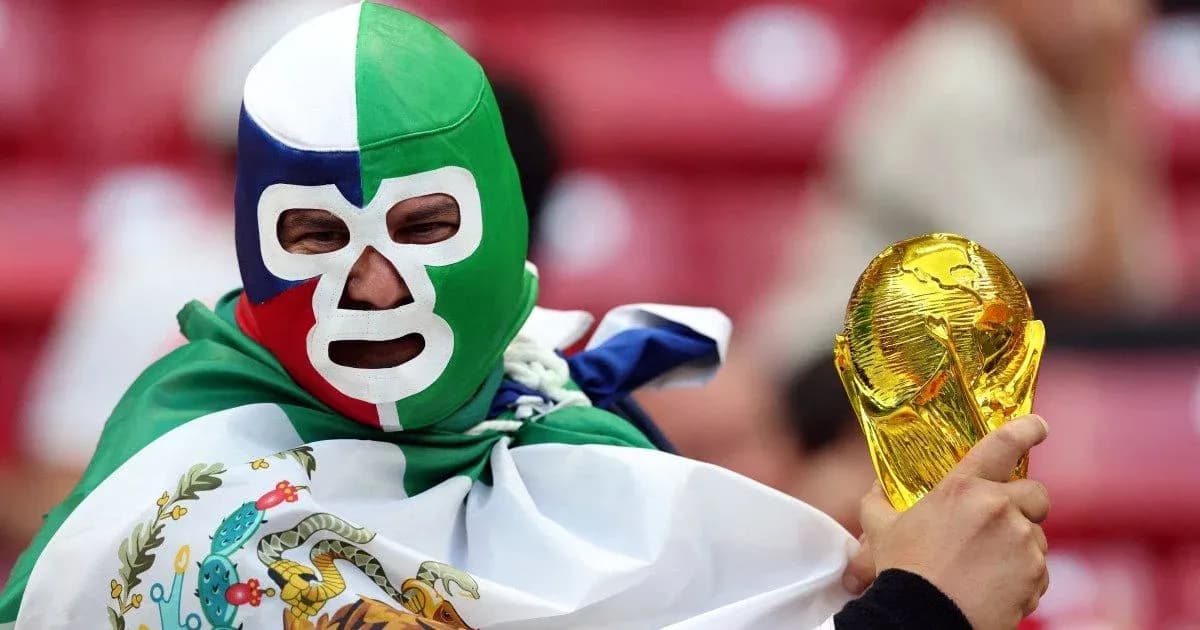
At the heart of it all: Mexico against South Korea in Guadalajara, a clash between two sides who opened with wins and now stare at a fast track to the knockouts.
Mexico–South Korea: history on Mexico’s side, pressure on both
Mexico know this fixture. They’ve beaten South Korea in both of their previous World Cup meetings, including that taut 2-1 win at Russia 2018. El Tri have the pedigree, the crowd, and, according to the numbers, the edge.
Opta’s supercomputer ran the game 25,000 times. Mexico came out on top in 49.1 percent of simulations, South Korea in 24.3 percent, with 26.6 percent ending level. On paper, the hosts are favourites. On grass, it’s a test of nerve between two teams who already smell the knockout rounds.
Win again, and Mexico seize control of Group A. Lose, and the group turns into a knife fight.
Czechia–South Africa: contrasting histories, thin margins
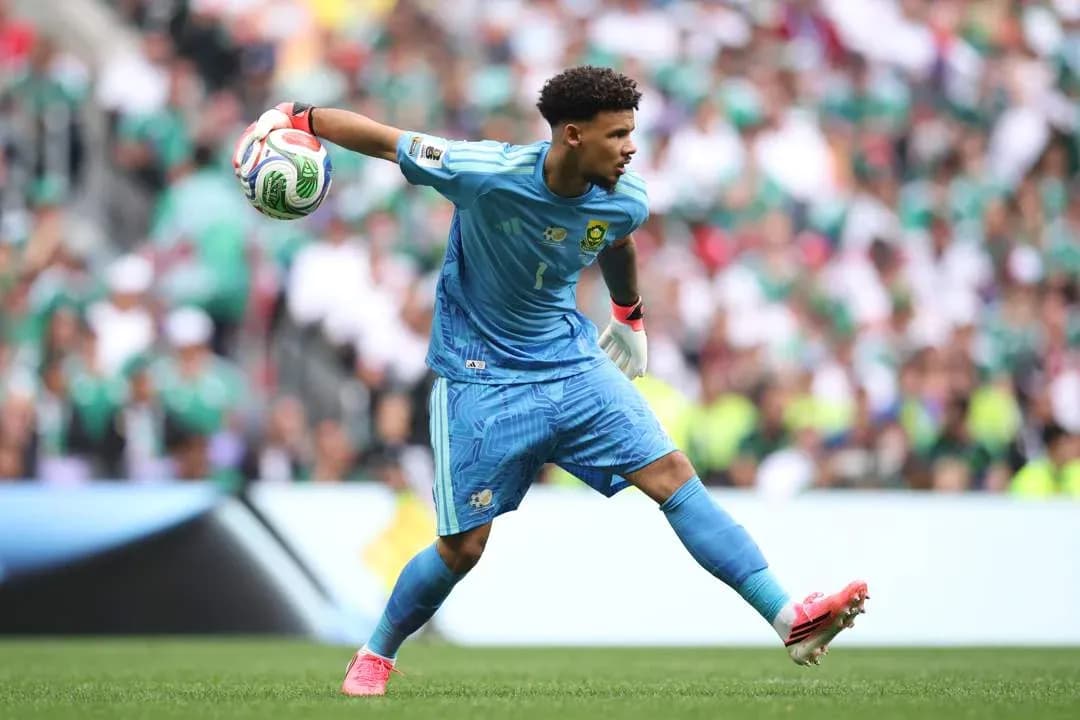
The day starts in Atlanta, where Czechia face South Africa in a meeting loaded with historical footnotes but very little head-to-head data. They’ve played only once before.
South Africa arrive with a curious World Cup record against European opposition: just one defeat in their last four such games, including that famous 2-1 victory over France in 2010. They know how to bloody a heavyweight nose.
Czechia’s own brush with African opposition on this stage is less flattering: a 2-0 defeat to Ghana in their only previous World Cup encounter with a team from the continent. Even so, the models lean their way. Opta gives Czechia a 54.9 percent chance of victory, South Africa 21.8 percent, with the draw lurking at 23.3 percent.
For Bafana Bafana, still stung by a 2-0 loss to Mexico in the tournament opener, this is already close to must-win territory.
Switzerland–Bosnia and Herzegovina: first World Cup meeting, familiar faces
Los Angeles hosts a fascinating tactical duel: Switzerland against Bosnia and Herzegovina. They’ve met only once before, in a 2016 friendly in Zurich, when Bosnia won 2-0 thanks to goals from Edin Dzeko and Miralem Pjanic.
That night belongs to the archives. This one carries World Cup weight.
Opta’s simulations make Switzerland clear favourites: 61.6 percent of outcomes tilt their way, with Bosnia winning 17 percent and a draw in 21.4 percent. The Swiss, hardened by years of deep tournament runs, are expected to control the tempo. Bosnia, with memories of that Zurich win and a point to prove on the biggest stage, know they can hurt them.
One slip, one set piece, and the numbers won’t matter.
Canada–Qatar: hosts backed by history
In Vancouver, Canada face Qatar in a matchup stacked against the Asian champions by precedent alone. When a World Cup host has faced an Asian confederation team, the pattern has been ruthless: Mexico beat Iraq in 1986, France swept aside Saudi Arabia in 1998, Russia dismantled Saudi Arabia in 2018. Three games, three home wins.
The data says the trend should hold. Canada win 72.9 percent of Opta’s 25,000 simulations. A draw shows up in 16.5 percent. Qatar’s chances of an upset sit at 10.6 percent.
The message is clear: anything less than a Canadian win would reverberate far beyond Vancouver.
Golden Boot race: Messi out in front, giants in pursuit
The tournament’s top scorers are already jostling for position. Lionel Messi has set the early pace, his hat-trick against Algeria pushing him to three goals and straight to the top of the Golden Boot standings.
Seven names sit one strike behind, a chase pack dripping with firepower and narrative:
- Kylian Mbappe, France’s unstoppable spearhead
- Erling Haaland, the Norwegian force of nature
- USA forward Folarin Balogun
- Germany’s Kai Havertz
- Sweden’s Yasin Ayari
- New Zealand’s Elijah Just
- England captain Harry Kane
Messi has the lead. The field behind him is terrifying.
DR Congo and Cape Verde: new chapters in World Cup history
This World Cup is not just about the traditional giants. It’s about new voices forcing their way into the conversation.
Yoane Wissa delivered one of the tournament’s defining moments so far, scoring DR Congo’s first-ever World Cup goal in a 1-1 draw against Portugal, FIFA’s fifth-ranked team. The Newcastle United forward rose in Houston to head home shortly after half-time, cancelling out Joao Neves’s early strike and securing a first World Cup point for the Leopards in 52 years.
The reaction told its own story: Congolese fans celebrating in the stadium, in Kinshasa, in European cities, across the diaspora. A goal, a point, a nation reintroduced to the world stage.
Cape Verde’s breakthrough came in a different form but carried similar weight. The World Cup debutants held Spain, one of the tournament favourites, to a 0-0 draw. No goals, but a seismic result. A first-ever World Cup match, a clean sheet, and a point against a superpower.
For both nations, these are not footnotes. They are foundations.
Colombia’s return to the spotlight
Colombia, absent from Qatar 2022, have wasted no time reminding the world what they can do. A 3-1 win over debutants Uzbekistan at Mexico City Stadium marked a confident return to the World Cup stage.
Luis Diaz ran the show. He set up Daniel Munoz for the opener, then struck Colombia’s second after the break. Uzbekistan briefly punched back through Abbosbek Fayzullaev, but Colombia reasserted control and closed out the game.
The result hands them an early advantage in Group K and hints at a side intent on going back to where they once belonged: the knockout rounds.
Shock results and shifting hierarchies
Every World Cup needs its early tremors. This one already has a few.
Cape Verde’s stalemate with Spain might be the biggest shock of the opening round. A tournament newcomer shutting out a heavyweight with a point to prove. It reshapes expectations for both Group and team.
DR Congo’s draw with Portugal belongs in the same bracket. On paper, a mismatch. On the pitch, anything but.
Iran’s 2-2 draw with New Zealand also raised eyebrows. Many expected Iran to open Group G with a win; instead, they were dragged into a contest that exposed vulnerabilities and emboldened their opponents.
The lesson from the first round is simple: reputations are not worth three points.
A World Cup of many faces
Look closely at the squads and another story emerges. Teams such as England, France, Spain and Sweden are built from players of different ethnic, cultural and religious backgrounds, line-ups where Christian and Muslim teammates share the same shirt, the same pressure, the same celebrations.
Spain’s teenage star Lamine Yamal and Sweden midfielder Yasin Ayari are part of a growing cohort of Muslim footballers operating at the highest level. Their presence reflects the countries they represent and the arguments raging off the pitch over immigration, identity and integration.
On the field, the message is simpler: you score, you pray in your own way, you embrace. One team, one objective.
Ronaldo’s sixth World Cup: history without the goal
Cristiano Ronaldo stepped into this World Cup as one of only two men, alongside Lionel Messi, to appear at six editions. A staggering feat of longevity at 41.
The opening game, though, ended in frustration. Ronaldo had chances in the second half against DR Congo but could not find the net, an absence made more glaring as Messi, Mbappe, Haaland and Kane all struck in their first outings.
Portugal’s 1-1 draw in their Group K opener leaves them chasing, not cruising. For Ronaldo, the question now is sharp: can he still bend a World Cup to his will, or has the stage finally stopped listening?
Hydration breaks: science meets rhythm
Another talking point has nothing to do with tactics or talent. FIFA’s new hydration breaks, introduced to protect players in the summer heat of the US, Canada and Mexico, have split opinion.
The flashpoint came in Houston. Curacao scored against Germany, then play stopped for a hydration break. When the game resumed, Germany scored twice before half-time and ran away 7-1 winners. Former England striker Alan Shearer argued the break “killed their momentum”. Roy Keane likened the pauses to timeouts, saying they cut into the continuous flow that defines football.
FIFA insists player welfare comes first. Critics counter that these stoppages offer extra windows for tactical tweaks and, inevitably, more broadcast opportunities. The debate is unlikely to cool as temperatures rise.
Africa’s record representation – and the roadblocks
This World Cup features a record six sub-Saharan African teams. It is a landmark moment, years in the making.
South Africa’s Bafana Bafana were the first to take the field, beaten 2-0 by Mexico in the tournament opener. Behind them stand some of the continent’s most storied names. Ghana’s Black Stars, quarterfinalists in 2010, return to a stage they once lit up, following the paths carved by Cameroon in 1990 and Senegal in 2002. Senegal are back again. Ivory Coast, absent since 2014, return as two-time Africa Cup of Nations winners.
DR Congo and Cape Verde, though, may be the most compelling stories. The Leopards are back for the first time since 1974, when the country played as Zaire. Many of their players were born in Europe, a pattern mirrored in Cape Verde’s squad. The Blue Sharks have already made their mark with that draw against Spain.
The journey has not been smooth. Some teams, officials and fans have battled travel and visa complications. At one stage, many supporters with African passports were told they would need to post $15,000 bonds to enter the United States. The policy was dropped, but, for some, too late to rescue travel plans.
One iconic sound from Africa’s last World Cup is also absent. The vuvuzela, the plastic horn whose relentless buzz defined South Africa 2010, is banned this time. The soundscape has changed, even if the passion has not.
Across the US and Canada, more than three million people of African birth form a vast, scattered home crowd. Their backing, in stadiums and fan zones, could tilt tight games and carry these six teams further than ever before.
On Thursday, as Mexico chase history, South Korea chase respect, and new nations chase the next shock, one question hangs over the day: in a World Cup already tearing up scripts, who dares to write the next line?