.svg&w=384&q=75 "naujapitch logo")
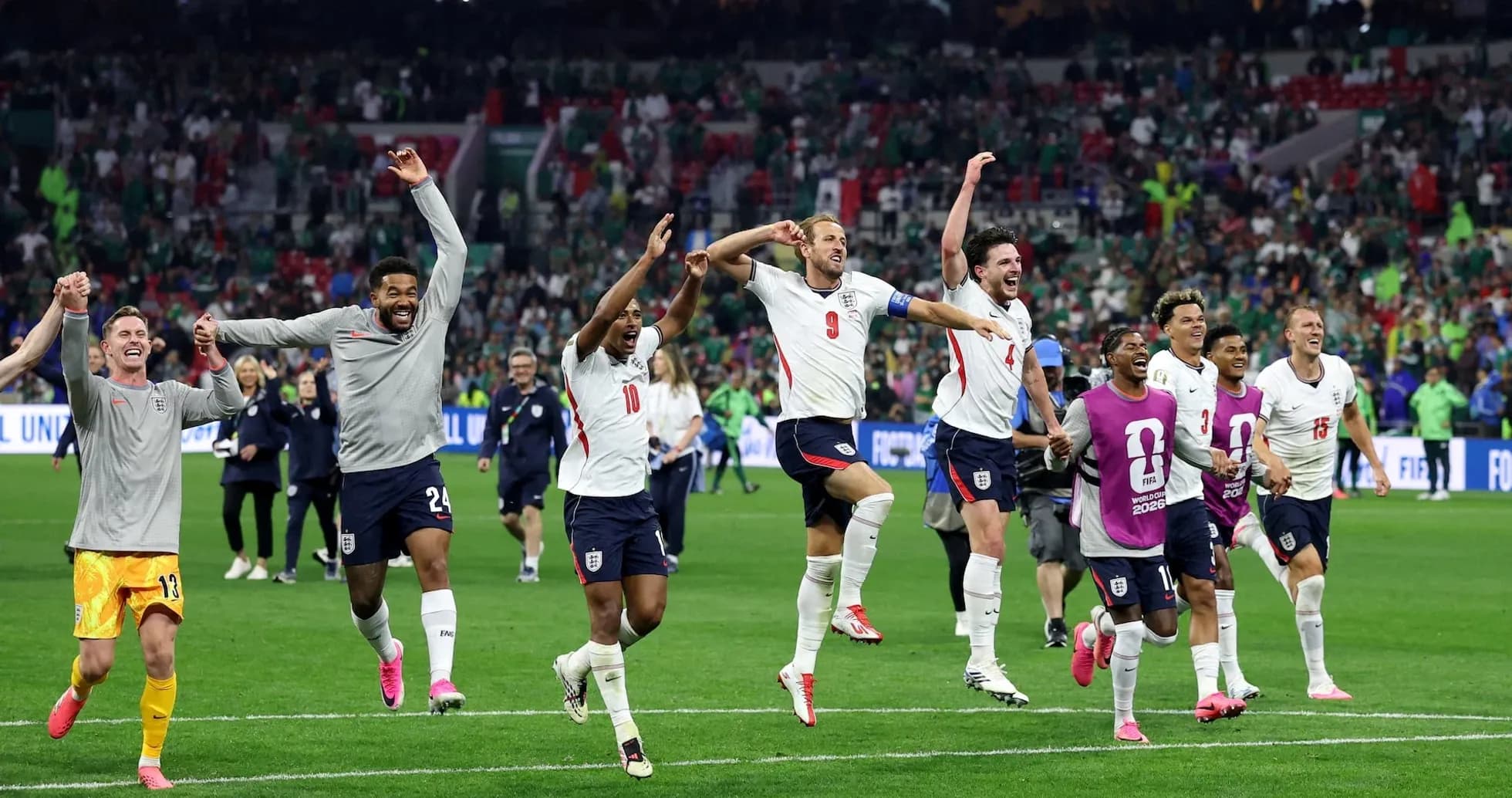
England Triumphs Over Mexico in Knockout Epic
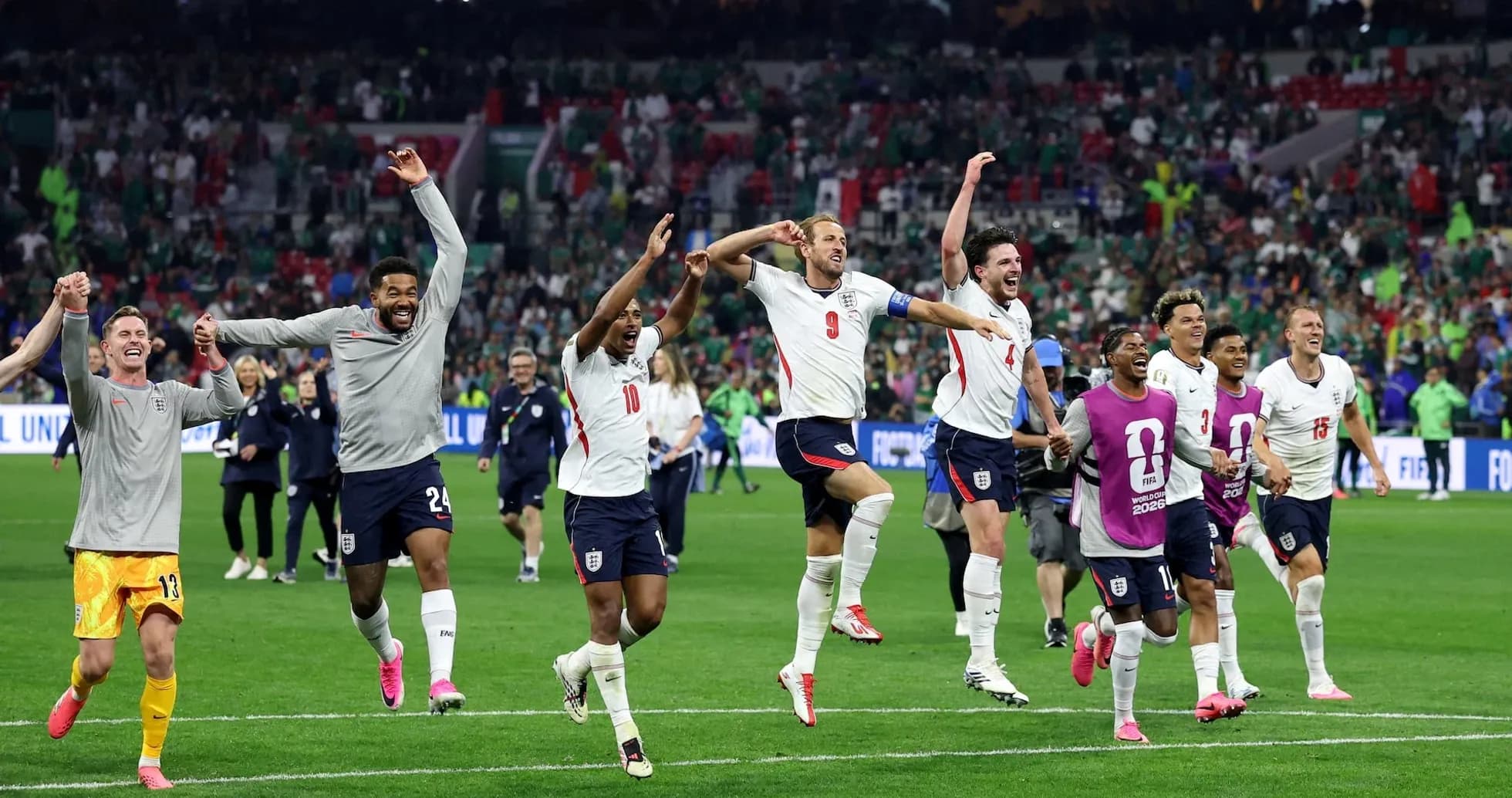
Under the lights of Estadio Banorte in Mexico City, a Round of 16 that began as a tactical chess match ended as a 3–2 England win, a knockout epic that felt like it compressed an entire tournament’s story into 90 minutes. Mexico, flawless in Group A with 9 points and a goal difference of 6 from three wins and no goals conceded, finally met a side capable of stretching their back line to breaking point. England, who had topped Group L with 7 points and a goal difference of 4, arrived with a different kind of pedigree: a team unbeaten overall, battle-tested in tighter contests, and built to suffer as well as to strike.
Both coaches leaned into their identities. Javier Aguirre doubled down on Mexico’s established 4-3-3, a shape that had underpinned four home wins in five fixtures overall this campaign, where they averaged 1.8 goals at home and 2.0 in total, conceding just 0.6 overall. Thomas Tuchel, for England, trusted the 4-2-3-1 that has been his side’s default in four of five matches, a system that has produced 11 goals overall at an average of 2.2 per game while conceding 1.0.
The opening half was a collision of those blueprints. Mexico’s front three of J. Quiñones, R. Jiménez and R. Alvarado pressed high and narrow, trying to pin England’s full-backs and isolate the centre-backs. England responded by using Declan Rice as the release valve, dropping between Ezri Konsa and Marc Guéhi to turn the back four into an asymmetrical three in build-up. That allowed N. O’Reilly to step higher on the left and B. Saka to hold the width on the right, stretching Mexico’s full-backs J. Gallardo and J. Sanchez into uncomfortable distances.
The 2–1 England lead at half-time reflected the sharpness of their attacking spine. Harry Kane, already the tournament’s leading scorer with 6 goals and 2 successful penalties from 2 attempts, operated as both finisher and fulcrum. His movement into the inside-right channel dragged C. Montes and J. Vasquez into dilemmas they had largely avoided in the group stage, where Mexico’s defence had not conceded at all. Behind him, Jude Bellingham, with 4 goals and 1 assist in 5 appearances, attacked the half-spaces with the authority of a player rated among the competition’s elite creators, linking one-touch combinations with Saka and A. Gordon.
Yet Mexico never looked like a side overawed by the stage. Their season numbers hinted at this resilience: 10 goals overall in 5 fixtures, at an average of 2.0, and only 3 conceded in total. Even at 1–2 down, the midfield trio of L. Romo, E. Lira and G. Mora began to tilt the contest. Romo, stationed as the left-sided shuttler, repeatedly found pockets behind Saka, forcing Rice to decide whether to step out and leave space around Kane or hold and allow Mexico’s midfield to advance.
Aguirre’s choice of personnel in the front line was vindicated by the way the game evolved. J. Quiñones, who had already contributed 4 goals and 1 assist in this World Cup, played as the emotional and tactical leader of the press from the left. His willingness to drive at Quansah and Konsa, combined with R. Jiménez’s penalty-box instincts – 3 goals in 4 appearances before this tie – meant that England’s centre-backs were rarely allowed to settle. R. Alvarado, one of the tournament’s top providers with 3 assists and 13 key passes, floated between the lines, often drifting inside from the right to overload Rice and E. Anderson.
Defensively, though, Mexico’s back line showed the scars of a more turbulent disciplinary record than their clean sheet tally suggests. C. Montes, who had already been sent off once in the tournament, again walked the tightrope between aggression and excess. His previous red card, despite an otherwise solid profile of 176 passes at 90% accuracy and 1 blocked shot, hung over every duel with Kane. Mexico’s card distribution this campaign has been skewed toward the middle and late phases of games, with 25.00% of their yellows between 16–30 minutes and 50.00% between 61–75 minutes, plus a red card shown between 91–105 minutes in earlier action. That tendency to boil late forced the defensive line to drop five yards too deep as the second half wore on, opening lanes for England’s attacking midfielders.
On the other side, England’s defensive structure carried its own volatility. Jarell Quansah, among the tournament’s red-carded defenders, came into this knockout having already seen red once and picked up a yellow in just 117 minutes of football. His underlying numbers – 10 duels won from 13 and 66 passes at 87% accuracy – speak to a defender who relishes contact, but in a match where Mexico’s wide forwards were constantly running at him, that aggression again risked tipping into danger. The wider disciplinary profile of England supported that tension: yellows distributed fairly evenly across the first 75 minutes, with 28.57% of them between 61–75 minutes, and a red card earlier in the competition between 46–60 minutes.
The “Hunter vs Shield” battle that defined this tie, though, was unmistakable: Kane and Bellingham against a Mexico defence that had conceded just 3 goals overall before this match. England’s attack, which had produced 6 home goals and 5 on their travels, found ways to exploit exactly the zones where Mexico’s structure is most fragile – the space either side of Lira when Romo and Mora pushed on. Saka, who leads the assist charts here with 3, repeatedly punished those gaps by receiving in isolation against Gallardo, then either driving inside to combine with Bellingham or going outside to force crosses toward Kane.
In the “Engine Room” duel, Rice’s duel with Romo and Lira was as decisive as anything in either box. Rice, with 166 passes at 91% accuracy and 12 key passes this tournament, played as both destroyer and deep playmaker. His ability to screen transitions – just 3 fouls committed despite 2 yellow cards – was tested relentlessly by Mexico’s willingness to commit bodies forward. Yet it was his composure in possession, recycling under pressure and finding Anderson and Bellingham between the lines, that allowed England to ride out Mexico’s surges after they pulled the game back to 2–3.
What makes this result feel like a hinge point in the tournament is how it intersected with the teams’ statistical arcs. Mexico, who had never failed to score in any of their 5 fixtures and had kept 4 clean sheets, finally met an attack that could sustain pressure for 90 minutes. England, who had only 2 clean sheets overall and had conceded 5 goals in 5 games, again needed their forwards to outgun the opposition rather than shut them down.
Following this result, the tactical prognosis for both squads is clear. England’s path forward will continue to be built around the Kane–Bellingham axis, with Saka as the creative accelerant and Rice as the stabilising force. Their 100.00% record from the spot in this World Cup – 2 penalties taken, 2 scored, none missed – only deepens their threat in tight knockout matches. Mexico, meanwhile, leave with a blueprint that is far from broken: a 4-3-3 that generated 10 goals overall at 2.0 per game, never failed to score, and leaned on the dynamism of Quiñones and Alvarado. But the story of this night in Mexico City is that, when their high line and aggressive midfield met a truly elite, multi-layered attack, their margin for error disappeared – and England, ruthless and clinical, stepped through the gap.