.svg&w=384&q=75 "naujapitch logo")

Aston Villa vs Liverpool: Premier League Showdown for Champions League Spot
Villa Park stages a high‑stakes Premier League showdown on 15 May 2026 as Aston Villa host Liverpool in round 37, with both clubs locked on 59 points and chasing a Champions League league‑phase place. Liverpool arrive in 4th, ahead only on goal difference (+12 to Villa’s +4), while Villa sit 5th. With just two games left, this has the feel of a de facto play‑off for a top‑four finish.
Form and season context
In the league, both sides have identical records: 17 wins, 8 draws, 11 defeats from 36 matches. The separation comes in the details:
- Liverpool have scored more (60 vs 50) and conceded slightly more (48 vs 46), underlining a marginally more expansive, higher‑variance profile.
- Aston Villa have built their campaign on home strength: 11 wins from 18 at Villa Park, with 28 goals scored and 20 conceded.
- Liverpool’s away record is solid but less imposing: 7 wins, 3 draws, 8 defeats, scoring 27 and conceding 29.
Recent form tilts slightly towards Liverpool. Their league form line reads “DLWWW”, suggesting a current three‑match winning run following a small wobble. Villa’s “DLLWD” points to a more inconsistent stretch, with just one win in the last five and defensive slippage at times.
Across all phases, Aston Villa’s broader form string shows pronounced streakiness: an eight‑game winning run earlier in the season, but also clusters of defeats. Liverpool, by contrast, have mixed long winning bursts with a mid‑season sequence of losses; their ability to reset and string together victories again is evident in the current run.
Tactical themes and likely approaches
Both teams are built around a 4‑2‑3‑1 base. Aston Villa have used it in 32 league matches, while Liverpool have lined up that way in 32 as well. The shapes mirror each other, putting a premium on who controls the double pivot and the half‑spaces.
Aston Villa
At Villa Park, Villa average 1.6 goals for and 1.1 against per game. They have:
- 11 home wins from 18.
- 6 home clean sheets, but also 4 home games where they failed to score.
This points to a side capable of shutting opponents out when structure and pressing are right, but one that can occasionally run into attacking dead ends.
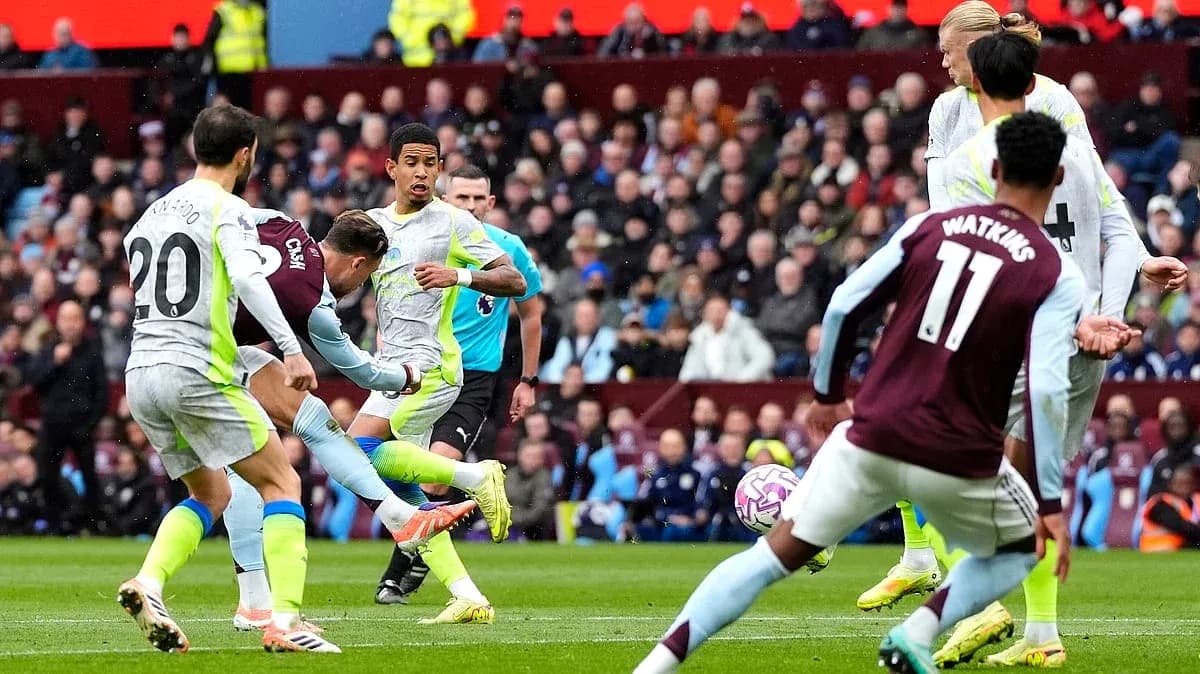
Ollie Watkins is the central reference point. With 12 league goals and 2 assists in 35 appearances, he remains Villa’s primary finisher. His 51 shots (31 on target) and 22 key passes underline his dual role as penalty‑box presence and link man. Watkins’ duel volume (271 duels, 108 won) reflects the physical battles he engages in to hold up play and pin centre‑backs.
Behind him, Morgan Rogers has emerged as a key creative engine. Ever‑present in the league (36 starts, 3195 minutes), he has 9 goals and 5 assists. His 43 key passes and 117 dribble attempts (41 successful) show how often Villa funnel possession through him between the lines. Rogers’ high involvement in duels (433, with 155 won) and 40 tackles also illustrates his importance in counter‑pressing once Villa lose the ball.
Villa’s defensive numbers are respectable rather than elite. They concede 1.3 goals per game overall, with their biggest home defeat a 1‑4 scoreline. That ceiling for defensive collapse is a warning sign against a Liverpool side that can score in bursts.
Liverpool
Liverpool’s attacking profile is more prolific: 60 goals in 36 league matches, 1.7 per game. They average 1.5 goals scored and 1.6 conceded away from home, reinforcing the sense of high‑event away matches. They have:
- 7 away wins and 5 away clean sheets.
- Only 2 away matches where they failed to score.
Even with injuries, the structure remains front‑foot. Their most used shape, like Villa’s, is 4‑2‑3‑1, but they have also occasionally shifted into 4‑2‑2‑2 or 4‑3‑3, which can tilt the game into a more open, transition‑heavy contest.
Hugo Ekitike is a significant attacking weapon, though he will miss this fixture with an Achilles tendon injury. His 11 goals and 4 assists in 28 appearances, plus 21 key passes and 38 successful dribbles from 72 attempts, underline how much vertical thrust he provides. Removing that threat forces Liverpool to redistribute responsibility among the remaining forwards and attacking midfielders.
Liverpool’s defensive record is slightly worse than Villa’s in terms of goals conceded (48 vs 46), but they have managed 10 clean sheets overall, split evenly between home and away. Their heaviest away defeat is 3‑0, showing that when the structure fails, they can be exposed, particularly given the relatively high away concession rate (1.6 per game).
Injuries and selection headaches
Both managers have major calls to make due to absences:
Aston Villa missing:
- Alysson (Muscle injury)
- B. Kamara (Knee injury)
- A. Onana (Questionable, calf injury)
Kamara’s absence is the most tactically significant. As a defensive midfielder, his screening and ball‑winning are central to protecting the back four. Without him, Villa’s double pivot may be lighter defensively, potentially inviting Liverpool’s attacking midfielders to operate between the lines. If Onana is also unavailable, Villa lose another option for physical presence and ball progression in midfield.
Liverpool missing:
- Alisson (Muscle injury)
- C. Bradley (Knee injury)
- H. Ekitike (Achilles tendon injury)
- W. Endo (Foot injury)
- G. Leoni (Knee injury)
- M. Salah (Thigh injury)
- I. Konate (Questionable, injury)
- F. Wirtz (Questionable, illness)
This is a substantial list. Losing Alisson removes Liverpool’s first‑choice goalkeeper and a key organiser of the back line. The absence of Wataru Endo weakens the shielding in front of the defence, while Ekitike and Salah being out strips significant goal threat and movement from the frontline. If Konate is not fit, Liverpool’s central defence loses a major athletic and aerial component, which could be critical against Watkins’ movement and Villa’s crossing game.
The net effect is that both teams may be more vulnerable centrally: Villa because of the missing Kamara, Liverpool because of the missing Endo and potentially Konate, plus the downgrade in goalkeeping security.
Head‑to‑head: recent history
The last five competitive meetings, all in the Premier League, read:
- 2-0 at Anfield on 1 November 2025 – Liverpool home win.
- 2-2 at Villa Park on 19 February 2025 – draw.
- 2-0 at Anfield on 9 November 2024 – Liverpool home win.
- 3-3 at Villa Park on 13 May 2024 – draw.
- 3-0 at Anfield on 3 September 2023 – Liverpool home win.
Over these five matches, Liverpool have 3 wins, Aston Villa have 0, and there have been 2 draws. At Villa Park specifically, the last two encounters ended 2-2 and 3-3, underlining how volatile and high‑scoring this fixture can become in Birmingham.
Key battles and tactical nuances
- Watkins vs Liverpool’s centre‑backs: With Konate questionable and Alisson out, Watkins’ pressing, channel runs and aerial duels become even more important. His ability to disrupt build‑up and exploit any hesitation from a stand‑in goalkeeper could swing momentum.
- Rogers in the half‑spaces vs Liverpool’s double pivot: With Endo unavailable, Liverpool’s midfield balance is under strain. Rogers’ capacity to receive between the lines, drive at the back four and combine with overlapping full‑backs could repeatedly stress Liverpool’s structure.
- Liverpool’s wide rotations vs Villa’s full‑backs: Even without Salah and Ekitike, Liverpool’s system is built on wide overloads and underlapping runs from attacking midfielders. Villa’s wide defenders must decide when to step out and when to protect the box, especially given their occasional vulnerability to conceding four in a game.
- Transition control: Both teams favour 4‑2‑3‑1 and can be aggressive in numbers committed forward. The side that better protects rest defence—especially with key screening midfielders missing—will likely dictate whether this becomes another high‑scoring Villa Park contest.
Discipline and game management
Card data suggests Liverpool can become increasingly combative late in games: 31.48% of their yellow cards come between minutes 76‑90, plus a notable cluster in added time. Villa’s bookings are more evenly spread, with a spike between 46‑60 minutes. In a match with so much riding on it, late‑game discipline—especially with tired legs and stretched structures—could be decisive, particularly if one side is protecting a narrow lead.
The verdict
The table says these teams are equals; the underlying numbers and injury lists suggest a finely balanced, high‑risk encounter. Villa’s home strength and Liverpool’s significant absentees (Alisson, Salah, Ekitike, Endo) nudge the needle slightly towards the hosts, especially given Villa’s proven ability to turn this fixture into a goal‑heavy spectacle at Villa Park.
Liverpool’s superior overall goal output and current three‑match winning run mean they cannot be discounted, but the combination of defensive disruption and lost attacking firepower is substantial.
On balance, the data points towards another open, multi‑goal contest, with Aston Villa marginally better placed to exploit Liverpool’s weakened spine. A draw would not be a surprise given the recent 2-2 and 3-3 in Birmingham, but if either side edges it, Villa’s home record and Liverpool’s absences make a narrow home win the slightly more logical outcome.