.svg&w=384&q=75 "naujapitch logo")
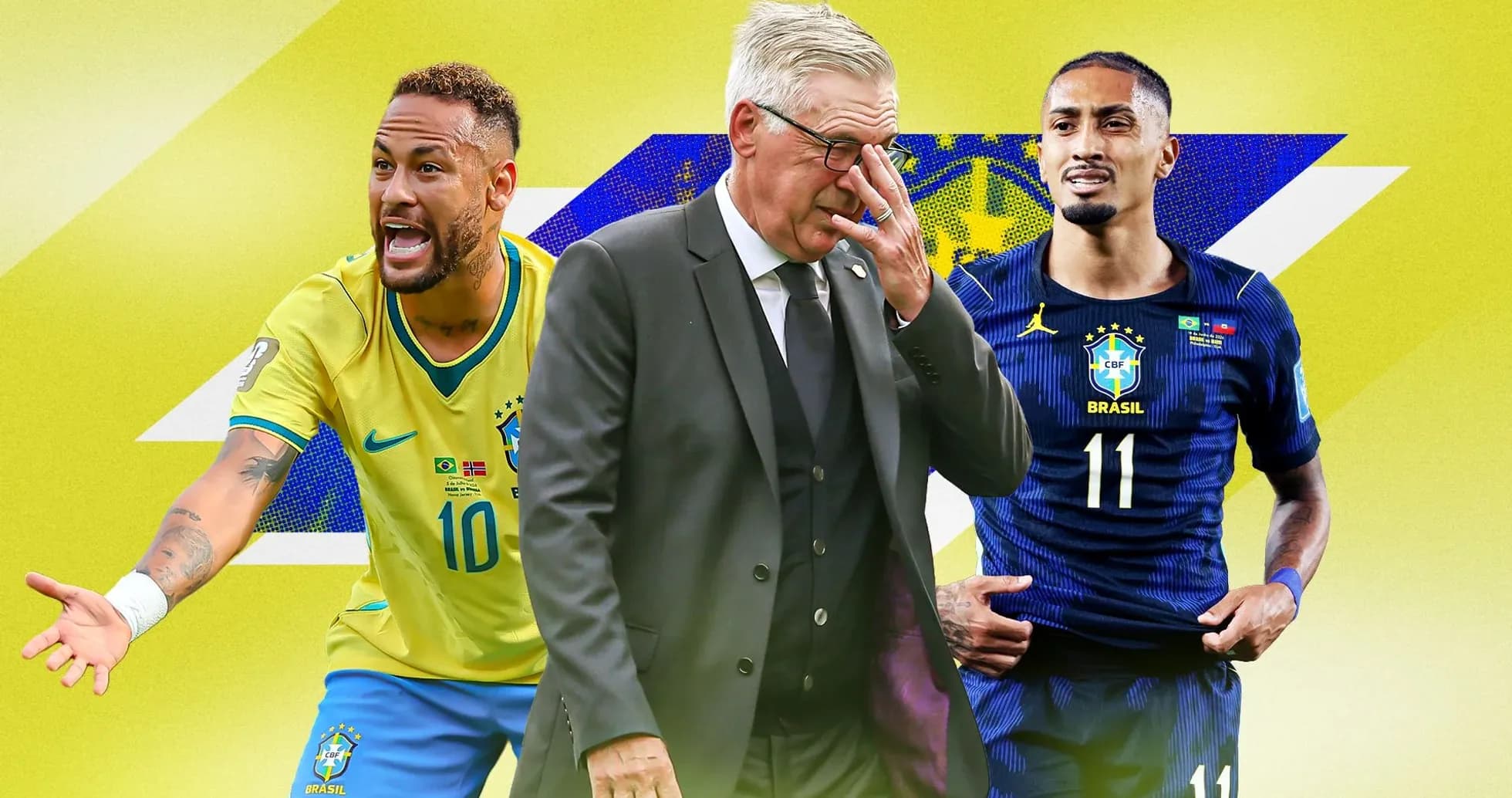
Brazil's World Cup Collapse: A Legacy of Loyalty and Ageing Stars
Brazil’s World Cup collapse did not come out of nowhere. It was built, piece by piece, on loyalty, caution and a stubborn faith in a generation that has already given its best years.
Carlo Ancelotti walked into this tournament with a squad that looked more like a testimonial guest list than the vanguard of a new era. Between the posts, Brazil’s three goalkeepers were 33, 32 and 38. Across the back line, the average age of the defenders was 31, with Danilo and Alex Sandro – once elite full-backs at Juventus – now looking like echoes from another time.
In midfield, the pattern hardened. Casemiro, 34, again carried the burden. Fabinho, 32, was trusted for long stretches. The legs were older, the miles heavy, and yet the responsibility barely shifted.
There were hints of tomorrow. Bournemouth’s 19-year-old Rayan and Botafogo’s 25-year-old Danilo offered brief flashes of something fresher, something quicker. Ancelotti himself admitted after the exit that Brazil need new blood, that the talent pool must be replenished with “young talent” and “high-level players” ready to step into the shirt. The admission came late. Far too late for this campaign.
Neymar, nostalgia and a missed opportunity
One name dominated the build-up and, ultimately, the post-mortem: Neymar.
At 34, with a long medical file and his last cap back in October 2023, he was still recalled under intense pressure from media and fans. It felt like a romantic gamble, a nod to what he once was rather than what he is now.
Predictably, the script turned cruel. A calf injury on the eve of the World Cup ruled him out for “two to three weeks”. He missed Brazil’s first two group games, then scraped together just 14 minutes off the bench against Scotland. Those minutes in Miami were heavy, laboured. The atmosphere was more testimonial than triumphant comeback.
Ancelotti’s trust faded quickly. Neymar stayed on the bench throughout the dramatic last-32 win over Japan. Against Norway in the round of 16, he finally saw more time as Brazil chased the game, but the impact wasn’t there. A late consolation penalty went in, the numbers were padded slightly, yet it felt like a coda – the likely final act of a storied international career.
The real sting? His inclusion made another decision look even worse.
Chelsea’s Joao Pedro, 24, was the obvious casualty of the Neymar recall. He had just delivered a combined 29 goals and assists in his first season at Stamford Bridge, a breakout year that seemed to guarantee his seat on the plane and perhaps even the No.9 shirt. His versatility, his form, his timing – everything pointed to Qatar as his stage.
Instead, he stayed home. Ancelotti admitted, bluntly, that Pedro “probably deserved to be on this list”. That honesty only sharpened the criticism.
As the inquest deepens, that omission will be replayed over and over. Brazil legend Ronaldo Nazario has already led the charge, saying he “still doesn’t understand” why Pedro was ignored, pointing to his form and insisting Brazil needed a striker who could bring something different. The question hangs over this campaign: what might have changed with a hungry, in-form No.9 instead of a half-fit icon?
A midfield left exposed
The age profile and selection choices hit hardest in midfield. Brazil’s engine room simply did not have enough power.
Ancelotti initially named just five central midfielders, one of them Lucas Paqueta, a natural No.10. Only when right-back Wesley was injured did Manchester United-bound Ederson come in as cover. Even then, the balance never looked right.
Into that vacuum stepped Bruno Guimaraes. The Newcastle captain became creator, worker, tempo-setter – everything at once. He delivered four assists, a strong return under pressure, but he was asked to carry too much. The depth behind him was thin, and the coach’s trust in the alternatives was thinner still. Ederson and Danilo were given only scraps of minutes from the bench.
After the defeat to Norway, Ancelotti didn’t hide from the issue. He pointed straight at the centre of the pitch as the area that must be rebuilt, saying Brazil “have to move some players” in midfield. It was a public acknowledgement that the heart of this team has to change.
The key moment that defined that midfield burden came from the penalty spot. Brazil won a first-half penalty against Norway. Score it, and the narrative might be different. Miss it, and the door swings open to disaster.
Bruno Guimaraes stepped up. Not Vinicius Junior, who was in electric form and leading the team in goals at the tournament. Not Neymar, who wasn’t on the pitch. Guimaraes, the man already carrying the midfield, took on the responsibility – and saw his effort saved.
Ancelotti later explained that the decision was data-driven. The staff had run the numbers: Raphinha, then Neymar, then Guimaraes, then Gabriel Martinelli. With the first two unavailable, they went to the third name on the list. It was logical on paper. On the grass, it became the turning point. Brazil fell behind later and never found their way back.
Injuries and excuses
Ancelotti will point, with justification, to the injuries that stripped his squad of depth and dynamism. This was not the full might of Brazilian football.
Before the tournament even began, Eder Militao, Rodrygo and Estevao Willian were ruled out. That meant no first-choice right-back and the loss of two wide players who could have started or at least changed games from the bench. The options narrowed before a ball was kicked.
Once the World Cup started, the problems mounted. Neymar’s calf was the headline, but Raphinha and Paqueta both succumbed to hamstring injuries at crucial moments. Raphinha pulled up in the first half of the second group match against Haiti and never returned. Paqueta was forced off at half-time in the knockout tie with Japan. Each setback stripped another layer of creativity and cutting edge from a squad already short of it.
Those are real, tangible blows. They don’t erase the selection mistakes, but they do explain why, when the pressure came, Brazil looked short of solutions.
The end of one cycle, the uneasy start of another
For Ancelotti, this failure is both scar and starting point. He called the defeat “the beginning of a new adventure”, insisting this is not an end but the start of a new cycle. He spoke of fresh impetus, new ideas, a renewed assessment of players. He defended the work done so far, reminding everyone that in football, you must learn to live with the sadness of defeat.
He is used to it. Brazil are not.
This is a country that measures itself only against trophies and legends. Yet here they are, exiting another World Cup with questions swirling about loyalty to ageing stars, the courage to trust youth, and the willingness to break from the past.
The next squad list will tell its own story. Will Brazil finally cut the cord with a golden generation in decline and hand the keys to players like Joao Pedro, Rayan and the next wave waiting at home? Or will nostalgia keep its grip on a team that can no longer live off its reputation?