.svg&w=384&q=75 "naujapitch logo")

Wolves vs Fulham: Tactical Analysis of Premier League Draw
Molineux Stadium felt heavy with context as Wolves and Fulham walked out for this late‑season Premier League meeting, a clash between a side already drowning in the table and another trying to lock in a respectable mid‑table finish. Heading into this game, Wolves were rooted to 20th with 19 points and a goal difference of -41, their entire campaign defined by struggle: only 3 wins in 37 matches, just 26 goals scored and 67 conceded overall. Fulham arrived safer and more assured in 13th on 49 points, their own goal difference at -6, but with a clearer identity and a far more stable platform.
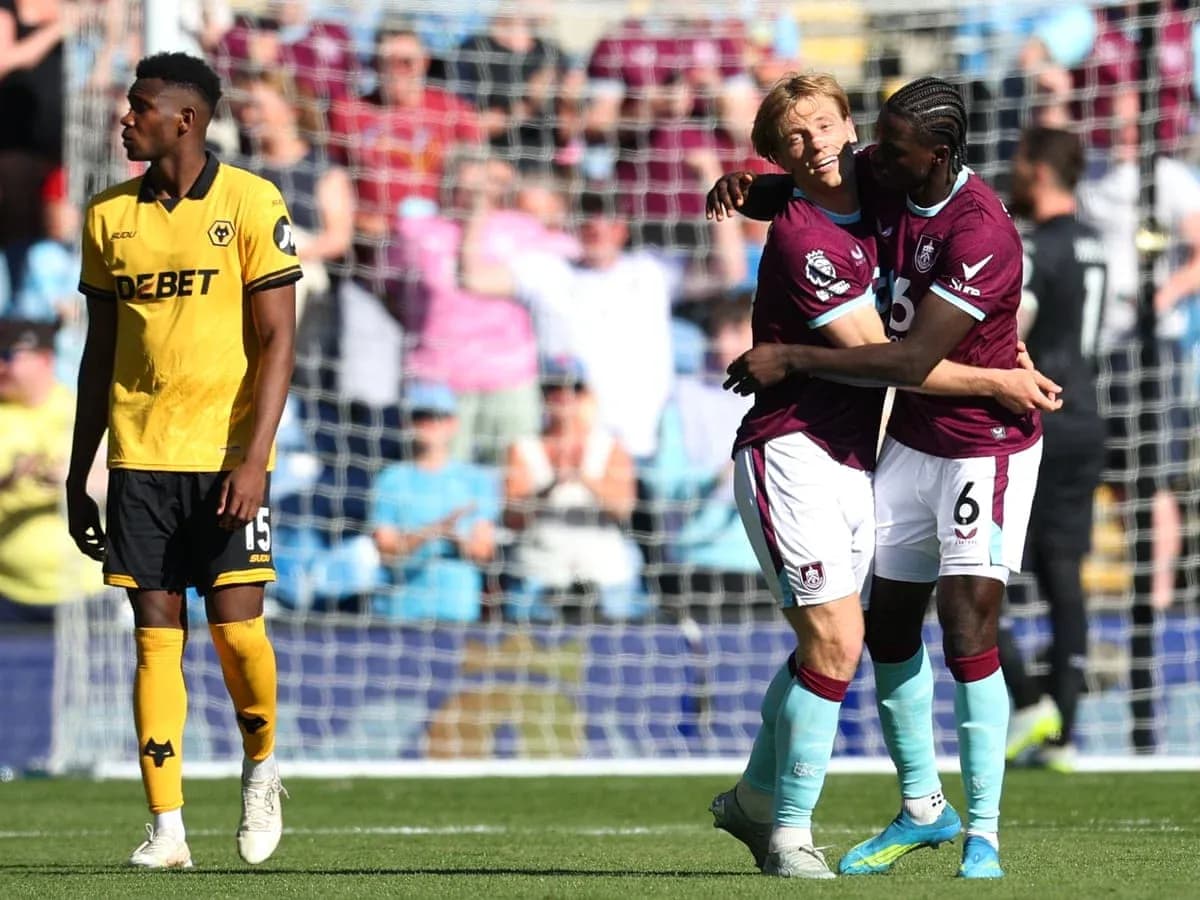
The 1-1 draw that followed felt almost inevitable: Wolves’ inability to turn effort into wins meeting Fulham’s habit of oscillating between control and vulnerability. Both managers leaned into a 4-2-3-1, but the way those shapes breathed over 90 minutes told a deeper story about their seasons.
Wolves' Tactical Setup
For Wolves, Rob Edwards’ choice of a back four — D. M. Wolfe, L. Krejci, S. Bueno and Y. Mosquera in front of J. Sa — was a notable shift from their season-long preference for back‑three structures. Across the campaign, Wolves’ most-used setups have been 3-4-2-1 (11 times) and 3-5-2 (9), with 4-2-3-1 only appearing twice before this. The decision here was clearly about simplicity and survival: compress the pitch, protect the middle, and try to squeeze more support around lone forward A. Armstrong.
The double pivot of Joao Gomes and Andre was the emotional and tactical core. Andre, one of the league’s most card-prone midfielders with 12 yellows this season, again played on that disciplinary edge — his profile is all aggression, 78 tackles and 45 fouls committed overall, but also 1,285 passes at 91% accuracy. Beside him, Joao Gomes brought even more bite, with 108 tackles and 69 fouls committed in total. Together they form a ferocious but risky shield, emblematic of a Wolves side that spends long stretches without the ball and often pays for late-game fatigue; their yellow-card distribution shows a clear spike between 46-60 minutes (28.21%) and a sustained rise through 61-90, the kind of pattern that hints at chasing games and making desperate interventions.
Ahead of them, the trio of R. Gomes, M. Mane and Hwang Hee-Chan were tasked with bridging to Armstrong. Wolves’ season numbers underline how fragile that bridge has been. At home, they average 1.0 goals for and 1.8 against; overall, just 0.7 scored and 1.8 conceded per match. Nineteen home goals in 19 matches tells you this is a team that often needs the perfect storm to win. Clean sheets at Molineux stand at only 3, while they have failed to score at home 7 times. The 1-1 here fit the pattern: just enough threat to stay alive, not enough to tilt the season’s narrative.
Absences did little to help Edwards. L. Chiwome and E. Gonzalez were both out with knee injuries, while S. Johnstone missed out with a knock. None are central attacking leaders in this dataset, but their absence still trimmed options in a squad already short on confidence and variety. That lack of depth helps explain why Wolves’ form line coming into this was so bleak: a long sequence of Ls and Ds, with only brief, isolated wins.
Fulham's Tactical Approach
On the other side, Marco Silva’s Fulham arrived with a much clearer structural identity. They have used 4-2-3-1 in 34 of their 37 league matches, and they stuck with it here: B. Leno behind a back four of T. Castagne, I. Diop, C. Bassey and A. Robinson; S. Berge and S. Lukic as the double pivot; O. Bobb, E. Smith Rowe and A. Iwobi supporting Rodrigo Muniz. It is a shape that has underpinned a solid, if inconsistent, campaign: overall 45 goals for and 51 against, averaging 1.2 scored and 1.4 conceded per match.
The tactical void for Fulham was clear even before kick-off: J. Andersen, a key defensive leader and one of the league’s top red‑carded players, was suspended after his dismissal earlier in the campaign. His absence removed a high-volume passer (2,275 total passes, 86% accuracy) and a dominant duel-winner at the back. In his place, the Diop–Bassey axis had to carry the build-up and the physical battles. That mattered against a Wolves side whose best hope was to press in bursts and attack second balls around Armstrong.
Silva’s bench also carried quiet threat. H. Wilson, one of the league’s standout creators and scorers this season with 10 goals and 6 assists, waited among the substitutes. Across the campaign he has 38 key passes and 50 shots (25 on target), operating as both finisher and supplier. Introducing him against a tiring Wolves midfield — one that accumulates cards heavily after the break — always loomed as a potential game-breaking move.
Disciplinary Trends
Disciplinary trends framed the contest’s rhythm. Heading into this game, Wolves’ yellow cards peaked between 46-60 minutes (28.21%) and remained high from 61-90, while their red cards were evenly spread across 31-45, 46-60 and 61-75 (each at 33.33%). Fulham, by contrast, carried a different kind of late volatility: their yellow cards surged in the final phases, with 20.55% between 76-90 and a striking 23.29% from 91-105, plus a lone red card in the 46-60 window. Those patterns suggested a match that might open up late, with both midfields walking a disciplinary tightrope.
From a “Hunter vs Shield” perspective, this was less about a single Wolves striker and more about their collective struggle against Fulham’s away defence. On their travels, Fulham concede 1.6 goals per match (31 in 19 away games) but also score 0.9, with 17 away goals. They are vulnerable but not porous, and their 3 away clean sheets point to a team that can close games when the structure holds. Wolves, by contrast, are anaemic overall, and even at home their 19 goals in 19 matches rarely arrive in flurries.
Engine Room Duel
In the “Engine Room” duel, Andre and Joao Gomes versus Berge and Lukic defined tempo and territory. Berge, a tall, progressive presence, and Lukic, more positional and tidy, tried to set a measured rhythm, while Wolves’ pair sought chaos: tackles, duels, and transitions. Given Wolves’ season-long average of 1.8 goals against overall, their best route to a result was always going to be disruption rather than control.
Statistically, Fulham’s broader campaign suggested they should shade the xG balance: more wins overall (14), more goals scored (45 to Wolves’ 26), and a far healthier home/away split. Wolves’ defensive record — 67 conceded overall, with 34 at home — pointed towards them conceding at least once. Yet their occasional home spikes, including a biggest home win of 3-0, showed that when the structure holds and the crowd lifts them, they can punch above their weight.
Following this result, the numbers tell us the draw was almost a compressed version of both seasons. Wolves again showed effort and flashes of structure in a back four, anchored by a combative double pivot, but their chronic lack of cutting edge and their defensive fragility over the campaign remain. Fulham, even without Andersen, demonstrated why they sit comfortably in mid‑table: a coherent 4-2-3-1, multiple creative outlets, and enough resilience to survive awkward away days, even if their away averages underline that they are rarely dominant on their travels.
In tactical terms, this was a stalemate born of identity: a relegated side trying to rediscover solidity too late, and a mid‑table one content to manage risk, lean on structure, and accept a point when the margins narrowed.