.svg&w=384&q=75 "naujapitch logo")
Portugal 2-1 Croatia: World Cup Round of 16 Match Report
Portugal 2-1 Croatia at BMO Field sends Roberto Martinez’s side into the World Cup Round of 16 with momentum, turning a deficit into a late win. Portugal move from 5 to 8 points with their seventh and eighth goals of the tournament, now on a +6 goal difference after conceding just twice. Croatia, who started with 6 points and a neutral goal difference, stay on 6 points but slip to a negative differential (6 scored, 7 conceded), a setback that could prove decisive in knockout seeding.
Match Report
The contest opened with Portugal trying to dictate the tempo, but the first major incident was disciplinary. On 17', Rúben Dias (Portugal) was booked — yellow card (Elbowing) — after leading with his arm in an aerial challenge, a reminder of Croatia’s physical threat in transition and set-piece situations.
At half-time, Zlatko Dalic acted first. On 46', Igor Matanović replaced Ante Budimir (Croatia), a like-for-like change up front aimed at adding mobility and pressing energy against Portugal’s back line.
The switch paid off indirectly when Croatia struck first. On 53', Croatia goal — Ivan Perišić (unassisted). The wing-back surged into space down the left, arriving on the end of a broken move to finish and put Croatia 0-1 up, capitalising on Portugal’s slow reset after losing second balls around the box.
Portugal’s frustration nearly turned to relief on 61', when Cristiano Ronaldo thought he had levelled, only for VAR to intervene: a Portugal goal by Ronaldo was ruled out — Goal Disallowed - offside — after review, maintaining Croatia’s 0-1 lead.
Martinez responded with a triple reshaping of his side’s structure. On 62', Bernardo Silva replaced Vitinha (Portugal), adding creativity and control in the right half-space. One minute later, on 63', Francisco Conceição replaced Pedro Neto (Portugal), injecting directness from wide areas. In the same minute, Nélson Semedo replaced Bruno Fernandes (Portugal), with Portugal rebalancing the right flank and pushing more numbers into advanced zones. Also on 63', Gonçalo Ramos replaced João Cancelo (Portugal), an aggressive attacking substitution that effectively shifted Portugal towards a more front-loaded shape with extra penalty-box presence.
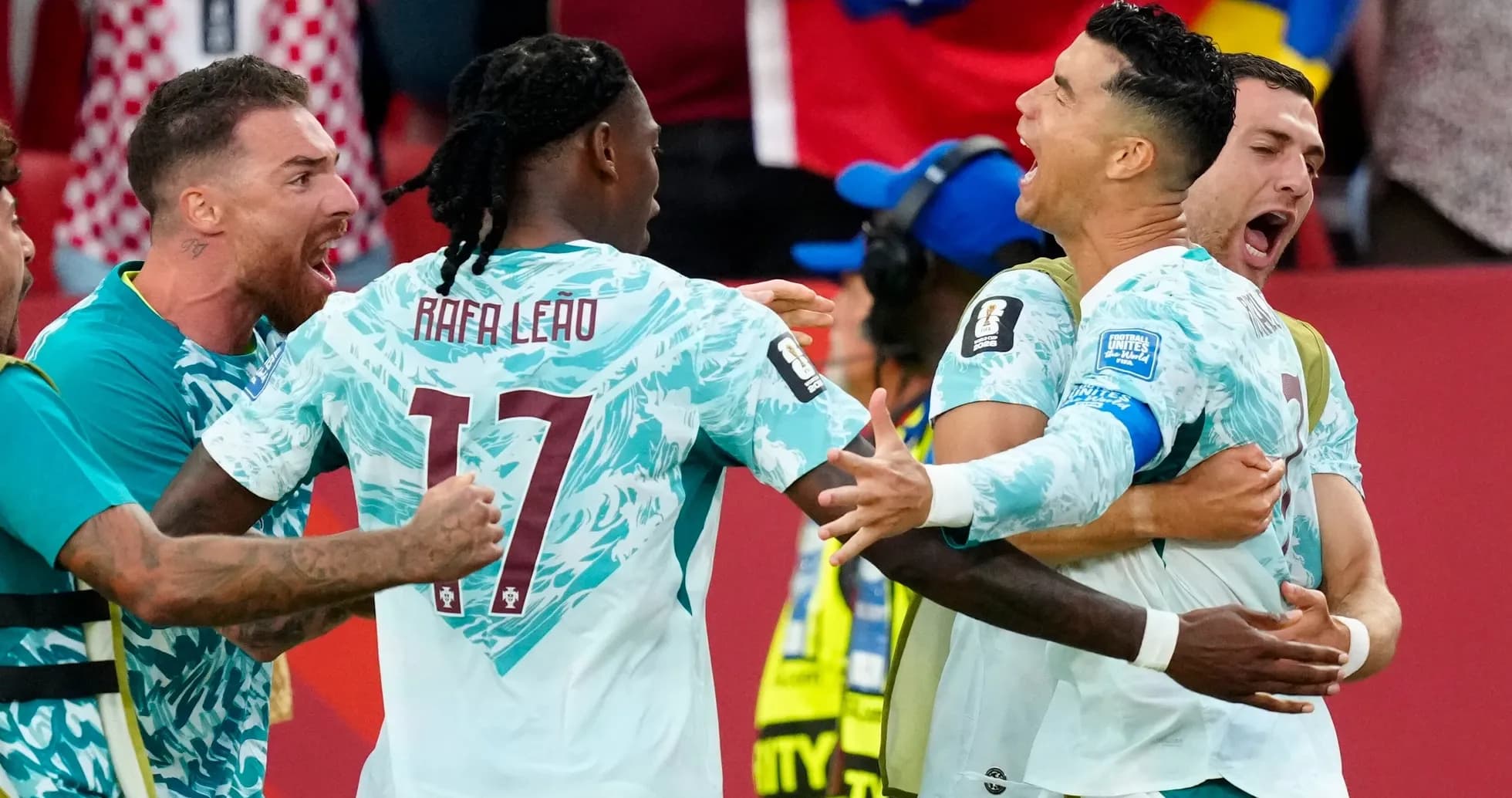
The pressure finally told from the spot. On 68', Portugal goal — Cristiano Ronaldo (unassisted, penalty). The captain converted confidently from 12 yards to make it 1-1, reflecting Portugal’s growing territorial dominance around the Croatian area.
Immediately after the equaliser, Croatia tried to refresh their attacking midfield. On 68', Mario Pašalić replaced Martin Baturina (Croatia), a move designed to add late runs into the box and more set-piece threat.
Croatia briefly thought they had reclaimed the lead. On 81', Petar Sučić’s finish was cancelled after another VAR intervention — Goal Disallowed - offside (Croatia), denying them a 1-2 advantage and underlining how fine the margins were in Portugal’s high defensive line.
Portugal then made a key game-management change. On 81', Rúben Neves replaced Cristiano Ronaldo (Portugal), sacrificing their main striker for additional midfield control and defensive stability as the match moved into its decisive phase.
Deep into added time, Croatia altered their defensive structure. On 90+2', Joško Gvardiol replaced Nikola Vlašić (Croatia), effectively adding an extra defender to cope with Portugal’s late pressure and aerial deliveries.
But the tactical gamble backfired. On 90+4', Portugal goal — Gonçalo Ramos (assisted by Rafael Leão). Leão attacked space on the left and delivered a telling ball that Ramos, the late-arriving striker, converted to turn the match around at 2-1. The move showcased Portugal’s wide overloads and the value of Ramos’s earlier introduction.
Croatia made one final attacking adjustment. On 90+6', Andrej Kramarić replaced Mateo Kovačić (Croatia), pushing an extra forward into the line in search of an equaliser.
Tensions flared as Croatia chased the game. On 90+8', Ivan Perišić (Croatia) — yellow card (Unsportsmanlike conduct) — was booked after protesting and a late clash on the touchline, reflecting Croatian frustration at the late turnaround.
There was still more VAR drama. On 90+13', Joško Gvardiol thought he had rescued Croatia, but his effort was ruled out — Goal Disallowed - offside (Croatia) — the third disallowed goal of the night, and the final confirmation of Portugal’s 2-1 comeback win.
Fixture Statistics & Tactical Audit
- xG: Portugal 2.18 vs 1.34 Croatia
- Possession: Portugal 61% vs 39% Croatia
- Shots on Target: Portugal 3 vs 6 Croatia
- Goalkeeper Saves: Portugal 5 vs 2 Croatia
- Blocked Shots: Portugal 4 vs 2 Croatia
The underlying numbers broadly support Portugal’s win, but also reveal its fragility. Portugal’s higher xG (2.18 vs 1.34) and heavier territorial control (61% possession, 584 passes at 91% accuracy) show a side that systematically constructed chances, particularly after the hour mark when the substitutions tilted the game. Their 15 total shots, with 10 from inside the box, underline how often they managed to pin Croatia deep and attack the penalty area.
Croatia, however, were anything but passive. They generated 13 shots and actually hit more efforts on target (6 vs Portugal’s 3), forcing Diogo Costa into 5 saves. That shot-on-target imbalance, combined with three disallowed goals for offside, shows how Croatia repeatedly exploited Portugal’s high line and the spaces behind their full-backs. Yet their xG of 1.34 suggests many of those attempts were from less optimal angles or under pressure, and their 85% passing with only 39% of the ball reflects a more direct, transition-focused approach.
Portugal’s 4 blocked shots and Croatia’s 2 blocks highlight how both defences were often stretched but willing to throw bodies in front of efforts. The difference was Portugal’s ability to convert territory and structure into higher-quality chances, particularly the penalty and the late Leão–Ramos combination, while Croatia’s most dangerous moments were marginally on the wrong side of the offside line.
Standings Update & Seasonal Impact
For Portugal, the 2-1 victory adds three points to their tally, moving them from 5 to 8 points in the World Cup campaign. Their goals for column rises from 6 to 8, and goals against from 1 to 2, taking their goal difference from +5 to +6. Already in the Round of 32 zone, this result strengthens their knockout credentials, underlining both their attacking depth and their resilience in overturning deficits.
Croatia, who entered with 6 points, remain on 6 after this defeat. Their goals for increase from 5 to 6, but goals against climb from 5 to 7, shifting their goal difference from 0 to -1. Despite being in the Round of 32 bracket, this loss and the negative swing in goal difference could leave them facing a tougher path in the knockout draw and raises questions about their defensive organisation against elite attacks.
Lineups & Personnel
Portugal Starting XI
- GK: Diogo Costa
- DF: João Cancelo, Rúben Dias, Renato Veiga, Nuno Mendes
- MF: João Neves, Vitinha, Pedro Neto, Bruno Fernandes, Rafael Leão
- FW: Cristiano Ronaldo
Croatia Starting XI
- GK: Dominik Livaković
- DF: Josip Stanišić, Josip Šutalo, Marin Pongračić, Ivan Perišić
- MF: Luka Modrić, Mateo Kovačić, Nikola Vlašić, Petar Sučić, Martin Baturina
- FW: Ante Budimir
Post-Match Verdict
Portugal’s performance was clinical in chance creation (2.18 xG from just 3 shots on target and 10 efforts inside the box) and tactically decisive in the timing of their substitutions. The introduction of Bernardo Silva, Francisco Conceição and Gonçalo Ramos reshaped the attacking structure, increasing occupation of the half-spaces and central lanes, which ultimately produced the penalty incident and the late 2-1 winner. Their dominance in possession (61%) and passing (584 completed at 91%) reflects a side comfortable controlling tempo and territory, even when chasing the game.
Croatia, by contrast, were vulnerable defensively (conceding 2 goals from 2.18 xG and allowing 15 shots) despite being dangerous in transition (6 shots on target and three disallowed goals for offside). Their plan to sit deeper and break nearly succeeded, but repeated offside calls against Sučić and Gvardiol exposed timing issues in their attacking runs, while late structural changes — adding Gvardiol, then Kramarić — could not stabilise the back line nor rescue a point. In the end, Portugal’s superior structure and bench impact outweighed Croatia’s sporadic but incisive moments, justifying a narrow but deserved 2-1 win.