.svg&w=384&q=75 "naujapitch logo")
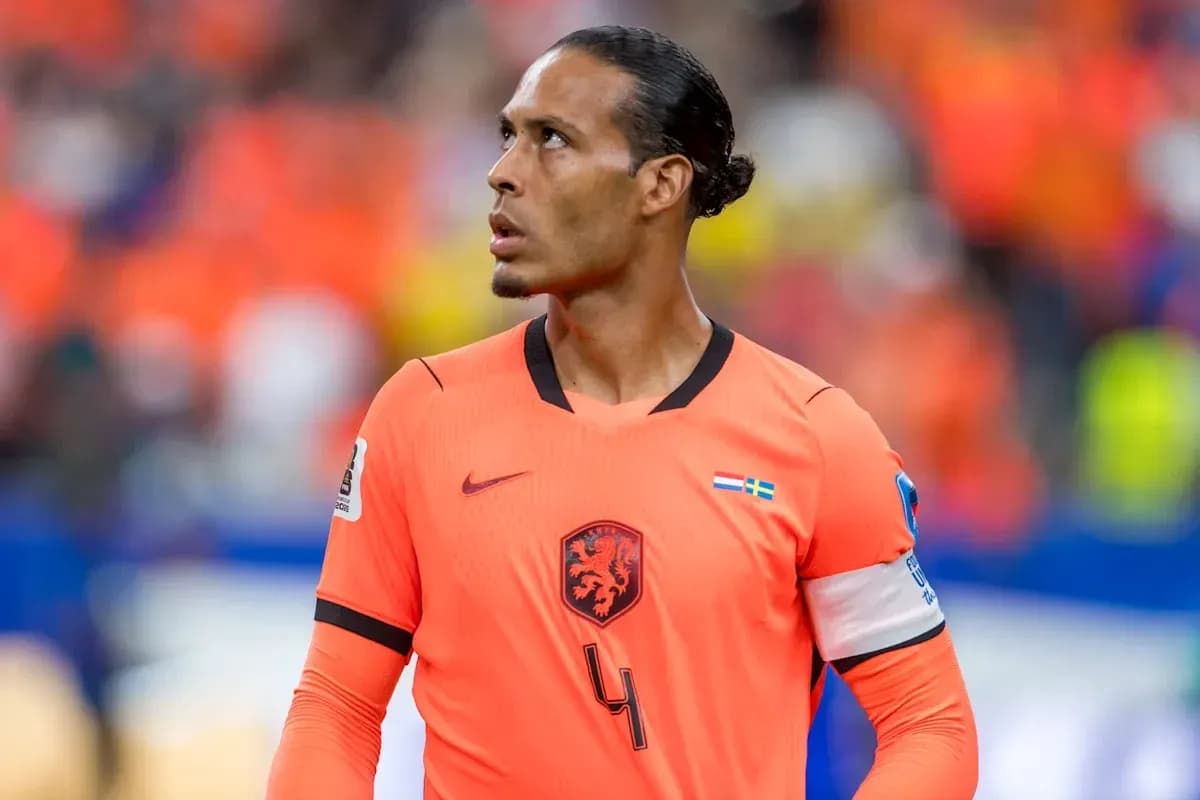
Virgil van Dijk Faces Backlash After World Cup Exit
The Netherlands’ World Cup campaign ended in chaos and recrimination, and at the eye of the storm stands Virgil van Dijk.
A late collapse against Morocco, an equaliser in stoppage time, and a penalty shootout defeat have triggered a furious inquest back home. The focus, almost obsessively, has landed on the captain.
Driessen’s blistering verdict
De Telegraaf columnist Valentijn Driessen did not bother with nuance. He went straight for the jugular.
“Ronald Koeman and Virgil van Dijk have betrayed everything our national team stands for,” he wrote, in a column that has set the tone for much of the Dutch debate since the final whistle.
For Driessen, the decision to move to a back three was not a tactical tweak but a concession — a shift he argued was forced by Van Dijk’s inability to marshal the defence properly during the group stage. In his eyes, the captain had dragged the team away from its principles, and the system change became a symbol of that.
Then came the equaliser.
As Morocco surged forward deep into stoppage time, Van Dijk lost his man in the box and the cross was converted. One moment of hesitation, one broken chain in the defensive line, and the Dutch were suddenly staring at extra time instead of the semi-finals.
Driessen laid that moment squarely at Van Dijk’s feet, accusing him of failing in the very area that has defined his career: command in the penalty area. His final verdict was brutal. The defender’s “time is up,” he declared.
For a player regarded as one of the finest centre-backs of his generation, it was an astonishingly severe public takedown, echoing the frustration of a nation that expected far more.
One lapse, or something deeper?
Strip away the emotion and one fact remains: Van Dijk will know he should have done better on the equaliser. This is a defender who has built his reputation on reading danger early, stepping in before chaos erupts. Here, at the worst possible moment, he didn’t.
But to boil the entire Dutch exit down to a single misstep is to ignore the rest of the night.
For long stretches, Van Dijk did what he has done for years. He headed danger clear. He dominated in the air. He cut out passes and helped keep Morocco’s attacks at arm’s length during regulation time. The Netherlands had chances to finish the job before the game descended into a lottery from the spot.
Tournament football lives in those tiny margins. A missed chance, a mistimed run, a tired leg in the 93rd minute. One detail changes, and the narrative around Van Dijk’s performance looks very different.
Playing hurt
After the game, Ronald Koeman added a layer of context that has been easy to ignore amid the noise. Van Dijk, he revealed, had been struggling with a calf problem as the match wore on.
The issue, Koeman said, was “bothering him badly”. The defender stayed on regardless, pushing through extra time when his body was clearly protesting.
For a central defender, a compromised calf is not a minor inconvenience. It affects the first step, the ability to twist and recover, the explosiveness needed to track runners in behind. Especially in the dying minutes of a knockout tie, when the spaces grow, the mind tires and the legs feel heavier than ever.
Van Dijk could have signalled to come off. He chose to stay. That decision speaks to his sense of responsibility as captain, even if it may have contributed to the lapse that now dominates the headlines.
Legacy under scrutiny
None of that will shield him from scrutiny. Captains carry the weight when things fall apart, and Van Dijk is no exception.
He has spent more than a decade at the top of the European game, defined by his authority, his calm, and a consistency that has made errors like this feel almost shocking. That body of work does not vanish because of one night. But international football is ruthless: reputations are reassessed in 120 minutes.
For some, Driessen’s attack reflects a broader impatience with a Dutch side that has not translated its talent into deep tournament runs often enough. For others, it feels like an overreaction aimed at an easy target after collective failure.
The truth, as usual, lies somewhere between those extremes. Van Dijk was not flawless. Nor was he the sole reason the Netherlands are on a plane home.
What comes next
The immediate task for Van Dijk is recovery — physically and mentally. A draining World Cup, the sting of elimination, and the public backlash at home will all take their toll.
The domestic season will not wait. Liverpool will expect their captain to return refreshed, the calf healed, the mind reset.
For the Netherlands, a new cycle looms. Questions will be asked about Koeman’s tactics, the use of the back three, and whether the team is built in the right image for the players it has. Hanging over all of it is a sharper, more personal question.
When Virgil van Dijk next pulls on that orange shirt, will he be the symbol of a painful past fortnight, or the man who proves that one brutal night did not mark the end of his story with the national team?