.svg&w=384&q=75 "naujapitch logo")

Portugal vs Croatia: World Cup Knockout Clash Preview
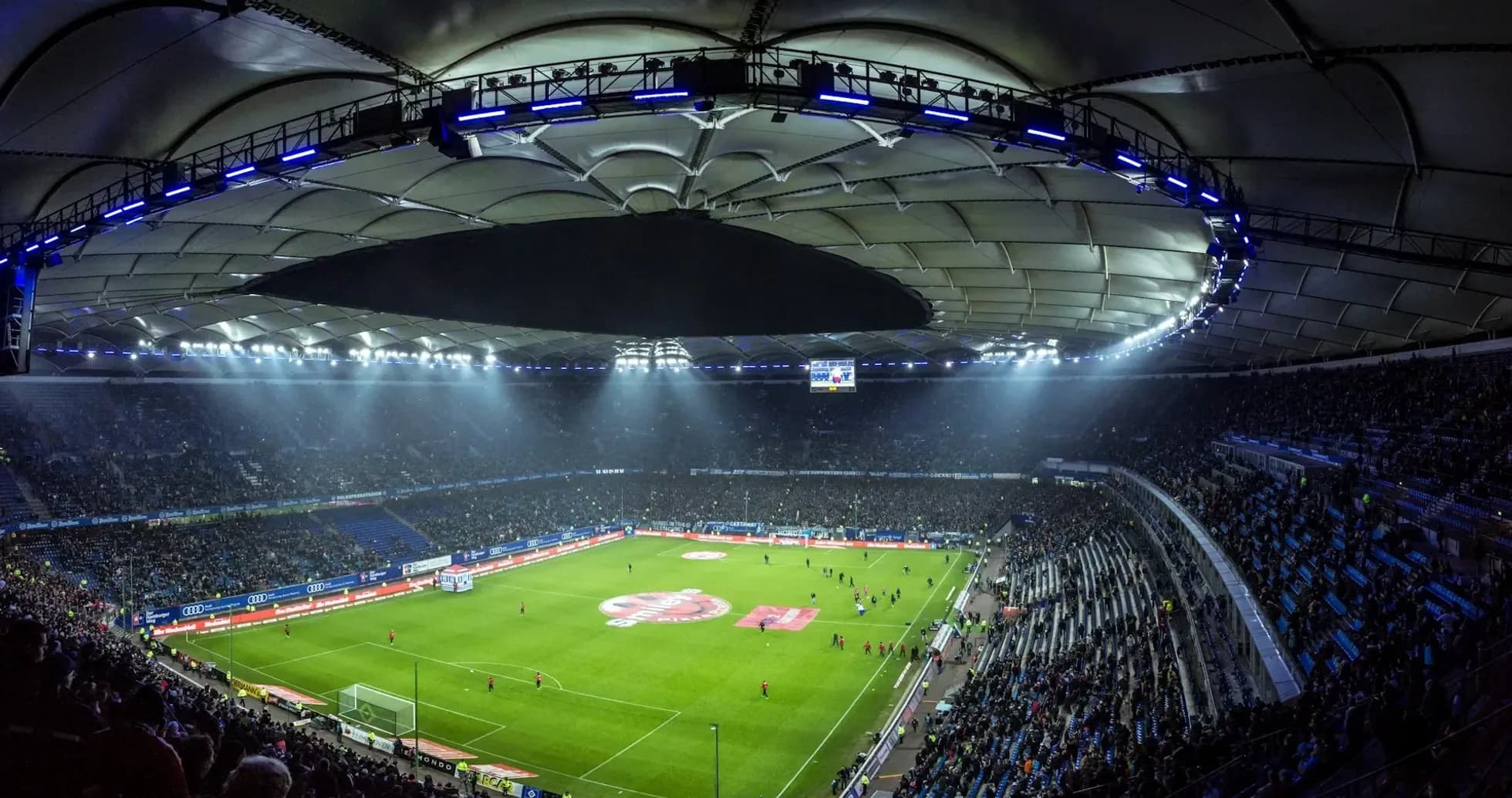
On the night of 2 July 2026, under the lights of BMO Field in Toronto, two generations of European heavyweights collide with their World Cup lives on the line. Portugal arrive with Cristiano Ronaldo still in the squad and a richly talented supporting cast, while Croatia lean again on the intelligence of L. Modric and the steel of a battle-tested core. This Round of 32 tie is simple in its stakes: win and the dream of a deep run in 2026 survives, lose and an entire cycle ends in a single, brutal evening.
Season Context
Portugal come into the knockout phase from Group K having taken 5 points from 3 matches, scoring 6 goals and conceding just 1. With a record of 1 win and 2 draws in those 3 games (6 goals for, 1 against), they have combined attacking flair with defensive control to secure their Round of 32 berth, and their positive goal difference of +5 underlines how efficient they have been in limited minutes.
Croatia emerge from Group L with 6 points from their 3 matches, built on 2 wins and 1 defeat. They have scored 5 goals and conceded 5, leaving them with a goal difference of 0, a profile that suggests a more open, volatile group campaign. Still, those 6 points and 5 goals from 3 games show that Croatia retain enough cutting edge to trouble any opponent when the margins tighten in the knockouts.
Form & Momentum
Portugal’s form string reads “DWD”, a sequence that reflects a solid, if not flawless, group stage (5 points from 3 games, 6 goals scored, 1 conceded). Averaging 2.0 goals per game and just 0.3 goals conceded per game in those 3 matches, Portugal look balanced and controlled rather than wild or erratic, with that +5 goal difference across 3 fixtures backing up their status as a well-structured side.
Croatia’s form string is “WWL”, underlining that they arrive with notable momentum despite a setback in their most recent outing (2 wins and 1 loss, 5 goals scored, 5 conceded). An average of 1.7 goals scored and 1.7 goals conceded per game across 3 fixtures paints them as more high-risk, high-reward than Portugal, capable of both opening games up and being opened up themselves.
Head-to-Head Patterns
Recent competitive history between these nations is rich and finely balanced. On 18 November 2024, Croatia and Portugal drew 1-1 at Stadion Poljud in Split in the UEFA Nations League (1-1, UEFA Nations League, season 2024, November 2024), a cagey contest that showed how hard it is for either side to fully impose themselves. Earlier that same UEFA Nations League campaign, on 5 September 2024 at Estádio da Luz in Lisbon, Portugal edged Croatia 2-1 at home (2-1, UEFA Nations League, season 2024, September 2024), underlining Portugal’s ability to find a decisive goal in tight competitive fixtures. Going back to 17 November 2020, again at Stadion Poljud, Portugal came from behind to win 3-2 away to Croatia in the UEFA Nations League (3-2, UEFA Nations League, season 2020, November 2020), a result that showcased Portugal’s resilience and Croatia’s vulnerability in high-scoring battles.
Tactical Preview
Portugal’s statistical profile in this World Cup points strongly towards a 4-2-3-1 structure, used in all 3 of their matches so far. With 6 goals scored and only 1 conceded in 3 games, Portugal have blended a potent attacking line with a disciplined double pivot in midfield (2.0 goals scored per game, 0.3 conceded). The presence of creative midfielders such as Bruno Fernandes, Bernardo Silva and Vitinha in the squad list suggests that Portugal can overload central zones and half-spaces, feeding attackers like Gonçalo Ramos, Rafael Leão, João Félix and Cristiano Ronaldo. The 4-2-3-1 base allows full-backs such as João Cancelo, Diogo Dalot or Nuno Mendes to advance, knowing that the team’s defensive record (1 goal conceded in 3 matches) supports an aggressive territorial approach.
Out of possession, that same 4-2-3-1 can compress into a compact 4-4-2 block, with one of the attacking midfielders stepping up alongside the striker to screen passes into midfield. The defensive numbers from the group phase (only 1 goal against in 3 matches) suggest that Portugal are comfortable defending higher up the pitch and limiting clean shots, rather than being forced into deep survival phases. With centre-backs like Rúben Dias and Gonçalo Inácio available, they have the aerial and positional security to hold a relatively high line and contest Croatia’s direct balls towards A. Budimir or P. Musa if selected.
Croatia, by contrast, have alternated between a 4-2-3-1 and a 3-4-2-1, with the former used twice and the latter once. Their 5 goals scored and 5 conceded in 3 matches (1.7 scored and 1.7 conceded per game) indicate a side that can create but also leaves space. In a 4-2-3-1, Croatia can lean on L. Modric and M. Kovacic as the double pivot, using their press resistance to bypass Portugal’s first line and connect with advanced midfielders like N. Vlasic, Mario Pasalic or L. Sucic between the lines. From wide areas, I. Perisic as a defender and J. Stanisic as a wide option provide both width and crossing ability, aiming at penalty-box forwards such as A. Budimir or P. Musa.
Should Croatia opt for the 3-4-2-1, defenders like J. Gvardiol, M. Erlic and M. Pongracic can form a back three, with wing-backs pushing high to pin Portugal’s full-backs. That system, however, risks exposing the channels if Portugal transition quickly through players like Rafael Leão or Pedro Neto, particularly given Croatia’s record of 5 goals conceded in 3 games. The comparison model’s overall index leans towards Portugal at 66.5% versus 33.5% for Croatia, reflecting Portugal’s stronger balance between attack and defence rather than any overwhelming dominance.
In the finer details, Portugal’s last-five indices show a solid defensive tilt (def index 93% and att index 40%), whereas Croatia’s last-five profile is more evenly split but less secure at the back (att index 33%, def index 67%). This suggests a scenario where Portugal may be more comfortable controlling territory and limiting chances, while Croatia may need to accept a more open game to maximise their attacking threat.
Statistical Snapshot
- Competition: World Cup, season 2026 — 2 July 2026.
- Venue: BMO Field, Toronto.
- Prediction: Win or draw — Double chance : Portugal or draw.
- Win Probabilities: Home 45% / Draw 45% / Away 10%.
- Model: Portugal 66.5% — Croatia 33.5%.
Betting Verdict
The prediction model favours Portugal on a “win or draw” basis, and the numbers support that stance: Portugal have conceded just 1 goal in 3 World Cup matches, while Croatia’s more open profile (5 conceded in 3) leaves them exposed against a multi-layered Portuguese attack. Head-to-head, Portugal have taken a 2-1 win and a 3-2 away win in recent UEFA Nations League meetings, alongside a 1-1 draw, reinforcing their slight historical edge in competitive games. With bookmakers pricing the home win for Portugal at roughly 1.73–1.81 (implied range around 55–58%), the draw around 3.12–3.66 (about 27–32%), and Croatia at roughly 4.15–5.24 (about 19–24%), the safest angle aligns with the model’s advice: back Portugal on the double chance, expecting their defensive stability and superior overall comparison index to carry them through a tight, high-stakes knockout.