.svg&w=384&q=75 "naujapitch logo")
Bellingham's Midfield Masterclass and Rice's Return
Thomas Tuchel walked out of the Panama game with a win, a clean sheet and a fresh problem. The kind every international manager secretly wants – but still a problem.
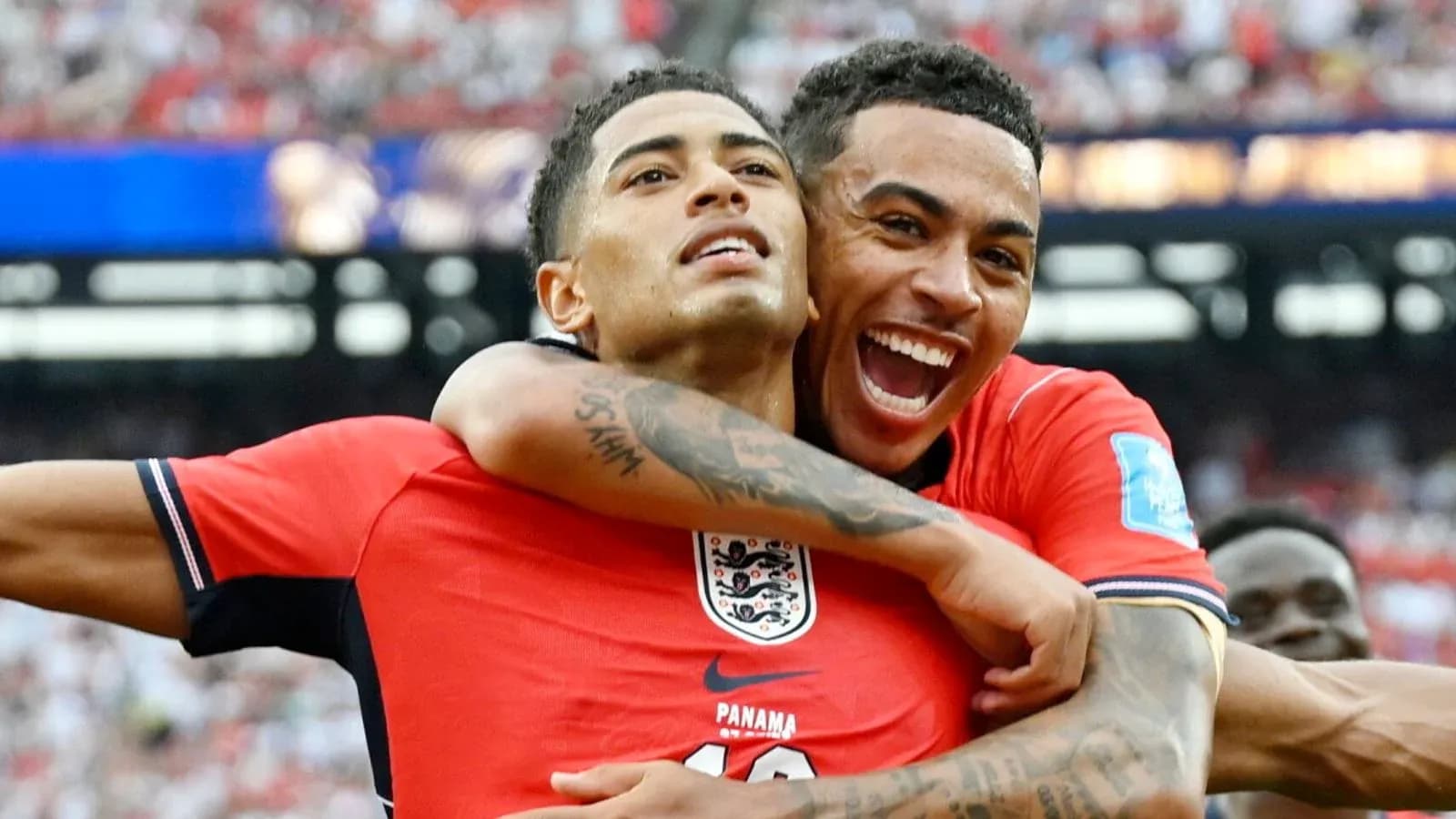
Jude Bellingham, unleashed in a deeper midfield role, didn’t just cope. He took over.
Goal, assist, constant menace between the lines. He played alongside Elliot Anderson and treated the middle of the pitch like his own training ground, dragging England into dangerous areas and leaving Panama chasing shadows in that 2-0 victory.
Now Declan Rice is ready to return.
And that is where it gets complicated.
Bellingham’s deeper masterclass – and Rice’s shadow
For Paul Merson, watching on as a former England midfielder, the picture is clear: Bellingham was outstanding. But that’s Rice’s territory.
“Rice plays,” is his blunt assessment. If Rice is fit, Rice starts. Simple on paper, far less simple on the tactics board.
Bellingham’s performance from deep offered something England have often lacked at major tournaments: a midfielder who can arrive from behind the play, break lines with and without the ball, and appear unmarked in zones defenders hate to defend. When he starts deeper, opponents lose him. They can’t just station a holding player on his toes and wait.
Panama couldn’t get near him. Ghana had, when he operated higher up.
Merson saw the contrast clearly. Against Ghana, Bellingham floated in that No 10 pocket, constantly available, constantly showing, but starved of service as the game jammed up centrally. Against Panama, from deeper, he could burst through, pick his moments, arrive rather than wait.
That’s the appeal. That’s also the headache.
The Anderson question and a No 10 conundrum
If Rice comes back in as the anchor – and all logic says he will, especially as the opponents improve – Tuchel must decide who partners him and what becomes of the No 10 role.
Pairing Rice and Bellingham would be a brutal call on Anderson, who did little wrong against Panama. But it’s the next question that really bites: who plays as the 10, and how do England get that player on the ball?
Morgan Rogers struggled there. Barely involved, unable to influence the game, he mirrored Bellingham’s issues against Ghana. Same zone, same traffic jam. It’s an area that looks glamorous on the tactics board but, against low blocks, can quickly become a cul-de-sac.
Merson’s concern is not about names but about supply. Whoever wears that No 10 shirt, England must find a way to feed them. At the moment, the ball doesn’t arrive often enough in those pockets, and when it does, it’s under heavy pressure.
That’s why the temptation will be to keep Bellingham deeper, where he can dictate, surge, and break beyond a static line. It suits his energy. It suits his instincts.
But it forces Tuchel to redraw the rest of the map.
Bellingham the enthusiast – and England’s responsibility
Merson likens Bellingham’s attitude to Wayne Rooney’s. The same hunger, the same refusal to drift out of games. He wants the ball, everywhere, all the time.
From deeper, he simply sees more of it.
The comparison that really matters, though, is a different one. Merson is careful not to overstate it, but he points to Lionel Messi’s role with Argentina: when Messi shows, they give him the ball. Tight space, loose space, it doesn’t matter. They trust him to sort it out.
England, he argues, must develop that same instinct with Bellingham. When he’s free, give it to him. When he’s marked, give it to him anyway. Build the courage to play into him even when the picture isn’t perfect.
That’s easier said than done when opponents like Ghana and now DR Congo sit in deep banks, ten men behind the ball, daring you to thread needles in central areas. It’s why the idea of Bellingham returning to No 10 against DR Congo feels awkward. He’ll face the same wall, the same crowding, the same lack of space to turn.
But if he stays deeper, someone else must shoulder the creative burden between the lines. Tuchel has to choose what kind of control he wants.
Wide men stuck in second gear
Out wide, the story is similar: plenty of possession, not enough punch.
England’s wingers have seen the ball, but they’ve rarely torn games open. Marcus Rashford had volume against Panama – plenty of touches, plenty of promise – but no real end product after all the pre-match clamour for his inclusion over Anthony Gordon.
On the other flank, Bukayo Saka looks short of his usual sharpness. Maybe it’s a niggle, maybe it’s rhythm, but the spark hasn’t quite caught yet. Even so, Merson can’t picture an England side without Saka when the stakes rise. Big games, big players. He still belongs in that category.
The pattern is familiar: England circulate the ball, shift it wide, only to find their wingers doubled up and forced backwards. The tempo is there, the intent is there, but the incision is missing.
Merson grades the wide players as “six out of 10” so far. Functional, not frightening. And that might be the biggest hidden positive of England’s group stage: they’re still alive in the tournament, still winning, without their wingers catching fire.
If that changes in the knockouts, the whole picture shifts.
England’s spread of responsibility
One thing this England side are not doing is waiting for Harry Kane to bail them out every time.
Kane has his goals. The defence steadied themselves against Ghana. Bellingham took centre stage against Panama. Different matches, different heroes. That’s how tournament teams survive the slog – by spreading the load.
Merson likes that balance. This is not a one-man show.
England have four wingers still searching for their best form, a world-class holding midfielder about to return, and a generational talent in Bellingham proving he can hurt teams from multiple zones. The ceiling, on paper, remains high.
The question is whether they can climb towards it quickly enough.
DR Congo, reality checks and a wide‑open World Cup
The last 32 brings DR Congo, another side expected to sit in, defend deep and make England solve the same puzzle that frustrated them at times against Ghana and, in Merson’s eyes, even against Panama.
He calls those games “reality checks”. Wins, yes, but warnings too.
England, he feels, have been a “seven out of 10” so far. Professional against Croatia, patchy but effective against Ghana and Panama. Good enough to qualify, not yet good enough to scare the giants.
And the giants are out there. France, with that terrifying attacking arsenal. Spain, still Spain – slick, technical, but not always ruthless enough to kill you off. Colombia, who impressed Merson with their pace, energy and comfort in the conditions against Portugal.
This World Cup feels open. On any given day, any of the big nations can be hurt. That gives England a genuine shot, as long as they keep improving. You can’t just flick a switch in the quarter-finals and expect to become something you haven’t been.
The climb has to start now, against DR Congo.
Tuchel’s side don’t need perfection yet. They do need progression. A sharper edge in the final third. A clearer plan for that No 10 space. A definitive call on where Bellingham does the most damage alongside Rice.
Because while England are in the tournament, they have a chance to win it.
The hope, as ever with England at a World Cup, is both the fuel and the threat.