.svg&w=384&q=75 "naujapitch logo")
Iran 2-2 New Zealand: Match Report & Tactical Analysis
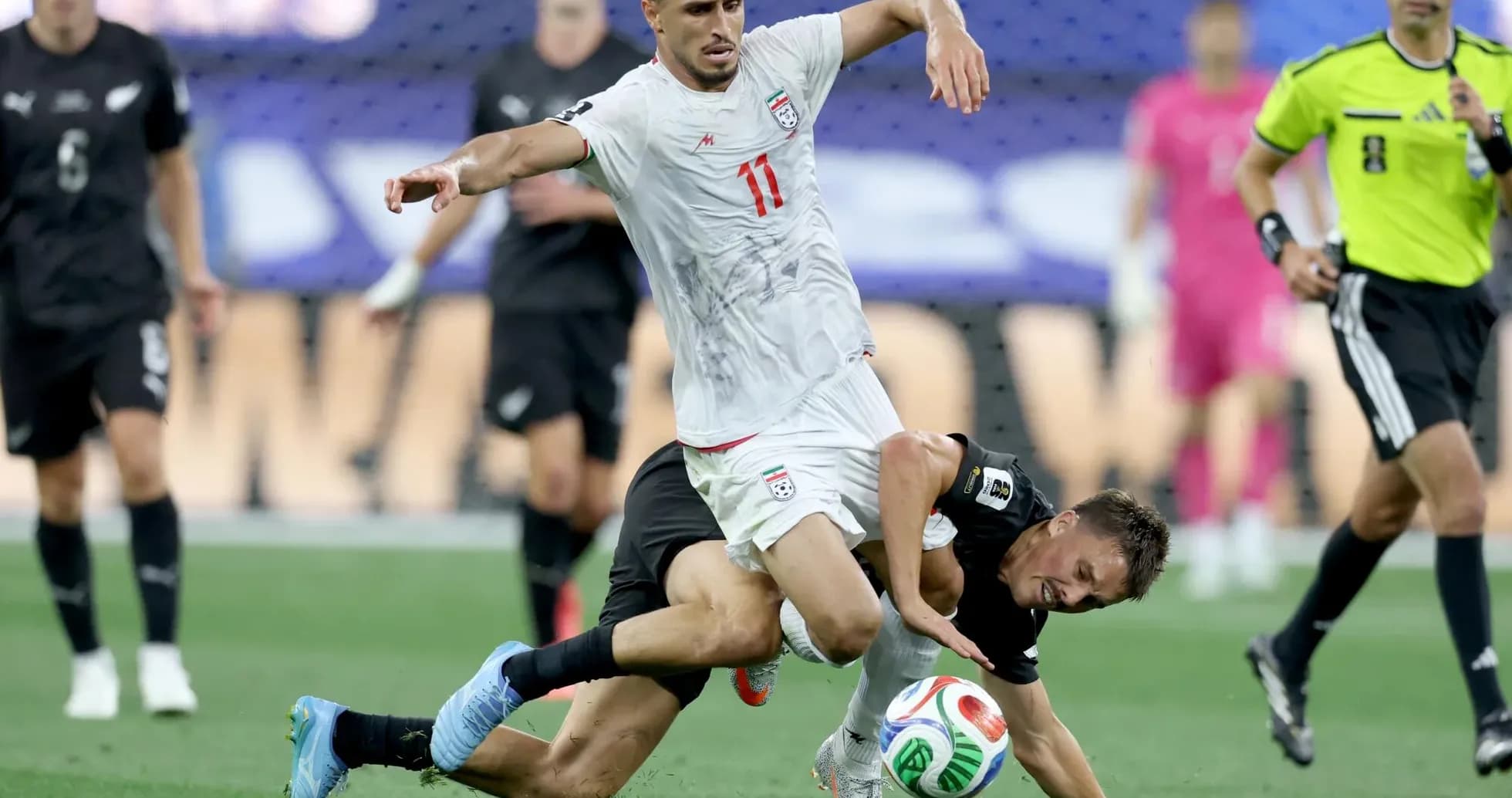
Iran 2-2 New Zealand at SoFi Stadium opened Group G with a high-tempo draw that reflected both sides’ attacking ambition and defensive looseness. With both teams already in Round of 32 qualifying positions, the shared points move New Zealand to 2 points and keep them top of the group on goal difference, while Iran also move to 2 points and remain firmly in the qualification places.
Match Report
The game exploded into life early. In the 7th minute, New Zealand struck first: New Zealand goal — E. Just (assisted by C. Wood). A direct move into the final third found Chris Wood between the lines, and his service into the box was met by Elijah Just, who finished to give the All Whites an early 0-1 advantage.
Iran responded by pushing their full-backs higher and increasing crosses from wide areas. That pressure told on 32 minutes: Iran goal — R. Rezaeian (unassisted). The right-back, stepping into an advanced pocket, cut inside and unleashed a driven effort that levelled the match at 1-1, restoring parity before half-time.
At the interval, Iran looked to inject more vertical threat. In the 46th minute, M. Ghaedi replaced A. Yousefi (Iran), adding a more direct, attacking profile from the left side of midfield. Seven minutes later, in the 53rd minute, A. Alipour replaced S. Moghanlou (Iran), refreshing the front line and aiming to stretch New Zealand’s centre-backs with more runs in behind.
Yet it was New Zealand who landed the next blow. In the 54th minute, New Zealand goal — E. Just (assisted by C. Wood). Once again the Wood–Just axis combined, with Wood linking play and Just timing his movement to exploit space in the box, restoring New Zealand’s lead at 1-2 and punishing Iran’s transitional defending.
Iran refused to fold and kept channelling attacks through their right flank. The equaliser arrived in the 64th minute: Iran goal — M. Mohebi (assisted by R. Rezaeian). A well-worked move down the right ended with Rezaeian delivering from a high position, and Mohebi arrived to convert, making it 2-2 and underlining the full-back’s dual role as scorer and creator.
Immediately after the goal, Iran adjusted their midfield balance. In the 65th minute, E. Hajsafi replaced S. Ghoddos (Iran), bringing more defensive security and experience into central areas to manage New Zealand’s counter-attacking threat.
New Zealand responded with a triple change on 68 minutes to regain control of the flanks and central lanes. First, B. Old replaced L. Cacace (New Zealand), altering the profile on the left side. Simultaneously, R. Thomas replaced C. McCowatt (New Zealand), adding fresh legs and passing range in the attacking midfield band. On 78 minutes, there was another defensive rotation as C. Elliot replaced T. Payne (New Zealand), refreshing the right-back position to deal with Iran’s persistent wing play.
Iran made a late attacking tweak in the 80th minute when A. Hosseinzadeh replaced M. Taremi (Iran), a notable decision to change their focal point up front in search of more mobility and pressing from the front in the closing stages.
As tensions rose, the only booking of the night arrived in the 89th minute: E. Hajsafi (Iran) — yellow card (Tripping), a tactical foul to halt a New Zealand transition through midfield.
Deep into stoppage time, New Zealand used their bench again to chase a late winner. In the 90+2 minute, J. Randall replaced S. Singh (New Zealand), adding fresh attacking energy between the lines. In the same 90+2 minute, T. Bindon replaced M. Stamenic (New Zealand), a move that slightly rebalanced their structure for the final aerial duels and set-piece phases. Neither side could find a decisive moment, and the match closed at 2-2.
Fixture Statistics & Tactical Audit
- xG: Iran 1.5 vs 1.24 New Zealand
- Possession: Iran 48% vs 52% New Zealand
- Shots on Target: Iran 4 vs 8 New Zealand
- Goalkeeper Saves: Iran 6 vs 2 New Zealand
- Blocked Shots: Iran 5 vs 2 New Zealand
The underlying numbers suggest a broadly balanced contest with contrasting attacking profiles. Iran’s 1.5 xG from 4 shots on target reflected selective but relatively high-quality chances, many created from wide overloads and late runs into the box. New Zealand, with 1.24 xG from 8 shots on target, were more volume-based in their finishing, frequently working shooting positions for Just and Wood but often from slightly less optimal angles.
New Zealand’s marginal edge in possession (52%) and pass accuracy (85% to Iran’s 77%) underpinned their more controlled phases, especially in build-up through Joe Bell and Marko Stamenic. However, Iran’s 17 total shots to New Zealand’s 14, plus a higher number of blocked efforts (5-2), showed how often they were able to pin the All Whites back and force last-ditch interventions.
In goal, Alireza Beiranvand’s 6 saves mirrored New Zealand’s 8 shots on target minus the two goals conceded, highlighting how frequently Iran’s back line was exposed in transition. At the other end, Max Crocombe’s 2 saves against 4 Iranian shots on target reflected a defence that allowed fewer clear looks but struggled to contain Iran’s best-crafted moves, particularly involving Rezaeian.
On balance, the 2-2 scoreline aligns closely with the xG profile: neither side did enough to clearly deserve three points, but both created sufficient quality to justify two goals apiece.
Standings Update & Seasonal Impact
For Iran, this 2-2 draw adds a second point to their Group G tally, moving them from 1 to 2 points. Their goals for column rises from 2 to 4, and goals against from 2 to 4, keeping their goal difference at 0. They remain in the Round of 32 qualification zone, with their attacking output encouraging but their defensive record indicating work still to do against stronger opponents.
New Zealand also climb from 1 to 2 points, maintaining their unbeaten start. Their goals for increase from 2 to 4, and goals against from 2 to 4, leaving their goal difference unchanged at 0. They stay top of the group on rank, but with the margins extremely fine, their ability to convert territorial control into more efficient chance creation will be critical in the remaining group fixtures.
Lineups & Personnel
Iran Starting XI
- GK: Alireza Beiranvand
- DF: Ramin Rezaeian, Shoja Khalilzadeh, Ali Nemati, Milad Mohammadi
- MF: Mohammad Mohebi, Saman Ghoddos, Saeid Ezatolahi, Aria Yousefi
- FW: Shahriar Moghanlou, Mehdi Taremi
New Zealand Starting XI
- GK: Max Crocombe
- DF: Tim Payne, Finn Surman, Michael Boxall, Liberato Cacace
- MF: Joe Bell, Marko Stamenic, Callum McCowatt, Sarpreet Singh, Elijah Just
- FW: Chris Wood
Post-Match Verdict
This was an attacking, open encounter in which both teams showcased their strengths and exposed familiar weaknesses. Iran were particularly effective down the right, with Rezaeian directly involved in both goals and helping drive a 17-shot output that underlines how dangerous they can be when full-backs are released high. However, conceding 8 shots on target and relying on 6 saves points to a vulnerable defensive structure in transition, especially when both full-backs advance simultaneously.
New Zealand produced a clinical attacking partnership in Wood and Just, whose combination yielded both goals and underpinned an 8-shot-on-target performance that was more aggressive than their 1.24 xG might suggest. Yet, allowing 17 shots and 1.5 xG against, despite having more possession, reflects a side that can be stretched once the first line of pressure is beaten. Both teams leave with a point and attacking confidence, but the data makes clear that defensive refinement will decide how far their World Cup campaigns can realistically go.