.svg&w=384&q=75 "naujapitch logo")
Lazio 2–1 Pisa: A Season's Reflection in 90 Minutes
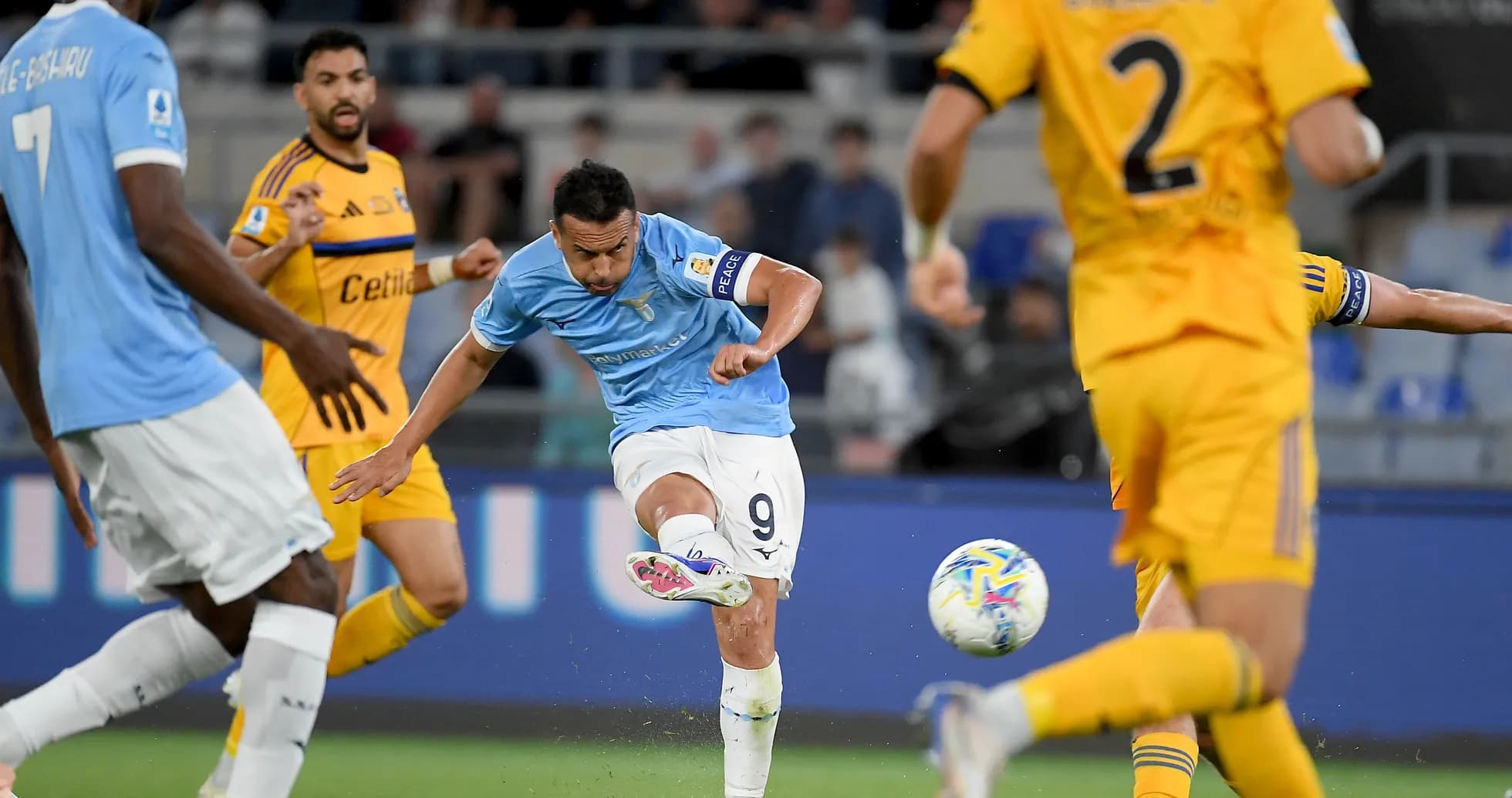
The Stadio Olimpico closed its Serie A season under the Roman dusk with a scoreline that felt inevitable and yet hard‑earned: Lazio 2–1 Pisa, a result that crystallised the very different identities of a side finishing 9th and one slipping out of the division in 20th.
I. The Big Picture – Season DNA in 90 Minutes
Following this result, Lazio’s campaign reads like a team hovering between eras. Overall they took 54 points from 38 matches, with a goal difference of 1 (41 scored, 40 conceded) – a perfectly balanced ledger for a side that never quite broke free of mid‑table gravity. At home they were marginally more assertive: 8 wins, 6 draws and 5 defeats from 19, scoring 27 and conceding 25. That translates to 1.4 goals scored at home on average against 1.3 conceded – slim margins, but margins nonetheless.
Pisa’s story is harsher and more linear. Bottom of Serie A with 18 points, their overall goal difference of -45 (26 for, 71 against) is the statistical scar tissue of a relegation season. On their travels they never won: 0 victories, 8 draws and 11 defeats, scoring 17 and conceding 45, an away average of 0.9 goals scored against a punishing 2.4 conceded. Heading into this game, the numbers already suggested that survival was a theoretical exercise rather than a realistic ambition.
The formations on the night mirrored these identities. Maurizio Sarri stayed loyal to Lazio’s season‑long blueprint, a 4‑3‑3 that the club used in 36 league matches. Oscar Hiljemark’s Pisa lined up in their most familiar structure, a 3‑5‑2 that has framed 21 of their league outings. One shape promised width and controlled possession; the other, density and reaction.
II. Tactical Voids – Absences and Discipline
Both managers had to negotiate significant absences that subtly reshaped the contest.
For Lazio, the spine was thinned. Goalkeeper I. Provedel was ruled out with a shoulder injury, pushing A. Furlanetto into a rare starting role between the posts. Higher up the pitch, the absence of M. Zaccagni (knee injury) removed one of Sarri’s key one‑v‑one outlets and a player whose season had been coloured by intensity and edge – his campaign included a red card and even a missed penalty, underlining both his influence and volatility. N. Rovella’s suspension for a previous red card, alongside yellow‑card bans for N. Tavares and K. Taylor, forced Lazio to lean on depth in midfield and at full‑back.
Pisa’s voids were just as structural. A. Caracciolo, their defensive leader and one of Serie A’s most carded players (10 yellows), was suspended for accumulation. His absence stripped the back line of its most experienced organiser and a defender who had blocked 24 shots across the campaign – a crucial “last‑line” presence missing on a night when Lazio’s front three were always likely to probe. Further upfield, creative and transitional pieces like F. Coppola, D. Denoon, M. Marin and M. Tramoni were all unavailable, while Lorran was omitted by coach’s decision. The result was a Pisa XI that had to manufacture threat without many of its usual secondary weapons.
Disciplinary trends also framed the tone. Lazio’s season‑long yellow‑card distribution peaks late: 25.64% of their yellows came between 76–90 minutes, with a further 14.10% in added time (91–105). Their red cards tell a similar story of volatility across the match, with a striking 55.56% of reds in the 76–90 window. Pisa, too, live on the edge late on, with 25.64% of their yellows arriving in the final quarter‑hour. This shared tendency towards late‑game bookings hinted that the closing stages in Rome would be fraught, even if the scoreline was already set.
III. Key Matchups – Hunter vs Shield, Engine Room vs Enforcer
With no official top‑scorer data provided, the “Hunter vs Shield” duel had to be read through structure rather than names. Lazio’s front three – M. Cancellieri, T. Noslin and Pedro – were supported by an aggressive midfield triangle of F. Dele‑Bashiru, T. Basic and R. Belahyane. This 4‑3‑3 is built to exploit the half‑spaces and isolate wide defenders, and on this night it was set directly against a Pisa back three missing its most combative organiser.
In Caracciolo’s place, S. Canestrelli and R. Bozhinov were asked to anchor a line that already belonged to the league’s leakiest defence: overall 71 goals conceded, with 45 of those on their travels. Without their chief shot‑blocker and vocal reference point, Pisa’s “shield” was always likely to bend under Lazio’s layered attacks, especially given the home side’s comfort in this system – 36 league matches in a 4‑3‑3 is tactical muscle memory.
The “Engine Room” duel played out between Lazio’s deep‑lying distributors and Pisa’s central pair. On one side stood the ball‑secure axis of A. Romagnoli and Mario Gila. Across the season, Romagnoli completed 2,001 passes at 93% accuracy, while Mario Gila added 1,820 passes at 90%. Together, they formed a remarkably calm platform for Lazio’s build‑up, with Gila also blocking 17 shots and Romagnoli 20, underlining their defensive contribution.
Opposite them, Pisa’s midfield heartbeat belonged to M. Aebischer. Over the campaign he completed 1,530 passes with 85% accuracy and created 34 key passes, a rare note of control in a chaotic season. His challenge at the Olimpico was twofold: disrupt Lazio’s first phase and then carry Pisa forward whenever transition opportunities arose. But with E. Akinsanmiro and I. Vural flanking him and wing‑backs M. Leris and S. Angori pushed deep by Lazio’s wingers, Aebischer often found himself outnumbered, more firefighter than conductor.
IV. Statistical Prognosis – Why 2–1 Felt Written
Even without explicit xG figures, the season data sketches the underlying probabilities that fed into this 2–1 finale.
Heading into this game, Lazio’s overall scoring average sat at 1.1 goals per match, rising to 1.4 at home. Pisa’s overall defensive record of 1.9 goals conceded per game – and 2.4 away – strongly suggested that Lazio would create and convert multiple chances. At the other end, Pisa’s total scoring average of 0.7 goals per match (0.9 away) aligned neatly with the idea of them nicking a goal rather than sustaining pressure.
Lazio’s 15 clean sheets overall (6 at home, 9 away) and Pisa’s 21 matches without scoring underlined the gulf in defensive solidity, yet the visitors’ ability to find 17 away goals in a brutal season hinted they could still trouble an opposition that concedes 1.3 at home on average.
Overlay those numbers onto the tactical map – a settled 4‑3‑3 at home against a damaged 3‑5‑2 missing its defensive leader – and the 2–1 scoreline becomes less a twist and more an expected chapter. Lazio had the structure, the ball circulation and the marginally sharper edge in both boxes. Pisa, as they have all season, had pockets of resistance and flashes of threat, but not enough armour to withstand 90 minutes at the Olimpico.
In the end, the campaign’s truths converged in one evening: Lazio as a side of slim but real superiority, Pisa as a team whose courage could not quite compensate for structural frailty. The table, and the night, told the same story.