.svg&w=384&q=75 "naujapitch logo")
Luca Zidane: A New Chapter for the Zidane Legacy in Algeria
When the cameras panned to Algeria’s goalkeeper against Argentina and the name “Zidane” flashed across the back of his jersey, the football world did a double take. For a split second, memories jumped back to 1998, to 2006, to a bald maestro dictating World Cup finals.
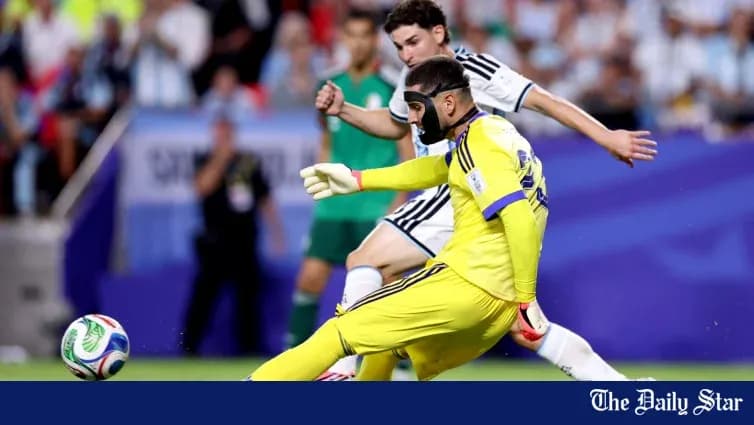
But this was a different Zidane. Luca, not Zinedine. Mask on, gloves on, standing alone in front of a sea of noise.
At 28, Luca Zidane has taken a very different path from his father, yet he walked into the same tournament, under the same unforgiving spotlight. Born in France, raised largely in Spain during Zinedine’s glittering years at Real Madrid as player and coach, Luca grew up in the shadow of a legend and in the heart of elite football. His choice, though, was to follow a different flag.
He chose Algeria.
It is a decision rooted not in marketing or convenience, but in blood and upbringing. Zinedine Zidane’s parents were Algerian, and that heritage never faded inside the family home. Luca has spoken often about it, about the food, the language, the stories, the sense that Algeria was never far away, even as he trained at Valdebebas and watched his father lift Champions League trophies.
“We’ve lived in an Algerian culture since we were small,” he said in an earlier interview. “It’s an honour to play for Algeria.”
Those words now carry the weight of a World Cup behind them.
His debut on football’s biggest stage could hardly have been tougher: defending champions Argentina, Lionel Messi in full command, and a relentless attack that eventually broke Algeria down in a 3-0 defeat, Messi helping himself to a hat-trick. For any goalkeeper, that is a brutal introduction. For a Zidane, with the world watching the surname as much as the performance, the scrutiny only intensifies.
And then there was the mask.
Luca’s appearance in a black protective face mask gave the night an even more striking image. The Granada goalkeeper came into the tournament still carrying the scars of a violent collision in a Spanish league match in April. He suffered a fractured jaw, injuries to his chin and a severe concussion. For a time, his World Cup dream looked over before it had even begun.
Yet there he was, cleared to play, strapping on the mask and pulling on Algeria’s number one jersey for the country’s return to the sport’s grandest stage. The mask was not a fashion statement; it was a reminder of how close he came to missing this chance, and how determined he was not to let it slip.
Every save, every goal conceded, every camera close-up came with a subtext: a Zidane back at a World Cup. Only this time, instead of orchestrating attacks, he was trying to repel them. Instead of gliding through midfields, he was diving at boots and fingertips.
For many Algerian fans, and for neutrals of a certain age, the surname alone was enough to stir old memories. Zinedine Zidane lifting the trophy in 1998. The heady run to the final in 2006. The iconic number 10. Two decades on, the same name is stitched onto a different shirt, in a different colour, representing a different story of migration, identity and choice.
The arc has flipped. The son of Algerian parents once chose France and conquered the world. Now their grandson has chosen Algeria and stepped into a World Cup in his own right, not as a replica, but as a goalkeeper trying to write his own chapter behind a famous name.
The surname is familiar. The journey is not. And on this evidence, the Zidane legacy has found a new position on the pitch – guarding Algeria’s goal on the game’s biggest stage.