.svg&w=384&q=75 "naujapitch logo")
Spain's Mourning After Goalless World Cup Opener
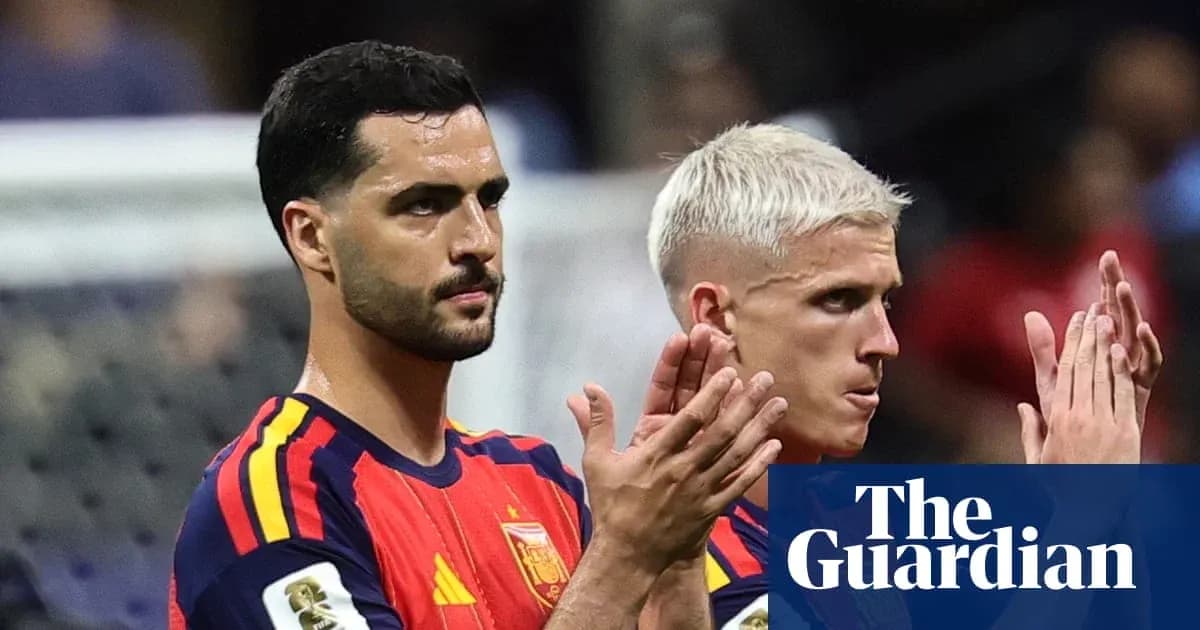
Mikel Merino walked into the press room alone, the only Spain player not out on the grass at 11am, and chose a word that hung in the air longer than any question.
Mourning.
“With a ‘u’,” he clarified. No one had died. Spain had not even lost. But after a flat, goalless World Cup opener against Cape Verde, it felt close enough.
“A 0-0 draw isn’t a defeat, but sometimes defeats can feel like that,” the Arsenal midfielder admitted, facing seven long desks of reporters and the hum of criticism outside. The selección had slipped in their first step, and now came six long days in Tennessee before they could try to put it right.
Living with the ‘mourning’
“Like every game that doesn’t go as you’d like, every player lives with that mourning,” Merino said. He was calm, clear, unflinching. Some players, he explained, go straight back to the footage, rewinding every mistake. Others switch off completely, shut out football and try to breathe.
“You have to swallow the disappointment. We have to recover as soon as we can. Luis [de la Fuente] always says that it’s about trying to be better tomorrow, even if you’ve won. We’re always self‑critical.”
He doesn’t see much point in firing off public messages to soothe the anger. “Personally, I am not one to send messages [to fans]; I think the best message is the next game, turning it around with a win.”
The message, though, was already there in his words. Spain, he insisted, would deal with this together. Each in their own way. But as a family.
Family, ego and the national shirt
“It is easy to talk of ‘family’ but when things don’t go well, when they are difficult, is when you truly see that ‘family’ – and I see unity, enthusiasm and a will to play well,” Merino said.
He turned to the dressing-room dynamic, to the balance between ego and humility that every national team wrestles with.
“It is important to have ego; as a footballer, with all the criticism from outside you need it to feel good on the pitch. But you also need the humility to know that this belongs to everyone. Players come to the national team because they are important [at their clubs] and find a new reality where only a few can play.
“That’s what the word ‘family’ is. We have to be united, support each other in every moment. You can be annoyed, angry, but that energy has to be positive.”
Anger can turn inward. It can eat away at players. His use of “mourning” was quickly seized upon, but he did not back away from it.
“Maybe I didn’t express myself well,” he said at first, then circled back to defend the metaphor. “It was an attempt at a metaphor, a comparison. You’re so competitive that when it doesn’t go well, sometimes you go home and don’t even want to talk to your family. That’s why I say it’s like a mourning. Everyone deals with it differently. I like to face it and watch [games back] as soon as possible but that doesn’t mean it’s the best approach for everyone.”
Too much time, too many thoughts
What players crave after a bad night is simple: another game. Immediately. A chance to rinse out the taste.
“What you want after a bad game is to play again straight away to get the bad taste out of your mouth,” Merino said. The new, expanded World Cup denies them that. More rest days, more analysis, more noise.
“The risk is you have lots of time to go over it; it’s a mental challenge to deal with that, evade all that and be as free as you can mentally.”
And all of it plays out in public.
“That’s a reality; it’s part of the business, the reason we earn what we earn, why football is so big, so important: because you’re here to cover it, to create stories through which we explain things to fans,” he said, glancing across the room at the rows of laptops and cameras. “There are players who like it more, or like it less, but it’s part of the ‘circus’ and we have to accept it and live with it.”
He admits he struggles to digest a bad result. Always has. Over time, though, he has learned not to run from it.
“I’m one of those that finds it hard to swallow a bad result but with time I’ve realised that it is best to [confront it] and start trying to turn it around as soon as possible. Four, five hours and you realise that this [World Cup] has just started, that there is time to fix it.”
Once that realisation lands, his focus shifts outward. To the group. To the players who are hurting.
“Then you can focus on the group, on what helps them. Put a hand on the shoulder of whoever is hurt because they didn’t play, or missed a chance. Or know who needs space for that mourning.”
Echoes of 2010
There was a small lift for Spain in the other Group match. Saudi Arabia and Uruguay drew, keeping the pool open and offering a psychological reset.
Merino did not hide the sense of relief. The draw, he said, left him with the feeling that they “start over”.
“I like to see the positive side,” he said. The examples came quickly. “The last world champion started by losing to Saudi Arabia. In 2010 Spain lost the first game and there was lots of criticism and they turned it around; that is an example to follow from people who were idols.”
Back then, he was 14, watching that Spain side carve out history. Now he stands inside the story, drawing on those memories.
“I often take inspiration from athletes who have lived my dreams before I did. That generation means so much for this one: we want to emulate them.”
The mourning, then, is real. But so is the precedent. Spain have been here before, in deeper trouble than this, and found a way out. The question now is whether this group can carry that same ruthless response into their next 90 minutes.