.svg&w=384&q=75 "naujapitch logo")
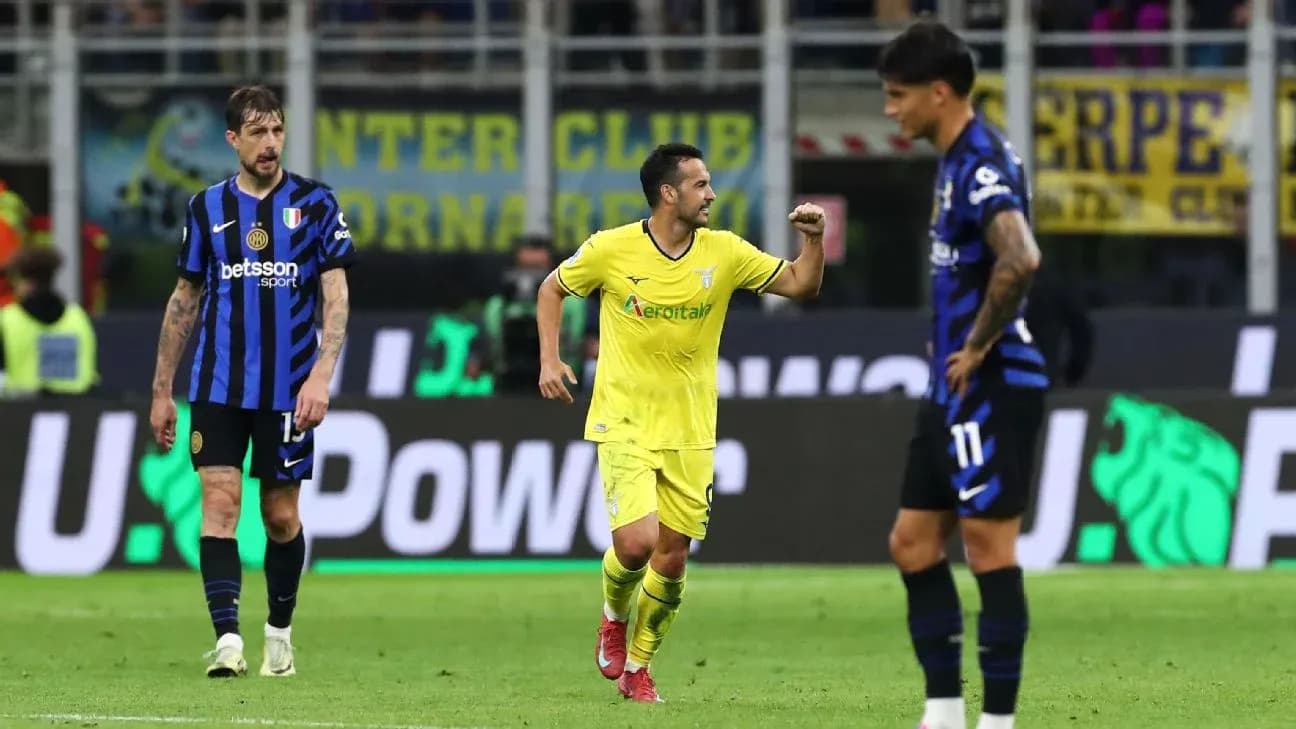
Lazio's Harsh Reality Check Against Inter: A 0–3 Defeat
Under the late-afternoon light of the Stadio Olimpico, Lazio’s season met a harsh reality check. Following this result, an 0–3 defeat to league leaders Inter in Serie A’s Round 36, the table tells a blunt story: Lazio sit 8th with 51 points and a slender overall goal difference of +2 (39 scored, 37 conceded), while Inter stride clear in 1st on 85 points with a dominant overall goal difference of +54 (85 for, 31 against). The numbers mirror what unfolded on the pitch: one side clinging to European hopes, the other playing with the authority of a champion.
I. The Big Picture: Structures and Seasonal DNA
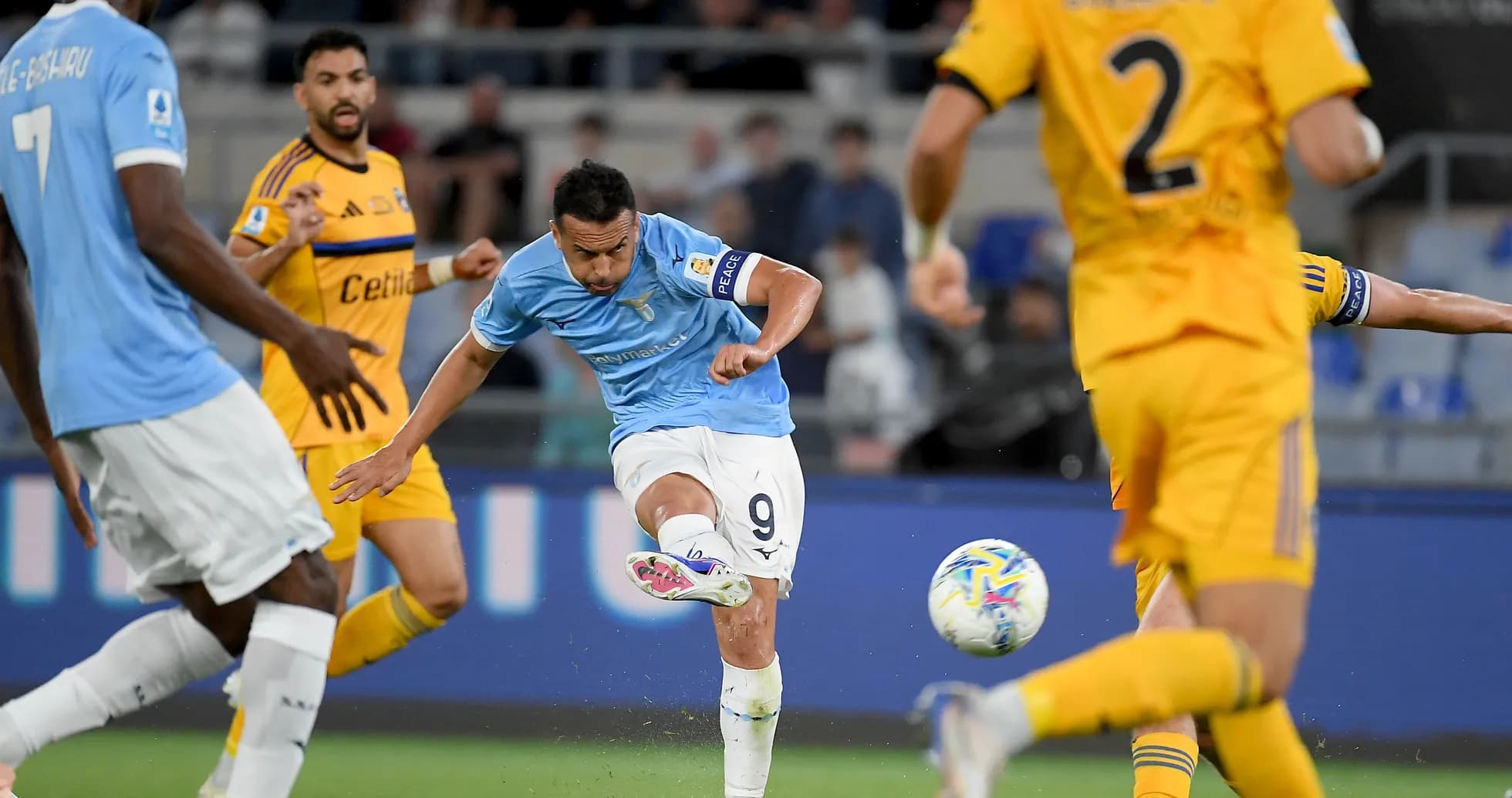
Lazio lined up in Maurizio Sarri’s familiar 4-3-3, but the names on the teamsheet revealed a side patched together rather than purring at full strength. E. Motta started in goal, shielded by a back four of A. Marusic, Mario Gila, A. Romagnoli and L. Pellegrini. In front of them, a midfield of F. Dele-Bashiru, N. Rovella and T. Basic tried to stitch together Sarri’s vertical passing patterns, feeding a front three of M. Cancellieri, T. Noslin and Pedro.
This is a Lazio whose seasonal identity has been one of balance rather than brilliance. Heading into this game, they had won 13 of 36 league fixtures overall, drawing 12 and losing 11. At home they had been solid rather than intimidating: 7 wins, 6 draws and 5 defeats from 18, with 25 goals scored and 24 conceded. The overall picture is of a team that scores 1.1 goals per game in total and concedes 1.0, a side that lives on fine margins and often needs defensive control to compensate for an attack that can stall.
Inter, by contrast, arrived with the swagger of a machine in full flow. Cristian Chivu kept faith with a 3-5-2 that has become the league’s gold standard: J. Martinez in goal behind a back three of Y. Bisseck, F. Acerbi and A. Bastoni. Across midfield, A. Diouf and Carlos Augusto patrolled the flanks, with N. Barella, P. Sucic and H. Mkhitaryan forming a technically gifted central trio. Up front, the devastating partnership of M. Thuram and Lautaro Martínez led the line.
Inter’s seasonal numbers underline their superiority. Overall they had 27 wins from 36 matches, with just 4 draws and 5 losses. On their travels they had been ruthless: 13 away wins from 18, scoring 36 and conceding only 16. Their attack hums at 2.4 goals per game overall, including 2.0 away, while their defence allows just 0.9 goals per game in total. This is the profile of a side that dominates both penalty areas.
II. Tactical Voids: Absences and Discipline
The absences sheet framed much of the tactical narrative. Lazio were without D. Cataldi (groin injury), I. Provedel (shoulder) and M. Zaccagni (foot). The loss of Provedel pushed Motta into a high-pressure start against the league’s most clinical attack, while Cataldi’s absence removed a tempo-setter in midfield. Zaccagni’s injury stripped Sarri of one of his key one-v-one outlets in wide areas, forcing more responsibility onto Cancellieri and Noslin to stretch Inter’s back three.
Inter had their own creative void: H. Çalhanoğlu, one of Serie A’s most influential deep playmakers, missed out with a calf injury, while F. Esposito was also unavailable. Yet Chivu’s squad depth softened the blow. P. Sucic stepped into the central spaces, with Barella assuming more of the progressive passing load and Mkhitaryan knitting together the half-spaces.
From a disciplinary standpoint, both teams carried reputations into this fixture. Lazio’s season card map shows a pronounced late-game edge: 27.40% of their yellow cards arrive between 76–90 minutes, while 62.50% of their red cards are also shown in that same 76–90 window. Inter’s profile is similar in terms of late intensity: 30.65% of their yellows fall in the final 15 minutes of regular time. This is typically a phase where emotions spike and structure can fray, but Inter’s control on the day meant Lazio’s usual late volatility never truly translated into a comeback push—only into frustration.
III. Key Matchups: Hunter vs Shield, Engine Room Battles
The headline duel was always going to be Lautaro Martínez against Lazio’s central defensive pairing of Romagnoli and Mario Gila. Lautaro entered this fixture as Serie A’s standout finisher for Inter, with 17 goals and 6 assists in total, forged from 66 shots and 37 on target. His movement between the lines and in the box is relentless, and he is more than just a poacher—his 37 key passes and 6 assists underline his creative edge.
Facing him, Lazio relied heavily on Mario Gila’s standout season. Across the campaign he had made 29 appearances, and his defensive numbers are those of a modern anchor: 44 tackles, 16 successful blocked shots and 23 interceptions, with 127 duels won from 188. Romagnoli, for his part, brings leadership and distribution, with 1,942 completed passes at 93% accuracy and 19 successful blocked shots. Yet both centre-backs have flirted with disciplinary danger—each has seen red this season—making the timing and aggression of their interventions critical against a striker who thrives on contact and chaos.
Alongside Lautaro, M. Thuram’s all-action profile stretched Lazio’s line. Thuram has 13 goals and 6 assists in total, with 56 shots and 29 on target, and his 258 duels (129 won) show how often he engages defenders physically. Against a Lazio side that, overall, concedes 1.3 goals per game at home, the double threat of Thuram’s runs into the channels and Lautaro’s penalty-box craft was always likely to test the hosts’ narrow margin for error. The 0–3 scoreline underlined just how ruthlessly that “hunter” partnership exploited any hesitation.
In midfield, the “engine room” battle pitted Inter’s creators against Lazio’s stabilisers. Barella, one of Serie A’s top assist providers with 8 in total, is the heartbeat of Inter’s possession game. His 1,725 passes with 72 key passes and 85% accuracy speak to a player who can both circulate and penetrate. Mkhitaryan added subtlety between the lines, while Sucic offered vertical runs from deep.
Lazio’s trio of Rovella, Basic and Dele-Bashiru were tasked with disrupting this rhythm and feeding transitions to Pedro, Cancellieri and Noslin. Yet their season profile hints at structural limitations: Lazio have failed to score in 16 matches overall, including 6 at home, and while they have collected 15 clean sheets, they rarely blow teams away. Without Cataldi’s control and Zaccagni’s outlet, their midfield looked more functional than incisive, and Inter’s trio gradually dictated the tempo, especially after taking a two-goal lead by half-time.
IV. Statistical Prognosis: xG Logic and Defensive Solidity
Even without explicit xG values, the season data offers a clear probabilistic reading of this matchup. Inter’s attack, producing 2.7 goals per game at home and 2.0 on their travels, is operating at a level where they reliably generate high-quality chances. Their defence, conceding only 0.9 goals per game overall and keeping 18 clean sheets, consistently suppresses opponents’ shot quality and volume.
Lazio, by contrast, sit in the realm of fine margins: 1.4 goals scored at home per game versus 1.3 conceded. Their 15 clean sheets overall are impressive, but the 16 matches in which they failed to score underline a vulnerability when chasing games. Against a side like Inter, whose away defence allows just 0.9 goals per match and has produced 10 away clean sheets, the statistical expectation tilted heavily towards a low Lazio output.
Following this result, the 0–3 scoreline feels less like an anomaly and more like the logical convergence of form, structure and squad depth. Inter’s twin spearhead of Lautaro and Thuram overwhelmed a Lazio back line that usually survives on tight margins, while Barella and Mkhitaryan controlled the engine room against a Lazio midfield missing key pieces.
In narrative terms, this was a meeting between a side still searching for a definitive identity and one that has already forged a ruthless, title-winning one. The numbers, the lineups and the final score all point the same way: Inter’s tactical clarity and statistical dominance left Lazio with little room to breathe, let alone to dream.