.svg&w=384&q=75 "naujapitch logo")

Ousmane Dembele Named Ligue 1 Player of the Year Again
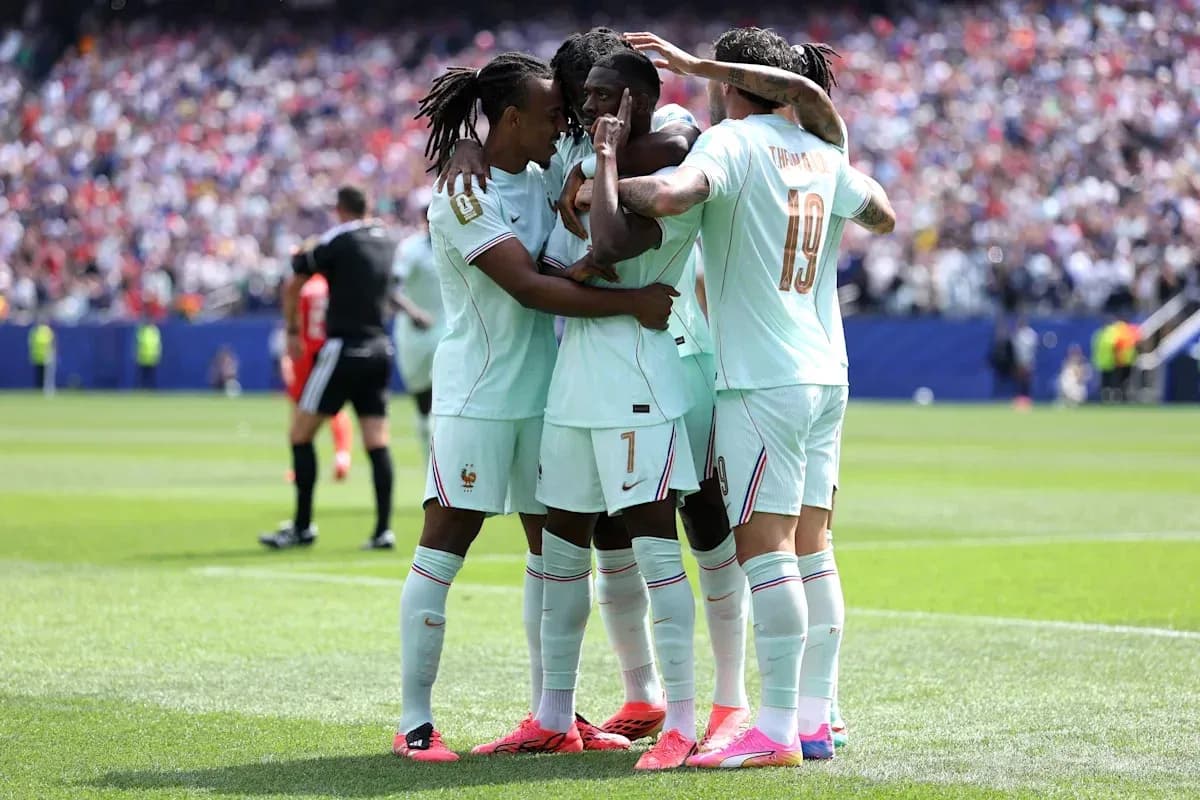
Ousmane Dembele has been named Ligue 1 Player of the Year for the second season running, and this time there is no caveat, no shadow, no asterisk. The Paris Saint-Germain winger now stands alone as the face of French domestic football.
At 28, he has stepped into the space once owned by Kylian Mbappe and filled it with his own, very different chaos. No longer the support act, he is the headline, driving a remodelled PSG side towards a 14th league title and into a Champions League final date with Arsenal that could redefine careers.
A Season Built on Fragility and Fury
On paper, Dembele’s campaign should not belong to a Player of the Year. Nine league starts. Just 960 minutes. A body that kept betraying him.
Yet every time he did make it onto the pitch, he bent the narrative back his way.
Ten goals. Six assists. That is the surface. The deeper story lies in how he tilts a football match. Stationed on the right, he stretches back lines to breaking point, drags full-backs into places they do not want to go, and opens corridors of space for the rest of Luis Enrique’s system to flood.
Opponents know what is coming. They still cannot live with it.
The contrast with last season is stark: 1,736 minutes then, barely more than half of that now. But where volume dropped, impact sharpened. Dembele turned limited time into concentrated damage, the sort of efficiency that forces awards panels to ignore the injury report and focus on the fear he generates.
Joining an Elite Circle
Winning the UNFP Player of the Year once is a line on a CV. Winning it twice in a row is a statement.
Dembele becomes only the fifth player in French football history to retain the prize. It is a tiny club, defined by dominance. Zlatan Ibrahimovic last managed it in 2014, before Mbappe turned the award into his personal property for five straight seasons.
Now the baton has passed again, from one PSG star to another. The club’s grip on the trophy remains firm, but the face on the podium has changed.
There is more Parisian flavour in the honours list. Desire Doue, Dembele’s teammate, claimed the award for best young player, a sign that this version of PSG is not just about one man, or even one generation.
Dembele did not use the stage to talk about himself. He pointed to the dressing room, to the coaching staff, to structure and work rate. The words were predictable, perhaps, but the context was not: this is a PSG where the collective finally feels like more than a slogan.
Luis Enrique’s New Order
The shift starts on the touchline. Luis Enrique has taken a club long addicted to individual brilliance and forced it into a more demanding identity.
PSG now press as a unit, keep the ball with purpose, and attack in waves instead of isolated flashes. The design matters. It has allowed them to survive long stretches without key players, Dembele included, without the season veering off course.
They effectively sealed the league with a narrow, nervy 1-0 win over Brest, a result that pushed them six points clear with an unassailable goal difference. Not spectacular, but decisive — a champion’s kind of win.
Luis Enrique did not walk away with the best coach award. That went to Pierre Sage of Lens, the man who turned his side into the only genuine domestic challenger to PSG’s supremacy. The choice underlined how far the rest of the league has come, even as Paris still finish on top.
Yet anyone who has watched PSG closely this season understands how much of this campaign carries the manager’s fingerprints. The structure protects them. The structure amplifies them. And within that structure, Dembele has become the unpredictable element that makes everything else harder to defend.
Arsenal, London, and the Edge of History
For all the trophies and all the statistics, PSG’s season will be judged in one place: the Champions League final.
They arrive in London after surviving a wild semi-final against Bayern Munich, edging the tie 6-5 on aggregate. It was chaotic, emotional, and precisely the kind of scenario in which previous PSG sides have lost their nerve.
This one did not.
There is a different steel about them now. They have coped with injuries, tactical reshuffles, and elite European pressure without folding. The squad looks less fragile, less fixated on individuals, more capable of managing the dark moments that define knockout football.
At the heart of that lies a simple question: can Dembele stay fit, and can he tilt one more major match in his team’s favour?
If he does, his dribbles and feints will carry more than just entertainment value. They will carry the weight of a club’s history and a league’s reputation. Because this final against Arsenal is not just about a winger confirming his status as Ligue 1’s best.
It is about whether PSG, and by extension French club football, are finally ready to sit at the very top table and stay there.