.svg&w=384&q=75 "naujapitch logo")
Fiorentina vs Genoa: A Tactical Stalemate
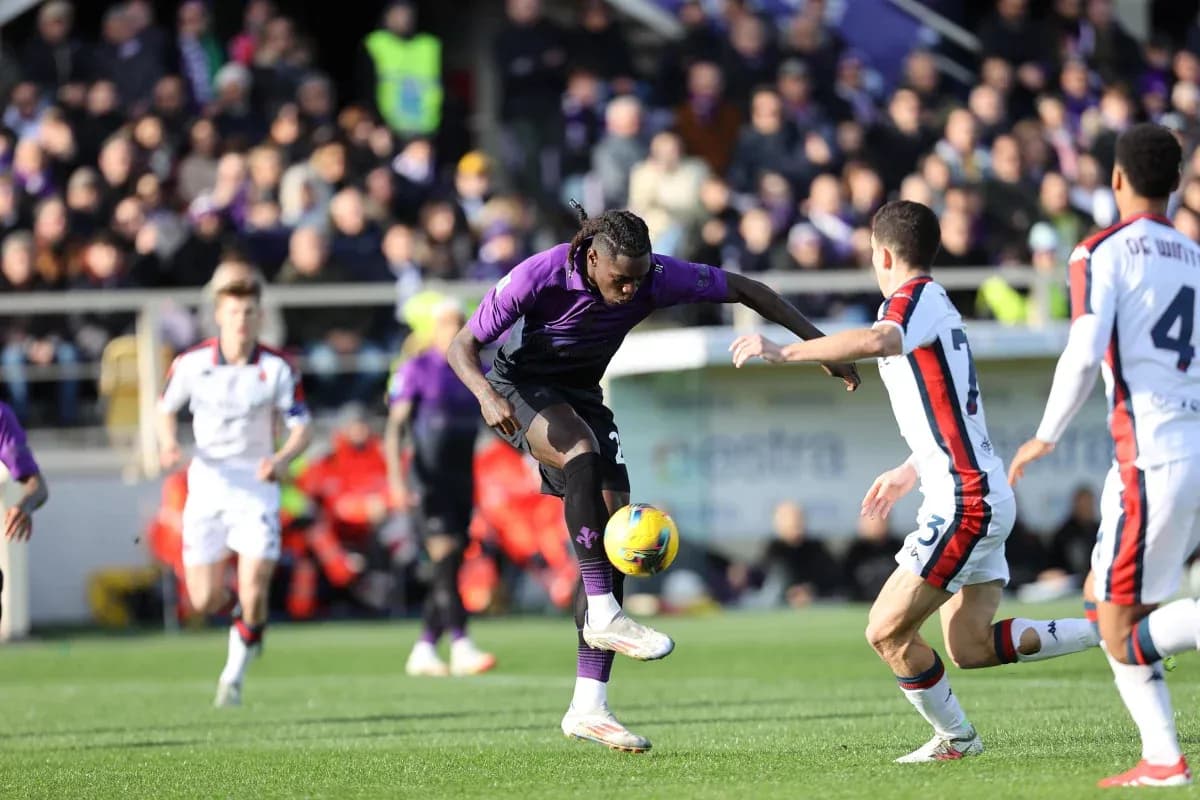
Stadio Artemio Franchi exhaled at full time, but it never truly roared. Fiorentina and Genoa walked away from a 0-0 that felt less like a stalemate and more like a mirror held up to their seasons: functional, tense, but ultimately short of incision.
I. The Big Picture – Two Nervous Mid-Table Identities
Following this result, the table tells you why the night unfolded as it did. Fiorentina sit 15th on 38 points with a goal difference of -11, their overall 38 goals for and 49 against confirming a side that scores and concedes at almost identical rhythms. At home this campaign they have been perfectly balanced: 20 goals scored and 20 conceded across 18 matches, averaging 1.1 goals for and 1.1 against at the Franchi.
Genoa, 14th with 41 points and a goal difference of -8, travel with a similar statistical profile. On their travels they have scored 19 and conceded 24 in 18 away fixtures, averaging 1.1 goals for and 1.3 against. Both teams came into the fixture with 36 league matches behind them, both with modest win columns (Fiorentina 8 overall, Genoa 10), both more comfortable dragging opponents into attritional contests than blowing them away.
That shared DNA framed a match where risk management trumped ambition, and where the tactical structures mattered more than individual flashes.
II. Tactical Voids – Who Was Missing, and What That Changed
The absences on the teamsheet quietly reshaped the contest.
For Fiorentina, the headline missing piece was M. Kean. With 8 league goals and 2 penalties scored from 26 appearances, he is their clearest penalty-box reference. His blend of 75 shots, 27 on target, and 60 dribbles attempted gives Paolo Vanoli a vertical threat that stretches back lines and pins centre-backs. Without him, Fiorentina’s front three of F. Parisi, R. Braschi and M. Solomon had to manufacture threat more through movement than presence. None of them carries Kean’s proven finishing volume or duel intensity (Kean has contested 228 duels, winning 102), and that lack of a focal point was evident in the way Genoa’s back three could hold their line.
T. Lamptey’s knee injury removed another potential accelerant from Fiorentina’s right flank. Instead, Dodo operated as the starting right-back in the 4-3-3, offering width but not quite the same raw burst in transition.
Genoa were stripped of creativity and depth between the lines. T. Baldanzi’s thigh injury, Junior Messias’ muscle problem, and the absences of M. Cornet, B. Norton-Cuffy and S. Otoa narrowed Daniele De Rossi’s options to tilt the game late. Without Baldanzi and Messias, Genoa’s 3-4-2-1 leaned heavily on the starting trio behind and ahead of the ball: Vitinha as the central spear, with J. Ekhator and L. Colombo tasked with providing runs and combination play rather than pure invention.
Disciplinary histories also cast a shadow. Fiorentina’s season-long yellow-card distribution peaks at 25.00% between 76-90 minutes, and all of their red cards (2 in total) have come in that same 76-90 window. Genoa, by contrast, spread their dismissals across early and late phases: one red between 0-15, another between 46-60, and one in the 91-105 period. Both squads therefore entered with a clear awareness that emotional control in the final quarter-hour would be decisive. That awareness, perhaps, contributed to a cautious, foul-averse closing stretch.
III. Key Matchups – Hunter vs Shield, Engine Room vs Enforcer
The “Hunter vs Shield” narrative was altered by Kean’s enforced absence, but the structural battle remained compelling.
Fiorentina’s back four of Dodo, M. Pongračić, L. Ranieri and R. Gosens faced a Genoa attack that, on their travels, averages 1.1 goals per game and has failed to score in 6 away fixtures overall. Pongračić, Serie A’s leading yellow-card collector with 11 bookings, is a defender who lives on the edge of duels. Across the campaign he has blocked 23 shots, a testament to his front-foot defending and willingness to step into shooting lanes. Alongside him, Ranieri brings slightly more composure, with 8 yellows but strong duel numbers (188 duels, 113 won) and 11 blocked shots of his own.
Together, they formed the core of a unit that, heading into this game, had kept 6 home clean sheets in the league. Their season-long home average of 1.1 goals against belies a defence that, when screened properly, can suffocate matches like this one. Against a Genoa side that has been shut out 14 times overall, the Fiorentina centre-backs were always likely to feel more in control than under siege.
On the other side, Genoa’s “shield” was built around a back three of A. Marcandalli, L. Ostigard and N. Zatterstrom, protected by a busy midfield line. The real creative engine, however, was further forward and sitting on the bench at kick-off: R. Malinovskyi. With 6 league goals, 3 assists, and 37 key passes from 1171 total passes at an 82% accuracy, he is Genoa’s most dangerous long-range threat and set-piece specialist. His 10 yellow cards underline his dual role as both creator and enforcer in midfield battles.
In his absence from the starting XI, the “Engine Room” dynamic shifted. For Fiorentina, R. Mandragora and N. Fagioli were asked to dictate tempo and protect transitions, while C. Ndour provided vertical running from midfield. For Genoa, Amorim and M. Frendrup had to balance ball progression with tracking Fiorentina’s narrow front three. The result was a congested central corridor where neither side consistently broke lines.
A second key duel unfolded on Fiorentina’s left. Gosens, an aggressive overlapping full-back, pushed into spaces that overlapped with A. Martin, Genoa’s top assist provider this season. Martin has 5 assists, 60 key passes and 11 blocked shots defensively, a rare combination of creative output and work rate. His presence as a left-sided midfielder/wing-back meant Genoa could both double up on Gosens defensively and spring counters down that flank. But with both teams wary of losing their shape, the Gosens–Martin lane became more of a locked door than an open highway.
IV. Statistical Prognosis – xG Without the Numbers
We do not have explicit xG values from the data, but the season-long statistical patterns and the tactical context sketch a clear expected-goals story.
Heading into this game, Fiorentina were averaging 1.1 goals per match overall, Genoa 1.1 as well. Fiorentina had failed to score in 11 matches this campaign, Genoa in 14. Both sides had 9 clean sheets each. Those are the numbers of teams who frequently operate in low-xG environments: structured, often cautious, and reliant on set-pieces or isolated moments rather than sustained high-quality chance creation.
Layer on the absences: Fiorentina without Kean, their 8-goal striker; Genoa starting without Malinovskyi, their most productive shooting midfielder and a three-time penalty scorer; and the creative deficit becomes obvious. The formations—Fiorentina’s familiar 4-3-3 and Genoa’s 3-4-2-1—were both deployed in their more conservative interpretations, with full-backs and wing-backs rarely released simultaneously.
Defensively, both teams came in with nearly identical solidity: Fiorentina conceding 1.4 goals per game overall, Genoa 1.3. On their travels, Genoa’s 24 goals conceded in 18 matches underline a back line that, while not impenetrable, is rarely shredded. Fiorentina’s home record—20 conceded in 18—tells a similar story.
Put together, the pre-match numbers pointed towards a tight contest with a modest combined xG, probably hovering around the 1.0–2.0 range in total rather than per team. The 0-0 final scoreline, therefore, is less an anomaly and more the logical endpoint of two mid-table sides who, this season, have specialised in dragging games into narrow margins.
In narrative terms, this was not a night of heroes but of systems. Pongračić and Ranieri quietly justified Fiorentina’s 6 home clean sheets with another composed display; Genoa’s three centre-backs and the work of A. Martin and Frendrup preserved an away point that fits their broader pattern of 7 away draws from 18 matches.
Following this result, both Fiorentina and Genoa remain what their numbers say they are: compact, occasionally blunt, and more comfortable surviving than soaring. The tactical preview for their remaining fixtures writes itself—unless someone finds a way to tilt these carefully balanced structures towards risk, the margins will stay razor-thin, and the xG graphs will keep tracing the same, cautious lines.