.svg&w=384&q=75 "naujapitch logo")
Kylian Mbappe: The Superstar Under the Microscope at Real Madrid
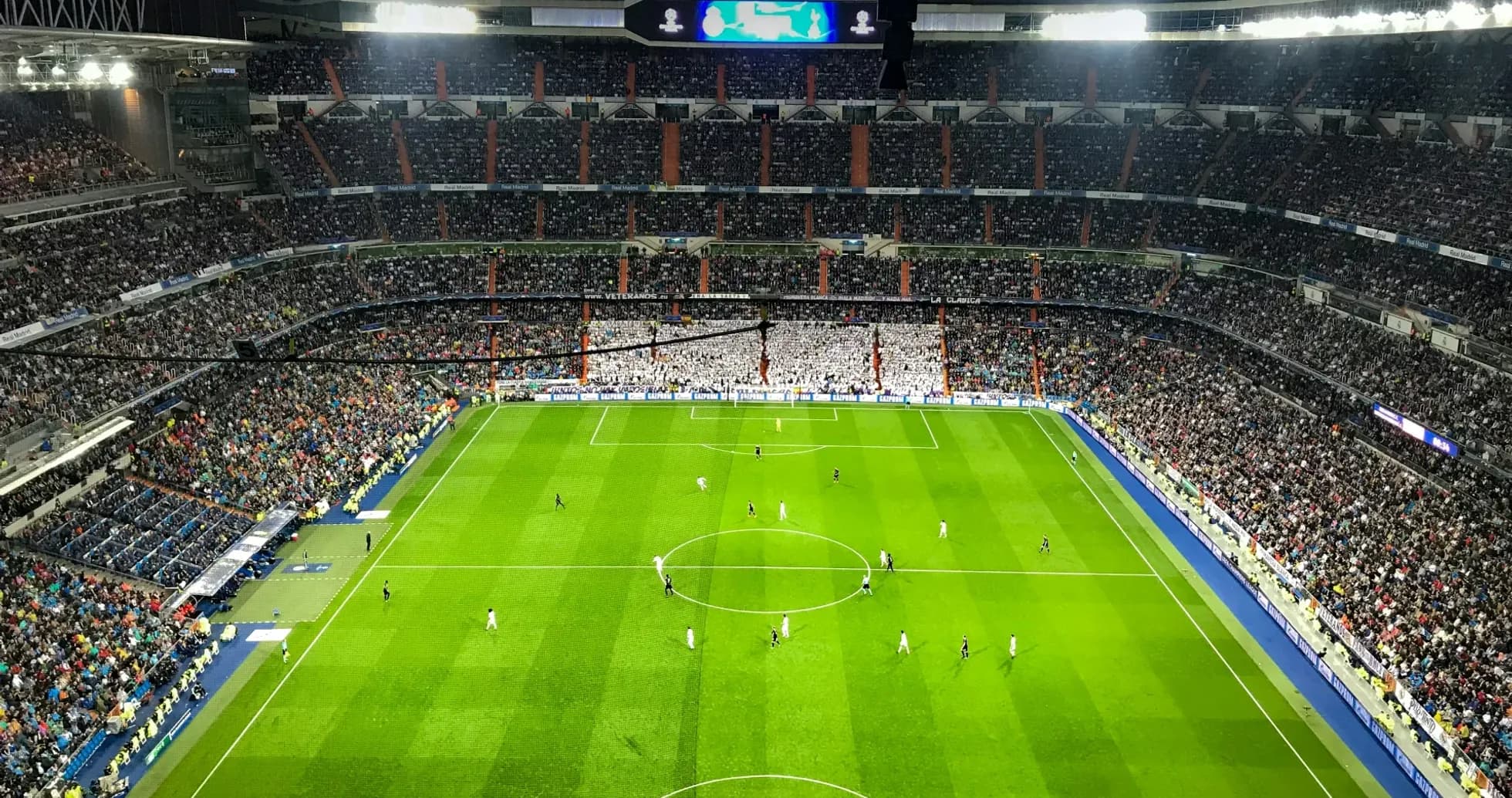
As Real Madrid’s players file through the Bernabeu tunnel, they walk past a sentence that has never felt more pointed.
“No player is as good as all of you together.”
Alfredo Di Stefano’s words used to read like a tribute to collective greatness. Right now, they feel like an accusation.
The club icon, the genius behind five straight European Cups in the 1950s and later a coach and honorary president, has been gone a decade. His quote remains, etched into the concrete of a club that has always wrestled with the tension between the power of the team and the allure of the star.
This season, that tension has boiled over.
Madrid are drifting towards the end of a second straight campaign without a major trophy. The Bernabeu, a stadium that once rose as one for its idols, now whistles its own. Vinicius Junior. Jude Bellingham. Kylian Mbappe. Even Florentino Perez, the architect of the galactico era, has not escaped the noise.
The discontent is not confined to the stands. A training-ground fight between Aurelien Tchouameni and Federico Valverde last week ripped the lid off a dressing room already under strain. The idea of “all of you together” feels a long way from reality.
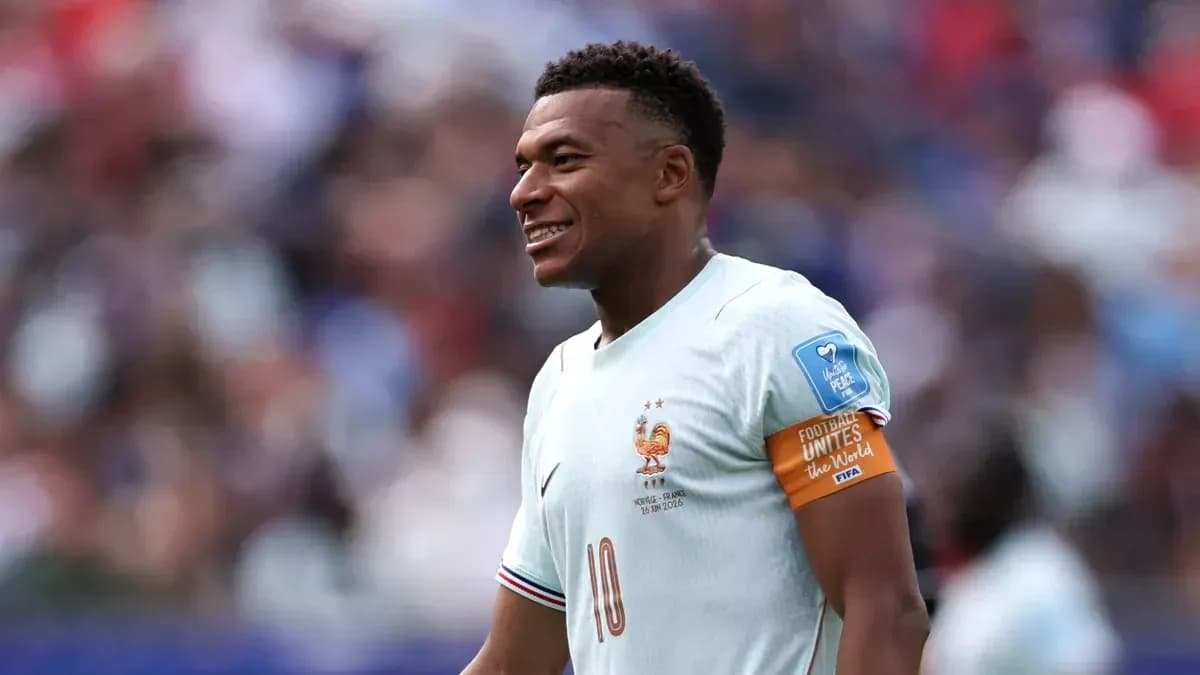
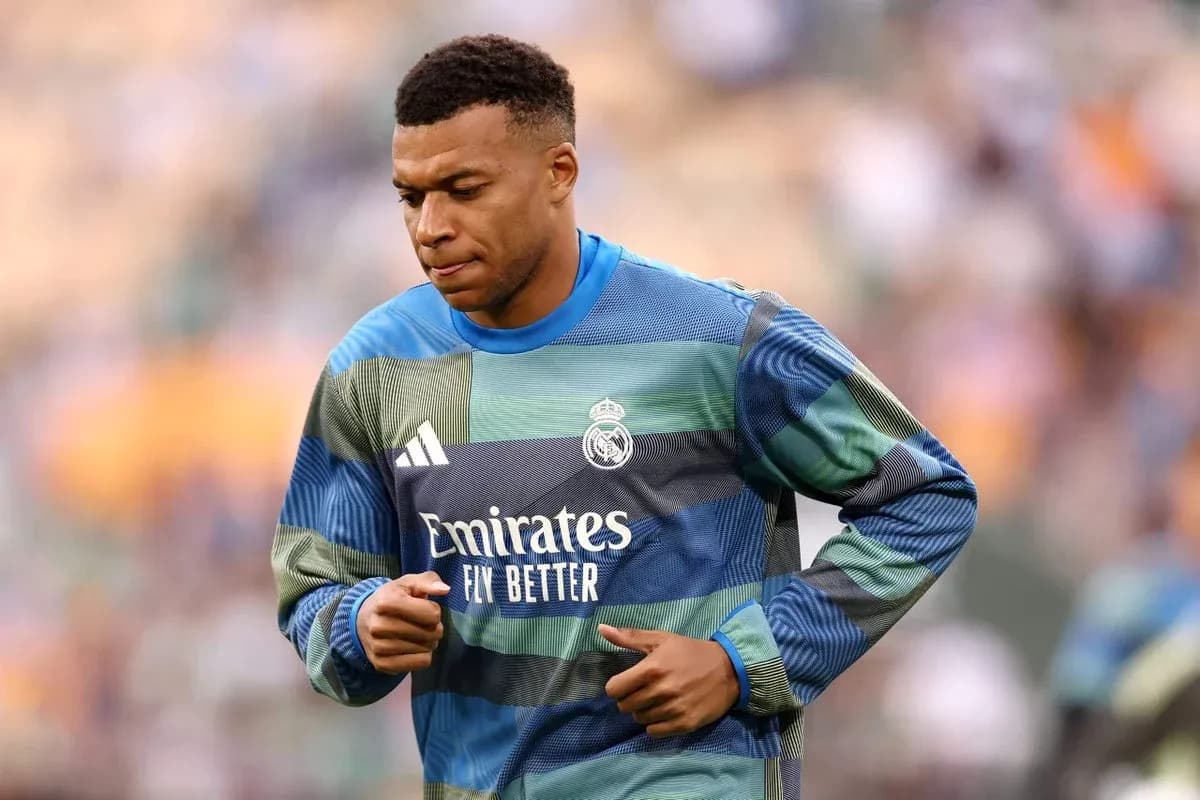
And in the middle of it all stands Mbappe.
The superstar under the microscope
Perez and Real Madrid chased Mbappe for years. They called, they waited, they swallowed public rejection in 2022. In June 2024, they finally got him on a free transfer, with a huge signing fee and the kind of salary that instantly put him at the top of the club’s pay scale.
Back then, the story wrote itself. Madrid had just completed a La Liga and Champions League double. Bellingham and Vinicius were electric. Mbappe was supposed to be the final piece of a new dynasty.
Instead, the questions have multiplied.
On the surface, the numbers are unanswerable. Mbappe is Madrid’s leading scorer since the day he arrived, with 77 goals across La Liga and the Champions League. He claimed the Golden Boot in 2024-25. In this season’s Champions League, he has 15 goals and is on course to finish as the competition’s top scorer, within touching distance of Cristiano Ronaldo’s record of 17 from 2013-14.
In the quarter-final defeat to Bayern Munich last month, he was one of the few Madrid players who met the occasion, scoring twice across the tie. He has almost doubled the goal tally of any team-mate since joining and, statistically, hoovers up the bulk of Madrid’s attacking chances. He has even outperformed his expected goals by seven.
For most clubs, that would be enough to grant immunity.
Not here.
In the first home game after the Champions League exit, Mbappe walked out at the Bernabeu and heard boos. Not a scattered murmur — a clear, targeted reaction. He has since become a lightning rod for broader frustration, on and off the pitch.
A row with a member of Carlo Ancelotti’s coaching staff in the build-up to a match at Real Betis on April 24, reported by The Athletic, added to the sense of unease. Sources around the club spoke of a worsening atmosphere. Internal irritation also grew when Mbappe chose to travel to Italy with his partner while recovering from injury, even though the trip fell within a recovery plan supervised by the club.
His camp pushed back, issuing a statement insisting that “a portion of the criticism is based on an over-interpretation of elements related to a recovery period strictly supervised by the club, and does not reflect the reality of Kylian’s commitment and daily work for the team.”
Still, the debate rages. After two seasons of this project, the question echoes through the press box and the stands alike: has all of this been worth it?
The case against: A star who bends the team out of shape
When Mbappe’s signing from Paris Saint-Germain moved towards completion two years ago, someone inside Ancelotti’s staff pointed to one thing above all: his defensive numbers.
Or rather, the lack of them.
They were struck by how little he worked without the ball. At a time when Madrid had just lifted a record 15th Champions League, that concern sounded almost joyless, like nit-picking in the middle of a party. Two seasons on, it looks more like foresight.
Across La Liga and the Champions League, Mbappe is the Madrid player with the fewest tackles, interceptions and ball recoveries per 90 minutes. The more telling figure is his ‘true’ tackle attempts — a combined measure of tackles won, lost and fouls committed that shows how often a player actually engages.
In La Liga, he ranks 461st out of 461 outfield players. Dead last. Around 0.6 attempts per game.
For a superstar forward, that in itself is not a crime. Teams often carry one attacker who does less defensive work to preserve his energy and threat. The issue comes when that player shares the pitch with others who also demand freedom.
Madrid have tried to fit Mbappe in alongside Vinicius Jr, Bellingham and Rodrygo. At times, it has looked less like a front line and more like four different players trying to be the main character in the same film.
Then there is the Vinicius problem.
Both Mbappe and Vinicius naturally gravitate to the left flank. Both want to receive early, run at defenders, dictate the tempo of attacks. Touchmaps show them repeatedly occupying similar spaces in the build-up. There have been flashes of connection, of course — they are too gifted for there not to be — but the chemistry has not come close to the intuitive link Vinicius once had with Rodrygo.
Instead of complementing each other, they often seem to crowd each other out.
That overlap has raised awkward questions about planning at the top of the club. Who decided that loading the squad with two dominant left-sided attackers was a sustainable idea? And if one player scores at an extraordinary rate but disrupts the balance of those around him, how do you weigh that trade-off?
The team numbers do not offer a simple defence. Madrid scored 87 league goals in 2023-24, when they had no clear attacking reference — Bellingham floated as a false nine, Joselu came off the bench as a target man, and Mbappe was still in Paris. Last season, with Mbappe on board, they hit 78. This year, with three games left, they sit on 70.
It is not a collapse, but it is not the explosive leap many expected when the world’s most coveted forward walked through the door.
Then comes the less measurable side: leadership and dressing-room harmony.
Mbappe is supposed to be one of the figures who stands tallest when the pressure closes in. That is the responsibility that comes with his status and his salary. Yet internal spats, the perception of distance from the group and the long memory of his 2022 rejection have all clouded his authority.
Perez said at Mbappe’s unveiling in July 2024 that the Frenchman had made “a great effort” to join. For many Madrid fans, the only effort they remember is the one he made to say “no” two years earlier. He is now the highest-paid player in the squad and still does not have a Champions League title with the club to show for it.
In a place where legends are measured in European Cups, that matters.
The case for: A generational talent who thrives as the main man
Strip away the noise and Mbappe remains what he has always been: one of the best players in the world.
He is 27, in his physical prime, and will arrive at this summer’s World Cup with France as one of the tournament’s headline acts again. He won the World Cup at 19 in 2018, then scored a hat-trick in the 2022 final — joining Geoff Hurst in a club of two — even if France fell to Lionel Messi’s Argentina.
His game has a clear pattern. He shines most when he is the undisputed protagonist.
We saw that again earlier this season when former coach Xabi Alonso handed him a more central, dominant role ahead of Vinicius Jr. Mbappe looked lighter, more decisive, less encumbered by the need to share the stage. The goals and performances flowed.
There is room for growth. His defensive work can improve. His understanding with team-mates can sharpen. But there is also a strong argument that, if Madrid commit fully to a structure that puts him at the centre and accept the compromises that entails, they will be rewarded.
This is a squad that has lost enormous experience and personality in a short space of time. Karim Benzema, Toni Kroos, Luka Modric — each departure stripped away a layer of on-pitch authority. In that vacuum, Mbappe’s ability alone makes him a natural leader, whether everyone likes it or not.
He has shown he can handle a microphone as well as a ball. Despite some clumsy media moments, he often speaks with clarity in interviews and mixed zones. After Vinicius Jr accused Benfica’s Gianluca Prestianni of racist abuse in a Champions League play-off first leg in February, Mbappe stepped forward with a strong defence of his team-mate. UEFA later banned Prestianni for six games for homophobic, not racist, conduct, but Mbappe’s willingness to front up for Vinicius did not go unnoticed.
The club hierarchy, too, have been here before with a different superstar.
The Cristiano Ronaldo reminder
Madrid’s history with galacticos is not a straight line of instant success. Cristiano Ronaldo, Mbappe’s childhood idol, needed time.
In Ronaldo’s first two seasons at the Bernabeu, Madrid won only a Copa del Rey. The Champions League, the trophy that defines eras in this club, did not arrive until 2014 — five years after his arrival — when they beat Atletico Madrid in Lisbon.
The journey was not smooth. In September 2012, Ronaldo scored twice against Granada, refused to celebrate and later admitted: “I’m sad and the people at the club know it.” The comment triggered weeks of speculation and hand-wringing over his mood and his future.
The story did not end there. He stayed, he scored, he dominated Europe. Four Champions League titles followed. He left in 2018 as Madrid’s all-time leading scorer.
No one inside the Bernabeu would dare argue now that the wait was not worth it.
Mbappe is not Ronaldo, and this Madrid is not that Madrid. The context, the dressing room, the tactical demands — all different. Yet the parallel lingers in the minds of those who believe that some players, the very top tier, demand patience and a willingness to endure turbulence in exchange for the possibility of greatness.
So Madrid stand at a familiar crossroads.
They can treat Mbappe as a problem to be managed, a star who distorts the collective and tests the club’s nerve. Or they can double down, shape the team around him and trust that the Di Stefano quote on the tunnel wall can still apply — not as a warning against the individual, but as a challenge to build a team strong enough to carry a talent like his.
The Bernabeu will have its say. The numbers will keep coming. The trophies, or their absence, will decide the argument.
And if Mbappe does eventually lift the Champions League in white, no one will remember the whistles. Only how long Madrid were willing to wait.