.svg&w=384&q=75 "naujapitch logo")
Klopp Dismisses Germany Job Speculation After World Cup Exit
Germany’s World Cup exit has reopened an old debate and revived an even older name. Jurgen Klopp knows it, hears it, feels it. And he wants no part of it. Not now.
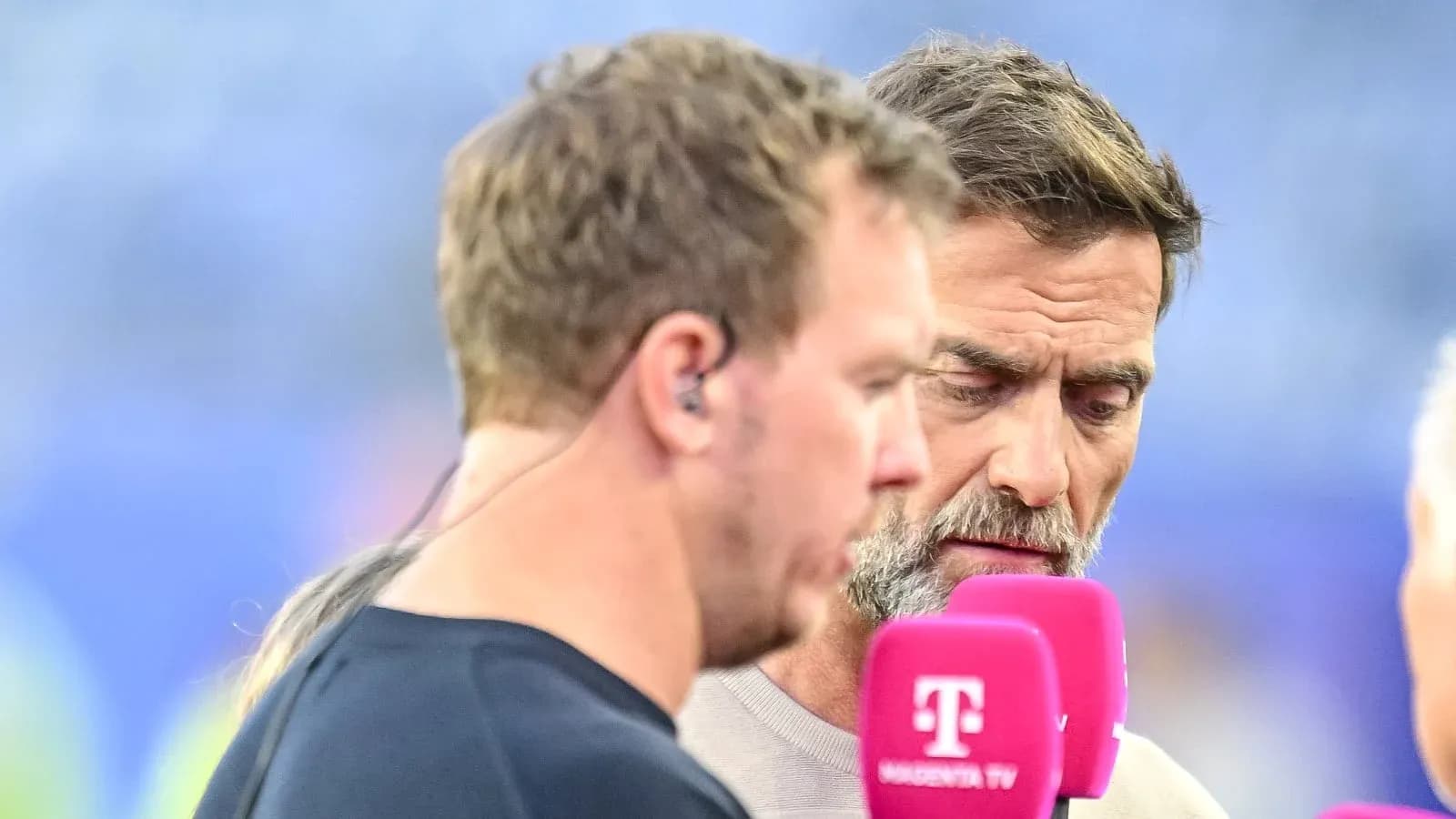
Hours after Germany crashed out on penalties to Paraguay in the round of 32, Klopp sat in a MagentaTV studio, the cameras hunting for a headline. The four-time world champions had just suffered their first-ever shootout defeat at a World Cup. The knives were already being sharpened for Julian Nagelsmann. The obvious question arrived.
What would have to happen for Klopp to consider the national job?
“I haven’t thought about that yet,” he replied, in comments reported by Bild. The answer was as firm as it was familiar.
“I’ve often been in that situation myself as a coach, where a big dream has been shattered. I understand that when people talk about the national coach, my name is mentioned. But it’s not the right moment to talk about it, especially not with me.
“I have a job that I really enjoy. And as far as I know, it’s not a part-time job. The fact is, Germany was eliminated today, and this is not the moment for me to think about Jurgen Klopp’s future.”
No ambiguity. No teasing. Klopp, now Red Bull’s head of global soccer, pushed the spotlight firmly back onto the team that had just fallen short again on the biggest stage.
Germany’s familiar pain
The exit itself felt like a grim remix of recent German tournament failures: enough quality to hint at something more, enough flaws to make the ending feel inevitable.
Germany had navigated Group E on top despite a 2-1 defeat to Ecuador in their final group match. The old aura never truly returned, but the route through the draw was there. Then came Boston, Paraguay, and another long night of regret.
Julio Enciso struck first, punishing Germany and forcing them to chase. Kai Havertz, again shouldering responsibility for a nation, dragged them level. The game stretched, frayed, and slipped into extra time.
Jonathan Tah thought he had become the unlikely hero, rising to head home what looked like the winner. VAR cut the celebrations short. The goal was ruled out, the tension ramped up, and the sense of foreboding grew.
The pressure finally told from 12 yards.
Havertz, the man who had dragged Germany back into it, missed from the spot. Nick Woltemade followed him with another failure. Paraguay blinked too: Antonio Sanabria and Fabian Balbuena both wasted chances to end it. The shootout staggered into sudden death.
Tah, already denied once by technology, dragged his effort off target. Jose Canale stepped up and buried his. Paraguay were through. Germany were out again, this time 4-3 on penalties after a 1-1 draw.
On the touchline, Nagelsmann wore the look German coaches have worn too often in recent years. Inside, he had already made his decision.
Nagelsmann stands his ground
Nagelsmann did not try to hide from the scale of the disappointment. But he also refused to offer the resignation some were waiting for.
“I’m not one to run away,” he said in his post-match press conference. “It’s not the first time, but it’s been happening for a while now that we’ve been delivering tournaments like this and yes, there are certainly a few basic things that I don’t want to go into now.
“I’m not one of those people who sits here and says, ‘I’m resigning now, just because we’ve been eliminated’. If the DFB wants me to continue then I’ll continue and if they don’t want me to, then they can tell me that.”
The message was clear. If there is to be a change, it will be the DFB’s call, not his. For now, he remains in the chair, even as the speculation swirls around him and the nation instinctively scans for saviours.
Havertz: “My second World Cup and both times it came to nothing”
On the pitch, the emotional toll was written across German faces. Havertz, who has carried expectation since his teenage years, looked shattered.
“I’m a little lost for words,” the Arsenal forward admitted, in quotes reported on FIFA’s website. “This is my second World Cup and both times it came to nothing.
“All I can do is apologise. I thought we didn’t play bad football at the last few tournaments, but something was always missing. And it was the same today.
“We have to take a hard look at ourselves, especially the players, and I’m leaving the coach out of that.”
It was a stark assessment from one of the few German players who consistently looked capable of bending the game his way. His words, though, echoed the wider mood: confusion, frustration, and the nagging sense of a generation drifting without a defining moment.
Gakpo’s grief and Morocco’s miracle
While Germany wrestled with another inquest, another story unfolded with a different kind of raw emotion.
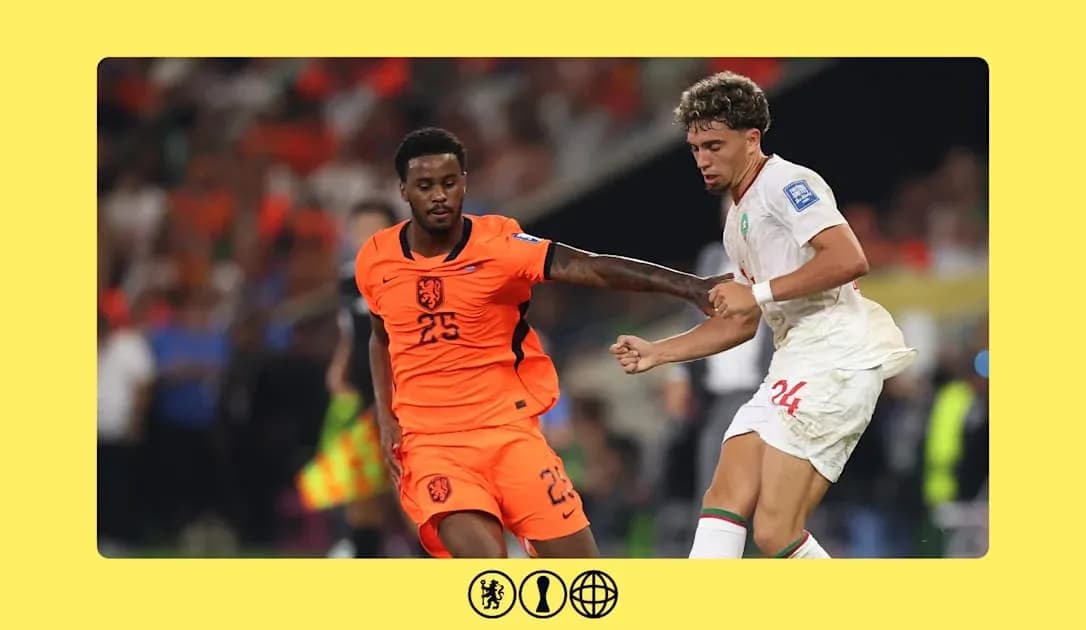
In Guadalupe, Cody Gakpo scored for the Netherlands against Morocco, then collapsed to the turf in tears. It was not just a goal. It was a release.
Days earlier, Gakpo and his partner Noa van der Bij had shared devastating news. Their son, Elijah, had died during pregnancy. Van der Bij wrote on Instagram: “With broken hearts, we share the devastating news that our baby boy passed away during pregnancy. Thank you for your love and support. Elijah Raphael Gakpo, forever loved, forever our son.”
Gakpo followed with his own message: “This is an incredibly difficult time for our family. We kindly ask for our privacy and space. Thank you for your understanding.”
Against that backdrop, his opener against Morocco carried a weight that went far beyond the scoreboard. Slipped in by Crysencio Summerville, Gakpo reacted first, pounced on the ball and drilled a low finish into the net. Then he sank, crouching to the ground as his teammates rushed to surround him, a huddle of orange shirts trying to shield him from the world for a few seconds.
For a long spell, it looked like that goal would decide the tie. Then came stoppage time, and with it another twist.
One minute into added time, Issa Diop levelled, ripping the script away from the Dutch. The game lurched into penalties, tension thick in the air. Morocco, riding the wave of that late equaliser, held their nerve and edged a 3-2 shootout win.
From Gakpo’s grief to Morocco’s jubilation, it was a match that cut right across the emotional spectrum.
A crossroads for a giant
Back in Germany, the questions won’t stop with Nagelsmann. They rarely do after a tournament like this. The pattern is now too familiar: promise, possession, passages of good football – and then the same empty feeling when it matters most.
Klopp’s refusal to enter the conversation, at least publicly, removes the easy answer. There is no white knight waiting in the wings, no simple fix that can be wrapped in a charismatic grin and a famous touchline sprint.
Germany must decide what it wants to be again. The DFB must decide who leads that process. Nagelsmann has nailed his colours to the mast. Klopp has, for now, stepped away from the storm.
The next move will say everything about how serious German football is about breaking this cycle – and how long a giant of the game is willing to live with being merely mortal on the world stage.