.svg&w=384&q=75 "naujapitch logo")
Brentford and Crystal Palace Draw 2-2: A Tactical Analysis
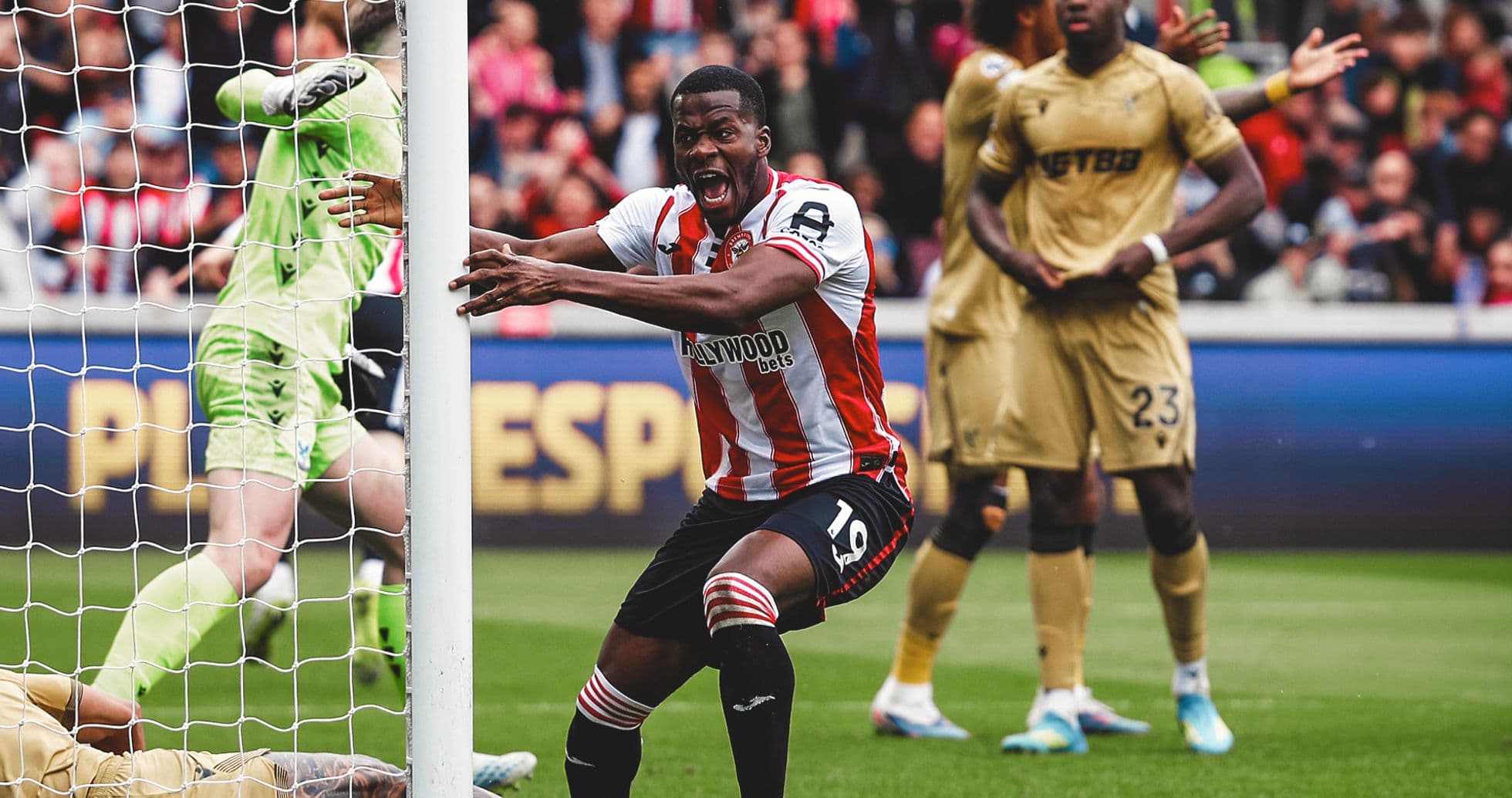
The late-season light slanted across the Brentford Community Stadium as Brentford and Crystal Palace walked out for a game that said as much about their evolving identities as it did about the 2-2 scoreline that eventually sealed it. Following this result, Brentford’s push from mid-table solidity towards European contention met Palace’s ongoing attempt to stabilise under Oliver Glasner, and the ninety minutes reflected that tension: structured, tactical, and punctuated by individual duels that will echo into next season.
I. The Big Picture – Two Systems, One Narrative
This was Round 37 of the Premier League season, both sides arriving with 37 matches already in their legs. Brentford, 8th in the table with 52 points and a goal difference of 3 (54 goals scored, 51 conceded in total), leaned again on their season-long backbone: a 4-2-3-1 that has been used 28 times. At home, they have been quietly formidable – 19 games played, 8 wins, 8 draws, only 3 defeats, scoring 33 and conceding 21. That home average of 1.7 goals for and 1.1 against framed this as a fixture they expected to control.
Crystal Palace, 15th with 45 points and a goal difference of -9 (40 for, 49 against in total), arrived as a curious away-side paradox. On their travels they have 7 wins from 19, more victories away than at Selhurst Park, with 22 away goals scored and 28 conceded. Glasner’s 3-4-2-1 has been his default – 32 league uses – and it was on display again: three centre-backs, wing-backs high, and a front three designed to break quickly once possession is won.
The final 2-2 felt like the league table in microcosm. Brentford, generally the more polished and cohesive, could not quite shake a Palace side that has learned to survive in chaos.
II. Tactical Voids – Absences and Discipline
Both managers had to navigate notable absences that reshaped their benches and, subtly, their options.
For Brentford, F. Carvalho (knee injury), R. Henry (muscle injury) and A. Milambo (knee injury) were all listed as Missing Fixture. Carvalho’s absence removed a creative, between-the-lines alternative in the attacking midfield band, which placed more responsibility on M. Jensen and M. Damsgaard to connect midfield and attack. Henry’s injury meant no natural left-back option of his profile, which pushed K. Lewis-Potter into the back four. That decision tilted Brentford’s left side towards attacking thrust but also required careful coverage from V. Janelt and Y. Yarmolyuk.
Palace’s missing trio was equally telling. C. Doucoure (knee injury) robbed Glasner of his most natural ball-winning screen in front of the back three. E. Nketiah (thigh injury) and B. Sosa (injury) further reduced the variety in attack and on the left flank. Without Doucoure, A. Wharton and D. Kamada had to share defensive and creative burdens in central areas, which influenced how aggressively the wing-backs, D. Munoz and T. Mitchell, could step out.
On the disciplinary front, the season-long data shaped the match’s emotional undercurrent. Heading into this game, Brentford’s yellow-card profile showed a clear late-game spike: 27.27% of their yellows came between 76-90 minutes, and another 22.73% between 61-75. Palace’s bookings were more evenly distributed but still heavy in the 31-45, 46-60, and 76-90 windows (each 18.42%). It was no surprise that as this contest tightened in the second half, both midfields edged closer to the disciplinary line, with tactical fouls and delayed transitions defining the final quarter-hour.
III. Key Matchups – Hunter vs Shield, and the Engine Room
The most compelling duel was always going to be Igor Thiago against the Palace back three. Thiago, Brentford’s spearhead and one of the league’s elite finishers this season, came into the match with 22 total league goals and 8 penalties scored from 9 attempts, having missed 1. His profile is brutally complete: 66 total shots, 43 on target, and a willingness to work without the ball – 36 tackles, 7 blocked shots, 12 interceptions, and 513 duels contested, winning 199. He is not just a finisher; he is Brentford’s first defender from the front.
Facing him, M. Lacroix was the natural “shield”. Across the campaign, Lacroix has been a defensive pillar: 60 tackles, 18 blocked shots, 45 interceptions, and 204 duels won from 333. His passing – 1,656 total with 88% accuracy – underpins Palace’s attempts to build from deep. In this match, Lacroix’s task was twofold: track Thiago’s physical presence when Brentford went direct, and still step out to prevent Jensen and Damsgaard from threading passes into the channels.
Around that axis, the wide duels were crucial. For Brentford, K. Lewis-Potter at left-back and D. Ouattara on the right side of the attacking band offered asymmetry: Lewis-Potter’s natural winger instincts encouraged overlaps and underlaps, while Ouattara’s positioning stretched Palace’s back line laterally. Palace’s response came from Munoz and Mitchell, who had to simultaneously press high to pin Brentford’s full-backs and recover quickly to protect the spaces behind Lacroix, C. Riad and J. Canvot.
In midfield, the “engine room” confrontation was subtle but decisive. V. Janelt and Yarmolyuk formed Brentford’s double pivot, one eye on controlling territory, the other on shielding a back four that, overall, has conceded 51 total goals (1.4 per game in total). Opposite them, Wharton and Kamada had to stitch together a side that scores 1.1 goals per game overall while conceding 1.3. Kamada’s ability to receive under pressure and play forward into I. Sarr, Y. Pino and J. S. Larsen was Palace’s primary route out of Brentford’s press.
IV. Statistical Prognosis – xG, Solidity, and What This Draw Tells Us
Even without explicit xG numbers in the data, the season-long profiles sketch the underlying picture. Brentford, at 1.5 total goals scored per game and 1.4 conceded, are a near-net-neutral xG side tilted slightly towards attack, especially at home where their 33 goals for and 21 against suggest they regularly create more than they allow. Palace, with 1.1 goals scored and 1.3 conceded overall, are more reactive, relying on structure and moments rather than sustained pressure.
The 2-2 draw therefore feels like a meeting point between Brentford’s ambition and Palace’s resilience. Brentford’s penalty record – 8 taken, 8 scored, 0 missed – hints at a side that maximises high-value chances when they arrive, while Palace match them from the spot with their own 8 from 8. In open play, though, Brentford’s more fluid 4-2-3-1 against Palace’s 3-4-2-1 produced a tactical stalemate: Thiago could trouble but not dominate Lacroix; Palace’s front three could threaten in transition but not overwhelm K. Ajer and N. Collins.
Following this result, the numbers suggest that Brentford will carry a European-capable attacking structure into next season if they can shave down that 51-goal-against column. Palace, meanwhile, have the bones of a robust away side – 7 away wins, 22 away goals – but must find a way to lift their attacking output without sacrificing the defensive platform Lacroix and company have built.
On a warm afternoon in London, the scoreboard read 2-2, but the subtext was clear: Brentford are close to being more than a good story, while Palace are still in the process of writing theirs.