.svg&w=384&q=75 "naujapitch logo")
Argentina Faces FIFA Sanctions Over Controversial Celebration
Argentina face possible FIFA sanctions after their players celebrated reaching the 2026 World Cup final with a politically charged banner referencing the Falkland Islands.
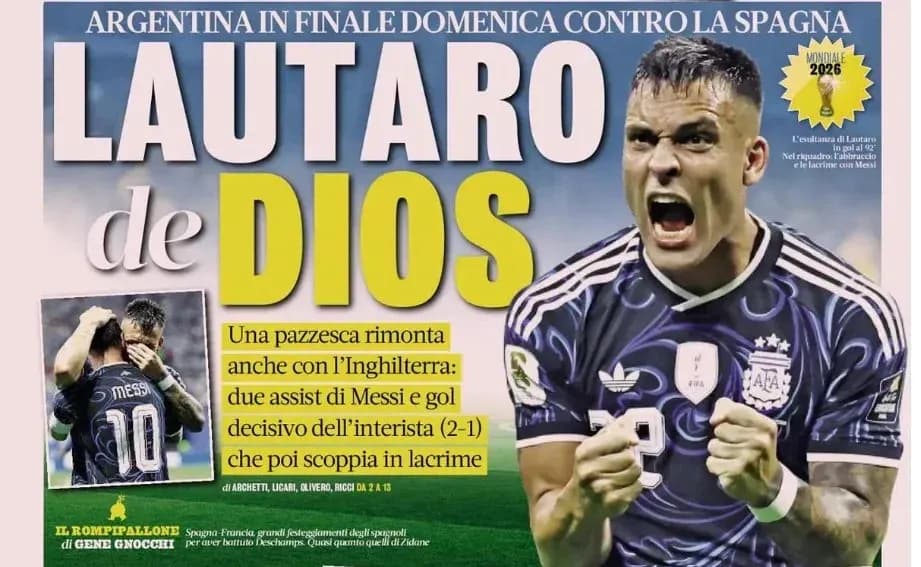
The world champions came from behind to beat England 2-1 in Atlanta on Tuesday, a tense, high‑stakes semi-final that swung on the familiar influence of Lionel Messi.
For over 50 minutes, England had the night in their hands. Anthony Gordon broke the deadlock in the 55th minute, finishing a move that briefly silenced a heavily pro-Argentina crowd and pushed the Three Lions to the brink of a first World Cup final since 1966.
Then Messi took control.
The captain, once again the compass for the Albiceleste, carved open England’s resistance. He supplied the assist for Enzo Fernandez to level the match, dragging Argentina back from the edge. The momentum turned, the noise rose, and England began to retreat.
The pressure told. Messi threaded another decisive ball, this time for Lautaro Martinez, who struck what proved to be the winner and sent Argentina into yet another World Cup final, extending an era of dominance that began with their triumph in Qatar.
The controversy came after the final whistle.
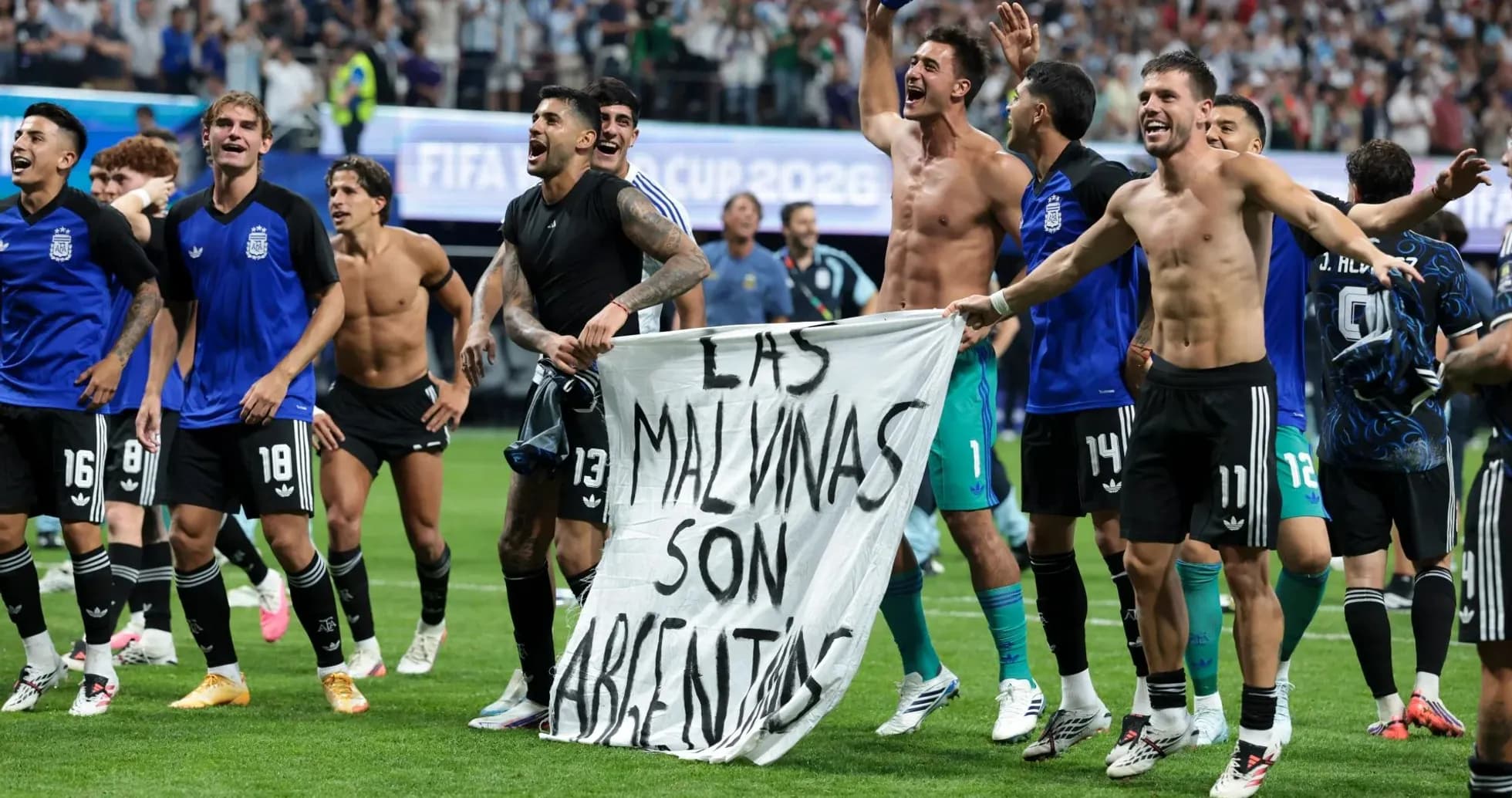
During the celebrations on the pitch, Argentina’s players unfurled a banner reading, “Las Malvinas son Argentinas” – “The Falklands are Argentine.” The phrase is a direct political statement about the sovereignty of the Falkland Islands, a long-running and deeply sensitive dispute between Britain and Argentina.
The reference cuts back to the 1982 war over the islands, a conflict that left 255 British servicemen and 649 Argentinian personnel dead. That history still shapes national identity and political rhetoric in both countries, and any invocation of it on a global stage carries weight far beyond sport.
FIFA regulations are clear: political messages and slogans are prohibited at matches and events it organises. By displaying the banner during an official World Cup celebration, Argentina’s players have opened the door to disciplinary action from the governing body.
Sanctions could range from fines to more severe measures, depending on how FIFA’s disciplinary panel interprets the act and its context. What is certain is that, on the eve of a World Cup final, the world champions find themselves not only chasing another trophy, but also waiting to discover the cost of a celebration that stepped firmly into the realm of politics.