.svg&w=384&q=75 "naujapitch logo")
Argentina's Epic Comeback: Lautaro and Messi Lead Against England
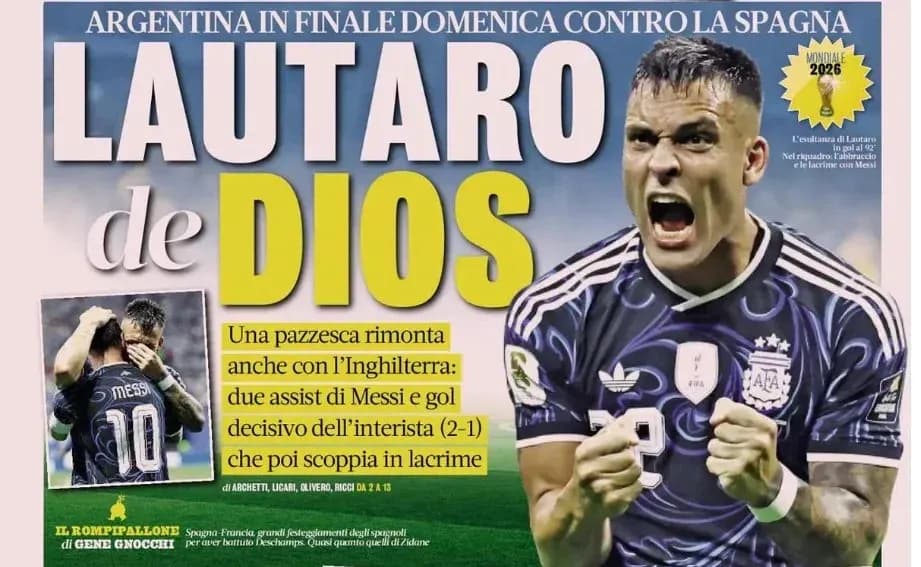
The old script refuses to die. Argentina fall behind, the clock runs down, Lionel Messi starts to bend the game to his will, and Lautaro Martínez writes the final line. Against England, it happened again.
Down 1-0 after Anthony Gordon’s strike, Argentina looked cornered. England had control, rhythm, and the sense that this time the ghosts of the past might finally be laid to rest. Then Messi went to work.
Two assists from the captain flipped the night on its head. First came the equaliser from Enzo Fernández on 85 minutes, a late surge that shook England’s composure and jolted Argentina back to life. The pressure grew, the air tightened, and England’s back line began to creak.
The decisive moment, though, belonged to Lautaro.
A cross, a movement, a split second of space. The Inter forward attacked the ball with the kind of conviction that defines careers. A powerful header, 2-1, Argentina into the final. El Toro roared, then broke. Tears streamed down his face as the weight of the goal, the night, and the journey crashed over him.
Forty years after the “Hand of God” rewrote football history, England once again watched an Argentine No. 10 dictate the story and an Argentine forward deliver the fatal blow. This time it was not the hand, but the head of Lautaro Martínez that turned them upside down.
On Sunday, Argentina will walk out at East Rutherford to defend their world crown against Spain, the champions of Europe. A final that feels like a clash of footballing ideologies as much as a battle for a trophy.
Spain arrive with calm, not fear. Luis de la Fuente has built a system that looks drilled, modern, and ruthless without losing the traditional Spanish control. The “lessons” from their coach are visible in every phase: pressing in unison, angles always available, a structure that seems to regenerate no matter who starts. They do not tremble at the thought of Messi. They prepare for him.
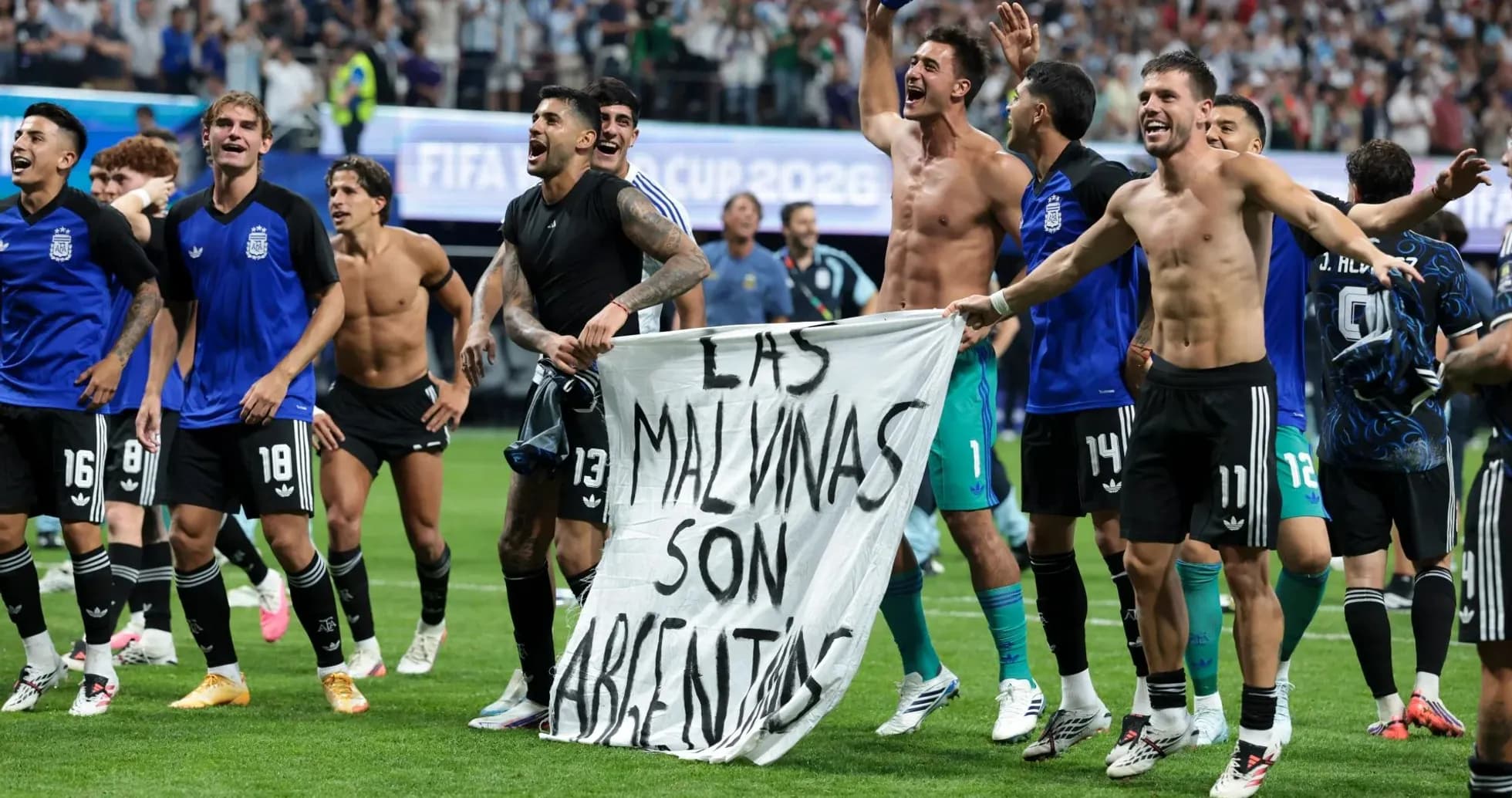
Argentina, for their part, lean again on the eternal No. 10 and the steel of a group that refuses to accept defeat as a final verdict. Another comeback, another late surge, another reminder that this generation does not know when it is beaten.
Behind the spectacle of the final, the European benches are already shifting. In France, eyes turn to Zinedine Zidane as the natural heir-in-waiting, a looming figure for a national team searching for its next cycle. In Italy, the debate over the future of the Azzurri continues to burn.
Paolo Maldini has made his choice: he wants Andrea Pirlo as the next national team coach. The decision, though, does not rest solely with him. The ball now sits in the court of Giovanni Malagò and the federation, with Serie A clubs watching on and nursing their doubts. Pirlo’s ideas, his status, his ability to handle a dressing room of stars – all under the microscope.
Transfer markets never sleep, and Italy’s giants are already moving their pieces.
At Juventus, the hunt for defensive solidity points toward Jhon Lucumí, with the club working on the funds to bring him in. The midfield puzzle could include Franck Kessié, with talks ongoing and Juve exploring a discounted deal. Up front, Ravanelli has thrown his opinion into the ring, urging the club to “sign Emegha” and calling time on the Vlahović project. The message is blunt: change the profile, change the attack.
The goalkeeping situation is equally delicate. Emiliano “Dibu” Martínez remains the first choice, the Aston Villa wall who has become a specialist in decisive nights. Yet Juventus are also keeping an eye on Guglielmo Vicario, with members of Luciano Spalletti’s staff sounding out the Tottenham goalkeeper as a serious alternative.
In attack, a deal for Parma’s young striker edges closer, another sign of Juve trying to refresh the squad with targeted moves rather than a full revolution.
Inter, fresh from Lautaro’s heroics on the international stage, are not standing still either. The club have moved quickly for Djed Spence and Romero, a blitz designed to reinforce depth and athleticism on the flanks and in defence. Spence has already given the green light to Cristian Chivu’s project, a sign of trust in the direction Inter are taking.
Off the pitch, the refereeing world is under the spotlight. The investigation surrounding Gianluca Rocchi and Inter has been dismissed, clearing one of the most discussed figures in Italian officiating and closing a chapter that had stirred tension and suspicion around the Nerazzurri.
Across the city, Milan feel the tremors of uncertainty. Christian Pulisic, one of last season’s key figures, is agitating the environment, his situation a live wire in a club that cannot afford another destabilising saga. At the same time, Nicolò Zaniolo has reappeared on the radar, a temptation with obvious talent and equally obvious risk.
Rio Ferdinand has added his voice to the transfer noise from England, stating that Manu Koné “will join United,” a line that only fuels expectation around Manchester United’s midfield rebuild. Elsewhere, Højlund’s embrace of Massimiliano Allegri hints at a growing bond between striker and coach, a relationship Juventus hope will translate into goals and stability.
At Torino, patience has snapped. The anger of the fans has exploded, a reaction to stalled progress and a sense that the club is treading water while rivals move with purpose. The stands are no longer content with survival and sporadic flashes; they want ambition.
All of it feeds back into Sunday. Messi, Lautaro, Spain’s machine, Argentina’s defiance. A world champion status to defend on one side, a European champion’s authority to impose on the other.
One game, one night in East Rutherford. After another comeback, another Messi masterclass, and another Lautaro tear-streaked celebration, the question is simple: how many more times can this Argentina side rewrite the ending?