.svg&w=384&q=75 "naujapitch logo")
World Cup Portraits: Behind the Scenes of Player Photography
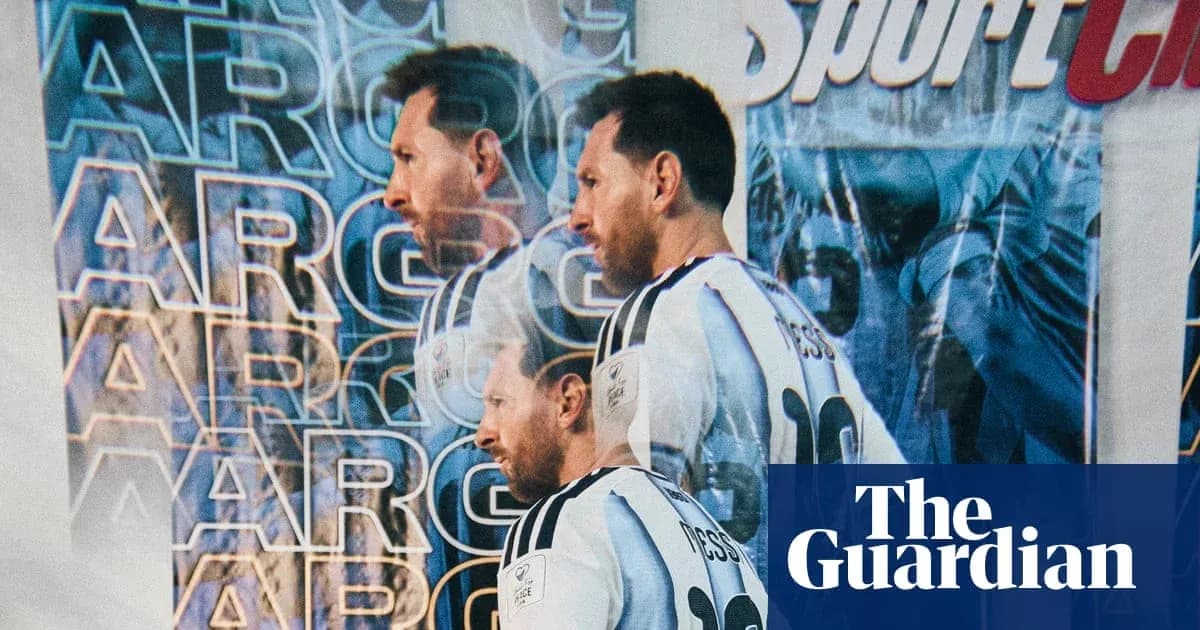
Lionel Messi doesn’t move. He stands bolt upright, eyes fixed, shoulders locked, as if a single twitch might ruin the spell. Across the same World Cup conveyor belt, Marc Cucurella whips his hair and half-dances, Diego Moreira hides behind a forearm tattoo that looks built for late‑night folklore, and Harry Kane drops awkwardly on to one knee, unsure whether to smoulder or smile.
Welcome to the other World Cup. The one played out under studio lights.
There are 1,248 players and 48 managers at this tournament, and not one of them has escaped the ritual. The official portrait: compulsory, inescapable, occasionally excruciating. Some arrive with a rehearsed pose, a signature celebration, a brand to protect. Others shuffle in, blink at the light, and hope it’s over quickly.
Shot by Getty Images on behalf of Fifa in recent weeks, the portraits form a strange, revealing gallery. Some players glare, some grin, some retreat behind carefully curated indifference. In a few frames you can see the media training. In others, you see something closer to the person.
Behind the curtain, the process is brisk and brutally efficient. Two photographers are assigned to every team, a tag‑team operation designed to keep the stars moving. One set is plain, almost austere. The other carries a bit more character. Players and managers are rotated between them with the speed of a penalty shootout.
The lighting is deceptively simple: a big studio strobe with a softbox washing over the subject, a couple of rim lights carving out shoulders and jawlines from the background. No elaborate rigs, no cinematic cranes. Just enough to sculpt a face and freeze a moment.
The backdrops this time are more muted than the vivid walls of the 2022 World Cup, but the photographers have found another way to turn up the volume. Special lens filters throw in unpredictable streaks and kaleidoscopic flares. Messi, refracted and blurred at the edges, looks as if he’s stepped into a dream sequence. It’s all done in camera, not in post-production.
Tom Jenkins, The Guardian’s long‑serving sports photographer, knows how unforgiving this kind of work can be.
“With these kinds of shoots, you only get a few minutes with each player and you have to bash out various pictures and think incredibly quickly,” he says.
It’s speed dating with superstars. One minute you’re trying to coax a grin out of a shy reserve full-back; the next, Messi is in front of you and the clock is ticking.
“You want some shots that are dead plain like a school photo – that’s how player portraits always used to be done – but these days you also want pictures that are more emotive and fun,” Jenkins explains. A lot of players arrive with their own ideas: a celebration they’ve honed for months, a trademark hand signal, a stare they’ve seen work on billboards.
“You’ve also got to have a list in mind,” he says. Poses, prompts, angles. There’s no time to improvise once the boots hit the backdrop.
The power dynamic flips in that instant. On the pitch, these are untouchable figures, protected by layers of staff and protocol. In the studio, they’re waiting for direction.
“The interesting thing is that you’re in control of these superstars and every aspect of the shoot,” Jenkins says. “There’s a lot of pressure that comes with that. You have to make sure you’ve set things up and tested everything before they arrive, so that when the shoot starts you can just focus on them.”
Every detail is mapped out in advance. Name cards for each player sit ready on set – even for Messi, just in case someone, somewhere in the editing chain, blinks and misses the most recognisable footballer on the planet. After a burst of frames, players often wander over to the monitor, checking angles, hair, the way a tattoo catches the light.
“Most football players are very aware of their own image these days and they know how powerful it can be, especially through Instagram,” Jenkins says. This generation has grown up in front of cameras, and it shows.
They’ve posed for luxury fashion houses and grooming brands. Eberechi Eze has fronted Burberry. Declan Rice has stared out from L’Oréal campaigns. The studio is no longer an alien environment; for some, it’s almost a comfort zone.
“So actually they’re much more comfortable with being in front of the camera and some of them really enjoy it,” Jenkins says.
That doesn’t spare them from the court of public opinion. England’s squad discovered that quickly enough when their portraits dropped. Rice’s sunburn became instant meme material. Anthony Gordon’s styling drew comparisons with Princess Diana. Dean Henderson’s unsettling side-eye took on a life of its own online.
The internet did what it always does. It mocked, it clipped, it shared. But away from the jokes, the more daring images – Jude Bellingham and others caught in those fractured, filtered frames – showed something else: what can be built in a few seconds when the photographer pushes the envelope, even if the subject offers little more than a stare.
And yet the portrait that has towered above all the rest this time does not belong to a player at all.
It’s Marcelo Bielsa.
The Uruguay manager, shot by Michael Regan at the team’s base in Cancún, Mexico, turned the entire exercise on its head. Asked for a straightforward portrait, Bielsa simply refused to play the game. He looked down at his feet, shoulders hunched, face turned away from the lens. No pose. No performance. Just stubborn, unfiltered Bielsa.
The result is a jarring, magnetic image. It breaks every rule of the glossy World Cup headshot, and that’s precisely why it works. You learn more about him from that single frame than from a dozen polished smiles.
“I’m not a model,” he protested afterwards. He didn’t need to be.
“Ultimately I think the best portrait is one that displays the individual’s personality, and that’s why the Bielsa picture is so brilliant,” Jenkins says. “It’s perfectly him.”
In a World Cup saturated with images, it’s the one man who refused to look up who ends up staring back the hardest.