.svg&w=384&q=75 "naujapitch logo")
Scaloni's Strategy: Control Over Chaos in Argentina's Game
In the thick Texas heat, with Group J finely balanced, Lionel Scaloni chose calm over conflict.
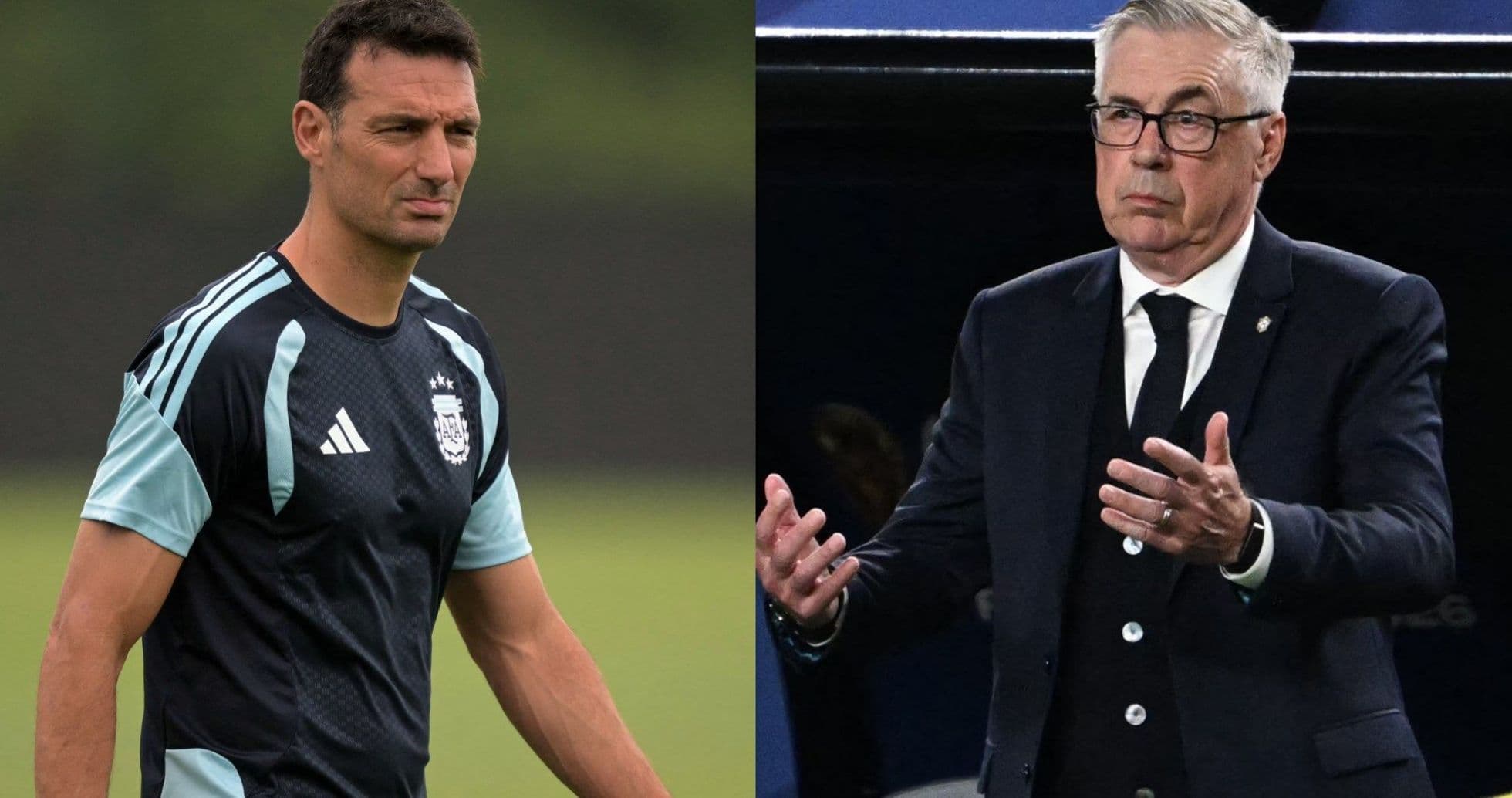
Argentina’s coach arrived in Dallas facing questions not about his line-up or his captain, but about Carlo Ancelotti. The Brazil manager had recently remarked that the world champions do not lean on a high-octane, heavy-pressing game, sparking a wider debate about Argentina’s physical output.
Scaloni refused to bite.
“I take it in a good way. He spoke highly of us, he didn't speak badly,” he said, brushing aside any hint of a feud. Ancelotti’s comments, delivered in a blend of Spanish, Italian and Portuguese, had left room for interpretation. Scaloni closed that door quickly. “I understood it as a compliment and not a criticism. I'm very sure of that.”
Scaloni’s football, on his terms
Once the noise around Ancelotti was dealt with, Scaloni moved onto what really matters to him: how his team plays.
He pushed back against the idea that intensity must always mean relentless pressing and lung-busting sprints. For him, the game has moved somewhere else.
You can run, he suggested. But you have to run smart.
He argued that defensive structure and intelligence in transition often outweigh raw physical effort, especially under the strain of a major tournament. The best sides, he noted, increasingly look to control games rather than get dragged into chaos, particularly in the middle of the pitch.
“You have to see what is understood by intensity,” he said. “When you don't have the ball, you have to try to ensure they don't hurt you. There aren't many who press you high and man-to-man. Teams become strong in the middle of the pitch and that's where the game is being defined.”
That is where Argentina want to rule. Not necessarily by swarming defenders high up the pitch, but by tightening the spaces that really matter.
“Whether you win with three forwards or defend with three or five at the back, the reaction when losing the ball is what matters,” he added. The message was clear: intensity is not a tactic, it is a reaction. And Argentina’s reaction, in his eyes, remains sharp.
A champion squad, quietly evolving
Three and a half years have passed since Argentina climbed to the summit in Qatar, but Scaloni insists the hunger has not faded.
The faces around Lionel Messi have shifted. The core remains, yet the coach pointed to the emergence of younger options such as Nico Paz and Giuliano Simeone as proof that this is no static champion, clinging to old habits.
Those new profiles give him different tools: more direct routes to goal when the game demands it, fresher legs when the rhythm changes.
“The team is on the right track even though three and a half years have passed,” Scaloni said. “They haven't shown signs of taking their foot off the gas and that’s why they are here. There is always room for improvement and they understood the message very well.”
Fatigue is the unavoidable backdrop. Players arrive from long club seasons, some carrying knocks, most short of true peak condition. Scaloni did not pretend otherwise, but he had one key reassurance.
“It is very difficult for everyone to arrive at 100 per cent because of the number of games played, but all 26 players are available and ready to play.”
For a coach deep in a tournament, that is gold.
Austria next, and no margin for error
All of this talk now funnels into a single, sharp reality: Austria in Dallas.
Both sides sit on three points in Group J. Argentina know what is at stake. Beat an impressive Austria and the world champions can all but lock up top spot, clearing their path through the bracket and avoiding early turbulence.
Scaloni’s focus is fixed on that. The tactical debates, the interpretations of Ancelotti’s remarks, the broader conversations about pressing and intensity – they all shrink once the whistle blows.
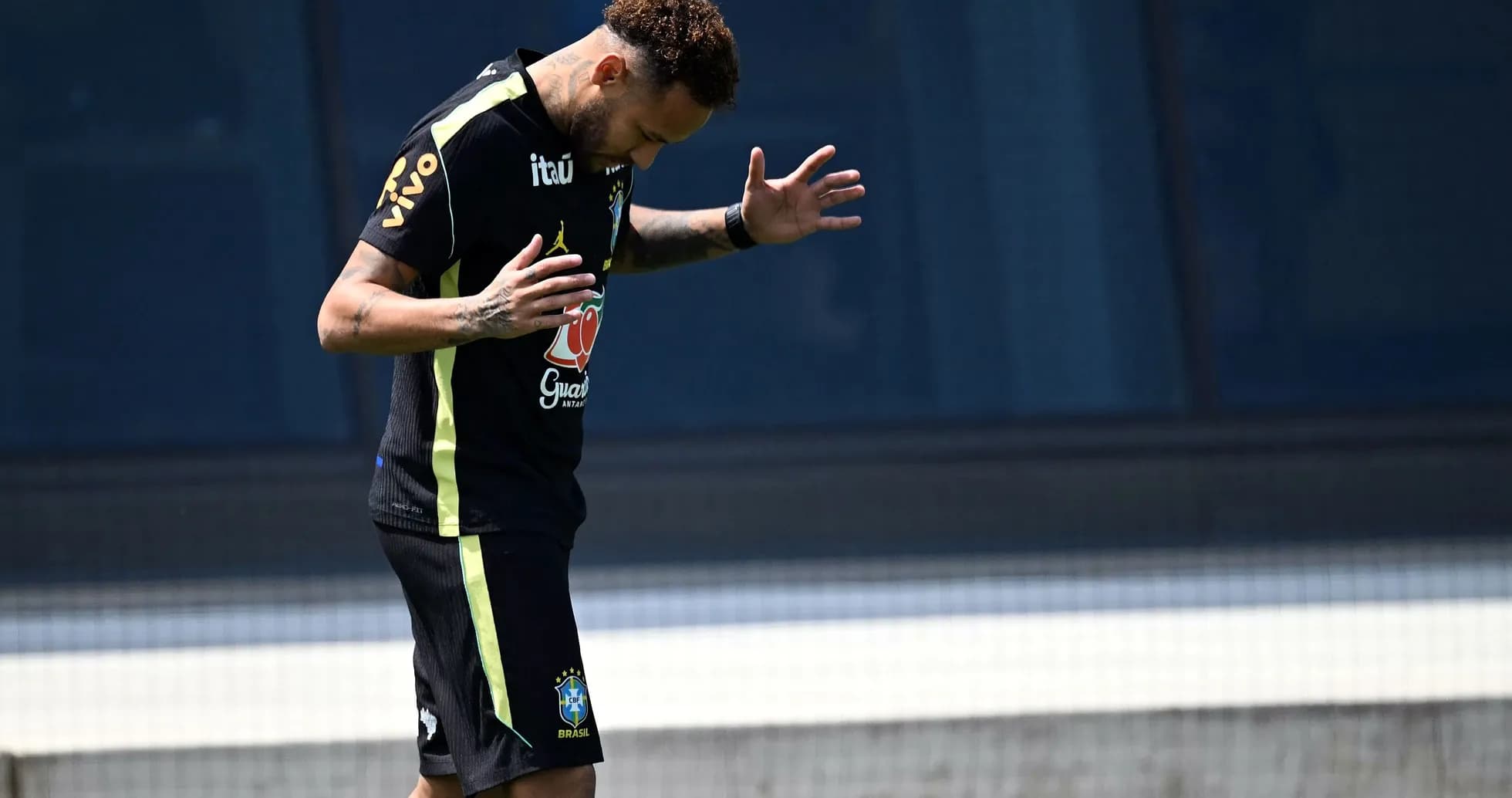
On the other side of the draw, Brazil have bought themselves a little comfort. Ancelotti’s team brushed aside Haiti 3-0, a result that leaves them needing only a draw against Scotland to secure a place in the round of 32. Their job, for now, looks simpler.
Argentina’s is not. They walk into Dallas with everything still to prove, still to defend, still to define.
If Scaloni’s belief in control over chaos holds firm, we are about to see it tested in the most unforgiving way: under the weight of expectation, with qualification – and authority – on the line.