.svg&w=384&q=75 "naujapitch logo")
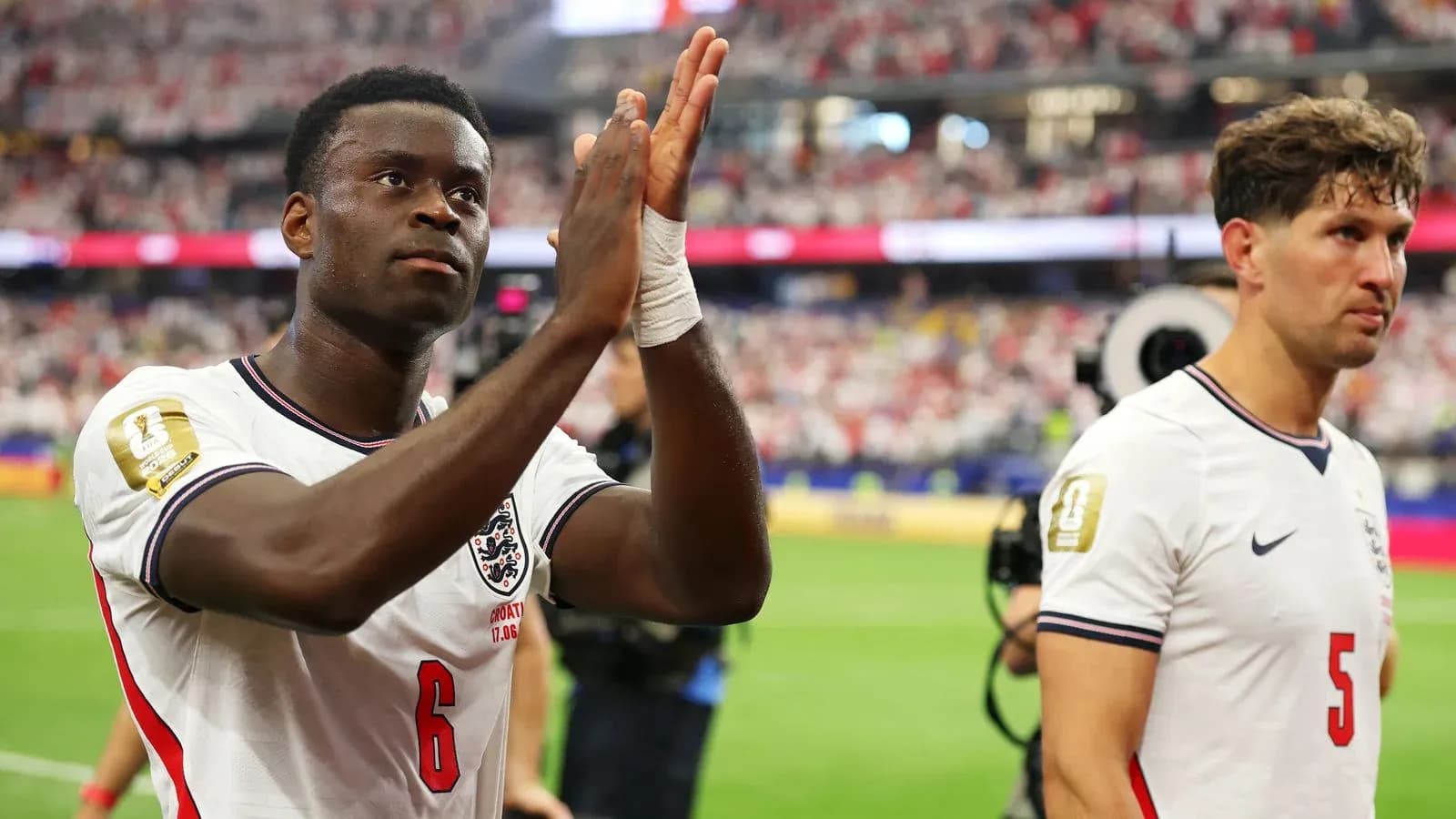
England's Defensive Woes Exposed Against Croatia
England’s attack roared in Dallas. Their defence whispered.
While Harry Kane and company tore through Croatia in a thrilling second half, the other end of the pitch told a far more uncomfortable story for Thomas Tuchel. The centre-back pairing of Ezri Konsa and John Stones, a selection that sidelined Marc Guehi and raised eyebrows before kick-off, did little to calm the doubts once the game began.
A partnership under the microscope
By half-time, the jury was already assembling. Stones went to ground too early before Croatia’s first goal. Konsa misjudged a chipped pass in the build-up to the second. Both moments fed directly into the pre-match question Gary Neville voiced on ITV: “Is Konsa and Stones a partnership that can win us the World Cup?”
Neville didn’t stop there. With Declan Rice and Elliot Anderson overrun at times in that frantic first half, he warned that England’s midfield would have to be “outstanding” to protect a back line that looked anything but secure.
The numbers behind the performance did not offer much comfort. Stones, across 87 minutes, made just one tackle – and it failed – plus a single clearance. He did win four of seven duels, but that was hardly the commanding presence England needed. Konsa fared worse: three wins from eight duels, just one success from five in the air, and no tackles or interceptions at all.
Jamie Carragher summed up the mood on Sky Sports News the next morning. “We probably lack something defensively to go all the way,” he said, cutting through the optimism that England’s attacking fireworks had generated.
The message was clear. The front end of this England side looks ready for a deep World Cup run. The back end does not.
The Guehi question
That is where Marc Guehi comes in.
Tuchel’s decision to leave him out against Croatia always felt like a gamble. His recall for the next Group L game against Ghana now feels almost inevitable. The data from his Premier League form since joining Manchester City in January screams of a defender built for exactly this kind of stage.
Guehi, now 25, has climbed a level since his Crystal Palace days. At City, he stepped straight into a side chasing trophies and barely missed a beat, collecting another FA Cup winners’ medal in May. Over that Premier League stretch, he ranked among the division’s best for defensive and ball-playing metrics: 10th for possession won in the defensive third, fourth for interceptions, sixth for forward passes and fifth for passes completed.
Those are the numbers of a defender who doesn’t just survive pressure. He invites it, then plays through it.
The twist is that his emergence has come at Stones’ expense. Once a first-choice pick for Gareth Southgate at the Euros, Stones found himself on the outside looking in at City. He played only five times for them in 2026 and started just five Premier League matches over the past year. City lost four of those.
Stones insists he was fit and available during the run-in. Pep Guardiola still chose Guehi. Now Tuchel must decide whether to do the same.
Tuchel’s dilemma
Tuchel values Stones. That much is obvious. He fought to take him to this World Cup, leaning on his experience, leadership, defensive nous and composure on the ball. Dropping him outright would be a huge call.
So the compromise against Croatia was to shift Stones to the left of the centre-back pairing to accommodate Konsa on his preferred right. Tuchel had tested that alignment in the final warm-up game against Costa Rica. On paper it looked workable. On grass, far less so.
Modern defending is full of tiny details, and this one matters. Stones has rarely played on the left for City. Across the past three seasons, he has logged just 371 minutes there, compared with 1,151 minutes on the right. The angles, the body shape, the passing lanes – all change when you flip sides.
Guehi, by contrast, has grown up on the left. At Palace he often operated on the left of a back three, and at City he has shown he can handle both sides of a pairing. He is right-footed, but comfortable enough opening his body to the left and threading passes into midfield or down the line.
He explained it himself to Sky Sports in December: switching sides “can throw you off a little bit” when you’ve been fixed in one position for a long time.
The obvious solution, then, is to bring Guehi in on the left and move Stones back to the right. Tuchel tried that combination in England’s first warm-up game against New Zealand, and it looked like the blueprint for this tournament.
But that leaves Konsa in an awkward spot.
Konsa, James and the right-back ripple effect
Konsa has been a Tuchel favourite. Only Jordan Pickford and Harry Kane have played more minutes under him for England. At centre-back, Guehi has actually started more often alongside Konsa than alongside Stones. To axe Konsa after one World Cup match – a match England won – would be ruthless.
There is a third way. Play all three.
Tuchel has already trialled that too. Against Wales in October, Konsa lined up at right-back with Stones and Guehi in the middle. The Aston Villa defender fit the profile Tuchel clearly wants in that role: strong, athletic, defensively secure. That preference has already cost Trent Alexander-Arnold his place in this squad hierarchy.
But there is collateral damage. Reece James.
James started at right-back against Croatia and impressed when he drifted into midfield late in the game, offering control and bite in the centre of the pitch. Tuchel appears to see him as his first-choice in that position, having started him there five times – more than any other player in this era.
Yet James comes with a red flag: his body. Before this recent run, he had not started back-to-back games for Chelsea since March. Tuchel has already asked him to start two straight for England, against Costa Rica and Croatia. Managing his minutes early in the tournament would be sensible.
So does Tuchel rest him now against Ghana, a game that still carries weight for qualification and Group L positioning? Or does he wait for the final match against a weaker Panama side and risk another jittery defensive display in the meantime?
The balance England must find
The stakes are obvious. England’s attack looks ready to rip through opponents. The Croatia game showed that when they go “full gas” in the second half, few teams can live with them. But a World Cup is rarely won on flair alone. At some point, usually in the knockout rounds, a team needs to suffer without the ball and still survive.
Right now, England don’t look built for that.
Tuchel’s challenge is to find the right mix at the right moment: Guehi’s aggression and anticipation, Stones’ calm and distribution, Konsa’s athleticism and versatility, James’ dynamism and incision. The pieces are there. The combination is not.
Ghana will not wait politely for England to figure it out.