.svg&w=384&q=75 "naujapitch logo")
Detroit City vs Louisville City: A Tactical Standoff in USL League One Cup
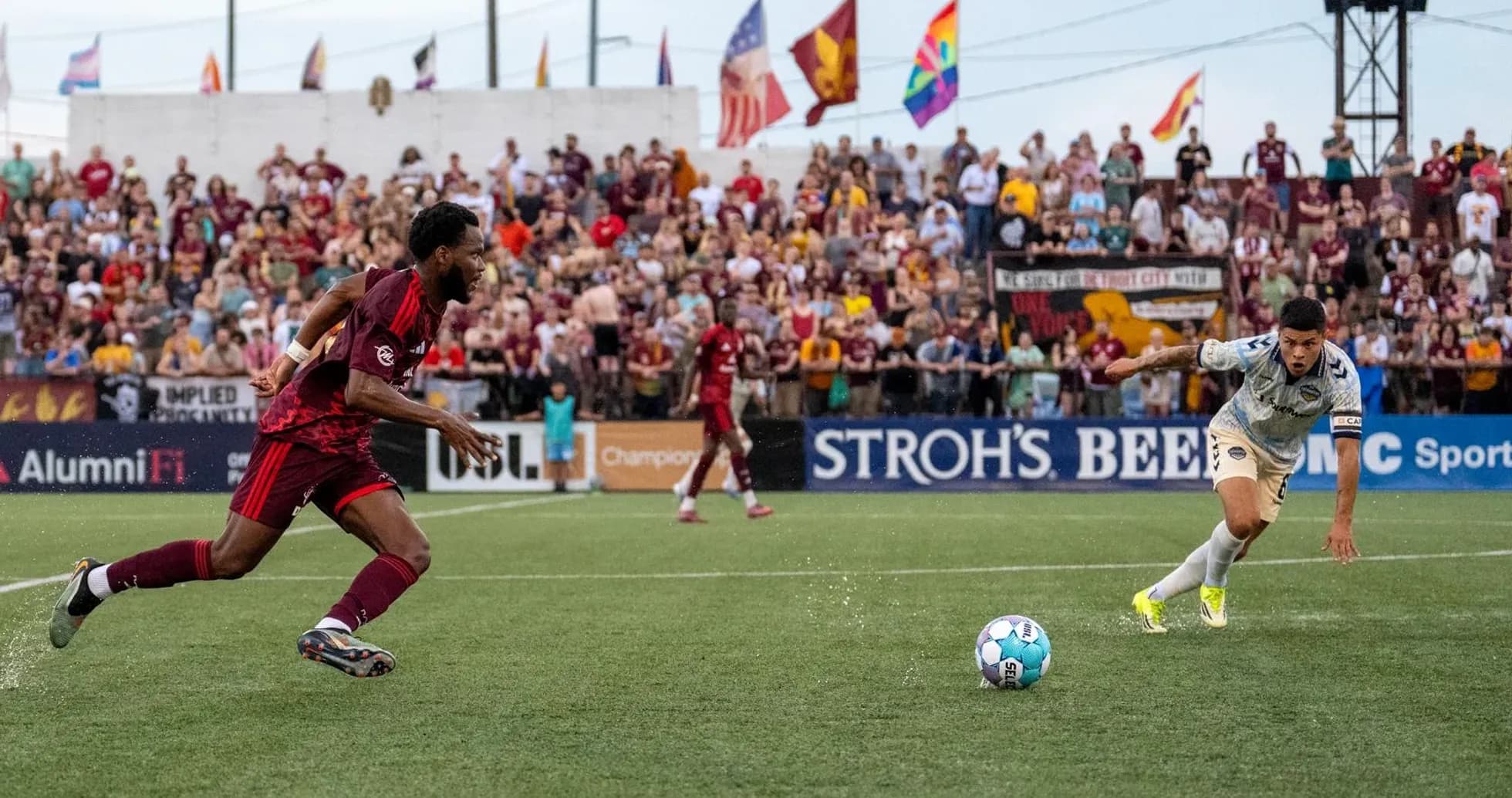
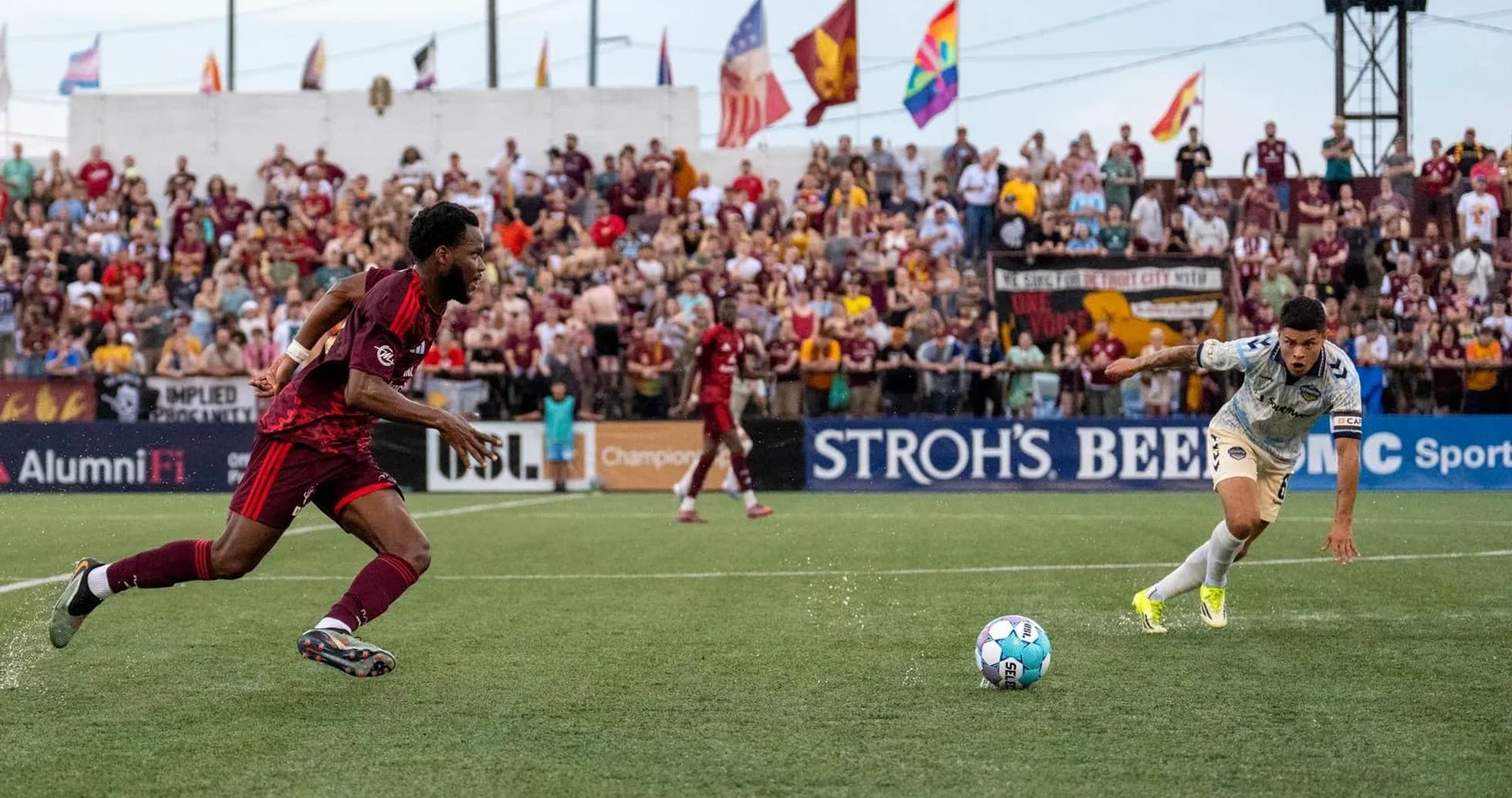
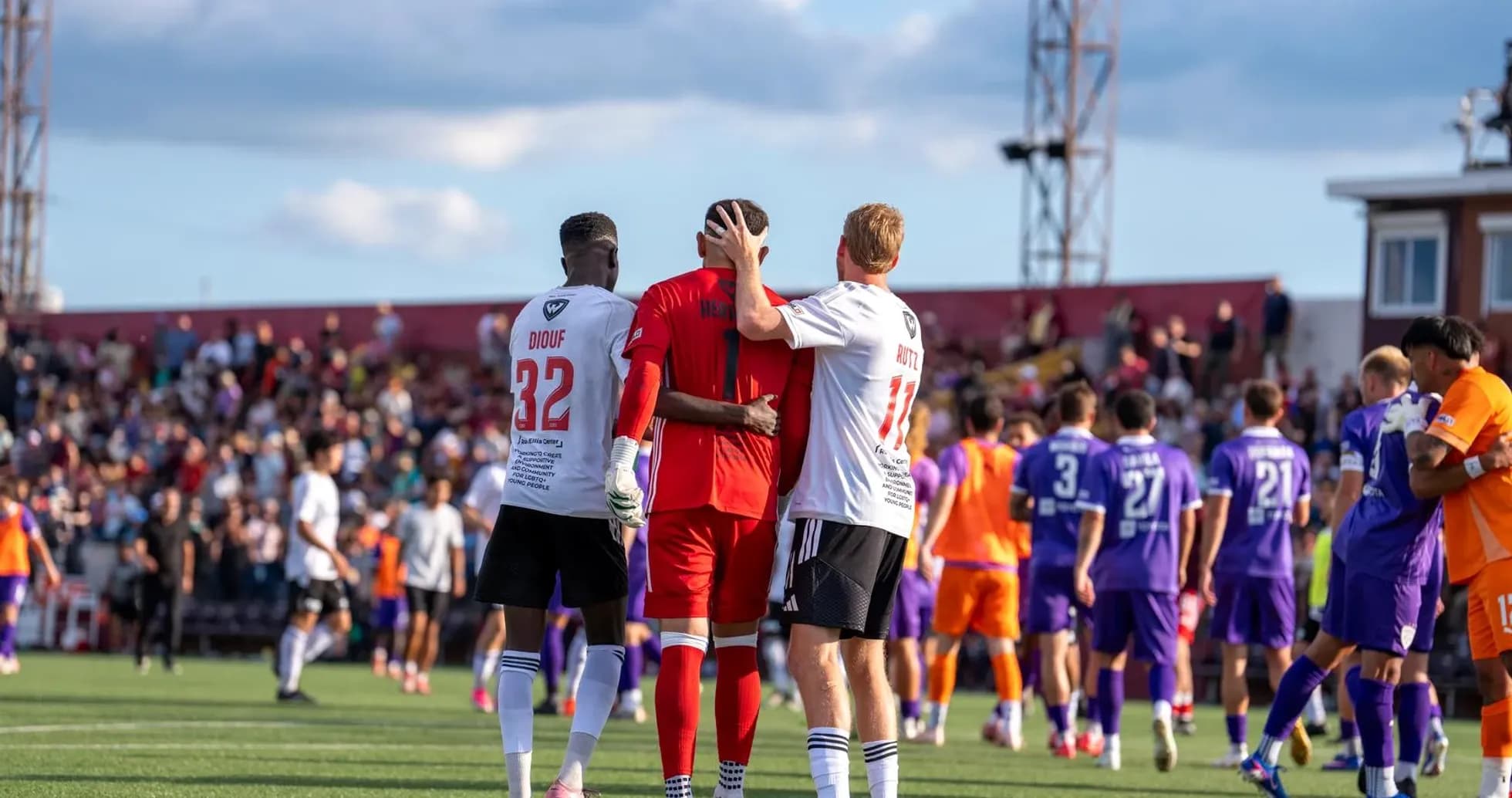
Under the lights at Keyworth Stadium, Detroit City and Louisville City dragged their Group 4 story all the way to 120 minutes and beyond, a tense USL League One Cup tie that finished 0-0 before Louisville edged the shootout 4-3. Following this result, the contrast between their broader campaign arcs only sharpened.
Louisville arrived as the group’s standard-bearer. Heading into this game they topped Group 4 in 1st place with 6 points, a goal difference of +6 built from 8 goals scored and 2 conceded overall. Their league DNA is clear: front-foot, ruthless, and efficient. Across the season they had played 3 fixtures in total, winning all 3, with a total goals-for average of 3.0 both at home and on their travels, and conceding just 0.7 in total.
Detroit, by contrast, were still trying to find themselves. Heading into this game they sat 5th in the group on 4 points, with a goal difference of -1 (3 scored, 4 conceded overall). The broader cup sample paints them as a team in flux: 3 total fixtures, 1 win and 2 losses, scoring 2 in total (0.5 at home, 1.0 away) and conceding 3 in total (1.5 at home, 0.0 away). At Keyworth, they had yet to crack the code: 2 home fixtures, both defeats, with 1 goal for and 3 against.
Yet for 120 minutes against the group’s most explosive attack, Detroit bent but did not break. The penalty shootout defeat will sting, but the performance hints at a tactical recalibration that could still reshape their campaign.
Tactical Voids and Disciplinary Undercurrents
There were no listed absentees, so both coaches could lean fully into their preferred core groups. Danny Dichio’s Detroit XI, anchored by goalkeeper C. Herrera and a defensive line including H. Yamazaki, R. Hope-Gund, D. Amoo-Mensah and T. Silva, set out to solve a problem no one else in the group had cracked: how to slow a Louisville side averaging 3.0 goals per game in total and 3.0 on their travels.
In midfield, the double presence of K. Hernandez-Foster and Rafa Mentzingen, supported by A. Diop and A. Stanley, gave Detroit a blend of ball progression and industry, with A. Diouf and B. Morris asked to threaten in transition rather than through long spells of possession.
On the other side, Simon Bird’s Louisville leaned into continuity. D. Faundez in goal sat behind a defensive unit of S. Totsch, B. Dayes, A. Dia and A. McFadden, with Z. Duncan and B. Niang providing the screen. J. Morris and J. Wilson operated as connective tissue between lines, while R. Serrano and T. Showunmi were tasked with turning Louisville’s season-long attacking efficiency into knockout incision.
Disciplinary patterns framed the risk profiles. Detroit’s yellow cards this season have been spread across the middle and late phases: 25.00% of their cautions arriving between 31-45 minutes, 37.50% between 46-60, 12.50% between 61-75, and another 25.00% in the 76-90 window. That distribution tells of a side that often escalates its aggression as the game settles and then stretches. Louisville’s bookings have clustered slightly earlier, with 28.57% between 16-30, another 28.57% between 31-45, and a peak 42.86% between 46-60, suggesting a team that pushes hard out of the interval to reassert dominance.
In a match that went to 120 minutes, the absence of red cards from both teams’ season profiles mattered. Both have walked the disciplinary tightrope without tipping over, allowing coaches to maintain tactical structures deep into games without the chaos of playing a man down.
Key Matchups – Hunter vs Shield, Engine Room vs Enforcer
The most compelling duel here was conceptual rather than individual: Louisville’s “Hunter” attack against Detroit’s emergent “Shield.” Louisville’s offensive metrics are stark. Overall they had 9 goals in 3 fixtures, with 6 of those on their travels at an away average of 3.0. Their biggest away win, 1-5, underlines their capacity to shred hosts who open up too early.
Detroit’s defensive numbers entering the night were less flattering: 3 goals conceded in total, with 1.5 per game at home. Yet they had also banked a clean sheet on their travels and conceded 0.0 away, hinting that when they commit to a compact, pragmatic block, they can suffocate games. Against Louisville, Dichio essentially imported that away-game mentality into Keyworth: deeper lines, narrower spacing between centre-backs Hope-Gund and Amoo-Mensah, and disciplined protection from Hernandez-Foster and Diop.
In the “Engine Room,” the battle between Detroit’s ball-players and Louisville’s enforcers shaped the tempo. Rafa Mentzingen’s role as connector was crucial for Detroit, helping them break the first Louisville press and find Morris and Diouf in pockets. Opposite him, Z. Duncan operated as Louisville’s metronome and shield, breaking up transitions before they could expose the back line that had previously conceded just 1 goal at home and 1 on their travels in league play.
Louisville’s attacking structure, with Serrano drifting inside and Showunmi leading the line, repeatedly tested Detroit’s concentration. That Detroit held firm for 120 minutes against a side that had failed to score in 0 fixtures this season is both a tactical and psychological win, even if the shootout flipped the narrative.
Statistical Prognosis – Edges, Margins, and the Penalty Truth
Strip away the drama of penalties and the numbers still lean Louisville’s way over the broader campaign. They are perfect in results: 3 wins from 3 in total, a goal difference of +7 (9 for, 2 against overall), and a flawless penalty record this season, scoring all 4 of their spot-kicks with a 100.00% conversion rate. That composure from 12 yards inevitably seeps into a shootout, where routine becomes ritual.
Detroit’s story from the spot is more complicated. Across the season they have earned 5 penalties in total, scoring 3 and missing 2 for a 60.00% conversion rate. Those 2 missed penalties are not just statistical noise; they hint at a lingering fragility under high-pressure dead-ball moments. In a tie decided from the spot, that history becomes a psychological weight.
Defensively, Louisville’s solidity remains a defining edge: conceding 2 goals in total across 3 fixtures at just 0.7 per game, with 0.5 on their travels, they marry attacking firepower with control. Detroit, by contrast, sit at 1.0 goals against in total, with the vulnerability concentrated at home (1.5 conceded per game at Keyworth).
Following this result, the tactical verdict is nuanced. Louisville’s season-long xG profile—implied by their consistent 3.0 goals-for average—still makes them the statistical favourite against almost any opponent. Their defensive record and perfect penalty history justify their progression and underline their status as a cup contender.
But Detroit’s ability to drag the group’s most potent attack through 120 scoreless minutes suggests a new, more resilient identity. If they can graft this Keyworth performance onto their broader campaign, tighten the home defensive average, and exorcise the ghosts of those 2 missed penalties, they will not remain a footnote in Group 4 for long.