.svg&w=384&q=75 "naujapitch logo")
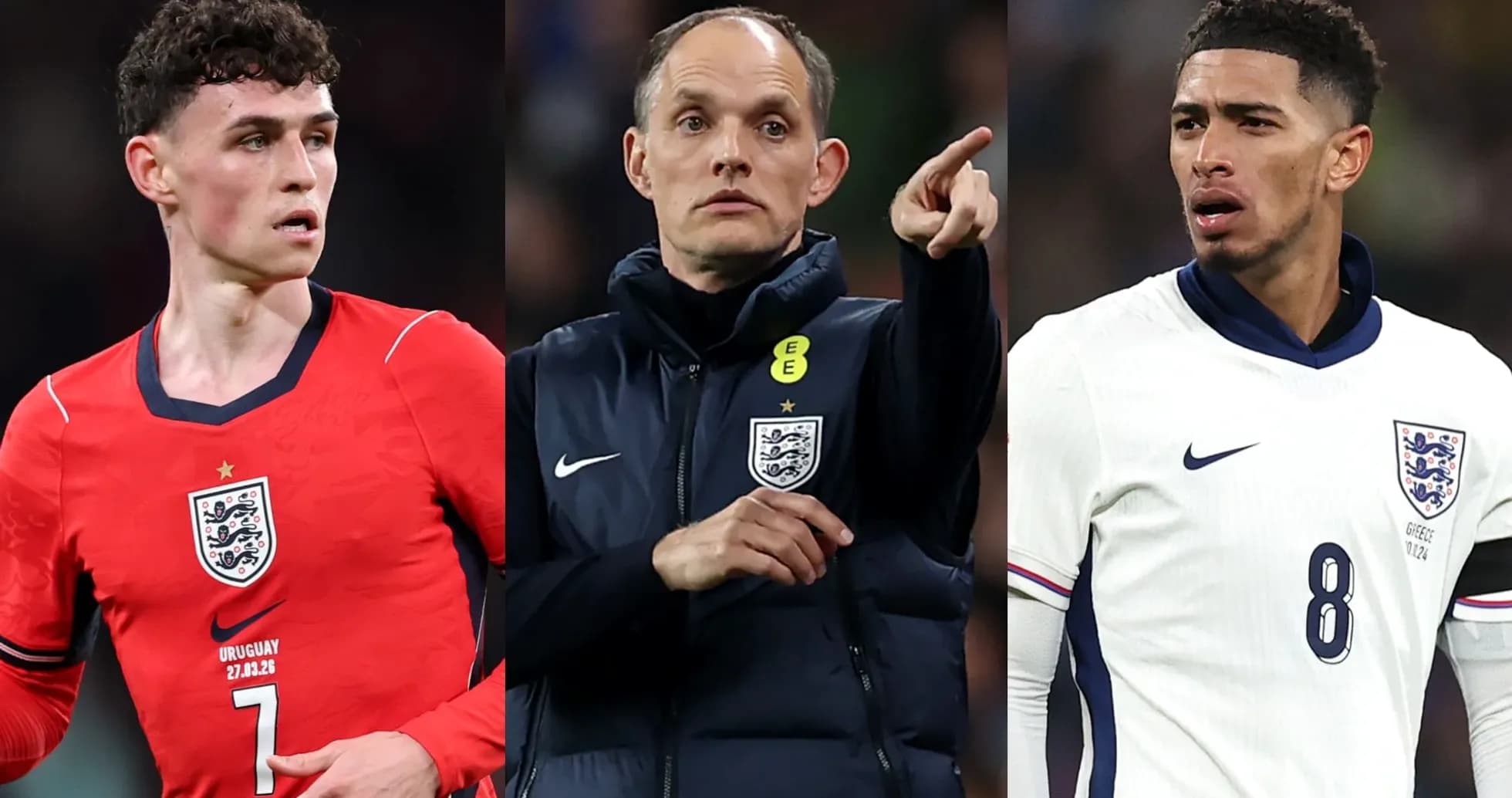
Tuchel’s England World Cup Squad: Big Names and Tough Cuts
Thomas Tuchel has made his cuts. From a sprawling preliminary list of 55 hopefuls, England’s head coach has carved out a final World Cup squad heavy on stardust, scarred by a few brutal omissions and loaded with expectation.
This is not a group built around automatic starters. It is a group built around competition.
Bellingham at the heart of a creative logjam
The fiercest debate before the announcement centred on England’s creators. Tuchel, like every England manager of the modern era, has more playmakers than spaces to fill.
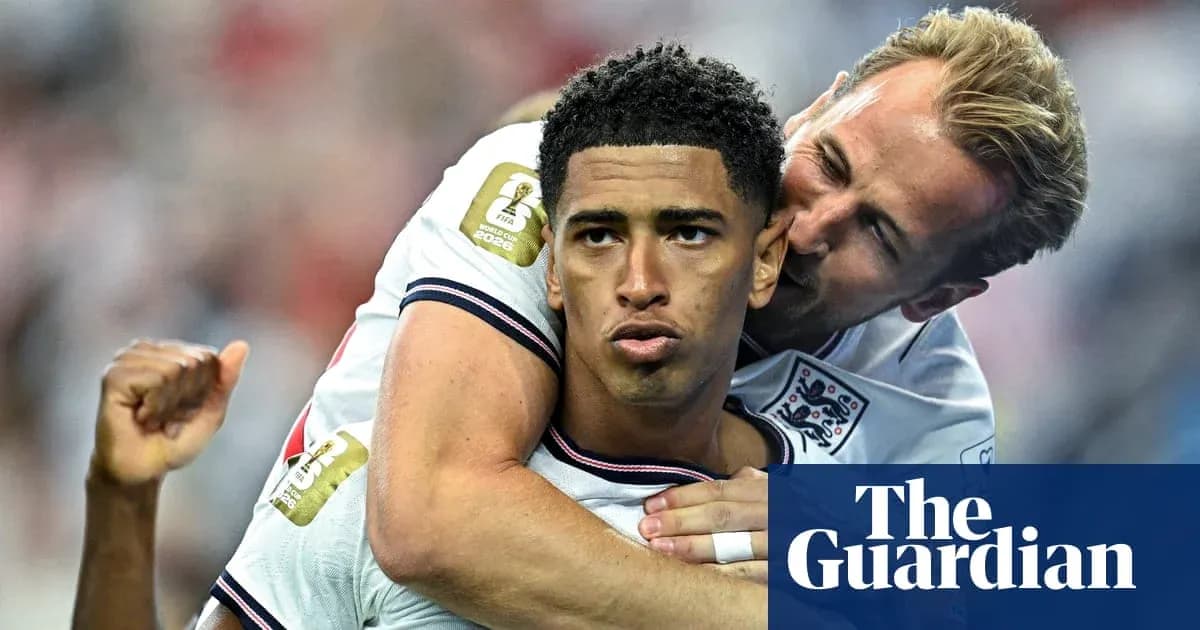
One name, though, was never really in doubt. Jude Bellingham, the Real Madrid ‘Galactico’, is set to wear the No.10 mantle, the central figure expected to stitch together England’s attacks and set the tempo in North America.
Behind him, the options are rich and varied. Eberechi Eze arrives on a high after tasting Premier League title glory with Arsenal, offering guile and flair as an alternative to Bellingham between the lines. Morgan Rogers, outstanding for Aston Villa, adds another inventive option, a player who can drift into pockets, carry the ball and break defensive structures.
The playmaking department looks lavish. The challenge now is turning that luxury into a coherent, ruthless unit.
Kane leads the line, with fresh support cast
Up front, one thing remains reassuringly familiar. Harry Kane, England’s record-breaking captain, will lead the line and chase more World Cup goals, the focal point around whom this entire attacking structure still orbits.
Around him, the picture is less settled and far more intriguing.
Ivan Toney, now in the Saudi Pro League and often on the fringes under Tuchel, has timed his resurgence perfectly. He forces his way back into the squad, offering penalty-box presence and nerve from the spot.
Ollie Watkins travels with memories of Euro 2024 still echoing, his semi-final heroics against the Netherlands a reminder of his impact from the bench. The Villa striker will push hard to prove that moment was not a one-off, but a preview.
Out wide, the choices are bold. Noni Madueke is one of the surprise inclusions, given he is not guaranteed a starting role at Arsenal. Yet his one‑v‑one ability and unpredictability clearly tempt Tuchel. Marcus Rashford, on loan at Barcelona, and Newcastle’s Anthony Gordon bring power, direct running and the flexibility to shift inside as central forwards when needed.
This is a forward line that can morph mid-game. Kane is the constant; everything else is fluid.
Midfield mix: redemption and experience
In midfield, Tuchel has blended experience with form players on the rise.
Jordan Henderson, a veteran of countless England campaigns, survives another cull. His leadership and tactical discipline keep him in the conversation when knockout games tighten and nerves fray.
Alongside him, one of the stories of the season. Kobbie Mainoo’s revival at Manchester United under Michael Carrick has propelled him from the fringes to the World Cup squad. Once drifting, now central, his late surge into contention is complete. He offers composure on the ball and an ability to knit play in deeper areas.
Adam Wharton of Crystal Palace, by contrast, slips off the bottom of a crowded deep-lying midfielder depth chart. Everton’s James Garner falls the same way. Both pay the price for England’s sheer volume of options in that zone.
Jarrod Bowen, who has battled admirably in a struggling West Ham side, also misses out. His work rate and goals are not enough to push him into this final 23.
Defensive gambles and familiar frustrations
At the back, Tuchel has resisted the temptation for shock calls but has still raised eyebrows.
There are no surprises in goal, but the headline in defence is John Stones. The Manchester City centre-back, heading towards free agency and coming off an injury-hit season, is still trusted to anchor England’s back line. Tuchel is gambling that tournament rhythm will come quickly for a player who, when fit, reads the game at an elite level.
On the flanks, Chelsea captain Reece James has nailed down the right-back berth, his blend of defensive nous and delivery from wide too valuable to ignore. On the opposite side, Nico O’Reilly and Djed Spence will scrap for the starting role, a battle that may run right up to the opening group game.
The pain of omission is sharpest in defence. Harry Maguire, a constant presence for England at recent tournaments, has already voiced his disappointment at being left out. Real Madrid’s Trent Alexander-Arnold, so often at the heart of the “where does he fit?” debate, does not make the cut at full-back. Newcastle’s Lewis Hall also misses out, while an untimely injury has left Arsenal’s versatile Ben White watching from home.
For a group that has leaned on continuity in recent years, this feels like a line being drawn.
Big-name casualties in attack
The attacking cuts are just as ruthless.
Phil Foden’s struggle for form at Manchester City has finally caught up with him. The player who once looked like the natural heir to England’s creative throne finds himself on the outside looking in, his dip too steep to ignore.
Cole Palmer’s omission is even more stark. Chelsea’s talisman and England Men’s Player of the Year in 2024 has seen his spark fade domestically, enduring a 14-game run without a goal for club and country. In a squad this competitive, that kind of drought leaves scars.
Morgan Gibbs-White, fresh from a career-best 17 goals for Nottingham Forest, can count himself unfortunate. He did almost everything he could to catch Tuchel’s eye, yet the door has stayed shut.
Up front, the cull is brutal. Danny Welbeck and Dominic Calvert-Lewin, who have combined for 27 Premier League goals for Brighton and Leeds in 2025-26, both miss out. Numbers alone were not enough. Style, fit, and Tuchel’s preferred profiles have won out.
Harvey Barnes, omitted again, may quietly wonder if he should have chosen Scotland when the opportunity arose. International careers can turn on a single decision; his now feels trapped in limbo.
Two friendlies, then the real thing
England will not have long to settle. Two pre-tournament friendlies in the United States will shape the final details and test legs under American heat.
New Zealand await on June 6. Costa Rica follow on June 10. Tuchel is expected to rotate heavily, spreading minutes as he searches for rhythm, chemistry and clarity before the tournament’s first whistle.
After that, there are no dress rehearsals.
England open their World Cup campaign against Croatia at AT&T Stadium in Arlington, Texas on June 17, a fixture loaded with history and tension. Six days later, they move to Gillette Stadium, home of the New England Patriots, to meet Ghana on June 23. Group L then closes at MetLife Stadium against Panama on June 27 – at the very venue earmarked to host the final.
By then, the arguments about who should have gone and who was left behind will no longer matter. The only question that will count is whether this hardened, star-studded squad can finally turn promise into a World Cup run worthy of its talent.