.svg&w=384&q=75 "naujapitch logo")
World Cup Showdown: Egypt vs Iran's Thrilling Battle
For a fixture without a European or South American heavyweight in sight, Egypt v Iran is throwing punches like a contender. Two giants from Africa and Asia, one blistering opening quarter of an hour, and a noise that barely dips even for the hydration break.
The boos for that pause in play almost matched the cheers that had come before it. This crowd didn’t travel to watch players sip water. They came for chaos, and the game obliged.
Egypt struck first, Iran wobbled, and then something snapped back into place. A missed Iranian penalty might have broken lesser sides; instead, it sharpened them. Within the first 15 minutes, the pressure swung back and forth, almost perfectly balanced, each attack answered with another, each clearance met with a roar.
The Iranian fans drove it. They were loud when their team surged forward, louder still when their defenders snuffed out Egyptian forays around the box. Every block sounded like a goal. Every tackle, a small victory.
Then came the moment that truly lit the contest.
Rezaeian’s Ruthless Response
Egypt looked set to double down when Mostafa Shobeir flung himself low to his left to make a superb save. It should have killed the move. Instead, it set up the defining strike.
The loose ball drifted to the far post, where Ramin Rezaeian arrived with a finisher’s calm and a street footballer’s audacity. From an absurdly tight angle, he lashed a rising shot into the net, somehow finding a gap that barely seemed to exist. Game level. Game alive.
That goal did more than just restore parity. It confirmed Rezaeian as Iran’s sharpest weapon at this World Cup. After his brace against New Zealand in the opening game, he now sits on three goals for the tournament, the country’s leading scorer on this stage and playing like a man who expects the ball to obey him.
Iran didn’t shrink after the equaliser; they surged. The noise from their end of the ground rose another notch, every Egyptian touch near the area whistled and jeered, every Iranian interception celebrated like a late winner.
Rezaeian almost found another opening soon after. The ball broke to him on his left side after Iran pressed, regained possession, and swept play across the pitch. He went for it first time, leaning back, left-footed, but this one flew well off target. No one in red and white seemed to mind. The intent was clear. Iran were hunting.
This isn’t a polished, risk-free World Cup tie between cautious giants. It’s raw, frantic, and wide open – the kind of match that sneaks up on a tournament and leaves it with a new classic.
Belgium Turn the Screw on New Zealand
On another pitch, in another kind of contest, Belgium are starting to look like themselves again.
Against New Zealand, there is a different edge to them. More running. More control. More bite in the press. The European side have been accused of strolling through games in the past, but here they look determined to stamp their authority early.
Kevin De Bruyne roams freely, drifting into pockets, dictating the tempo with that familiar, ruthless clarity. Jeremy Doku switches flanks, stretching New Zealand on both sides. Around them, the rest of the Belgian team holds its disciplined shape, a tight frame that allows its stars to improvise within safe borders.
The pressure builds, and New Zealand feel every second of it.
A penalty call briefly threatens to tip the match. The ball strikes Finn Surman, but with his arm tight to his side and the contact more rib-cage than hand, the decision is overturned after a Video Assistant Referee check. No spot-kick. No corner. Just a drop-ball to the New Zealand keeper and a collective Belgian glare.
The let-off keeps New Zealand alive, but only just.
A Corner, a Turned Back, and a Punishment
The warning signs had been there. Belgium were stepping higher, winning second balls, and forcing New Zealand deeper and deeper. When the breakthrough comes, it feels inevitable, yet entirely avoidable.
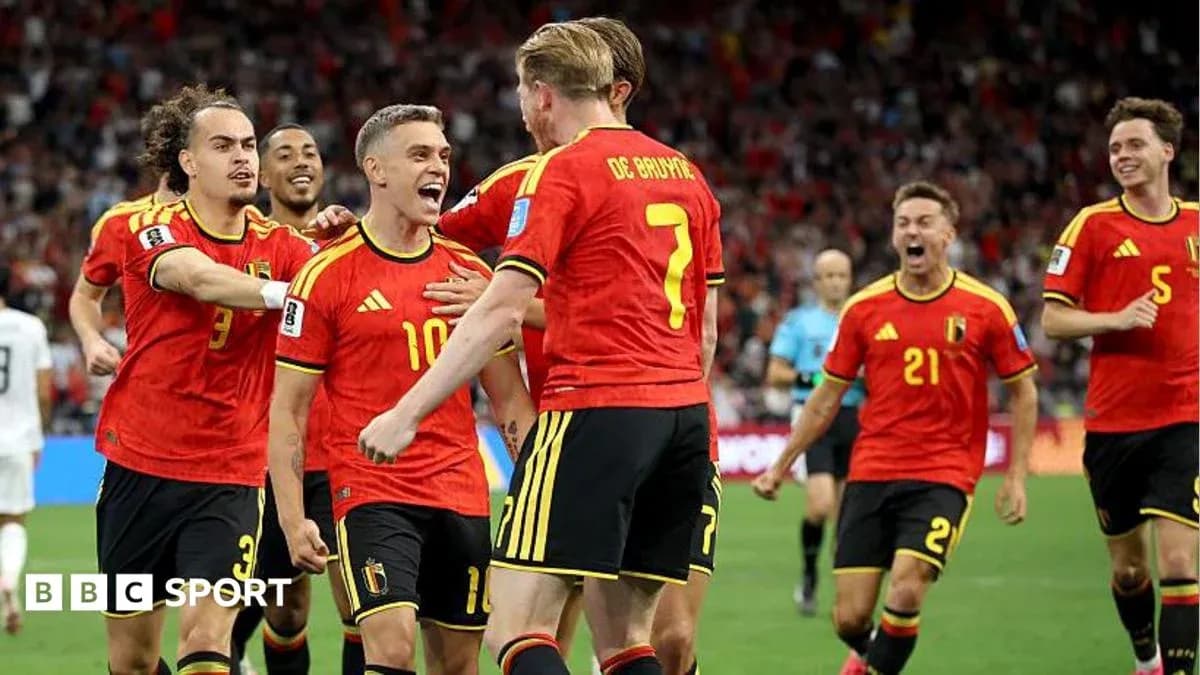
A corner is swung to the back post. Tim Payne, under pressure, makes the one mistake defenders are taught to avoid from their first day in the box: he turns his back on the ball. It hits him, drops loose, and Leandro Trossard reacts like every good forward should.
No hesitation. No mercy.
Trossard thumps the ball into the roof of the net from close range. Belgium finally have the goal their dominance deserves. New Zealand have a clip they will not want to see again.
It’s the sort of moment coaches replay in dressing rooms and training sessions for years: this is what happens when you switch off at a set-piece, this is what happens when you lose sight of both ball and man. As Dion Dublin notes from the gantry, it’s a basic, brutal lesson in defending corners—never turn your back.
Belgium’s intensity doesn’t dip after the goal. They look like a side intent on using this group-stage match as a statement, not just a stepping stone.
Back in the other stadium, Egypt and Iran are still trading blows, still locked at 1-1, still feeding off a crowd that refuses to sit down. One game is a tactical tightening of the screws, the other a breathless exchange of punches.
Different continents, different styles, same question: who finishes the night with something more than a highlight reel to show for it?