.svg&w=384&q=75 "naujapitch logo")
Switzerland Dominates Algeria 2-0 to Advance in World Cup
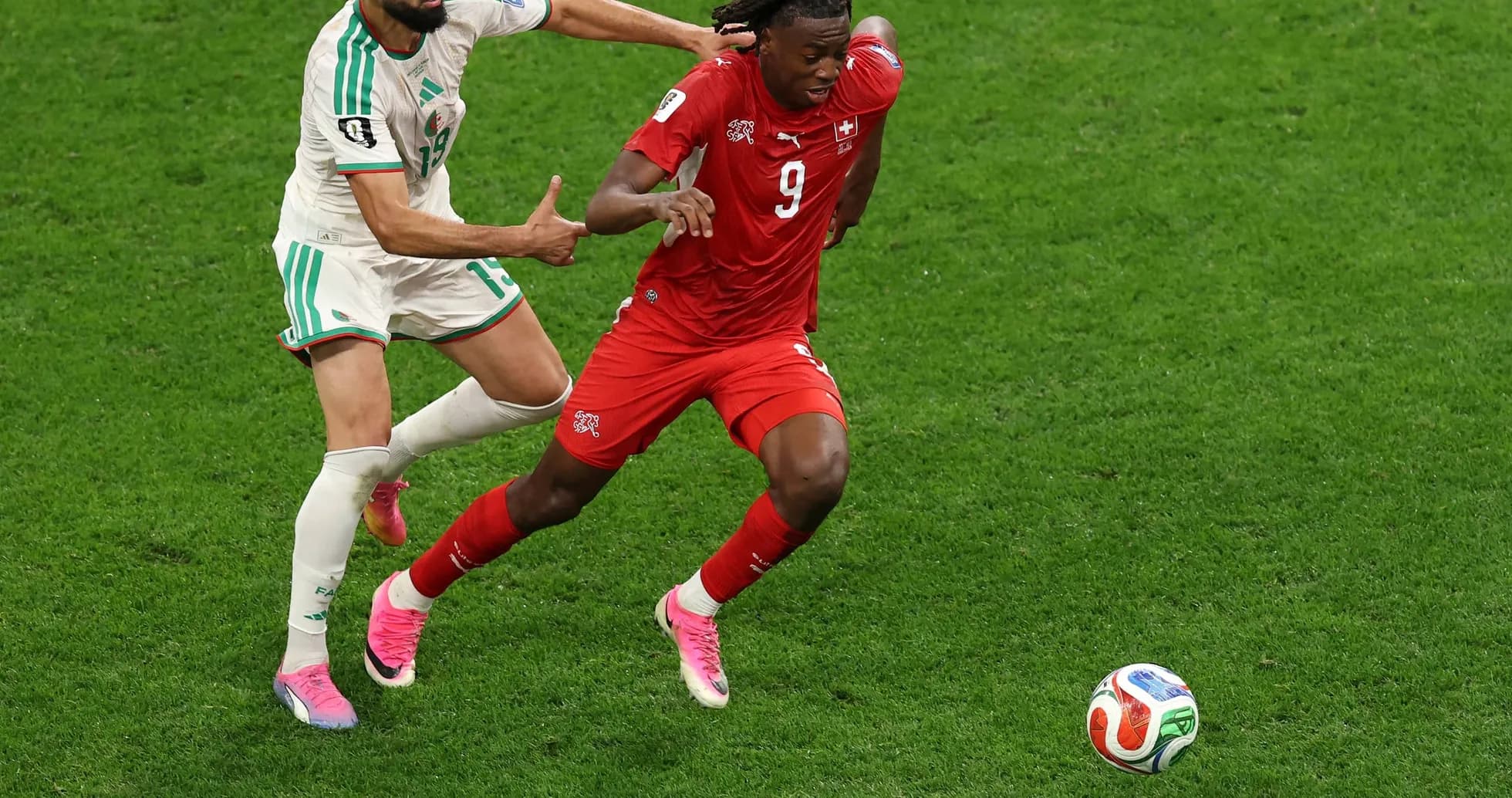
Switzerland 2-0 Algeria at BC Place sends Murat Yakin’s side into the World Cup Round of 16 with authority, building on their strong group campaign. Adding three more points to their tally, Switzerland underline their status as one of the form teams of the tournament, while Algeria’s run ends after a performance in which they had more of the ball but rarely turned it into genuine threat.
Match Report
The game tilted Switzerland’s way early. In the 10th minute, Switzerland struck first: Switzerland goal — B. Embolo (assisted by J. Manzambi) finished a swift attacking move to make it 1-0, rewarding the hosts’ aggressive start.
Algeria’s frustration began to show before the break. In the 36th minute, F. Chaibi (Algeria) — yellow card (Tripping) went into the book after a late challenge, emblematic of Algeria’s difficulty in containing Switzerland’s attacking midfielders between the lines.
Switzerland started the second half perfectly. In the 46th minute, Switzerland goal — D. Ndoye (unassisted) doubled the lead to 2-0 with a solo effort, capitalising on space down the flank and punishing Algeria’s slow restart.
Vladimir Petkovic responded with a double change on 58 minutes to inject energy and adjust the structure. At 58', J. Hadjam replaced H. Aouar (Algeria), adding more defensive balance on the left. Simultaneously at 58', A. Gouiri replaced R. Zerrouki (Algeria), a more attacking swap aimed at increasing presence between Switzerland’s lines.
On 71 minutes, both coaches turned to their benches again. For Switzerland, at 71', F. Rieder replaced R. Vargas (Switzerland), and at 71', N. Okafor replaced J. Manzambi (Switzerland), with Yakin refreshing the attacking midfield and wide areas to preserve intensity in transition. Algeria responded in kind: at 71', A. Hadj Moussa replaced R. Mahrez (Algeria), and at 71', H. Boudaoui replaced N. Bentaleb (Algeria), moves that shifted Algeria’s front line and central midfield profile in search of more penetration.
Just a minute later, Algeria’s substitute was in disciplinary trouble. In the 72nd minute, H. Boudaoui (Algeria) — yellow card (Roughing) was cautioned after a robust challenge, further disrupting Algeria’s rhythm as they tried to build sustained pressure.
Algeria made a final attacking roll of the dice in the 82nd minute: A. Boulbina replaced R. Belghali (Algeria), pushing fresh legs into the back line to support higher full-back positions and quicker ball circulation from deep.
Switzerland then managed the closing stages with controlled substitutions. In the 83rd minute, Z. Amdouni replaced B. Embolo (Switzerland), maintaining a focal point up front while resting the goalscorer. Finally, in the 87th minute, S. Widmer replaced D. Zakaria (Switzerland), and at 87', M. Aebischer replaced D. Ndoye (Switzerland), reinforcing the right side and midfield to close out a professional 2-0 victory without late drama.
Fixture Statistics & Tactical Audit
- xG: Switzerland 2.56 vs 0.73 Algeria
- Possession: Switzerland 45% vs 55% Algeria
- Shots on Target: Switzerland 5 vs 2 Algeria
- Goalkeeper Saves: Switzerland 2 vs 2 Algeria
- Blocked Shots: Switzerland 2 vs 3 Algeria
The underlying numbers support the 2-0 scoreline. Switzerland were clinical (2 goals from 5 shots on target and 2.56 xG), repeatedly creating high-quality chances inside the box despite having less possession. Their 9 efforts from inside the area highlighted how effectively they progressed through Algeria’s midfield, especially in transition. Algeria, by contrast, enjoyed more of the ball and completed more passes (561 to Switzerland’s 436) but were relatively blunt (only 0.73 xG and 2 shots on target). Switzerland’s compact 4-2-3-1 blocked central lanes and forced Algeria into lower-probability attempts, as reflected in Algeria’s modest shot volume and blocked efforts. Both goalkeepers were rarely overworked — each making 2 saves — but Switzerland consistently engineered better situations, justifying a two-goal margin.
Standings Update & Seasonal Impact
Switzerland arrived in the Round of 32 off a strong group phase with 7 points, 7 goals scored and 3 conceded (goal difference +4). This 2-0 win moves them to 10 points overall in the tournament, with 9 goals for and 3 against, improving their goal difference to +6. It reinforces their status as one of the most balanced sides left in the World Cup, combining attacking efficiency with defensive control.
Algeria entered the knockout phase with 4 points, 5 goals scored and 7 conceded (goal difference -2). Their elimination at this stage fixes their tournament totals at 4 points, 5 goals for and 9 against, with goal difference slipping to -4. The defeat underlines a recurring theme of their campaign: competitive in spells, but too porous defensively and insufficiently incisive in the final third to trouble higher-calibre opposition over 90 minutes.
Lineups & Personnel
Switzerland Starting XI
- GK: Gregor Kobel
- DF: Denis Zakaria, Nico Elvedi, Manuel Akanji, Ricardo Rodríguez
- MF: Remo Freuler, Granit Xhaka, Dan Ndoye, Johan Manzambi, Rubén Vargas
- FW: Breel Embolo
Algeria Starting XI
- GK: Luca Zidane
- DF: Rafik Belghali, Aïssa Mandi, Ramy Bensebaini, Rayan Aït-Nouri
- MF: Ramiz Zerrouki, Nabil Bentaleb, Farès Chaïbi
- FW: Riyad Mahrez, Ibrahim Maza, Houssem Aouar
Post-Match Verdict
Switzerland delivered a controlled, clinical performance (2 goals from 2.56 xG and 5 shots on target), maximising their best attacking moments while remaining compact without the ball. The Embolo–Manzambi combination and Ndoye’s direct running repeatedly exploited Algeria’s defensive spacing, and Yakin’s in-game management kept intensity high through well-timed substitutions. Defensively, Switzerland limited Algeria to just 2 shots on target and 0.73 xG, illustrating how effectively their double pivot screened the back four.
For Algeria, this was more a structural attacking failure than a collapse at the back. Despite dominant possession (55%) and superior passing accuracy (85% to Switzerland’s 81%), they lacked penetration and variety in the final third, too often funneled into low-yield attempts that Switzerland’s back line handled comfortably. The late attacking changes increased energy but not shot quality. Ultimately, Switzerland’s sharper chance creation and superior defensive organisation fully merited a 2-0 progression to the next round.