.svg&w=384&q=75 "naujapitch logo")
Spain's Evolution: From Entitlement to a Confident Belief
There was a time when Spain walked into every tournament as if the trophy already belonged in Madrid. Between 2008 and 2012, La Roja didn’t just win; they redefined the sport. A World Cup wedged between back-to-back European Championships, a style so suffocating it left opponents chasing shadows and rewriting their own blueprints.
Then it all collapsed.
The decade that followed was brutal. Early exits, failed experiments, managers churned through, a nation forced to swallow its pride and accept that the rest of the world had caught up, maybe even overtaken them. The entitlement vanished. The fear crept in.
Now, on the road to the 2026 World Cup in North America, something different hangs in the Spanish air. Not arrogance. Not fatalism. A calmer, more grounded conviction.
Euro 2024 changed everything.
Luis de la Fuente’s side didn’t just win that tournament; they tore through it. Croatia, Italy, Germany, France, England – all handled, all beaten. The doubts that had swirled around the coach and his methods turned into a statement run that re-established Spain as a superpower with a modern twist: they know exactly what they are.
Semra Hunter, Spanish-American journalist and ITV World Cup presenter, has watched that shift up close. On the Make Football Great Again podcast, she paints a picture of a country that has finally learned to live with its own expectations.
From suffocating pressure to a healthier pact
The old Spain lived under a “win or bust” ultimatum. Anything less than a trophy felt like failure. That mentality, Hunter argues, has eased.
"The fans learned their lesson from how spoiled they were getting with all the success from 2008 to 2012," she explains. There was a sense the team were untouchable, a machine that could not break. When it did, after 2012, the crash was painful enough to scar a generation.
That scar tissue shaped the build-up to Euro 2024. De la Fuente walked into a storm of scepticism. His squad choices were questioned. His style was doubted. “Going into the Euros, fans were super critical of Luis de la Fuente. There was almost no hope,” Hunter recalls.
The pressure flipped. Instead of a nation demanding glory, Spain went to Germany with something to prove. The players carried that chip on their shoulder and turned it into fuel. They became, as Hunter puts it, consistently the best team at the tournament.
Now the relationship between fans and team has been reset. Confidence is back, but it’s less toxic, less absolute. Supporters trust this group again, but the old ultimatum has softened. It is no longer “win or you’re failures”. It is “you are good enough to win, and we’ll ride with you”.
That subtle shift might be Spain’s most important evolution of all.
Spain’s heartbeat – and the two electric wires
If Spain are to climb the mountain again this summer, their two most explosive weapons need to be ready to run at full speed.
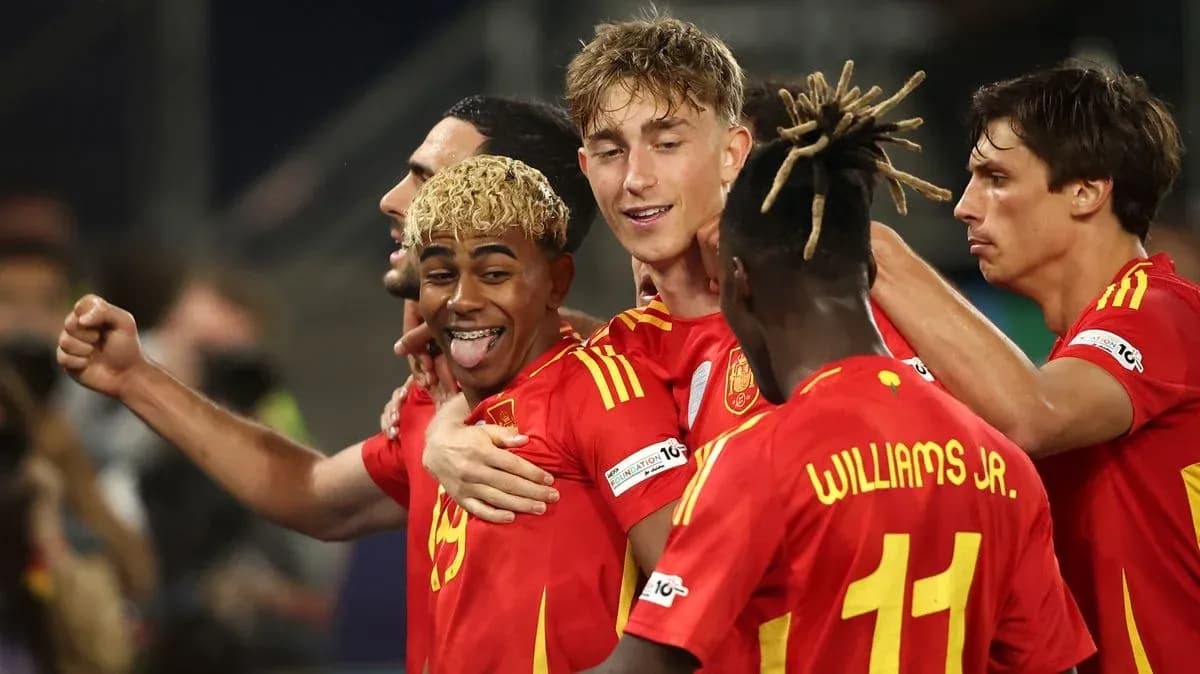
Inside the camp, there is a quiet tension around the fitness of Lamine Yamal and Nico Williams. They are not just wingers; they are the chaos agents that give this structured side its edge.
Yamal, still only 18, suffered a hamstring injury in April. He is expected to make the World Cup, but no one can yet say what version of him will arrive on opening day – the unstoppable prodigy from Euro 2024, or a player still searching for his sharpness.
“They are two of the most special, unique wingers in world football at the moment and they give Spain an edge they wouldn't have without them,” Hunter says. Yamal, she notes, has started to drift into that Messi-like pocket, coming inside, destabilising defensive lines, turning tight games with one flash of brilliance.
On the other flank, Williams – arguably Spain’s standout performer at Euro 2024 – also pulled up with a hamstring problem in May. This time, the prognosis is kinder. “Thankfully, that one doesn't seem to be as bad, and he should be back to fitness to start training,” Hunter adds.
Spain can function without them. The structure is that strong. But the difference between a deep run and lifting the trophy may well rest on whether both are fully firing. At full tilt, they turn a beautifully organised side into something terrifying.
A midfield that embarrasses the rest of the world
If other nations are scrambling to find one top-class midfielder, Spain are drowning in them.
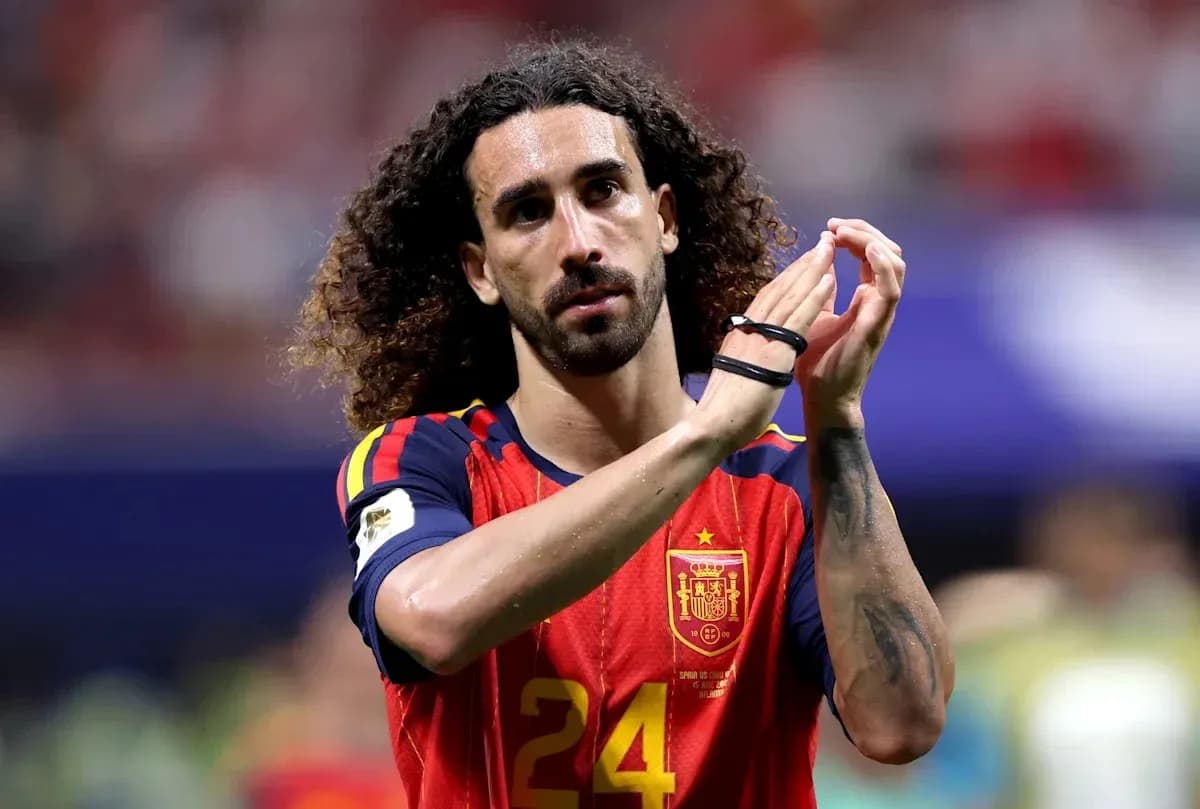
Rodri, the metronome and shield at Manchester City. Pedri, Gavi and Dani Olmo from Barcelona’s creative production line. Arsenal’s Martin Zubimendi and Mikel Merino. Fabian Ruiz at PSG. It is an embarrassment of riches, and yet De la Fuente’s core looks remarkably clear.
“As long as Rodri and Pedri are fit and firing, they are non-negotiable starters,” Hunter says, with no room for debate. Rodri dictates the tempo and plugs every gap. Pedri stitches moves together and unlocks defences with the calm of a veteran and the feet of a street footballer.
Around them, the options shift with the game plan. Gavi adds bite, aggression, a physical edge that Spain sometimes lacked in the past. Olmo can break lines, arrive in the box, even operate almost as a forward when needed.
The depth took a hit, though. Barcelona’s Fermin Lopez, who produced 30 goal contributions this season, has been ruled out with a broken foot and has already undergone surgery. “Fermin Lopez is a big loss,” Hunter admits. “He's somebody who probably could have been a breakout player for Spain.”
Even that blow gets softened by the sheer versatility of the squad. Zubimendi offers a direct, like-for-like alternative to Rodri. Others can move between roles and zones. Spain, as Hunter puts it, remain “completely spoiled for choice”.
The old wound that still hasn’t healed
For all the midfield opulence, one issue continues to stalk Spain into every major tournament: the centre-forward.
The country that once fielded David Villa and Fernando Torres now looks around and sees a gap that has never truly been filled. The talent pipeline keeps producing technicians, schemers, playmakers. The ruthless, one-touch “fox in the box” has become an endangered species.
"Our biggest weakness is so obvious for me," Hunter says. "We haven't had a proper, lethal 'fox in the box' striker who can put balls away first touch since the days of David Villa and Fernando Torres. No disrespect to Alvaro Morata but Spain just doesn't produce that kind of player. It's all about midfielders."
This summer, Real Sociedad’s Mikel Oyarzabal is expected to lead the line. He scored the winner against England in the Euro 2024 final and understands the demands of playing in a fluid, possession-heavy system. He will press, combine, and finish chances.
What he won’t do is terrify defences on reputation alone. In this Spain, the fear still comes from deeper – from the players behind him, from the waves of movement and passing that eventually break you.
A nation of whiteboard romantics
Spain’s tactical obsession doesn’t stop at the touchline. It starts in the playground.
“In Spain, football is a language,” Hunter says. From a young age, players are taught not just how to play, but how to think. Systems, spaces, pressing triggers – the whiteboard arrives early, and it never leaves.
It is no coincidence that the Premier League is littered with Spanish coaches: Pep Guardiola, Mikel Arteta, Unai Emery, Xabi Alonso, Andoni Iraola. They are not outliers; they are products of a culture that treats football as an intellectual craft as much as a physical one.
“Everybody fancies themselves a football philosopher in Spain, really. There's so much romance about it,” Hunter notes. Figures like Guardiola and Alonso were already “managers on the pitch” when they played, extending the coach’s mind into the game itself.
The philosophy is clear: the collective comes first. Collaboration over ego. The whole above the individual. That humility, that work ethic, bleeds into their management style and into the way their teams play. It is why Spain can keep reinventing themselves without losing their identity.
Group E: comfort, danger, and a South American test
On paper, Spain’s group at the World Cup looks manageable: Cape Verde, Saudi Arabia and Uruguay.
In reality, it is layered.
“They should get through relatively comfortably,” Hunter predicts. Cape Verde are debutants, full of energy and ambition but untested at this level. Saudi Arabia are organised and disciplined, capable of frustrating opponents for long spells. Spain, though, should have too much control, too much quality.
Uruguay are different. “Uruguay will be the biggest test,” she warns. “They are intense, aggressive, streetwise, and technically more talented than people give them credit for. If they want to rough up Spain, they certainly can.”
That match could tell us everything about where this Spain really are. Can they handle the physical storm without losing their rhythm? Can they impose their football on a side that lives for disruption and duels?
Hunter expects Spain to navigate it. “I see them getting seven to nine points, topping the group and advancing,” she says. And she doesn’t stop there. “Quite honestly, I think they will make it all the way to the final.”
Pressed on a winner, she doesn’t hedge.
“I think it's going to be Spain to win it.”
From entitlement to humility, from collapse to reconstruction, Spain arrive in North America not as the loudest team, but as one of the clearest. The question now is simple: has that painful decade forged a side ready to rule the world again?