.svg&w=384&q=75 "naujapitch logo")
Scotland’s No 1 Moment in Boston
Some World Cup moments come with fireworks and fanfare. Others happen quietly in a hotel lobby.
In Boston this morning, 13-year-old Daniel Nevin seized his own. The Scotland supporter, staying within walking distance of his national team, spotted Angus Gunn at the team hotel and did what any sharp-eyed young fan should do – he asked for a picture with his country’s No 1.
His father, Tommy, 55, watched on as Daniel, who plays for St Cadoc’s Youth Club in Glasgow, stood alongside the Scotland goalkeeper. The verdict afterwards was simple enough: he was “delighted”. Tonight, as Scotland face Morocco, the teenager will be hoping the man he met in the lift lobby delivers a clean sheet on the pitch.
For one boy in Boston, the World Cup has already delivered.
Co-hosts flex their muscles
While Scotland’s preparations tick over in New England, the other co-hosts have been busy laying down markers.
Canada finally found their groove, and in some style. A 6-0 demolition of Qatar brought their first win of this World Cup, a statement victory that felt like a release as much as a result. Goals flowed, confidence followed, and suddenly the co-hosts look like a side that belongs on this stage.
Mexico, meanwhile, kept their record spotless. A 1-0 win over South Korea maintained their 100 per cent start, not spectacular but quietly ruthless, the kind of narrow victory that often underpins deep tournament runs.
The supporting cast did their bit too. Switzerland brushed aside Bosnia-Herzegovina 4-1, a dominant display that underlined their habit of growing into tournaments. Czech Republic’s 1-1 draw with South Africa was tighter, more attritional, but every point now shapes the final days of the group phase.
The table is shifting, slowly but decisively.
2030 storm clouds over Spain and Morocco
This World Cup is barely out of its opening chapters, yet the battle lines for 2030 are already being drawn.
Spain, Portugal and Morocco will share hosting duties in six years’ time, but there is one prize nobody wants to split: the final. Both Spain and Morocco are pushing to stage the showpiece, and, according to The Times’ chief sports reporter Martyn Ziegler, the race currently stands at 50-50.
It is more than a logistical question. Hosting a World Cup final carries political weight, commercial clout and footballing prestige that lasts for generations. For Spain, it would be another jewel in an already glittering football crown. For Morocco, it would be a landmark moment for the African game.
The tournament is still in the United States, Mexico and Canada. Yet the tug-of-war for 2030 has already begun.
Pochettino’s USA: shaped by old scars
On the touchline this summer, Mauricio Pochettino cuts a relaxed, open figure with the United States squad. That image is forged from pain.
His only World Cup as a player came in 2002 under Marcelo Bielsa with Argentina. The talent was immense, the expectations suffocating. The squad lived under near-lockdown conditions and then crashed out in the group stage. For Pochettino, that campaign left scars.
He has not forgotten. He has flipped the script.
With USA, the Argentine has opened the doors and loosened the grip. The environment is lighter, more human, built to let players breathe rather than merely obey. That approach helped fuel their blistering 4-1 win over Paraguay in their opening game, a performance that felt less like a team grinding through instructions and more like a group released.
World Cups are about tactics, of course. But they are also about mood. Pochettino knows how dark it can get when the mood turns.
Australia’s perfect launch
Australia have become World Cup regulars. This is their sixth consecutive appearance, a feat that once felt fanciful. Yet for all that consistency, they rarely start fast.
Not this time.
Tony Popovic’s side opened with a sharp, controlled 2-0 win over Turkey in Vancouver last Saturday, their first victory in a World Cup opener since 2006. The goals brought three points, but the manner of the display brought something more valuable: belief that this group can do what only two Australian sides have managed before and reach the knockout rounds.
They have put themselves in position. Now comes the hard part – staying there.
USA hit stride, Pulisic in doubt
If Australia arrived with quiet authority, USA roared in.
Their 4-1 dismantling of Paraguay was a statement from co-hosts determined not just to participate but to dictate. They tore into a 3-0 lead before half-time, with Folarin Balogun striking twice, the kind of centre-forward performance that instantly changes how opponents prepare.
Paraguay did find a response midway through the second half, a reminder that this USA side is still learning how to manage games when they are ahead. Any nerves, though, were crushed in stoppage time when Giovanni Reyna swept in a superb late goal to restore the three-goal cushion and the sense of control.
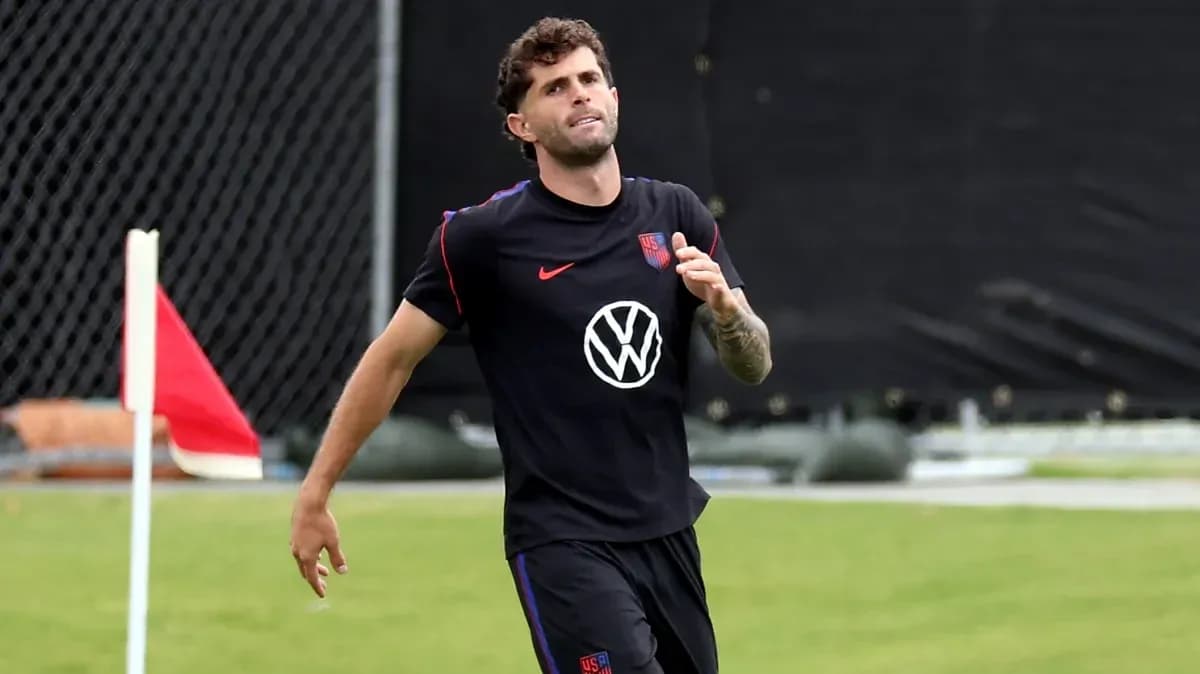
The one cloud hangs over Christian Pulisic. The 27-year-old, the team’s talisman, is racing the clock to prove his fitness for today’s match against Australia after a calf injury picked up just before the Paraguay game. He impressed in the first half of that opener but was withdrawn at the break as discomfort flared.
Without him, USA lose their sharpest edge. With him, they look like genuine contenders to top this group.
All roads lead to Seattle
Day nine at the 2026 World Cup builds towards one focal point: USA vs Australia.
Both sides won their first games. Both have momentum. Both know that tonight in Seattle, at 8pm local time (12pm PDT), the group D landscape will tilt one way or the other.
For Pochettino, this is the first real stress test of his new-era USA: can his players blend intensity with control against a disciplined, organised Australian team that rarely gives anything away cheaply? For Popovic, it is a chance to show that Australia’s opening win was not a one-off surge but the start of something more substantial.
Around them, the tournament continues to swirl — Scotland fans chasing photos in Boston, co-hosts racking up goals, and a distant argument over who will own the final night of 2030.
Tonight, though, all eyes turn to Seattle. One game, one group, and a chance to set the tone for the rest of the summer.