.svg&w=384&q=75 "naujapitch logo")
Pep Guardiola in Talks to Lead Italy's National Team
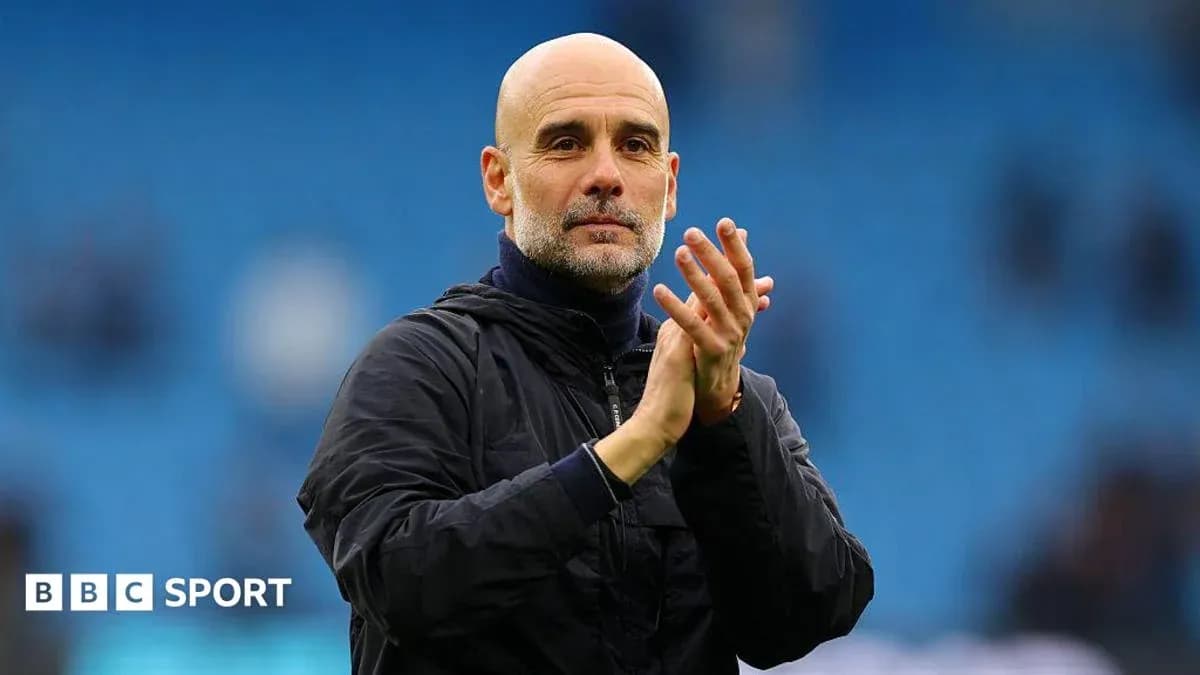
Pep Guardiola has already left his fingerprints all over English football. Now, Italy want him to reshape theirs.
The president of the Italian Football Federation (FIGC), Giovanni Malagò, has confirmed that talks have taken place with the former Manchester City manager about becoming the next head coach of the national team.
It is more than a rumour. It is a live possibility.
Italy Turn to a Giant
Italy have been drifting. Gennaro Gattuso walked away in April after the Azzurri failed to qualify for a third consecutive World Cup, a staggering decline for four-time world champions. Since then, the dugout has been empty, the debate raging, the identity of the next coach treated almost as a referendum on the future of Italian football itself.
Into that void steps the name dominating the headlines: Pep Guardiola.
Sky Italia first reported on Monday that the FIGC had made contact with the 55-year-old. Malagò then went a step further, telling Italian digital outlet Cronache di spogliatoio that discussions had indeed been held and that the federation is prepared to bend its own financial framework to make a deal possible.
“[Financial] exceptions have been made, exceptions that for example may concern the name that is so overbearing in these hours: Pep Guardiola,” Malagò said, before adding a note of caution: “Exceptions for obvious reasons that I am not here to explain, but it is not certain that this thing will go through.”
That last line matters. Italy want Guardiola. They have not got him yet.
A Serial Winner on the Market
Guardiola left Manchester City this summer after a decade of relentless dominance in England. Six Premier League titles. Three FA Cups. Five League Cups. One Champions League. An era defined by control, invention and a style of football that bent a league to his will.
His spell at City came after similarly glittering periods at Barcelona and Bayern Munich. Wherever he has gone, trophies have followed.
When he walked away from City in May, he cut the figure of a man emptied by the demands of elite management. “I am so tired. Seriously, I am so tired,” he said then, reflecting on a 10-year stay he described as richer in memories than even his time at Barça or Bayern.
A sabbatical seemed the logical next step. Instead, only weeks later, he finds himself at the centre of one of international football’s most intriguing courtships.
If he accepts, it would be a rapid return to the touchline and a dramatic pivot from club to country.
Breaking With Tradition
For Italy, appointing Guardiola would be more than a managerial hire. It would be a historical break.
Across their long history, the Azzurri have almost always been led by one of their own. Only twice has a foreign coach been involved: Hungarian Lajos Czeizler as part of a technical committee in the 1950s, and legendary Argentine Helenio Herrera, who shared the role with Ferruccio Valcareggi in the 1960s.
Guardiola would be the first non-Italian to take full command of the national side in the modern era.
Yet he would not arrive as a stranger. He speaks fluent Italian and knows Serie A from the inside, having spent two seasons there between 2001 and 2003. He had two spells at Brescia and a stint at Roma, absorbing a culture that has long fascinated him.
That background, coupled with his tactical reputation, makes him a seductive choice for a federation desperate to modernise without losing its soul.
Not the Only Name in the Frame
Guardiola is the headline act, but he is not the only candidate.
Roberto Mancini, who famously guided Italy to Euro 2020 glory five years ago, is under consideration for a second spell. His first tenure restored pride and produced a European title, even if it later unravelled with World Cup qualification failures.
Andrea Pirlo is also in the mix. The former midfield maestro, now managing Dubai United, represents a different type of gamble: less experienced, but deeply tied to the Italian game’s recent past and its tactical evolution.
Asked whether Guardiola, Mancini and Pirlo were the only options on the table, Malagò was clear: “Absolutely not. We think about a certain profile and certainly these names fall into that category.”
The FIGC is casting a wide net. The profile, though, is obvious: a strong personality, a defined playing identity, and the authority to reshape a broken system.
A Defining Decision for a Fallen Giant
BBC Sport has contacted the FIGC for further comment, but the broad outlines are already clear. Italy are prepared to make financial “exceptions” to lure Guardiola. They are open to breaking with tradition. They are weighing him against men who know Coverciano and the Azzurri shirt inside out.
The choice now is stark.
Do they trust a familiar Italian hand like Mancini or Pirlo to rebuild from within? Or do they hand the keys of a wounded giant to the most influential coach of his generation and ask him to reinvent a national team that has lost its way?
If Guardiola says yes, Italy change course in an instant.
If he says no, the question lingers: how many more chances will the Azzurri get to tempt a manager of this calibre at precisely the moment they need him most?