.svg&w=384&q=75 "naujapitch logo")
Guillermo Ochoa Retires: A Legacy in Goalkeeping
Guillermo Ochoa has finally taken off the gloves.
One of Mexico’s defining footballing figures announced on Tuesday that he is retiring from elite competition, ending a career that stretched across continents, generations, and six World Cups. He had long signalled that the 2026 tournament would be his last dance, yet a corner of Mexican football still clung to the idea of one more short-term deal, one more season, one more miracle save.
The debate ended with a message.
“I gave it my all; I left everything on the field for my clubs and the national team, and today I hang up my gloves,” Ochoa wrote on social media. “Being a goalkeeper means knowing you might wait 90 minutes for a single moment when everything depends on you. And when that moment arrives, you cannot hesitate.”
For two decades, he rarely did.
A World Cup constant
Ochoa’s career is framed by a number that scarcely seems real: six World Cups. He stands in that rarefied air alongside only Ronaldo and Messi, a testament not just to talent, but to remarkable durability and discipline.
He travelled as a youngster in his early tournaments, the promising heir rather than the established star. Then came Brazil 2014, Russia 2018, and Qatar 2022, when the position became his and his alone. Those summers turned him from domestic idol into a global cult hero, the agile, wild-haired shot-stopper who repeatedly frustrated the world’s best.
His longevity, more than any single save, is what now feels most staggering. Goalkeepers often age well. Few stay this relevant, this long.
From Mexico City to the world
The story began in the youth ranks of Mexico City, where a skinny teenager with quick feet and quicker hands emerged at Club América. His top-flight debut arrived in February 2004. It did not take long for Mexico to realise something different had appeared between the posts.
By 2005, he had a league title to his name, lifting the Clausura trophy with América. The reflexes were already there, the instinctive positioning, the fearlessness in one-on-ones. What followed was the leap that changed both his life and the history books.
In 2011, Ochoa joined French side Ajaccio, becoming the first Mexico-born goalkeeper to play in Europe. It was a move that carried more symbolism than silverware, yet it broke a barrier and set a path for others to follow.
From there, his European journey turned into a tour: Malaga, Granada, Standard Liege, Salernitana, AVS Futebol, AEL Limassol. Different leagues, different languages, same defiant figure in goal. At Standard Liege he added the Belgian Cup to his collection, a tangible reward for his persistence on foreign soil.
Just when it seemed the road might never lead home again, he returned to Club América in 2019. The three-year spell that followed did not just restore an idol to his people; it confirmed his status as a club legend, the prodigy turned patriarch back where it all started.
A farewell staged at the Azteca
The final act unfolded on the grandest of Mexican stages.
Though he served primarily as backup to Raul Rangel at the 2026 World Cup, coach Javier Aguirre understood the weight of the moment. In Mexico’s last group game against Czechia, with the clock ticking down and the Estadio Azteca humming with expectation, Aguirre turned to his veteran.
On came Ochoa for the final 13 minutes. The roar told its own story. This was not a routine substitution; it was a ceremony.
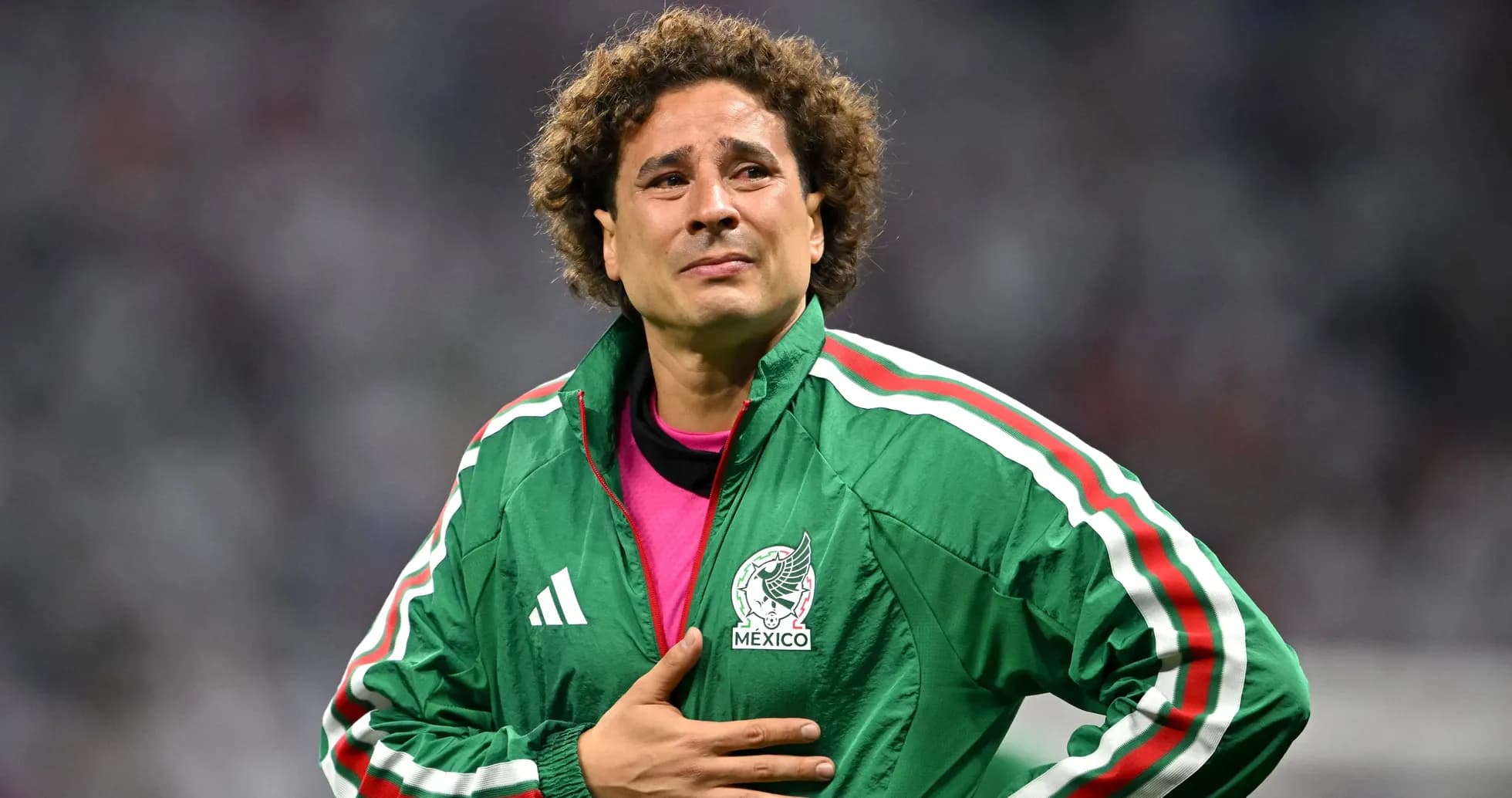
Every catch, every goal-kick drew applause. When the final whistle sounded, the emotion poured out. Ochoa walked to his posts, kissed them both, then dropped to his knees as teammates surrounded him. The Azteca — the same cathedral where his career had begun — watched one of its favourite sons say goodbye in the only way he knew: on the pitch, in gloves, under pressure.
The crowd eventually filed out. The floodlights dimmed. Yet Ochoa lingered. He stepped alone into the centre circle, turning slowly, as if trying to fix every blade of grass in his memory. That quiet lap of the eyes might prove the most enduring image of his farewell.
Leaving with peace, and a full cabinet
His honours list will not rival some of the game’s most decorated names, but it does not need to. A league title with Club América in the 2005 Clausura. A Belgian Cup with Standard Liege. The real weight of his career lies elsewhere — in the trust of successive national team managers, in the expectations of a country that grew used to seeing him as the last line of resistance.
“I never imagined how far a dream could take me. Today, I can only look back with pride and say: Thank you,” he wrote. “I take with me the affection of millions and the peace of mind that comes with knowing I gave everything for Mexico.”
That affection is not measured in medals. It lives in World Cup nights when he stood up to the giants, in the countless children who pulled on a goalkeeper’s jersey because he made the position look heroic, not thankless.
He walks away now, not pushed, not fading, but choosing his moment. The gloves are on the hook, the boots cleaned for the last time. The question, for Mexican football, is simple and daunting:
Who dares step into that goal next, knowing the standard he has just set?