.svg&w=384&q=75 "naujapitch logo")
Norway's World Cup Strategy: Beyond Haaland
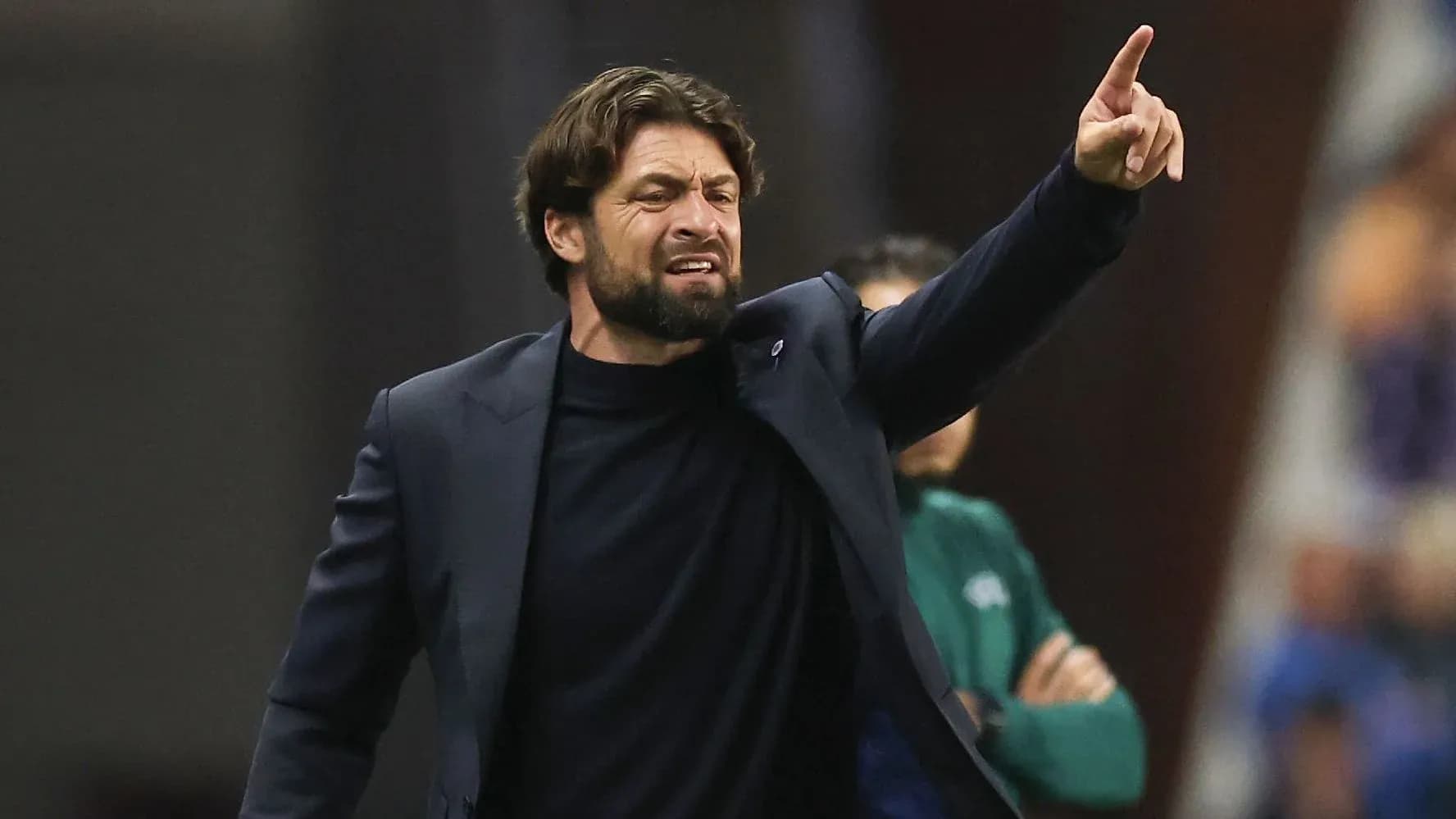
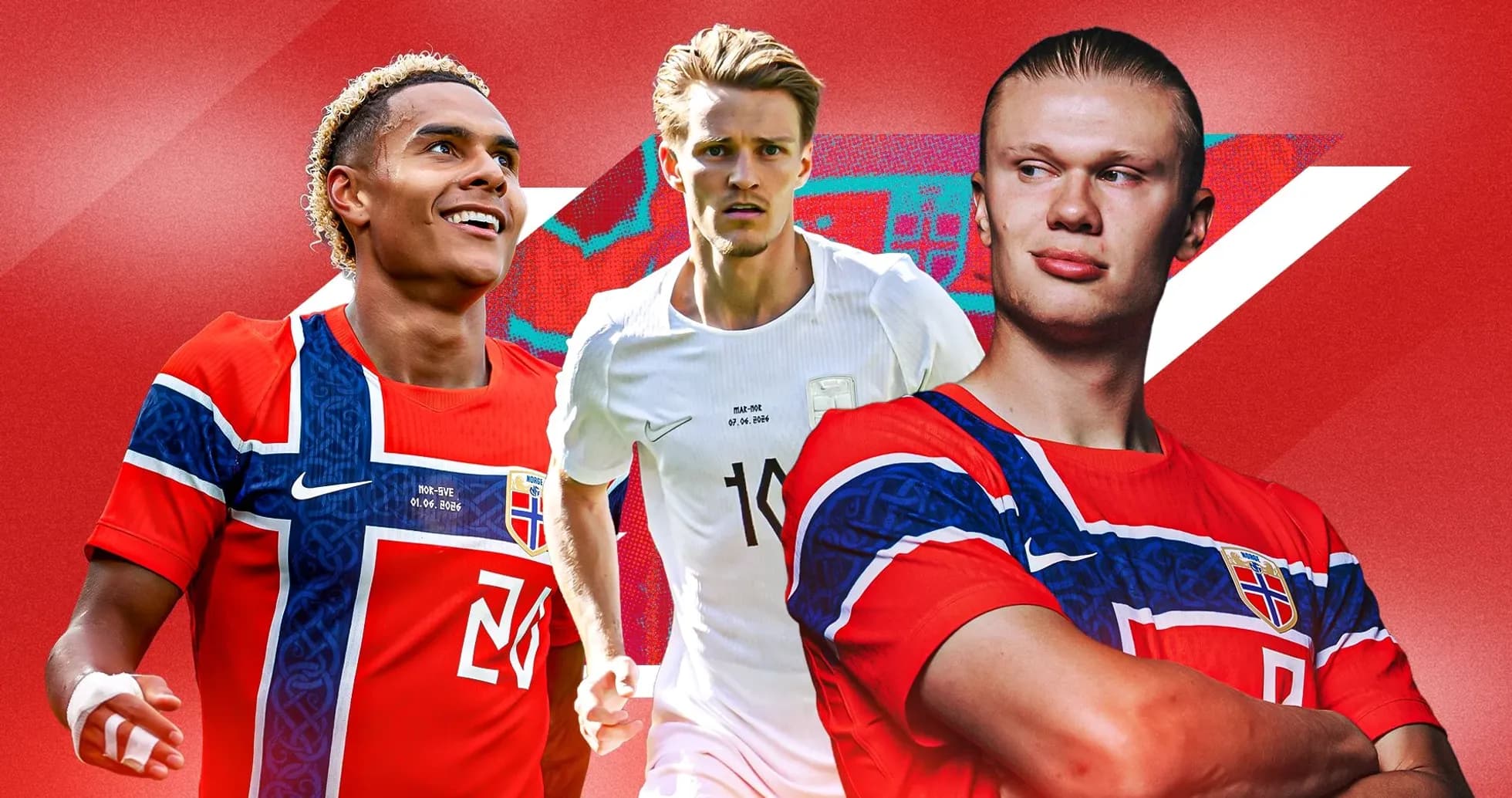
Erling Haaland will dominate the billboards and the broadcasts, but Norway are heading to the World Cup with far more than a one-man show. Stale Solbakken has built something more intricate, more layered – a side that attacks from unusual angles, leans on its full-back for width and hides a 6'5" centre-forward on the wing.
It looks odd on paper. On the pitch, it works.
Wing craft and a towering “winger”
The supply line to Haaland starts out wide, and on the left it runs straight through Antonio Nusa. The RB Leipzig winger, still only 21, glides past defenders as if they’re running uphill. Six goal contributions in six qualifying games tell the story in numbers; the performances against Italy tell it in colour.
He scored and assisted in a 3-0 win over the Azzurri, then added another in a 4-1 demolition in the return fixture. Those weren’t cameos. They were statements.
Behind him waits Andreas Schjelderup, another prodigy with a very real case for minutes. The 22-year-old arrives off a sparkling second half of the season under Jose Mourinho at Benfica: 10 combined goals and assists in just 14 league matches. He also hit a brace against Real Madrid in the Champions League in January. He is not yet a guaranteed starter, but inside Norway’s camp he’s spoken about as a future superstar rather than a hopeful understudy.
On the right, the picture is stranger. Alexander Sorloth, Atletico Madrid’s 6'5" battering ram, starts nominally from the flank. In reality, he lives in that half-space between winger and second striker, tucking in alongside Haaland whenever Norway have the ball and flood the box. Eight goal contributions in eight qualifiers underline how comfortable he is in that hybrid role.
Oscar Bobb offers a different profile there – smaller, neater, more of a technician – though his start at Fulham has been slow. Jens Petter Hauge has forced his way back into the conversation too. He played no part in qualifying, yet his form for Bodo/Glimt, including standout displays in those remarkable Champions League wins over Man City and Inter, has pushed him onto the plane.
Norway’s wide players stretch you, but they’re also decoys. The real chaos often comes from deeper.
Odegaard’s orchestra
If Haaland is the finisher, Martin Odegaard is the conductor. Everything in Norway’s midfield is arranged around the Arsenal captain, who walks into this World Cup as the team’s creative heartbeat.
He missed three of eight qualifiers in an injury-hit season, yet still delivered seven assists – including a hat-trick of them in one game against Israel. No player in Europe set up more goals in qualifying. When he wears national team colours, the doubts that sometimes swirl around him at club level tend to fall away. He sees the game quicker, demands the ball more, dictates the rhythm.
Alongside him, Solbakken has muscle, balance and experience. Sander Berge shields the back four and knits play from deep, a classic defensive midfielder with Premier League miles in his legs. Fredrik Aursnes, the Benfica all-rounder, drives the team forward as a No.8.
Aursnes’ presence is remarkable in itself. Two years ago, at 30, he walked away from international football, saying he wanted “more time and freedom to prioritise other things in my life besides football”. In February, he changed his mind. Now, without having played a minute in qualifying, he looks set to start at the World Cup.
Behind that trio, there is no dramatic drop-off. Patrick Berg, the classy Bodo/Glimt captain, brings control and composure. Kristian Thorstvedt and Morten Thorsby, hardened by Serie A battles, add legs, height and aggression.
Still, everything circles back to Odegaard. His link with the wingers, his ability to slide passes between centre-backs for Haaland, his calm in tight spaces – Norway’s attacking identity runs through his boots. If he catches fire in North America, this team changes level.
Life after Haaland? Norway have a plan
Solbakken will not want to test it, but he does have a contingency if the unthinkable happens and Haaland cannot play every minute. Norway are unusually well stocked at centre-forward.
Sorloth is the obvious next man up. He already scores regularly for his country and heads into the tournament after a 20-goal season with Atletico Madrid, achieved without being a nailed-on starter. Solbakken summed up his importance in a recent interview with FIFA: Alexander brings physicality, versatility and work-rate. He can play centrally, he can move wide, he threatens both as a finisher and a provider, and he never stops running for the team – even in roles he might not prefer.
Behind him, Crystal Palace striker Jorgen Strand Larsen is more than just a bench option. The 26-year-old has impressed since arriving in the Premier League in 2024 and tuned up for the World Cup with a brace in a friendly against Sweden. He also scored against Italy in qualifying. With Sorloth often stationed wide, Strand Larsen is likely to see meaningful minutes regardless of Haaland’s fitness.
Norway, for once, do not live in fear of a single injury.
The right-back who plays like a winger
Solbakken’s most intriguing tactical twist sits on the team sheet as a right-back: Julian Ryerson. In reality, he is Norway’s most dangerous wide attacker.
The system is built around his surges. When Norway have the ball, Sorloth drifts inside to occupy central defenders, almost forming a front two with Haaland. That movement clears the lane for Ryerson to fly down the flank. From there, he whips in crosses with the numbers to prove his impact: 18 Bundesliga assists in the 2025-26 season for Borussia Dortmund.
Those deliveries don’t just find Haaland. The inverted Sorloth, another towering presence, gives Ryerson a second giant target in the box. It’s simple, it’s direct, and it’s brutally hard to defend when the service is right.
Ryerson is also lethal from dead balls. A significant chunk of those assists came from corners and free-kicks, where his technique and Norway’s aerial power combine into a set-piece machine. Opponents will spend hours on the training pitch trying to solve that puzzle. Many still won’t.
Back on the biggest stage – and into the fire
Norway return to the World Cup for the first time in 28 years, and they walk straight into the so-called “Group of Death” with France, Senegal and Iraq. The country has waited a generation for this.
Solbakken felt that weight when qualification was confirmed. He told FIFA that 50,000 fans turned out on a Monday night in minus four degrees to greet the team. That kind of reception doesn’t just celebrate a ticket to the tournament. It underlines how long the nation has been starved of nights like these.
He is realistic about what comes next. He does not dress Norway up as contenders for the trophy. In his eyes, they are dark horses only in the sense that, on their day, they can knock over a stronger opponent – not storm through the whole competition. The group is hard, he knows it will be tight, and he believes organisation and a handful of match-winners must carry them through.
This World Cup, he says, is Norway’s chance to show a different face: an attacking team, full of good individuals willing to work for each other, playing a more expressive brand of football than the country has traditionally produced.
Haaland’s goals will headline any success. But if Norway are to survive this group and disturb the established order, it will be because the plan around him – the flying right-back, the roaming giant on the wing, the reborn playmaker in midfield – finally clicks on the stage they’ve waited nearly three decades to reach.