.svg&w=384&q=75 "naujapitch logo")
Luka Modric: A Career Defying Age and Expectations
Luka Modric walked out of Leipzig that night looking less like a Player of the Match and more like a man who had just watched the curtain fall on something he wasn’t ready to leave.
He had done everything. Scored, at 38, in what was essentially a last-16 play-off against an Italian side that had offered almost nothing. Missed a penalty, followed up the rebound, dragged Croatia to the brink. Then stood on the pitch as Mattia Zaccagni’s 98th‑minute strike sent Italy through and Croatia home.
By the time Modric posed with his award, the haunted expression told the real story. This was not how an international career like his was supposed to end.
In the press conference that followed, the room shifted. Italian journalist Francesco Repice dropped the usual distance and said what millions were thinking. He thanked Modric “for everything you have shown, not just tonight but in your career” and begged him to “never retire”. It sounded sentimental. It also sounded sincere.
Modric didn’t promise anything. He couldn’t. “I’d like to keep playing forever,” he said, “but there probably will come a time where I’ll have to hang up my boots. I’ll keep playing on for now, but I’m not sure for how much longer.”
That was then. Remarkably, he still doesn’t know when that day will come. More remarkably, there’s still no obvious reason it should.
The boyhood dream that became Milan’s crutch
When Modric left Real Madrid last summer after 13 seasons and a mountain of trophies, the move to AC Milan had the easy romance of a childhood poster finally coming to life. He had grown up admiring the Rossoneri, drawn in part by compatriot Zvonimir Boban. Yet he was clear: this was not a farewell tour or a nostalgia trip. He came to play, to matter, to lift a giant that had lost its edge.
Italy buzzed with the story. One of the great midfielders of his generation, in Serie A, in red and black. Still, the questions came quickly. How much did he have left? Was this a luxury signing, especially with the arrival of 24-year-old Samuele Ricci?
Those doubts didn’t last long inside Milanello. Massimiliano Allegri kept writing Modric’s name on the teamsheet, and Ricci, the man most affected, didn’t complain. Quite the opposite. “He’s the strongest player I’ve ever played with,” Ricci said, stunned by the veteran’s humility and intensity.
The Italian press watched the same thing and ran out of superlatives. “If he really is 40,” wrote journalist Alberto Polverosi, “let’s clone him!” It wasn’t just the touch, the passing angles, the way he still dictated tempo. It was the running, the pressing, the refusal to drift into ceremonial status.
From the outside, it looked supernatural. From someone who knew him, it didn’t. Kaka, his former team-mate at Real Madrid and a legend at San Siro, cut through the mystery. Modric, he said, was simply a “force of nature” at 40.
“I know what his mentality is like,” Kaka told Gazzetta dello Sport. “It’s human to lose a bit of motivation when you’ve already had it all – but Lukita is crazy. He still wants to pass on his knowledge, he calls his team-mates, he’s always ready to fight. He has energy and personality.
“His contribution to Milan is important in games and in training, and I believe that his being there is good for all of Italian football. It’s great to see what he’s doing in terms of his enthusiasm, leadership and, of course, his technique.”
Allegri saw the same thing every day. Coach and playmaker grew close enough that whispers began around Milan: could Modric slide straight into the dugout as Allegri’s assistant when he finally stepped away from playing?
There was a flaw in the plan. Milan leaned on him too hard.
When one fracture broke a season
The turning point came in Turin. In a bruising 0-0 draw with Juventus on April 26, Modric suffered a fractured cheekbone. It sounded minor compared to the muscle tears that usually define run-ins. It wasn’t.
He couldn’t start any of Milan’s final four league games. The team promptly collapsed. Three defeats in four. Third place turned into fifth. Champions League football vanished.
The dependence was laid bare. A 40-year-old playmaker had become the hinge on which a club of Milan’s size and history swung. Without him, the structure fell apart. The consequence was brutal for Allegri, who paid with his job after failing to secure a top-four finish.
Now, uncertainty hangs over Modric’s club future. He has spoken glowingly about Milan, about the city, about the feeling of being central again. At the same time, reports in Spain suggest Real Madrid are ready to bring him back to the Bernabeu in some capacity if he decides this summer is finally the moment to stop.
He isn’t saying. Not yet.
The mask, the heat, and one last dance
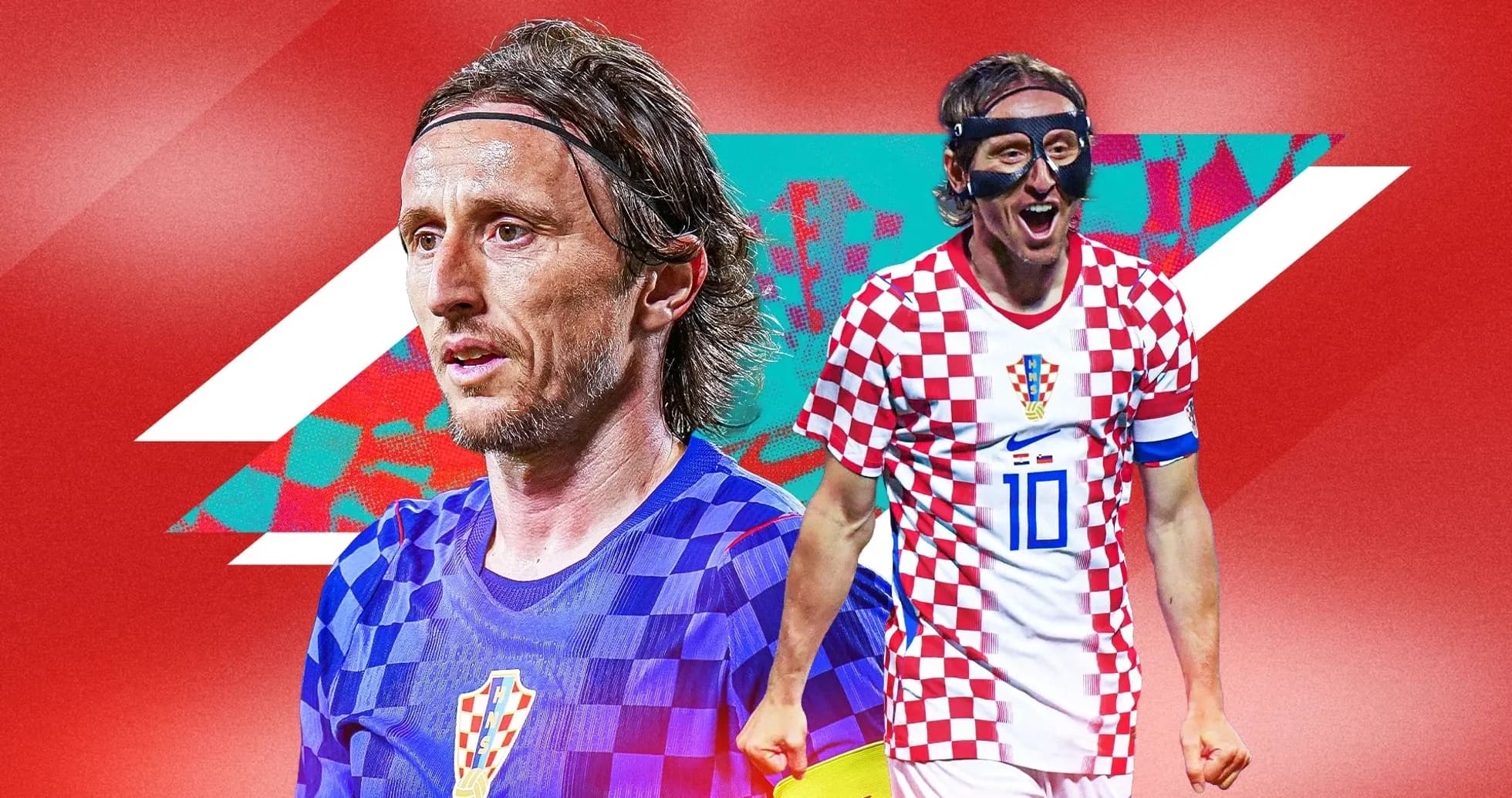
What does seem certain is that this will be his last major tournament with Croatia. That alone gives it weight. Then there’s the added twist: he will have to play at the World Cup in a protective mask, guarding that damaged cheekbone in conditions that will test younger legs, never mind his.
On paper, it sounds like a handicap. In reality, this is Modric. He has built a career on tearing up assumptions, on ignoring the noise. “I never really cared what anyone else said,” he reminded people recently. “It only further motivated me.”
So the image forms: Luka Modric, 40 years old, masked, still demanding the ball, still dictating games on the biggest stage. It feels improbable. It also feels entirely in character.
Who writes him off now? Certainly not in England, where memories of underestimating Croatia’s No.10 still sting.
The mask might cover his face. It won’t hide the fact that, somehow, Luka Modric still refuses to let the story end.