.svg&w=384&q=75 "naujapitch logo")
Marcelo Bielsa: The World Cup Portrait That Defies Convention
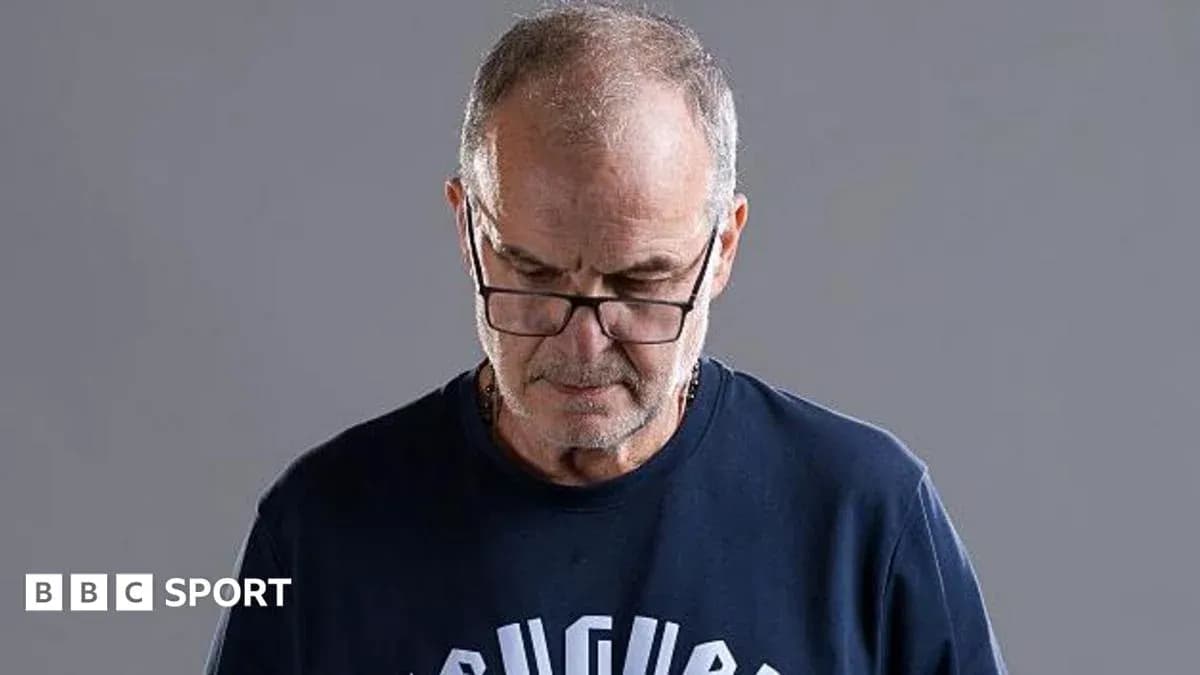
Marcelo Bielsa has never been interested in fitting the frame. Not on the touchline, not in the dressing room, and certainly not in front of a Fifa camera.
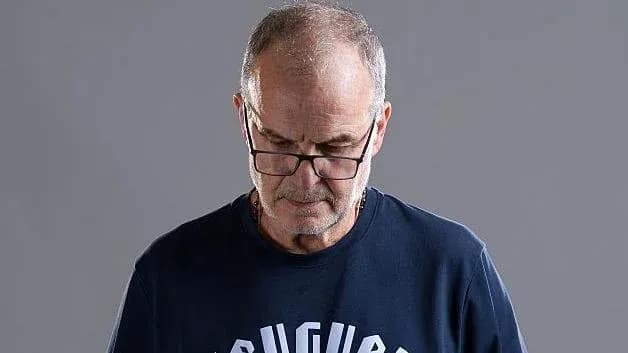
While players and coaches across this World Cup straightened their collars, fixed their smiles and leaned into the lens for their official portraits, Uruguay’s head coach did the opposite. The 70-year-old stared downwards, stone-faced, eyes averted, as if the photographer had interrupted a video session rather than invited him into the spotlight.
It looked less like a glossy tournament headshot and more like a candid moment from a training-ground corridor. Which, for Bielsa, feels about right.
The man nicknamed El Loco – The Crazy One – has built a career on total immersion in his work and total indifference to everything around it. Ice box for a seat. Obsessive analysis. Hours of footage, endless detail, no compromise. A coach who once had Leeds fans picking litter to understand the value of effort was never likely to play the media game for a portrait.
So when that image began to circulate, and questions followed about whether it was a protest or a pointed gesture, Bielsa met the curiosity with the same blunt edge he brings to his team talks.
After Uruguay’s 1-1 draw with Saudi Arabia in Miami on Monday, he was asked about the picture. He bristled.
“I don't have to give any explanation, the picture was taken the way it was taken,” he said. “I'm not a model.”
That was that, as far as he was concerned. But the subject refused to go away. Bielsa, managing his third nation at a World Cup after Argentina and Chile, found himself circling back to it even when a different question came his way.
“There is a limit in terms of what we need to explain,” he said. Then came a series of examples, delivered with the clipped logic of a man tired of surface-level debates.
- If I'm wearing glasses, why am I wearing glasses?
- You look somebody in the eye, why do you do that?
- There is nothing wrong about wearing glasses or looking into somebody's eyes or looking down.
In other words: not every action is a message. Sometimes a photograph is just a photograph, even when it involves one of football’s most scrutinised minds.
The irony, of course, is that Bielsa’s refusal to perform for the camera only deepens the fascination. While others lean into the curated theatre of modern football, he leans away. The image that emerges is of a coach who would still rather be in a darkened room with a laptop and a tactics board than anywhere near a studio light.
Fifa’s team and staff photos have become part of the tournament furniture over the past decade, a visual catalogue of the global game. In that grid of polished smiles and carefully held poses, Bielsa’s downward stare stands out like a tactical outlier on a whiteboard. It is anti-branding as branding, a reminder that some figures in football still resist the gloss.
What will matter far more to him, though, is what happens on the pitch next.
Uruguay’s draw with Saudi Arabia leaves their group finely balanced. On Sunday, at 23:00 BST, they face Cape Verde, the surprise package of the tournament so far. For all the talk about portraits and posture, Bielsa’s real statement will come in how his team respond – in their pressing lines, their bravery on the ball, their discipline without it.
The world can debate where he looks in a photograph. Bielsa will be more concerned with where his full-backs are standing when Uruguay chase their first win.