.svg&w=384&q=75 "naujapitch logo")
Liverpool and Chelsea Draw 1–1: A Tactical Analysis
Anfield under grey Merseyside skies, a 1–1 draw etched into the scoreboard, and yet this felt less like a stalemate and more like a tactical arm-wrestle between two evolving projects. Following this result in Round 36 of the Premier League season, Liverpool remain the more stable of the two – 4th with 59 points, a total goal difference of +12 from 60 scored and 48 conceded – but Chelsea, 9th with 49 points and a total goal difference of +6 (55 for, 49 against), showed enough structure to suggest their rebuild has a clear spine.
I. The Big Picture – Two Systems in Transition
Liverpool came into this game as one of the division’s more volatile sides. Overall this campaign they have won 17 of 36, drawing 8 and losing 11 – a profile of a side capable of surging but still prone to lapses. At Anfield they are far more convincing: 10 home wins from 18, with 33 goals for and 19 against. That home average of 1.8 goals scored and 1.1 conceded underpins why they still look like a Champions League team in everything but absolute consistency.
Chelsea, by contrast, are more balanced between home and away. On their travels they have 7 wins, 5 draws and 6 defeats from 18, scoring 31 and conceding 25; that away average of 1.7 goals for and 1.4 against is quietly impressive for a side outside the top four. Their total record – 13 wins, 10 draws, 13 losses – speaks of a team oscillating between promise and self-sabotage.
At Anfield, the 1–1 scoreline mirrored those underlying numbers: Liverpool’s home edge blunted by Chelsea’s away resilience.
II. Tactical Voids – Who Was Missing, and What It Changed
The team sheets told a story of absences shaping identity.
Liverpool were stripped of some of their most defining profiles. Alisson’s muscle injury handed the gloves to Giorgi Mamardashvili, altering the Reds’ build-up rhythm and high-line security. Higher up, the absence of Mohamed Salah (thigh injury) removed their most ruthless wide finisher and top assist provider, while H. Ekitike’s Achilles tendon injury robbed them of an 11-goal attacking focal point. With W. Endo also out, Arne Slot had to build a midfield without a natural destroyer, leaning instead on Ryan Gravenberch, Alexis Mac Allister and Dominik Szoboszlai to share defensive and creative duties.
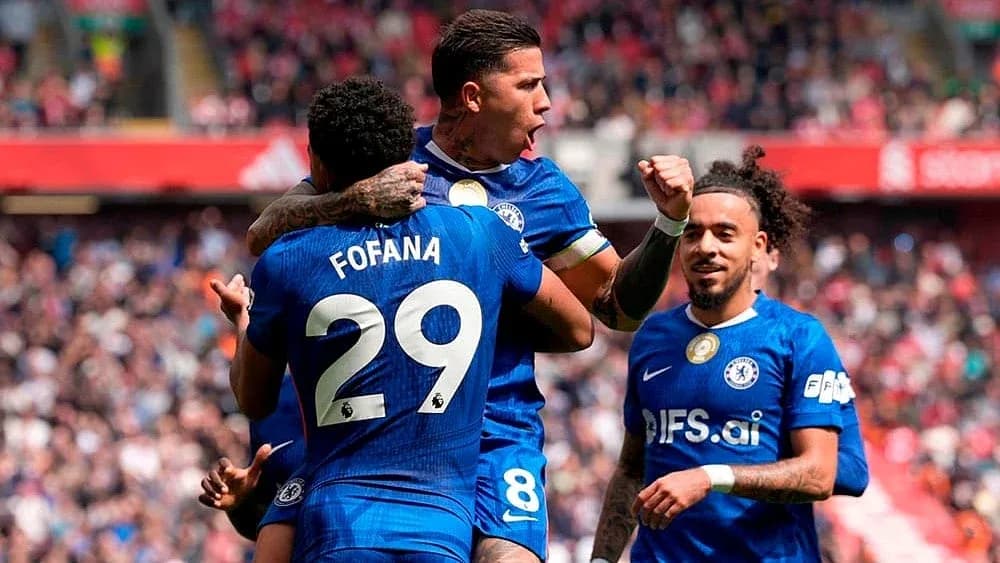
For Chelsea, the picture was different but equally disruptive. M. Mudryk’s suspension removed a vertical runner who stretches back lines. Concussion issues for Robert Sánchez and J. Derry, plus muscle and hamstring problems elsewhere, meant Calum McFarlane had to trust Filip Jørgensen in goal and rely heavily on his starting back four. Yet the spine – Wesley Fofana, Levi Colwill, Moisés Caicedo, Enzo Fernández and João Pedro – was intact, and that gave Chelsea a coherent core.
Discipline has been a season-long subplot for both clubs. Liverpool’s yellow-card distribution peaks late: 31.48% of their bookings arrive between 76–90 minutes, with a further 16.67% from 91–105, a pattern of emotional, late-game edges. Their only red in the league has also come in added time. Chelsea’s profile is similarly combustible: 23.60% of their yellows between 76–90 minutes and 21.35% from 61–75, plus red cards scattered across every 15-minute band from 0–75. This match, cagey and hard-fought, always risked boiling over as legs and minds tired.
III. Key Matchups – Hunter vs Shield, and the Engine Room
Hunter vs Shield was defined by João Pedro against Liverpool’s defensive record. Pedro, with 15 total league goals and 5 assists, is Chelsea’s leading marksman and creative spearhead. His 50 total shots, 28 on target, underline a forward who finds good positions rather than living off half-chances. Up against a Liverpool side that, overall, concedes 1.3 goals per game and at home 1.1, his threat was clear: intelligent movement between Virgil van Dijk and Ibrahima Konaté, and the ability to drop into spaces where Gravenberch or Mac Allister had to decide whether to follow.
On the other side, Cody Gakpo and Szoboszlai formed Liverpool’s main creative axis in Salah’s absence. Gakpo’s season – 7 goals, 5 assists, 52 total shots and 50 key passes – marks him as a hybrid forward who links rather than just finishes. Szoboszlai, with 6 goals, 5 assists and a remarkable 68 key passes from midfield, is the orchestrator, his 2,090 completed passes at 87% accuracy driving Liverpool’s possession game. Together they tried to probe a Chelsea defence that, on their travels, concedes 1.4 goals per game and has shown vulnerability to sustained territorial pressure.
The Engine Room battle was ferocious. On Chelsea’s side, Caicedo and Enzo Fernández are elite-volume operators. Caicedo has 1,940 passes at 91% accuracy and a staggering 87 tackles plus 56 interceptions; he is both screen and springboard. Enzo adds 1,936 passes at 86% accuracy, 65 key passes and 9 goals – a deep-lying playmaker with end product. Against Liverpool’s more fluid trio, Chelsea’s double pivot sought to compress space between the lines, forcing Szoboszlai and Gakpo wide and limiting central overloads.
There was also a disciplinary undertone to this midfield duel. Caicedo, with 11 yellow cards and 1 red this season, walks a constant tightrope. Szoboszlai, with 8 yellows and 1 red plus a missed penalty on his record, is similarly combative. Every 50–50 in the centre felt like a potential hinge moment.
IV. Statistical Prognosis – xG Patterns Hiding in Plain Sight
Even without explicit xG numbers, the season’s statistical fingerprints offer a clear tactical prognosis for how this match unfolded and what it says going forward.
Liverpool at home average 1.8 goals for and 1.1 against; Chelsea away sit at 1.7 for and 1.4 against. That convergence around the 1–2 goal band for each side points towards tight, chance-limited contests rather than chaotic shootouts. Both teams have enough attacking quality to generate good opportunities, but neither is structurally fragile.
Liverpool’s 10 clean sheets overall and only 2 home games failed to score show a side that almost always creates something at Anfield. Chelsea’s 4 away clean sheets and only 3 away games without scoring demonstrate that they travel with intent rather than fear. A 1–1 draw fits the underlying expected-goal landscape: each side likely carved out a handful of decent openings rather than a barrage.
Defensively, Chelsea’s total goals against (49) versus Liverpool’s (48) suggests parity in overall solidity, but Liverpool’s superior home record tilts the balance slightly in their favour in similar fixtures. Where Chelsea must improve is in game-state management; their red-card spread and late yellow-card spikes reveal a tendency to lose control in key phases.
Following this result, the tactical verdict is that both projects are on logically coherent paths. Liverpool, even shorn of Salah and Ekitike, can still manufacture enough creativity through Szoboszlai, Gakpo and a progressive back line to sustain Champions League-level performances. Chelsea, anchored by Caicedo, Enzo and Pedro, have a spine capable of competing with the league’s best; their next step is refining discipline and turning resilient away draws like this into narrow wins.
At Anfield, the numbers and the narrative aligned: two sides with similar underlying metrics, separated not by quality but by margins – and on this occasion, those margins balanced perfectly on 1–1.