.svg&w=384&q=75 "naujapitch logo")
Burnley and Aston Villa Draw in Tactical Duel at Turf Moor
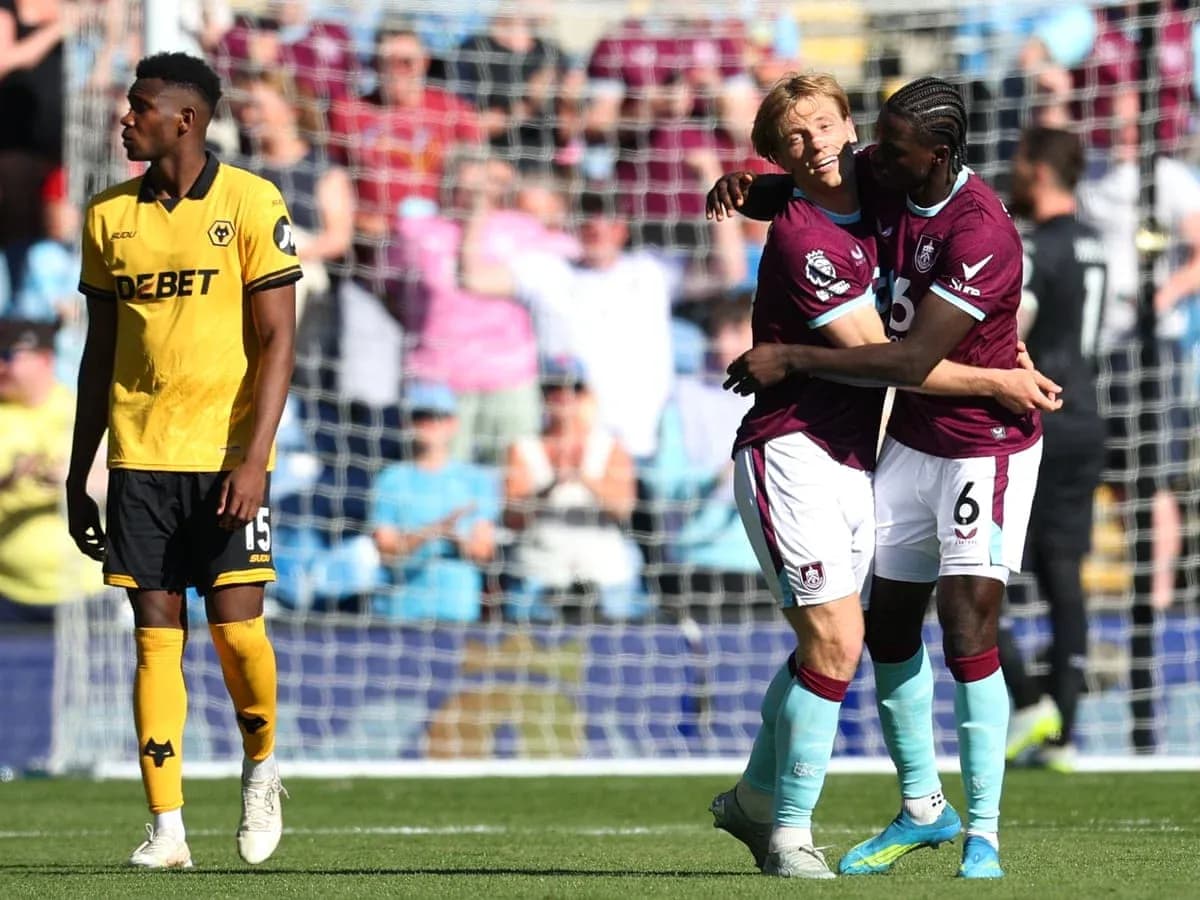
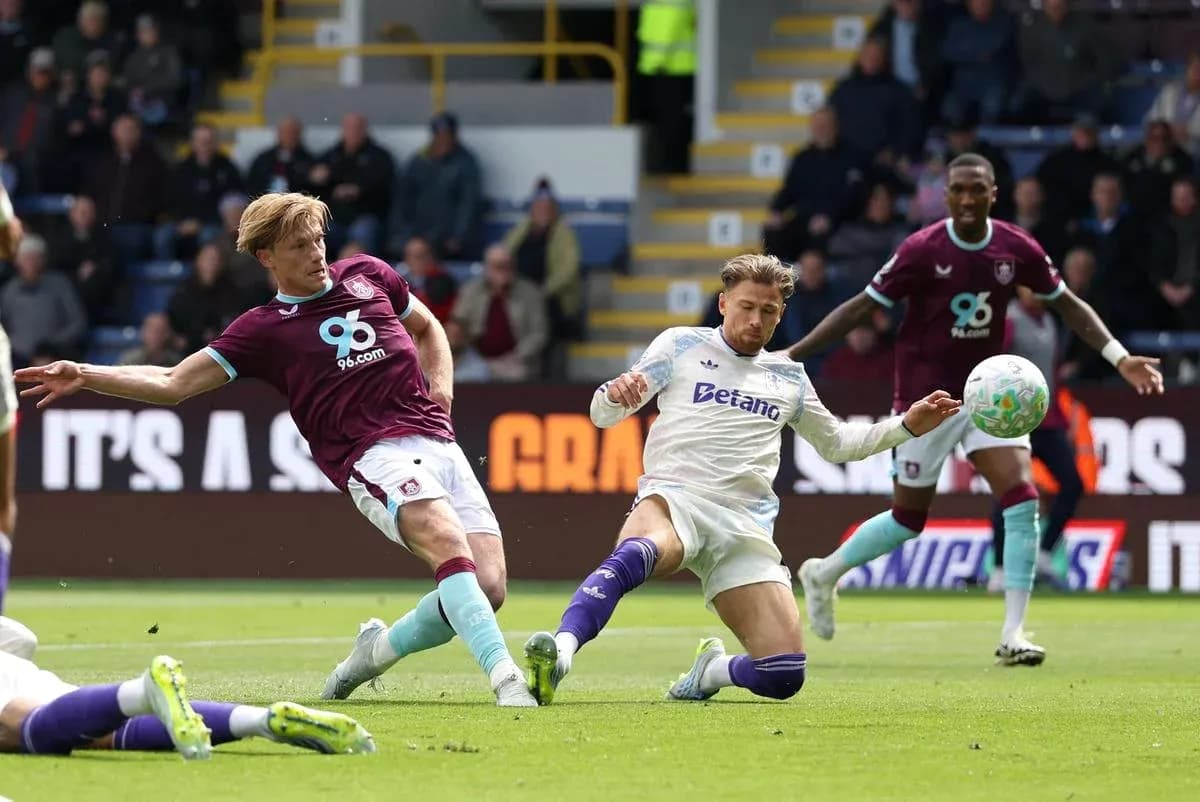
Turf Moor under a grey May sky, a relegation-threatened Burnley and a Champions League-chasing Aston Villa, both laid out in mirrored 4-2-3-1 shapes. Following this result, the 2-2 draw felt less like a stalemate and more like a clash of identities: Burnley’s desperate defiance from 19th against the controlled ambition of a Villa side sitting 5th in the Premier League table.
Burnley came into the day with a season-long profile that has been brutally clear. Overall this campaign they had scored 37 and conceded 73 in 36 league games, a goal difference of -36 that tells of structural fragility rather than just bad luck. At home they had managed only 17 goals and shipped 28 across 18 matches, averaging 0.9 goals for and 1.6 against at Turf Moor. Villa, by contrast, arrived as a side used to dictating terms: overall 50 scored and 46 conceded, a goal difference of 4 from 36 games, with a balanced away record of 22 for and 26 against on their travels.
Yet for all the statistical imbalance, the lineups suggested a more nuanced tactical duel.
Burnley’s 4-2-3-1 under Mike Jackson was built around a double pivot of Florentino and L. Ugochukwu shielding a back four of K. Walker, A. Tuanzebe, M. Esteve and Lucas Pires in front of M. Weiss. Ahead of them, the creative band of L. Tchaouna, H. Mejbri and J. Anthony worked behind lone forward Z. Flemming, the club’s leading scorer with 10 league goals. This was not the low-block, long-ball Burnley of old; it was a side trying to play through the thirds despite their struggles.
The tactical voids were significant. Burnley were without J. Beyer, J. Cullen and C. Roberts, stripping depth and familiarity from their defensive rotation. For a team that has managed only 4 clean sheets in total this season – all of them at home – any disruption to the back line’s chemistry is magnified. The absence of Cullen in particular removed a calmer passing option from midfield, placing extra responsibility on Florentino to progress play and on Mejbri to drop in and link.
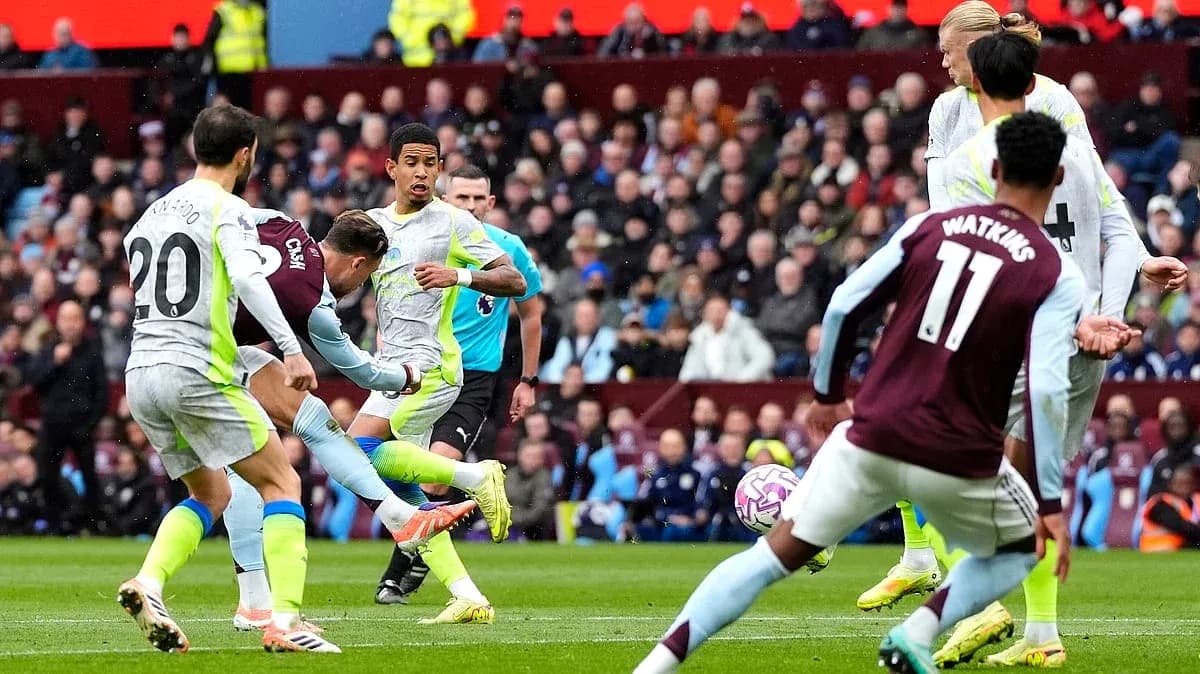
Villa’s own absences were less about quantity and more about profile. Alysson, B. Kamara and A. Onana all missed out, forcing Unai Emery to reshape his midfield balance. With Kamara unavailable, the screening and ball-winning duties shifted towards V. Lindelof and Y. Tielemans in the double pivot, a pair more comfortable in possession than in pure destruction. That choice underpinned Villa’s intent: dominate the ball, compress the game in Burnley’s half, and trust their attacking quartet.
Ahead of them, the trio of J. McGinn, R. Barkley and M. Rogers supported O. Watkins, the league’s 12-goal spearhead. Watkins’ profile this season – 51 shots, 31 on target, 22 key passes – paints the picture of a forward who stretches back lines but also links play. Rogers, with 9 goals and 5 assists in 36 appearances, has been Villa’s creative metronome, his 1033 passes and 43 key passes making him both the side’s main carrier and their most reliable final-third connector.
The “Hunter vs Shield” matchup was written clearly: Watkins and Rogers against a Burnley defence that concedes, on average, 2.0 goals per game overall and 2.5 on their travels, but still 1.6 at home. With Burnley’s biggest home defeat at 1-3 and their heaviest away at 5-1, they are a team that can be broken open if pressed relentlessly. Villa’s away average of 1.2 goals scored suggested they would create enough, but not necessarily run riot.
On the other side, Flemming’s threat was the sharpest Burnley weapon. Ten goals from midfield, 37 shots with 20 on target, and a willingness to work both ways – 15 tackles, 5 blocked shots, 7 interceptions – made him the embodiment of Burnley’s attempt to fuse graft with guile. His presence as the nominal “9” in this game turned the shape into something more fluid: a false nine dropping to combine with Mejbri and Tchaouna, inviting wide runners and late surges.
The “Engine Room” battle, though, was where the game’s rhythm was truly decided. Florentino and Ugochukwu had to screen, recycle and occasionally break lines against Lindelof and Tielemans. Without Cullen, Burnley lacked a natural tempo-setter, leaving Mejbri to oscillate between creator and auxiliary controller. Villa, conversely, could lean heavily on Rogers’ all-action profile: 117 dribbles attempted, 41 successful, and 49 fouls drawn. Every time he drifted inside from the left channel, he tested Burnley’s capacity to track, foul, or be played through.
Discipline was always likely to be a shadow over proceedings. Burnley’s season card map is scattered but telling: yellow cards peak at 19.67% in both the 16-30 and 76-90 minute windows, with another 16.39% between 31-45. Red cards have been evenly split, 33.33% in each of 31-45, 76-90 and 91-105. This is a team that frays under pressure, particularly as halves draw to a close. Villa, by contrast, accumulate yellows most heavily between 46-60 minutes (29.09%), a reflection of their aggressive pressing after the interval, and have seen their only red card in the 61-75 window.
That disciplinary pattern intersected intriguingly with tactical momentum. Burnley, often chasing games, are prone to late-half lunges; Villa, ramping up intensity after the break, invite contact and confrontation. With Rogers adept at drawing fouls and Watkins constantly running channels, the risk for Burnley was always that a tight contest could tilt on a mistimed challenge just before or after the hour.
From a structural perspective, both sides’ reliance on 4-2-3-1 was no coincidence. Burnley have used that shape in 11 league matches, more than any other system, while Villa have deployed it in 32. For Emery, it provides a stable platform: full-backs M. Cash and I. Maatsen push high, the double pivot holds the centre, and the three behind Watkins interchange. For Jackson, it is more a compromise: enough bodies behind the ball to avoid collapse, but just enough ahead of it to give Flemming and the wingers support.
Substitutes offered contrasting tactical vectors. Burnley’s bench included J. Ward-Prowse, J. Laurent, A. Broja, L. Foster, J. Bruun Larsen and Z. Amdouni – a mix of set-piece quality, midfield bite and varied forward profiles. Laurent, with 45 tackles, 8 blocked shots and 27 interceptions this season, and one red card to his name, represents both steel and risk if introduced to protect a result. Ward-Prowse, with his delivery, adds a late-game set-piece threat that can tilt tight margins in a team that otherwise struggles to create high-quality chances from open play.
Villa’s options – L. Bailey, P. Torres, Douglas Luiz, L. Digne, T. Abraham, E. Buendia and J. Sancho – speak of a squad built for in-game adaptation. Bailey and Sancho can inject directness and 1v1 threat against tiring full-backs like Walker and Pires. Torres and Digne allow a shift towards a more possession-dominant back line if Villa need to chase or protect the ball. Douglas Luiz offers a more natural holding presence than Lindelof, potentially closing the central spaces that Flemming and Mejbri look to exploit between the lines.
From a statistical prognosis standpoint, the 2-2 outcome sits in an interesting space between expectation and resistance. Heading into this game, Villa’s away scoring average of 1.2 and Burnley’s home concessions of 1.6 suggested the visitors would generate the better xG profile, particularly through central overloads and second-phase attacks around the box. Burnley’s home scoring average of 0.9 implied they would need either set-piece efficiency or moments of individual quality to keep pace.
Yet Burnley’s four home clean sheets and their capacity to occasionally compress space at Turf Moor hinted that this would not simply be a procession. Their penalty record – 2 taken, 2 scored, 100.00% conversion with no misses – meant any foul in the box carried maximum punishment. Villa, with no penalties awarded or missed all season, had no such margin.
Following this result, the narrative becomes one of a relegation-bound side refusing to bow to the arithmetic. Burnley, still 19th and mired in a campaign defined by that -36 goal difference, found enough structural discipline and attacking conviction to trade blows with a Villa team whose season-long form line includes an 8-match winning streak and a clear Champions League trajectory.
Tactically, the match underlined why Villa sit where they do and why Burnley are where they are. Villa’s 4-2-3-1 remains a polished, repeatable machine, driven by the Hunter pairing of Watkins and Rogers and supported by a deep bench of like-for-like quality. Burnley’s version of the same system is more fragile, dependent on Flemming’s goals, Mejbri’s energy and a back four that has been too often exposed.
And yet, for 90 minutes at Turf Moor, those differences blurred. The underdog’s structure held just enough; the favourite’s control was just imperfect enough. In a league table that measures cold numbers – 59 points for Villa, 21 for Burnley, 4 in goal difference versus -36 – this 2-2 felt like a reminder that tactical frameworks and statistical profiles still have to live through the chaos of a single match.